



Antique Thames Landscape
An antique Thames landscape records the changing moods of London and its valley through oils, watercolours and prints.
Antique Thames Landscape
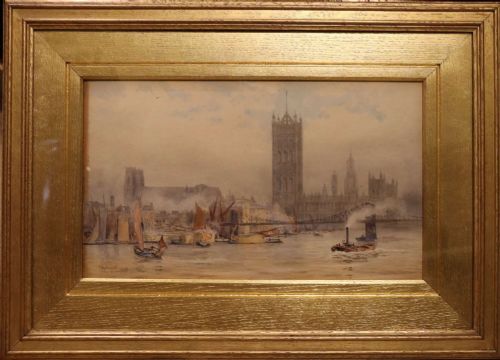
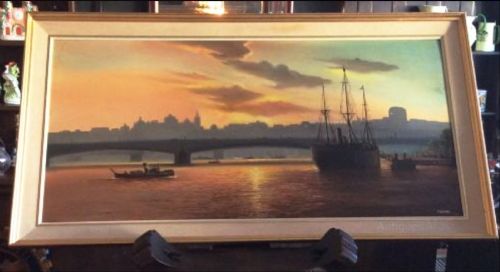
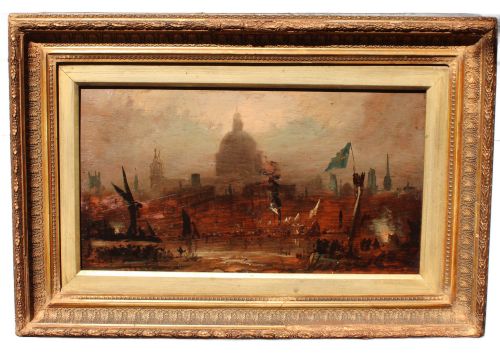
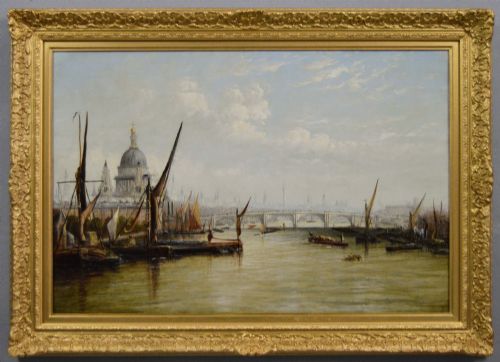
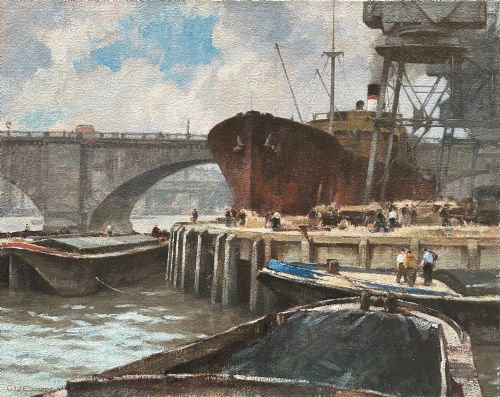
An antique Thames landscape captures the river from rural stretches near Oxford down to the bustling Pool of London and the maritime estuary. Buyers find historic depictions ranging from Georgian topographical studies to Edwardian watercolours of misty reaches and urban bridges.
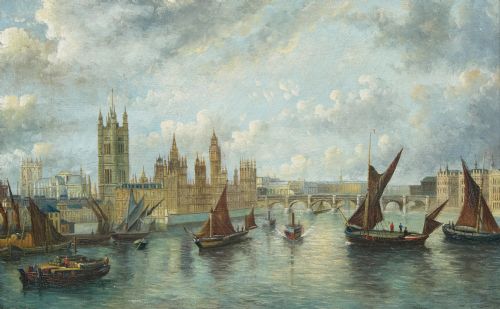
The works record familiar landmarks including Windsor Castle, St Paul's Cathedral, Westminster Bridge and Eton College. These scenes appear across various periods from the early nineteenth century through to the mid-twentieth century.
Most pieces encountered on this page date from the Victorian and Edwardian eras, executed by professional British artists who specialised in topographical views and maritime river scenes.
How They Were Made
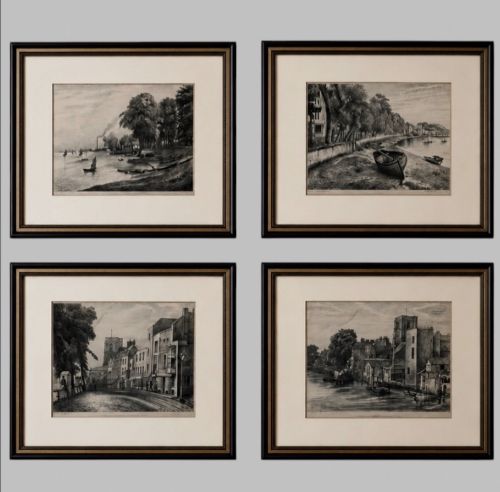
Artists painted these river views using oil on canvas, oil on board, or applied watercolour pigments onto paper. Lithographs and aquatints also preserve historic Thames perspectives through inked impressions.
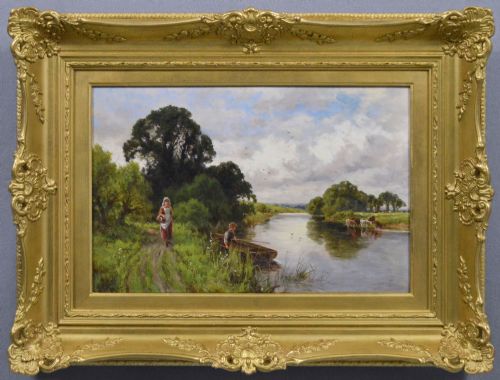
Many works incorporate gold leaf within period frames, while others rely on simple wood mouldings and glass to protect delicate watercolours from moisture.
Several Victorian watercolours capture children fishing patiently at dusk, watching the same Thames barges that still drift past today.
What Varies in Quality
The strength of a composition rests on the artist's handling of atmospheric light, river reflections and perspective along the water. Superior works display confident brushwork and accurate topographical detail rather than formulaic repetition.
The condition of the paper or canvas dictates the visual impact, with undisturbed watercolours retaining their original pigment vibrancy while poorly stored oils show signs of historic cracking or darkened varnish.
H. Medlycott·Alfred Young Nutt·Francis Moltino·Henry John Kinnaird·Charles William Wyllie·Robert Winchester Fraser·Frederick George Coleridge·Frank W. Scarborough·Thomas Whittle the Younger·Edward Henry Eugene Fletcher·David Cox Senior·John Varley
The Antique Thames Landscape Glossary
- Aquatint
- An intaglio printmaking technique that produces areas of tone resembling watercolour washes. It was widely used for reproducing topographical views in the eighteenth and nineteenth centuries.
- Grisaille
- A painting executed entirely in shades of grey or neutral monochrome. Artists frequently employed this method for preparatory studies or atmospheric river nocturnes.
- Topographical
- Representing a specific actual place with accurate physical details. These works serve as visual historical records of past architecture and bridge designs.
- Pool of London
- The stretch of the River Thames from London Bridge down to Limehouse. It was historically one of the busiest trading hubs in the world and a frequent subject for marine artists.
- Eyot
- A small island in a river or lake. They often feature in pastoral watercolours depicting the upper reaches of the Thames near Marlow or Richmond.
Antique Thames Landscape: Frequently Asked Questions
How do I identify the exact stretch of river shown?
Look for recognizable landmarks such as Windsor Castle, St Paul's Cathedral or specific bridges noted in the title or inscribed on the reverse.
Many nineteenth-century watercolours include contemporary artist annotations or old gallery labels identifying the precise lock, eyot or village.
What is the difference between an oil painting and a watercolour of the Thames?
Oils on canvas or board provide rich impasto textures and deep tones suitable for industrial shipping scenes around the Pool of London.
Watercolours on paper offer translucent washes that capture the mist, pale light and atmospheric weather of the Thames valley.
How should I frame and display a paper watercolour?
Watercolours require conservation mounting with acid-free materials and framing behind glass to prevent atmospheric pollution and fading.
Keep these works away from direct sunlight and damp environments to protect the fragile paper support and original pigments.
Are these river scenes painted on site or in a studio?
Artists typically executed rapid pencil or watercolour sketches outdoors before completing finished paintings inside their studios.
Preliminary field sketches often display spontaneous brushwork that differs from the more polished exhibition pieces.