
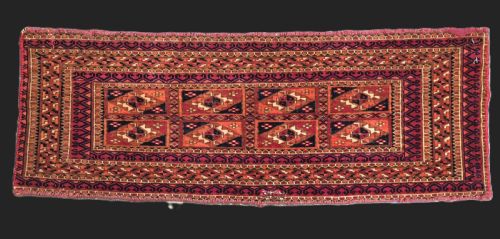
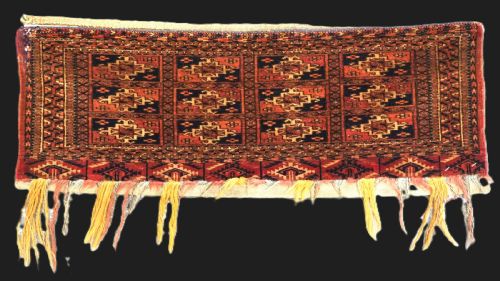


Antique Tekke Torba
An antique tekke torba is a tribal bagface woven by Central Asian nomads, prized by collectors for its geometric design and rich wool pile.
Antique Tekke Torba
An antique tekke torba is a small storage bag or bagface produced by Turkmen tribes in Central Asia during the nineteenth century. These pieces include complete examples with plain weave backs alongside isolated bagfaces.
Tribal weavers utilised traditional formats such as the nine gul, six gul, and fifteen gul patterns, often incorporating specific motifs like the aina gul, chuval guls, or curled leaf designs. These textiles served functional purposes in nomadic daily life before entering the collector market.
Materials and construction
The construction relies entirely on wool, manipulated into fine weaves by nomadic hands. Weavers employed natural dyes to achieve the distinct colour palettes seen across these nineteenth-century tribal pieces.
Individual examples demonstrate varying knot densities, with certain pieces noted for exceptionally fine weaves. Plain weave backs accompany some surviving bagfaces, while others remain as single panels or fragments.
The listings span from eighteen-fifty to eighteen-ninety, executed entirely in wool and natural dyes by Turkmen nomadic weavers.
Quality variations in tribal weaving
Quality rests upon the precision of the drawing and the saturation of the natural dyes. Superior examples exhibit crisp geometry and balanced colour distribution across the field.
The density of the wool pile and the fineness of the weave distinguish standard production from exceptional dowry weaving. Surviving structural completeness, such as retaining an original back, elevates a piece's integrity.
The Antique Tekke Torba Glossary
- Torba
- A small Turkmen storage bag traditionally used for household goods inside a yurt. These pieces were frequently woven as part of a bride's dowry.
- Gul
- A primary medallion motif repeated across Turkmen carpets and bagfaces. Different tribes utilised distinct gul designs to signal identity.
- Mafrash
- A larger rectangular storage bag or bedding chest container associated with nomadic tribes. These structures share construction techniques with smaller torbas.
- Kedjebe
- A camel wedding kajave or litter pattern adapted into tribal rug designs. This motif appears in specific nineteenth-century weaving.
- Aina gul
- A mirror-form gul motif incorporated into Turkmen tribal textiles. This geometric element is often centered within the field design.
Antique Tekke Torba: Frequently Asked Questions
How were these bags used originally?
Nomadic families utilised torbas inside their tents to store personal belongings, household items, or provisions. Their compact proportions suited the portable nature of yurt dwellings.
Many examples formed part of a bride's dowry weaving, representing significant cultural labour and tribal artistry. They hung against tent walls or served as functional containers.
How do I date an antique torba?
Dating relies on analysing the wool quality, dye consistency, and structural characteristics relative to nineteenth-century production standards. Pieces from this inventory span the eighteen-fifties to the eighteen-nineties.
Earlier examples often display finer weaves and specific natural dye palettes associated with mid-nineteenth-century nomadic workshops. stylistic variations provide further chronological clues.
How should I display a torba at home?
These textile bagfaces suit wall hanging display, allowing the wool pile and geometric patterns to remain visible without sustaining floor traffic wear. Proper mounting distributes the weight evenly across the fabric.
Keep textile displays away from direct sunlight to protect the natural dyes from fading over time. Gentle rotation and low humidity environments help preserve the nineteenth-century wool.