





Antique Teak Wine Table
An antique teak wine table brings rich colonial craftsmanship and intricate carving into a room, offering a compact surface suited for holding a glass or a lamp.
Antique Teak Wine Table
An antique teak wine table brings together the robust qualities of tropical timber and the decorative arts of the nineteenth and early twentieth centuries. When you examine this selection, you encounter forms that span side tables, occasional tables, pedestal stands, and folding campaign pieces. These items originate predominantly from Anglo-Indian, Anglo-Burmese, and colonial workshops, reflecting diverse regional aesthetics.
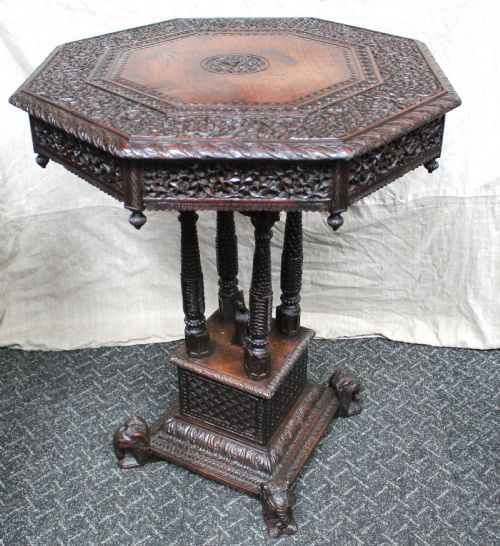
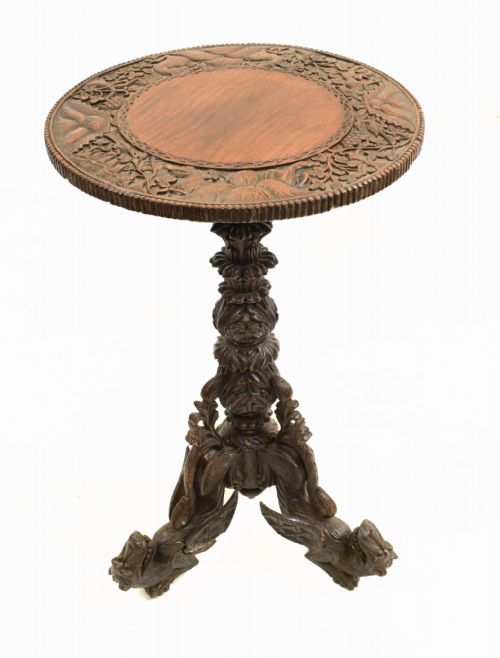
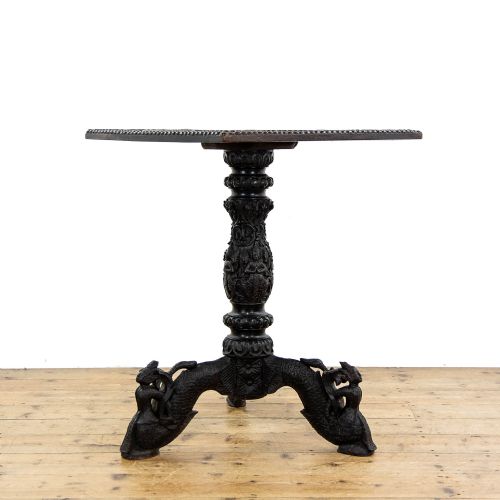
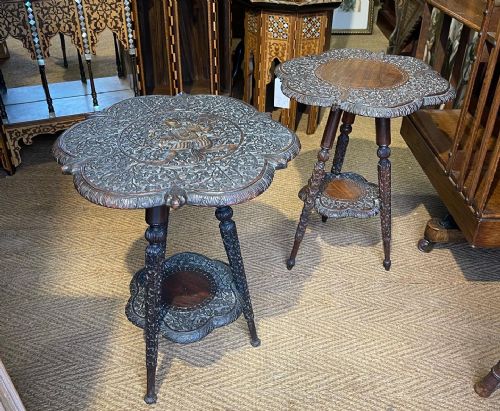
The version you are most likely to meet on this page is a round or tilt-top occasional table carved deeply from dense teak, often featuring tripod legs or pedestal bases. Many examples display regional specialities such as Hoshiarpur bone inlay or elaborate relief carvings depicting foliage and animal motifs. They serve readily as small lamp stands or coffee tables in contemporary spaces.
Materials and construction methods
The primary material found across these listings is teak, supplemented by other dense hardwoods such as padouk and rosewood. Craftsmen selected these timbers for their natural oils and durability, allowing for intricate hand-carving without splitting. Workshops also incorporated bone inlay and ebony inlay to create striking geometric patterns across table tops.
Joinery techniques ranged from sturdy pedestal mounts and tripod frames to folding campaign mechanisms designed for portability. Surfaces were frequently finished to highlight the rich grain of the hardwood, while tops were shaped into circles, shields, or tilt mechanisms for practical storage when not in use.
Several tables here proudly feature carved elephants standing ready to support your evening glass.
Factors that distinguish quality
The depth and clarity of the hand-carving largely separate finer examples from simpler production. Superior pieces exhibit crisp relief work where foliage, animals, and architectural motifs remain sharp and well-defined across the hardwood surface. Lesser examples often feature shallow, repetitive stamping or softer detailing that lacks individual character.
Construction integrity also defines the upper tier of these pieces. Well-made tables retain stable tilt mechanisms, tight joints in the tripod or pedestal bases, and securely fitted inlay work without missing sections of bone or ebony. The choice of timber grain and the harmony of the proportions further elevate the standing of a particular table.
The Antique Teak Wine Table Glossary
- Anglo-Indian
- A term describing furniture made in India during the British colonial period, often combining European forms with local carving traditions. These pieces utilise native hardwoods like teak and padouk.
- Tilt-top
- A table construction where the top pivots on a catch, allowing the surface to fold vertical for storage or transport when not in use. This mechanism is frequently found on nineteenth-century pedestal examples.
- Hoshiarpur
- A town in northern Punjab renowned for intricate woodwork involving delicate bone or ivory inlay set into shesham or teak. Tables from this tradition often feature geometric patterns or architectural scenes.
- Campaign table
- Portable furniture constructed for British officers on the move, typically featuring folding bases or removable tops. Teak was frequently chosen for these items due to its resilience.
- Tripod base
- A supporting structure comprising three legs radiating from a central pillar. This configuration provides steady balance on uneven floors for small occasional tables.
Antique Teak Wine Table: Frequently Asked Questions
What is an antique teak wine table used for?
These small tables function primarily as compact surfaces for holding drinks, small lamps, or decorative objects. Their modest footprint allows them to fit easily beside armchairs or in smaller reception spaces.
Historically, many originated as occasional or tea tables in colonial households, adapting well to modern living as versatile accent pieces.
Are these tables sturdy enough for daily use?
Solid teak and dense hardwoods provide inherent strength, making these tables durable for everyday placement in a home. Tripod and pedestal bases offer reliable stability when the joints remain tight.
Care should be taken with tilt-top mechanisms and intricate inlaid surfaces to avoid undue strain or moisture exposure during daily use.
How can I tell the period of a table?
Dating relies on examining the construction methods, tool marks, and stylistic influences present in the wood. Nineteenth-century examples often show hand-cut joinery and specific regional carving styles associated with colonial workshops.
Comparing the turned elements, timber selection, and inlay techniques helps narrow down whether a piece dates to the Victorian era or the early twentieth century.