




Hoshiarpur Carved Table
These hoshiarpur carved table pieces bring intricate craftsmanship into a room, offering dense floral patterns and striking inlay work that collectors prize.
Hoshiarpur Carved Table
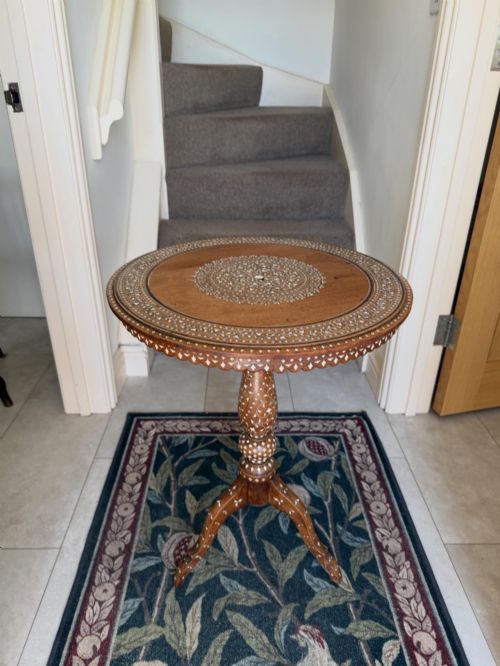
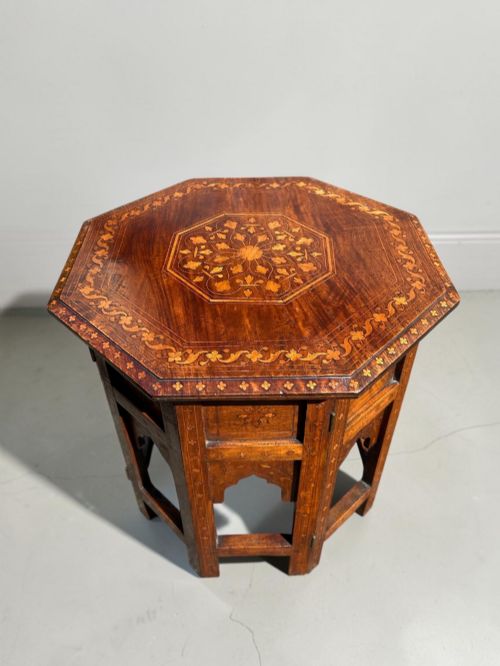
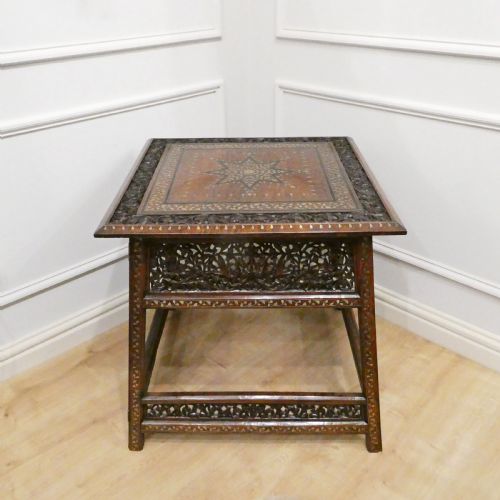
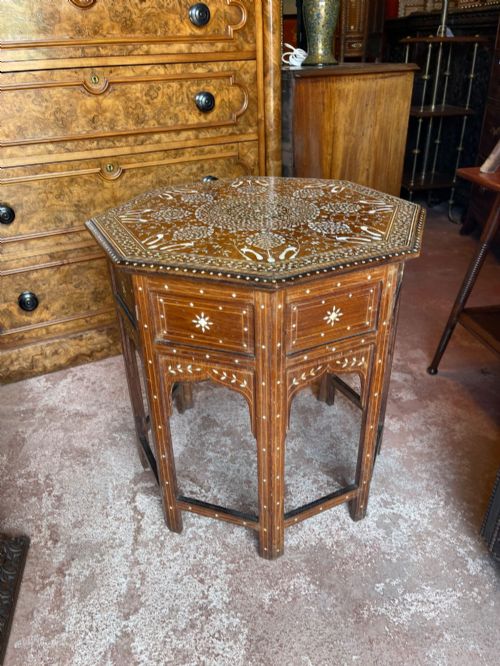
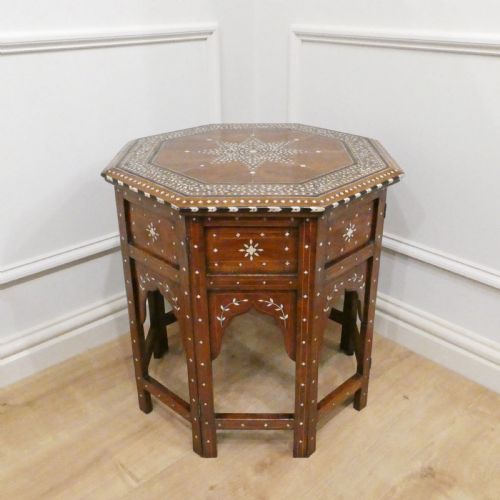
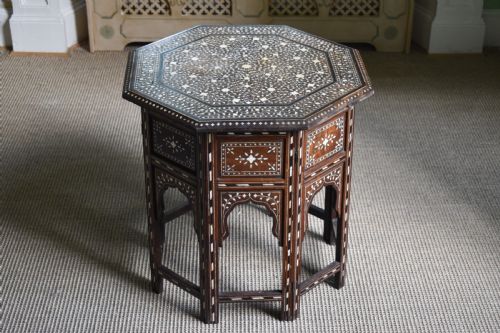
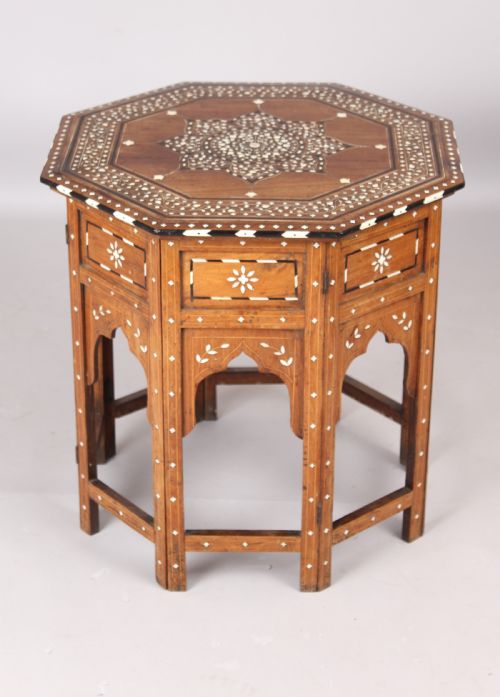
When you search for hoshiarpur carved table examples, you encounter distinctive occasional furniture originating from North India during the nineteenth and early twentieth centuries. The selection here leans heavily towards octagonal forms, square side tables, and occasional pieces featuring elaborate surface carving.
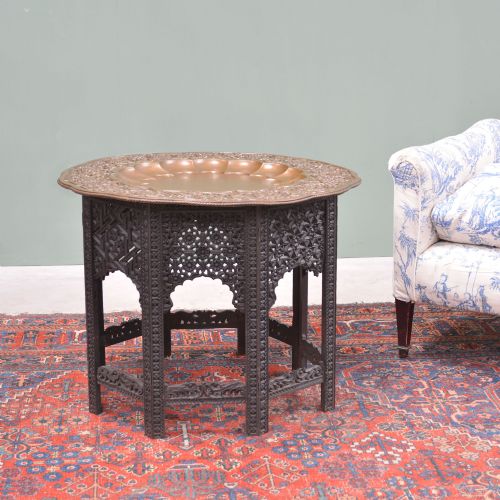
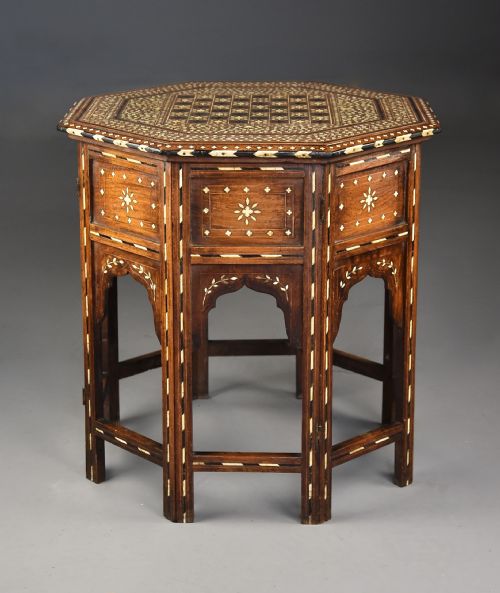
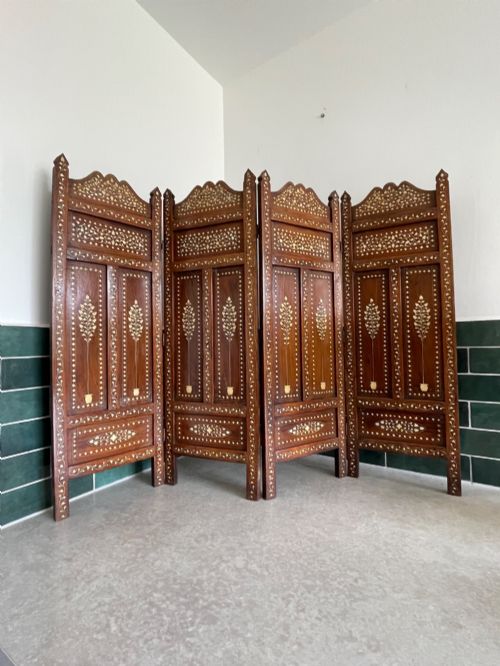
Makers produced several distinct formats during this period, including folding bases, pedestal supports, and specialised items such as table screens. Octagonal tables dominate the surviving pieces, frequently paired with intricate geometric and floral ornamentation across the entire surface.
How they were made
Artisans built these items primarily using dense timbers such as teak, rosewood, sandalwood, and hardwood, often constructing them with collapsible bases for practical transport. The woodwork relies on deep relief carving, where floral and geometric motifs cover every visible surface of the frame.
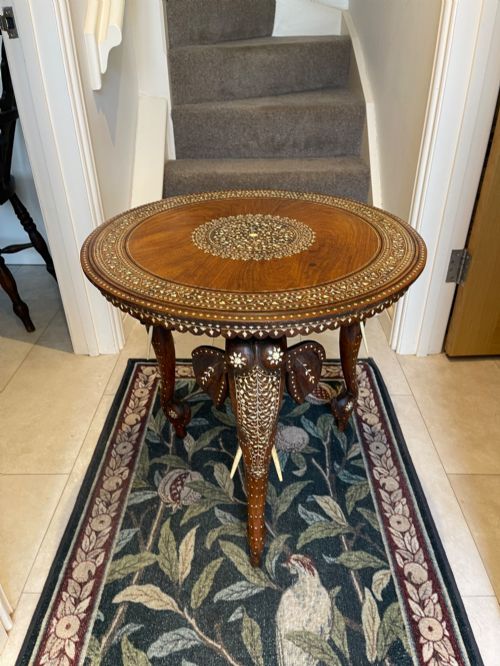
Craftsmen enriched the timber structures using detailed bone inlay and brass wire or sheet insertions, creating high-contrast patterns. This combination of fine carving and contrasting inlay defines the visual character seen across the inventory.
Several examples incorporate carved elephants into their tripod bases, adding a playful sculptural element to the intricate floral geometry.
What varies in quality
Quality in these pieces rests on the precision of the carving and the completeness of the inlay work. Finer examples display crisp, deeply carved foliate details that remain sharp across joints and intricate corners.
The density and tightness of the bone and brass inlay also distinguish superior items, as does the choice of denser primary timbers like teak and sandalwood. Pieces that retain their full complement of inlaid elements without significant losses demonstrate better original execution.
The Hoshiarpur Carved Table Glossary
- Bone inlay
- A technique where small pieces of animal bone are shaped and set flush into carved recesses within the wooden surface. This method creates pale, luminous geometric or floral patterns against the dark timber.
- Octagonal table
- A table top possessing eight distinct sides, which is the most prevalent shape found in this category. These shapes often fold down for ease of storage.
- Anglo-Indian
- A descriptive term for items produced in India under British influence, combining traditional local craftsmanship with European furniture forms. These objects bridge eastern and western aesthetic traditions.
- Pedestal table
- A table supported by a single central pillar rather than standard corner legs. This form allows for compact placement in smaller spaces.
Hoshiarpur Carved Table: Frequently Asked Questions
What is a hoshiarpur carved table?
These are nineteenth and early twentieth-century decorative tables originating from North India, known for dense overall carving and contrasting inlay.
They combine traditional regional woodworking techniques with forms suited to British colonial interiors of the period.
How do I date a hoshiarpur table?
Dating relies on examining the timber types, the style of the brass and bone inlay, and construction methods like folding bases.
Most surviving examples date from the late nineteenth century through to the early decades of the twentieth century.
How were these tables used originally?
They served as occasional furniture in drawing rooms and parlours for displaying decorative objects or holding small items.
Their collapsible bases made them versatile additions that could be moved or stored away when extra floor space was required.
How do I care for inlaid wood?
Maintain stable room humidity to prevent the timber from expanding or contracting, which can loosen delicate bone and brass inlay.
Dust gently with a soft cloth and avoid modern chemical polishes that might seep into the carved recesses.