

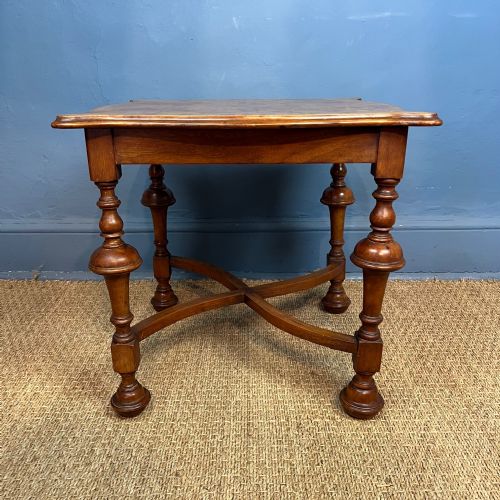
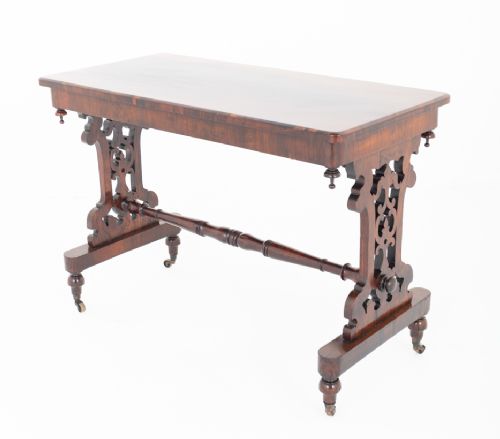
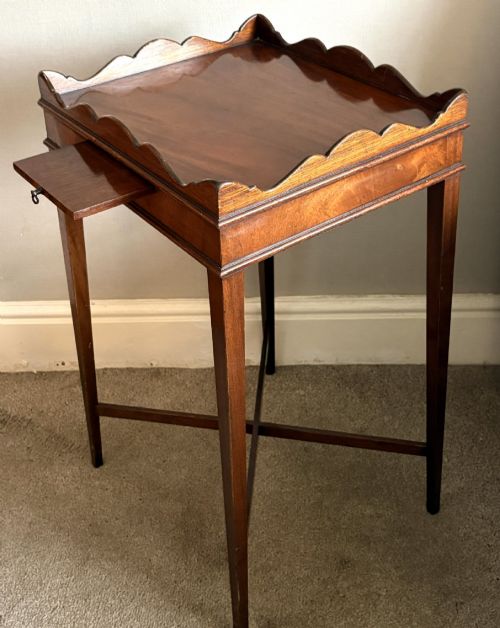
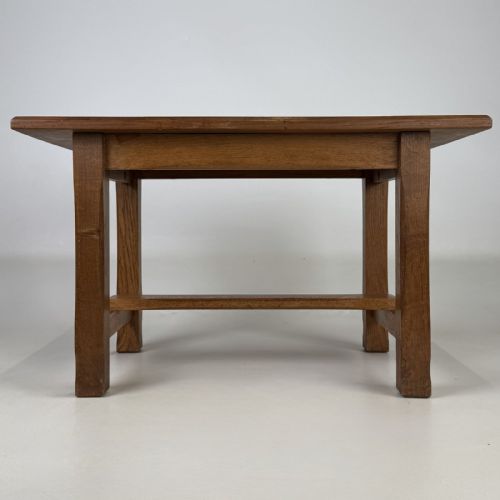
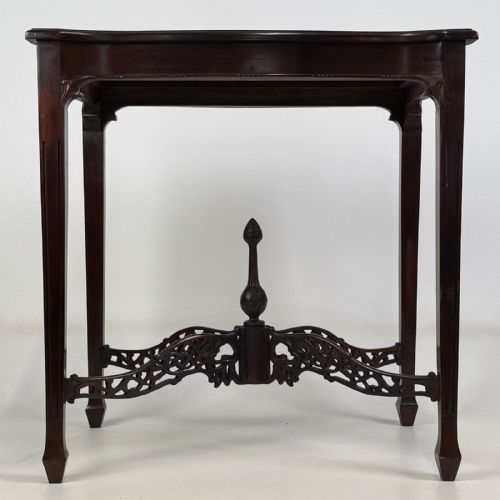
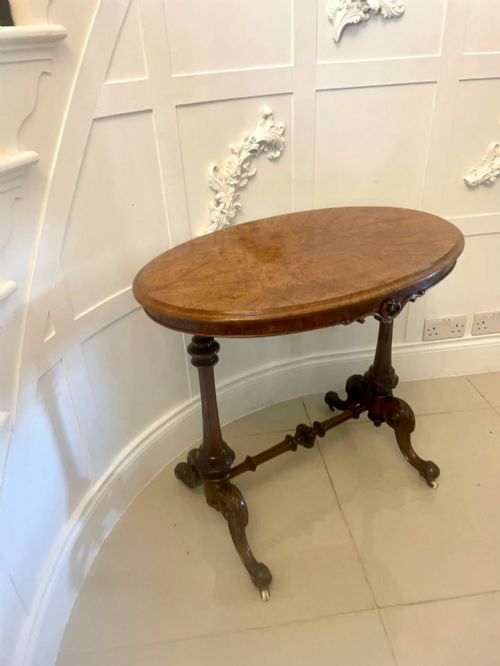
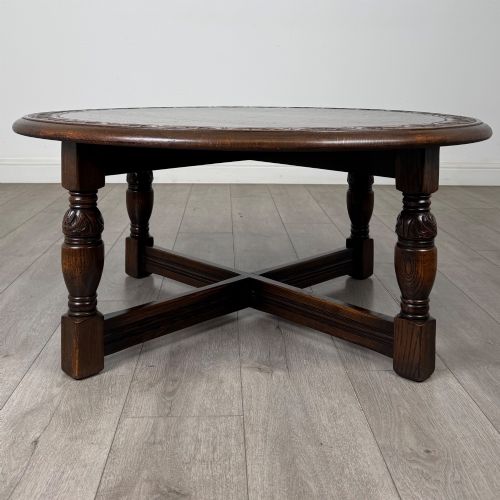
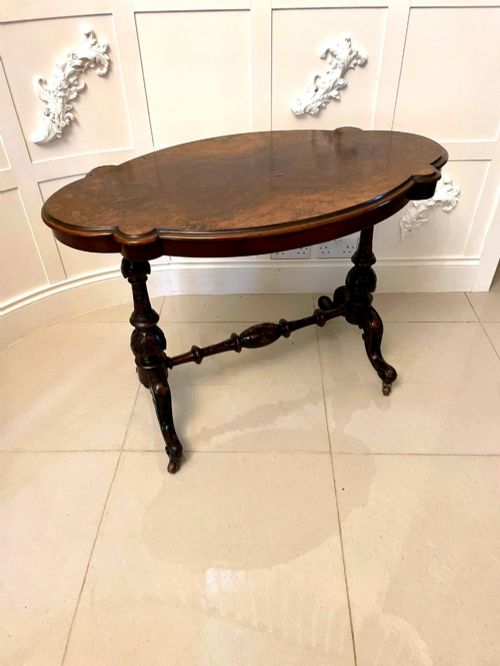
Antique Tea Table with Stretcher
These antique tea table with stretcher examples combine firm lower bracing with timber craftsmanship, offering period character for daily sitting rooms.
Antique Tea Table with Stretcher
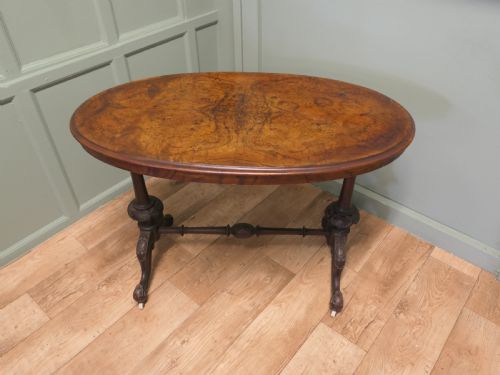
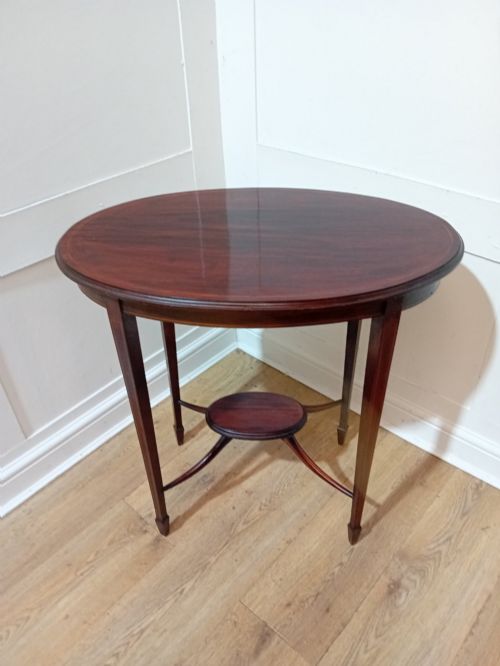
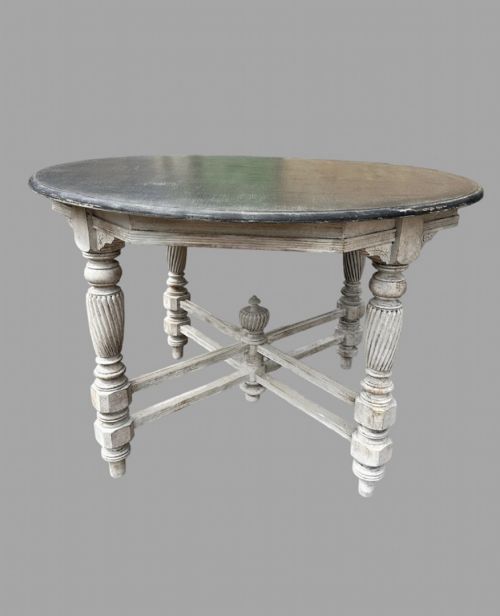
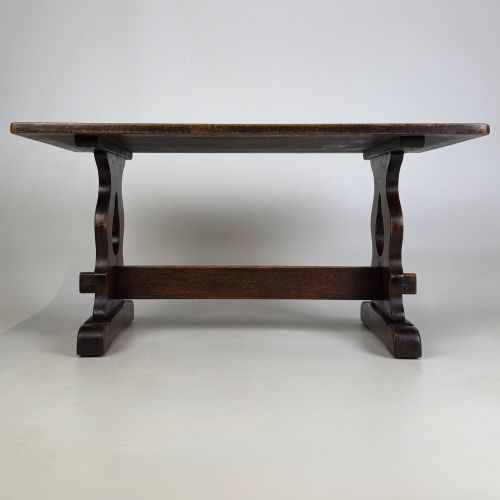
An antique tea table with stretcher brings together foundational wooden bracing and practical surface space, typically encountered through occasional tables, side tables, centre tables, and Pembroke tables from the eighteenth and nineteenth centuries. Buyers searching this phrase look for sturdy under-framing that unites the legs while supporting a functional top.
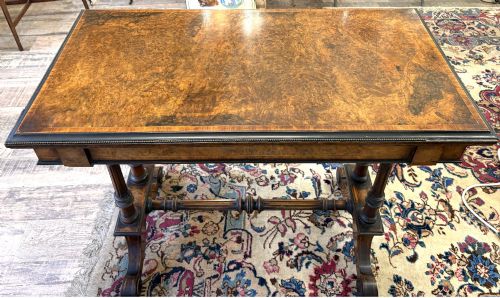
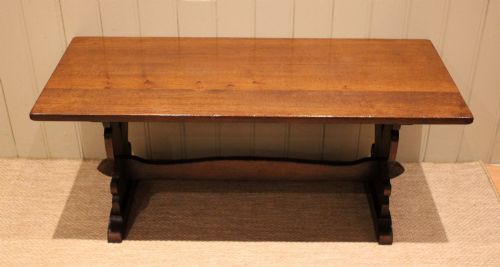
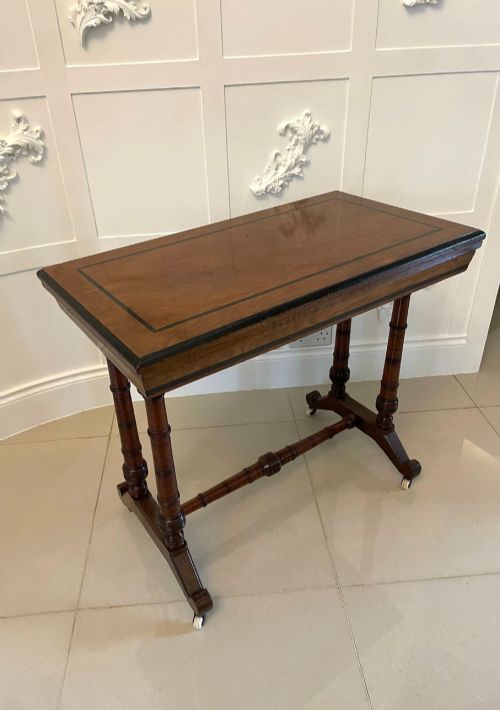
The pieces on this page span Georgian, Victorian, and Edwardian eras, alongside Sheraton Revival and Victorian Aesthetic Movement styling. Walnut, burr walnut, oak, and various grades of mahogany predominate, occasionally complemented by satinwood inlay or brass galleries.
Most items reflect domestic entertaining and tea-taking habits of past centuries, ranging from small side drawers to display shelf stretchers. This configuration balances decorative presence with the physical stability provided by the lower rail network.
Assessing quality in construction and timber
Quality separates pieces through the selection of timber figures, such as dense burr walnut or figured fiddleback mahogany, matched against simpler domestic woods. Superior examples display cohesive grain alignment across the top and well-proportioned stretcher bracing that integrates seamlessly into the leg architecture.
The finesse of hand-carved elements and the precision of inlaid satinwood banding indicate the workshop standard. Alterations or later reconfigurations, as found in some century-spanning pieces, distinguish unmodified historical surfaces from adapted furniture.
Antique Tea Table with Stretcher Retail Price Guide 2026
Typical asking prices for tea table with stretcher among the pieces listed under this phrase on Sellingantiques today, from the lower quarter to the upper quarter. They describe what is for sale here now, not the wider market.
Brass galleries kept runaway teacups securely anchored during particularly spirited Victorian gossip.
The Antique Tea Table with Stretcher Glossary
- Stretcher
- A horizontal wooden rail connecting the legs of a table below the top to provide structural rigidity. In these pieces, stretchers often double as display shelves.
- Fiddleback mahogany
- A highly figured mahogany timber displaying undulating grain patterns resembling the back of a violin. It is prized for its shimmering light-reflection properties.
- Pembroke table
- A drop-leaf table featuring hinged flaps on either side and typically a single drawer. This form often incorporates stretcher rails beneath.
- Burr walnut
- Timber taken from a tree growth or burl, yielding swirling, knotty patterns. It was used by cabinet makers for high-status veneered surfaces.
- Brass gallery
- A low pierced metal railing fitted around the edge of a tabletop to prevent items from sliding off. Found on select Georgian and Victorian pieces.
Antique Tea Table with Stretcher: Frequently Asked Questions
What is a stretcher base?
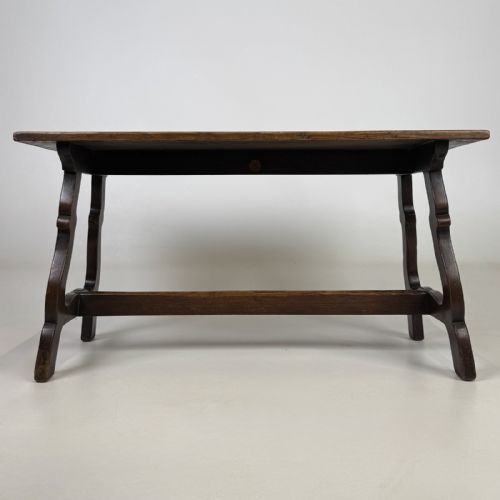
A stretcher base consists of wooden rails joining the lower legs to prevent wobble and add strength.
In tea and occasional tables, this framework often doubles as a decorative shelf for display.
How do I date these tables?
Dating relies on matching wood types, construction methods, and stylistic cues like Sheraton Revival or Georgian carving.
Makers changed their decorative vocabulary across the eighteenth and nineteenth centuries, moving from heavy mahogany to lighter inlaid walnut.
Where were these tables used?
These pieces served in formal reception rooms and parlours for serving afternoon tea or holding decorative objects.
Their sturdy stretcher construction suited busy household environments where furniture experienced frequent movement.
Are walnut and mahogany the only woods?
Mahogany and walnut form the bulk of surviving examples, supplemented by oak in Edwardian and earlier vernacular pieces.
Satinwood and brass frequently appear as decorative accents rather than primary structural materials.