
Antique Tea Saucer
When you handle an antique tea saucer, you hold centuries of ceramic artistry designed to cradle a delicate cup and protect fine table linen.
Antique Tea Saucer
An antique tea saucer is a small concave dish designed to hold a teacup, appearing across domestic settings from the eighteenth century into the twentieth century. These pieces emerge from periods spanning Georgian elegance, Regency refinement, and Victorian enterprise, alongside continental and Asian workshops.
The selections on this page encompass individual tea bowls, paired duos, and expansive tea services in porcelain, bone china, and creamware pottery. Most domestic examples originate from English potteries like Worcester, Coalport, and Spode, while others arrive from European factories such as KPM Berlin.
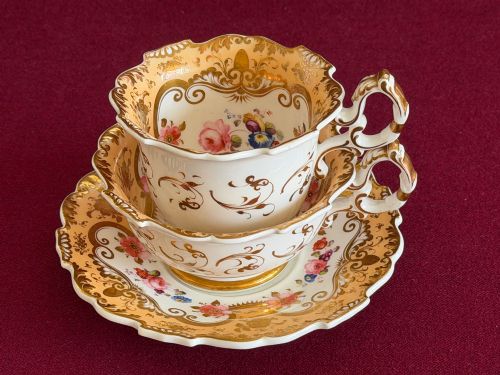
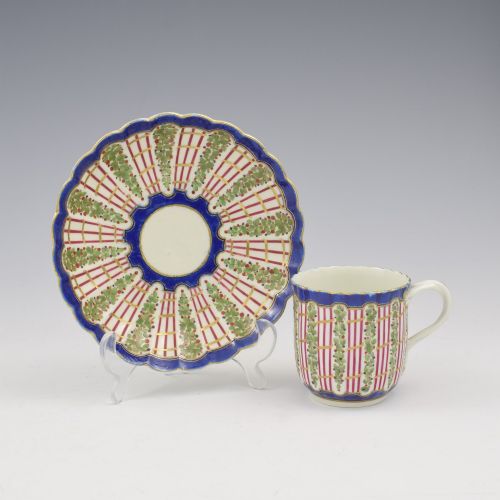
Buyers encounter forms ranging from deep eighteenth-century tea bowls to wide nineteenth-century saucer dishes shaped with fluting, gadrooning, or foliage profiles. Each item reflects the shifting social rituals of tea drinking across generations.
How they were made
Makers shaped these wares using soft-paste porcelain, hard-paste porcelain, or bone china, often hand-throwing or pressing the clay before kiln firing. Early examples frequently rely on soft-paste bodies containing glass frits and white clays, which yielded a warm translucency under the glaze.
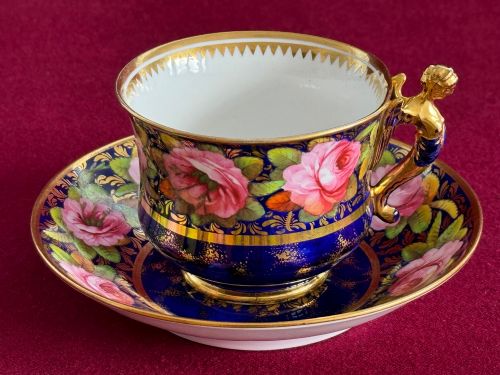
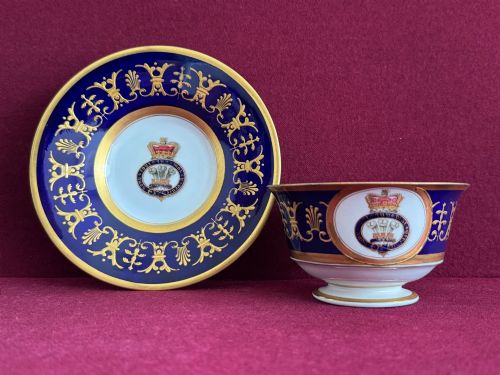
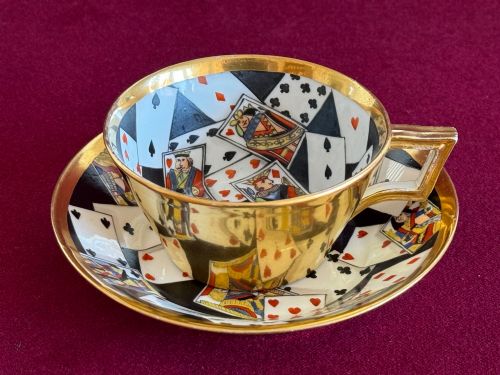
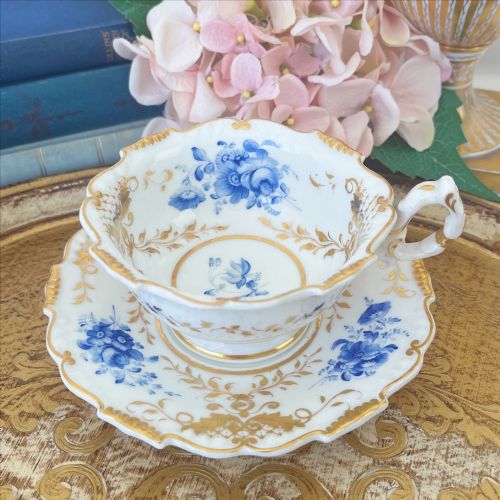
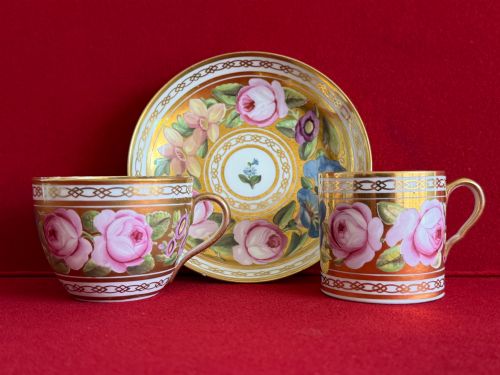
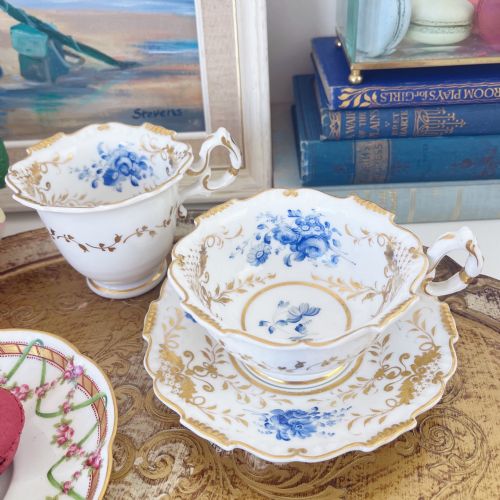
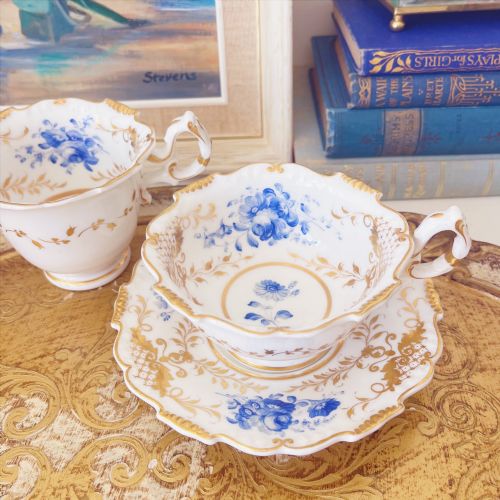
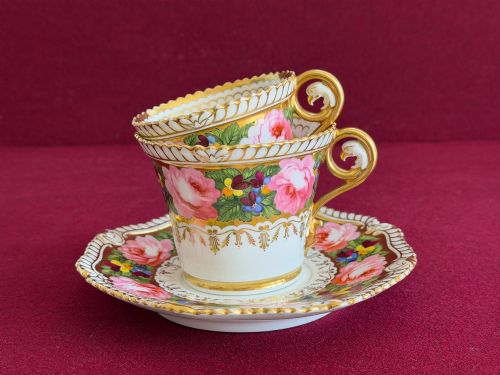
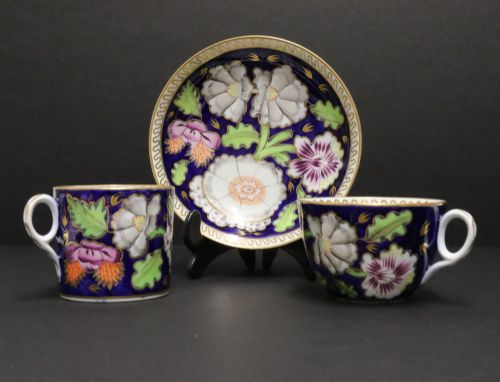
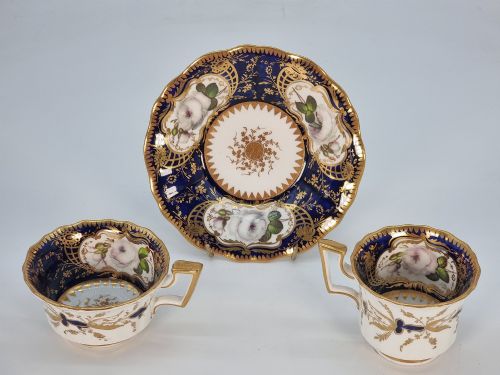
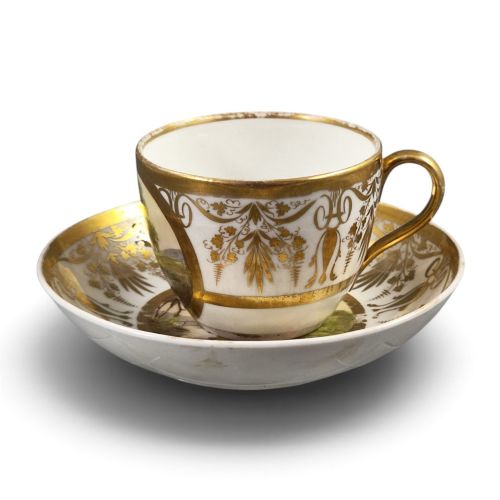
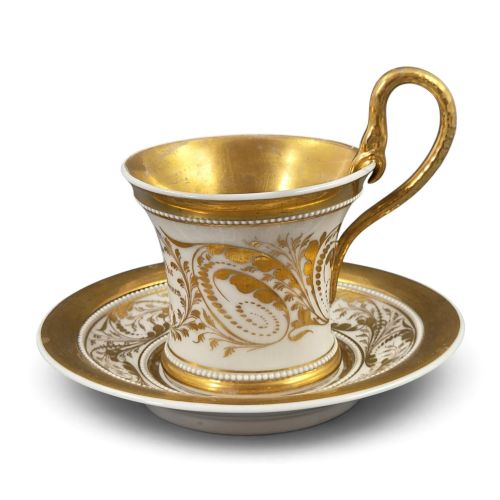
Decoration relied heavily on handpainted pigments, underglaze cobalt blues, and applied enamel colours fixed by secondary firing. Gilding and gold leaf were meticulously brushed onto rims and borders by specialist decorators working in factory workshops.
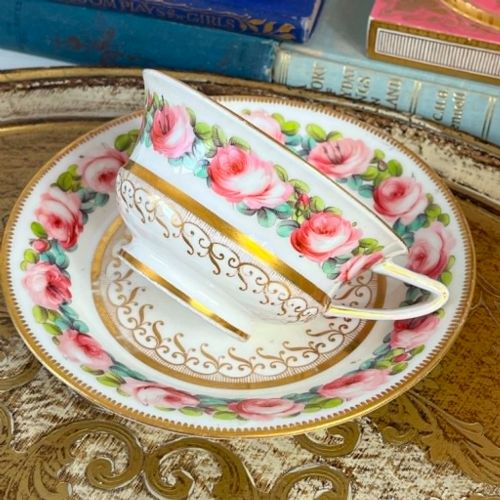
Decoration across the inventory includes handpainted botanical studies, transfer-printed scenes, and Imari palette gilding.
What varies in quality
Quality rests in the precision of the ceramic body and the skill applied to the handpainted decoration. Superior pieces display crisp potting with thin, even walls and smooth, translucent glazes free from major kiln debris or warping.
The artistry of the painted scene dictates the upper tier of the range, where detailed landscapes, botanical studies, or intricate gilded patterns exhibit confident brushwork by named or factory-trained artists. Lesser examples show simpler transfer-printing or hasty, repetitive brushwork with minor pooling in the enamel.
H & R Daniel·Chamberlain Worcester·Newhall·Coalport·KPM Berlin·Derby·Minton·Sevres·Royal Worcester·Flight Barr And Barr·Spode·Rockingham
The Antique Tea Saucer Glossary
- Tea bowl
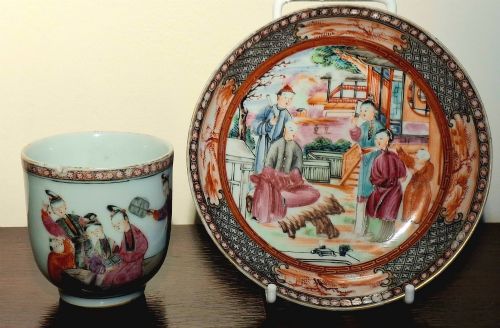
- A handleless cup used for drinking tea before the widespread adoption of handled teacups in the late eighteenth century. These accompanied small saucer dishes.
- Bone china
- A British ceramic body incorporating bone ash into the paste, producing a strong, highly translucent material well suited for delicate saucer rims.
- Gadrooning
- A decorative carved or moulded ornamental band of radiating curved ridges decorating the edge of a ceramic piece. This technique added texture to Regency and Victorian tablewares.
- Imari
- A decorative style inspired by Japanese export wares featuring a palette of underglaze blue, iron red, and abundant gold. English factories frequently copied this aesthetic.
Antique Tea Saucer: Frequently Asked Questions
What is the difference between a tea bowl and a tea saucer?
A tea bowl is the small, handleless drinking vessel used during the eighteenth century, while the tea saucer is the shallow dish designed to sit beneath it or hold the cup.
In earlier dining customs, drinkers occasionally poured hot tea from the bowl into the saucer to cool the liquid before consumption.
How can I tell an eighteenth-century saucer from a nineteenth-century one?
Eighteenth-century examples often take the form of deep tea bowls paired with matching saucers made of soft-paste porcelain, frequently featuring underglaze blue painting or delicate hand-pencilled motifs.
Nineteenth-century pieces commonly show handled teacups, denser bone china bodies, richer polychrome enamels, and extensive gilding produced during the Regency and Victorian eras.
Were these pieces meant for daily use?
Many early porcelain services served wealthy households for formal afternoon tea, afternoon gatherings, and receiving guests in the parlour.
While robust enough for their original purpose, surviving antique pieces now require gentle hand washing and careful handling to preserve their historic enamels and gilding.
What does a trio mean in antique ceramics?
A trio consists of a matching teacup, coffee cup, and saucer, reflecting the historical custom of serving both beverages from the same tea service.
This configuration allowed guests to enjoy tea and coffee from dedicated vessels while sharing a single coordinated saucer design.