
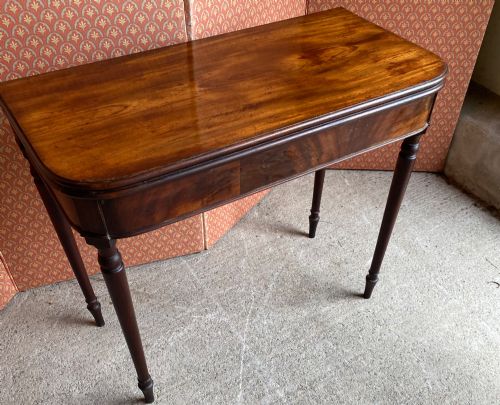
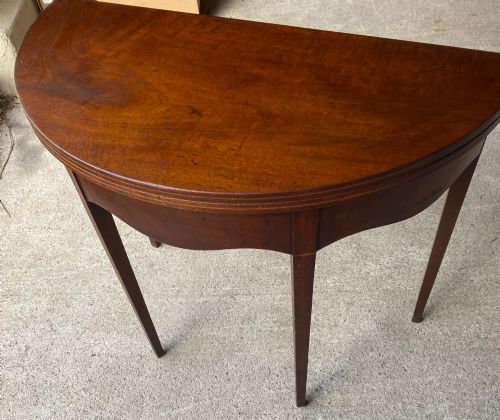
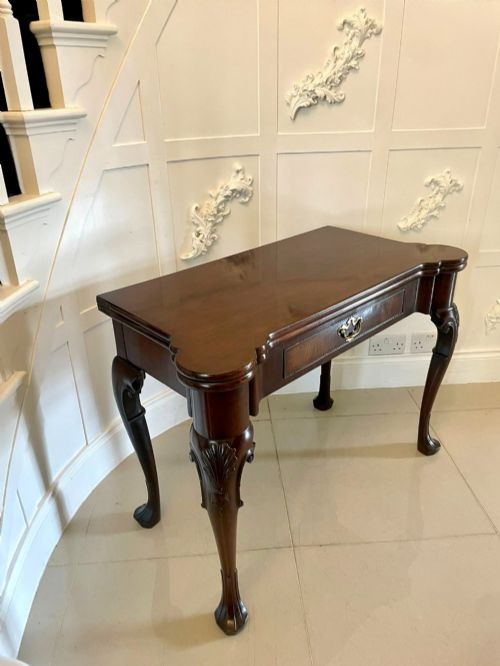
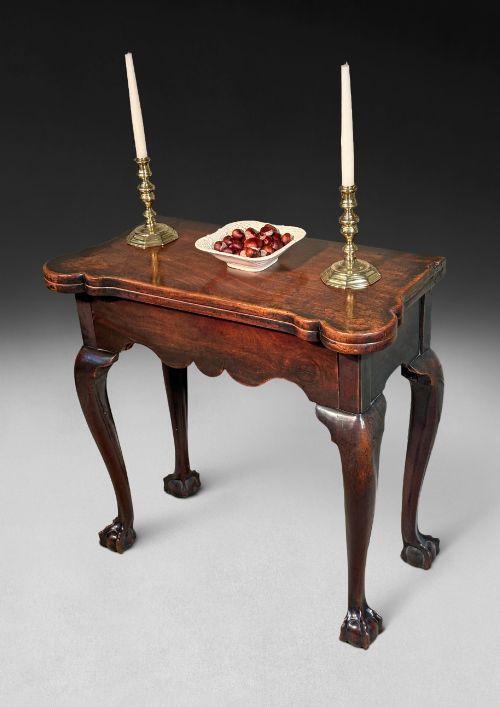
Antique Tea Games Table
An antique tea games table combines the hospitality of the Georgian parlour with the leisure of the card room through a clever folding top.
Antique Tea Games Table
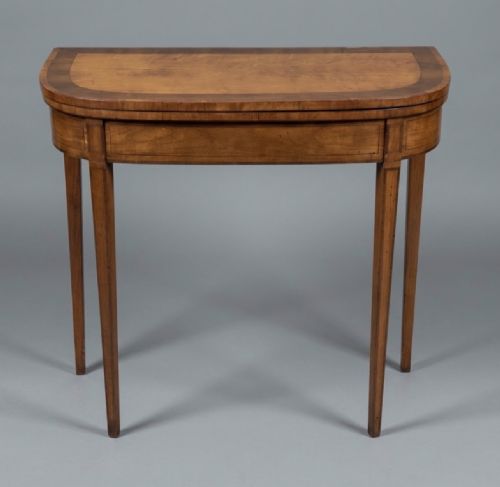
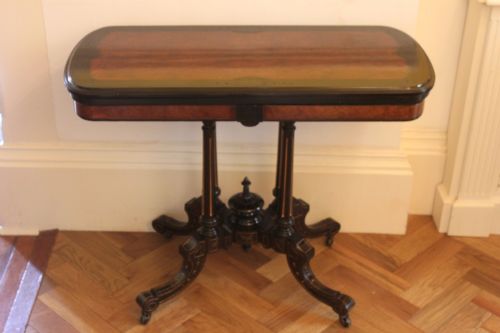
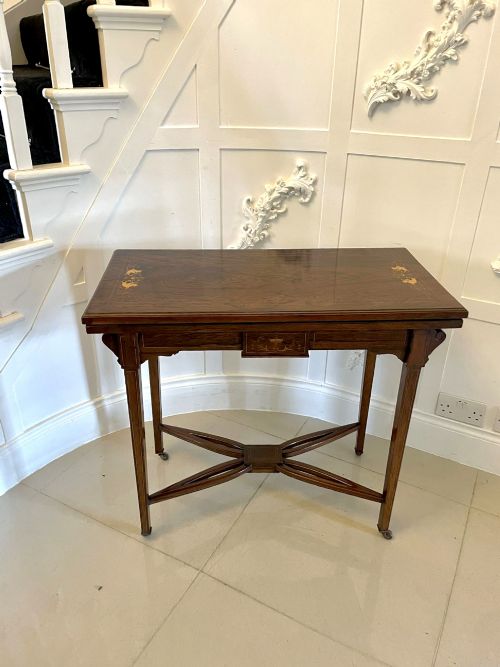
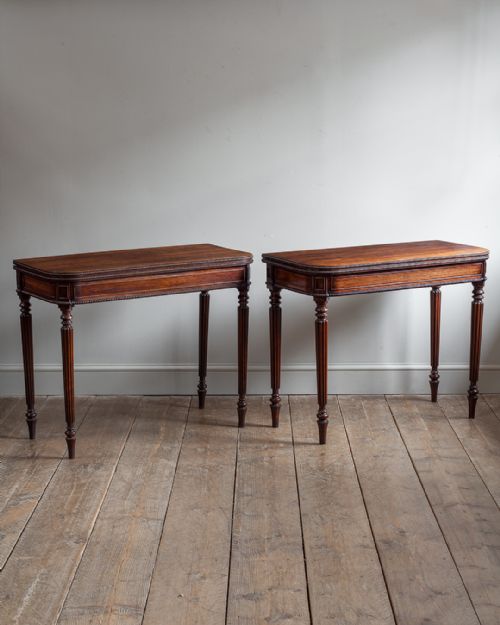
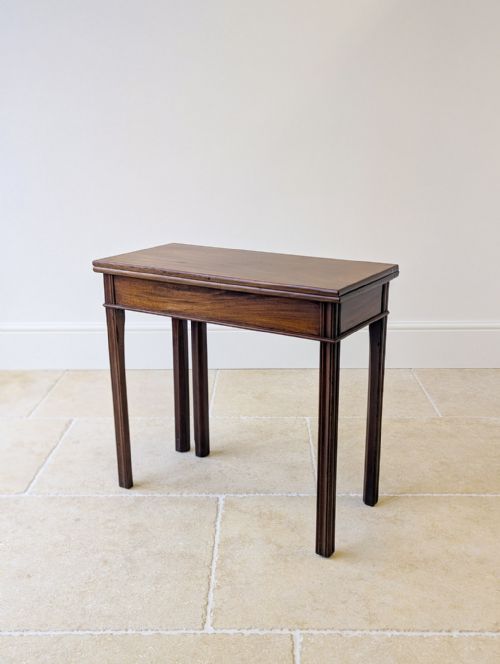
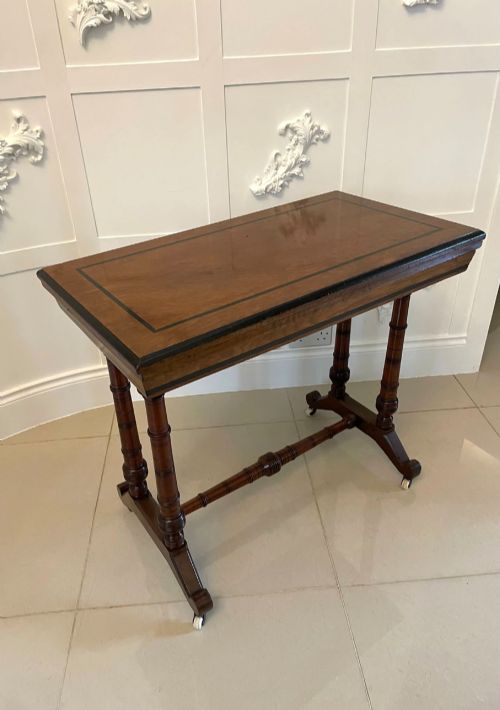
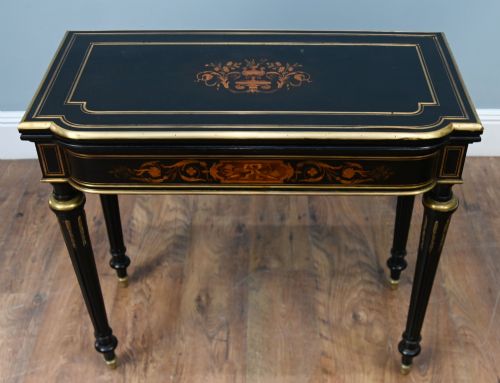
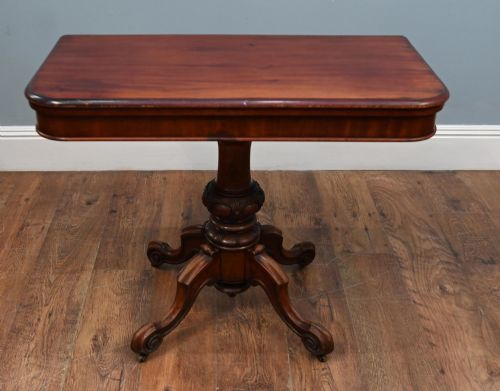
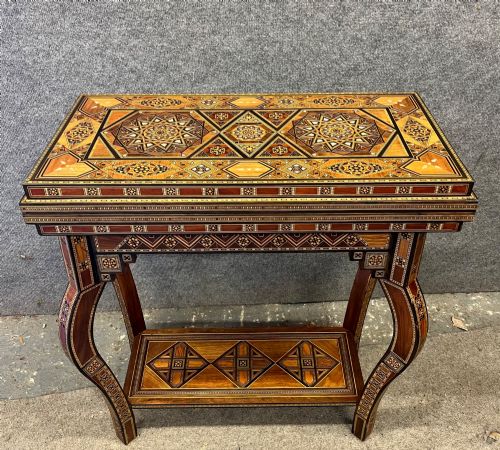
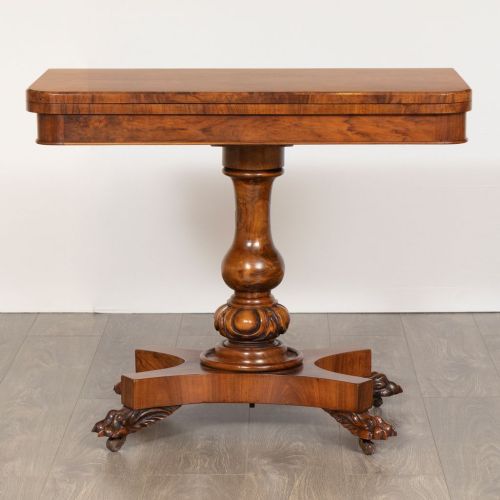
An antique tea games table serves a dual purpose as a compact console or side table and an expanded surface for card playing or serving tea. The form bridges the Georgian and Victorian eras, evolving from straightforward mahogany folding tops into elaborate rosewood and burr walnut pieces with swivel or concertina actions.
Mahogany dominates the selection from the eighteenth century and the Regency period, while rosewood and walnut define the later nineteenth-century examples. Most surviving pieces feature a fold-over top supported by a pillar, pedestal base, or folding leg mechanism.
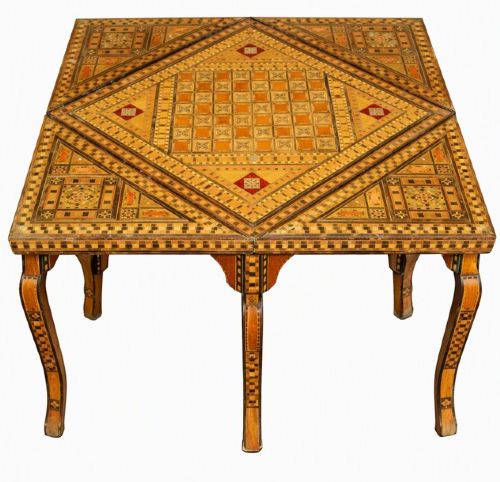
The buyer meets demilune, rectangular, and envelope shapes across these listings, spanning Georgian craftsmanship through to Edwardian interpretations. These dual-function tables reflect changing domestic entertainments where space efficiency mattered in the home.
How they were made
Cabinetmakers constructed the primary carcases using dense timbers such as mahogany, rosewood, and walnut, often applying decorative veneers like burr walnut, satinwood, and yew to the top surfaces. Crossbanding in contrasting woods and precise boxwood stringing framed the edges of the folding leaves.
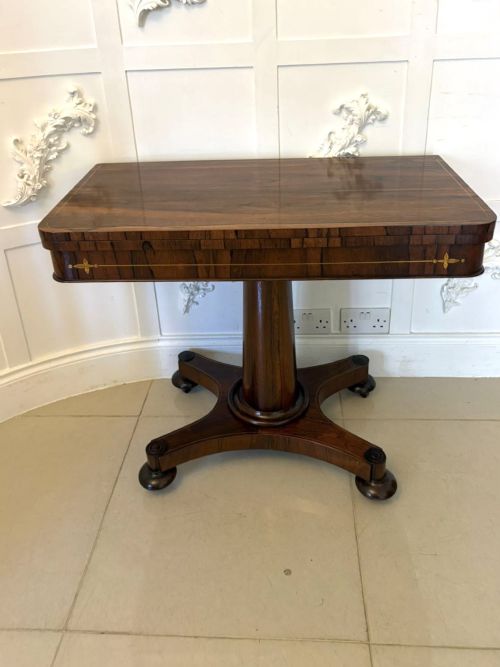
Brass inlay and decorative gilt metal mounts appeared on Regency examples, contrasting sharply with the dark grains of rosewood. Turning, carving, and reeding shaped the central pedestals, pillar supports, and sabre or basket bases that carried the weight of the heavy folding tops.
Generations of players left behind invisible dents in the baize where heavy brass candlesticks once stood guard over midnight card games.
What varies in quality
The integrity of the timber and the selection of veneer set the highest grades apart from standard workshop production. Grain movement across matched leaves and figured mahogany or burr walnut indicate careful material selection by the maker.
Mechanical complexity dictates the calibre of the piece, particularly the smooth operation of concertina actions and swivel hinges that allow the top to unfold without straining the joints. Finely carved pedestal bases and crisp brass inlay demonstrate the higher tier of nineteenth-century cabinet work.
George Bullock·Gillows·Giles Grendey
The Antique Tea Games Table Glossary
- Concertina action
- An expanding frame mechanism that supports the open leaf of a table evenly on all four sides. This construction allows the rear legs to move outward when the top unfolds.
- Demilune
- A half-moon shape used for table tops and consoles designed to stand flush against a wall. When opened, the top forms a full circle for dining or cards.
- Crossbanding
- A border of veneer applied around the perimeter of a table top with the grain running perpendicular to the central panel. This technique frames the primary wood visually.
- Satinwood
- A pale, lustrous timber utilised for contrasting inlay work and decorative banding on Regency and Georgian furniture. Its golden tone brightens dark mahogany surfaces.
- Patination
- The surface sheen and softening of colour developed by wood over centuries of handling and exposure to light. This quality reveals the age and history of the piece.
Antique Tea Games Table: Frequently Asked Questions
How do I use a folding tea games table today?
These tables function well as console or side pieces against a living room wall, offering surface space for lamps or ornaments. By swinging or folding the top open, they transform into impromptu dining surfaces or card tables for guests.
Because the secondary leaf rests on a swivel or hinged pivot, positioning the table away from direct heat sources protects the timber joints from movement. Daily use requires only a soft cloth to maintain the polish on the veneered surfaces.
How do I distinguish a tea table from a dedicated card table?
A dedicated card table frequently conceals a baize or felt-lined interior beneath the fold-over top, sometimes incorporating small corner wells for counters or candlesticks. Tea tables more commonly reveal polished wood across the interior surface, designed to hold porcelain without the need for a textile playing surface.
Many examples listed across these periods served both functions interchangeably, adapting to whatever domestic requirement arose in the parlour. Examining the interior timber and lining offers the clearest clue to the primary intended use.
Why do some tables feature concertina frames?
Concertina frames distribute the weight of the folding top across four legs when the table is opened for play or tea. This engineering prevents the heavy mahogany or rosewood leaf from sagging at the unsupported rear corner.
Simpler tables rely on a single swing leg or a pivoting top, which leaves one corner unsupported by a direct vertical column. The presence of a concertina action usually signals a higher grade of cabinetmaking.
What is the difference between Regency and Victorian tables?
Regency tables, dating from the early nineteenth century, lean toward classical lines with brass inlay, rosewood timbers, and reeded sabre legs. They show restraint in their decoration and architectural proportions.
Victorian pieces, emerging after 1837, favour heavier burr walnut veneers, elaborate carved basket bases, and serpentine outlines. The timber tones shift toward rich, dark walnut and figured mahogany with robust pedestal turnings.