
Antique Tea Caddy Chest
These antique tea caddy chest items are finely crafted receptacles designed to store valuable loose-leaf tea safely under lock and key.

Antique Tea Caddy Chest
An antique tea caddy chest is a specialised storage box developed during periods when tea was an expensive commodity requiring secure containment. The pieces available here span from the eighteenth century through the nineteenth century, encompassing Georgian, Regency, and Victorian eras.
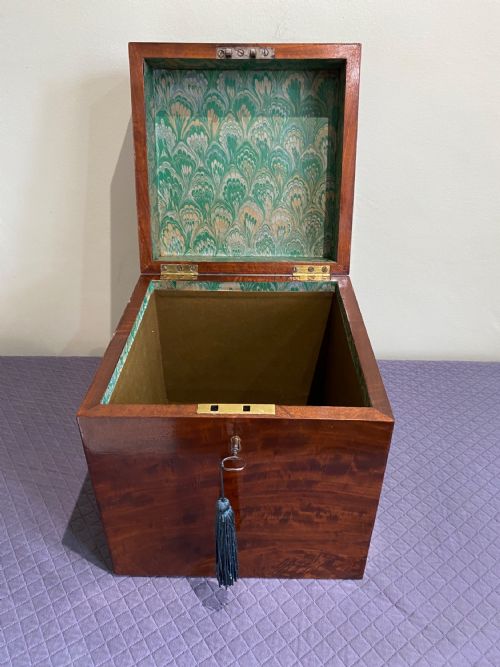
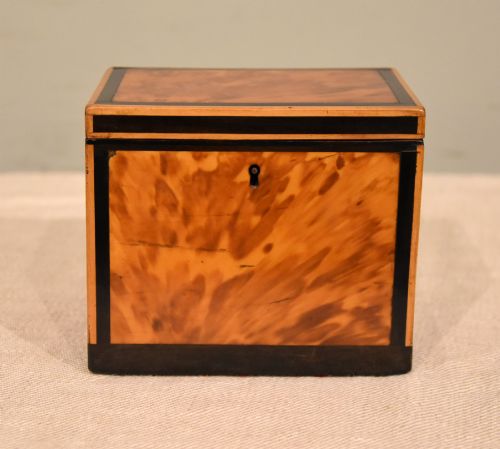
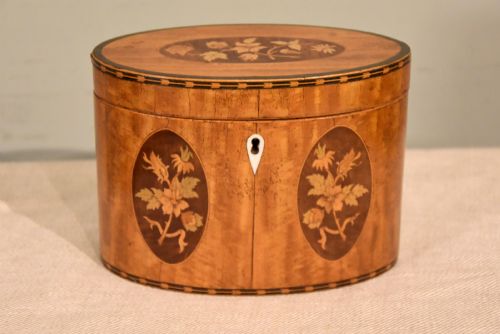
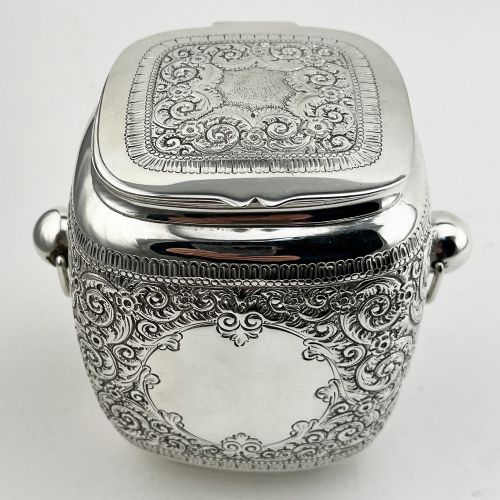
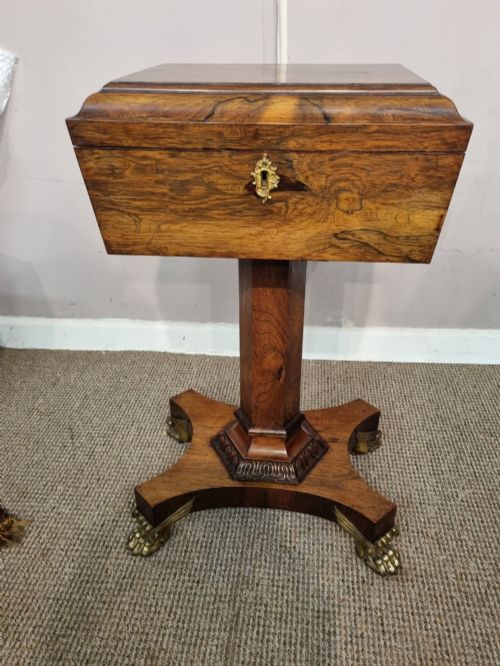
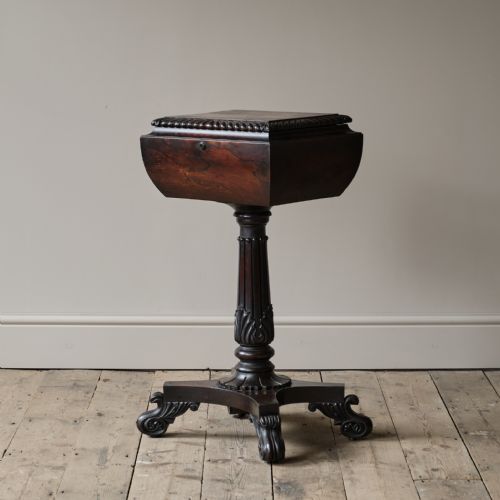
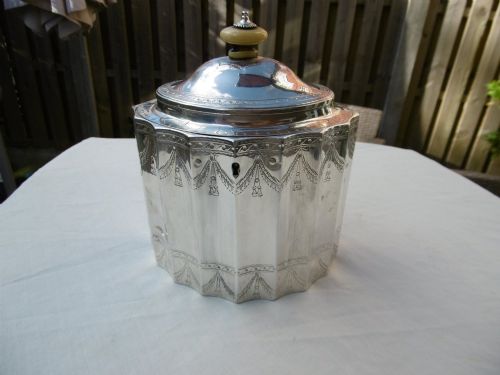
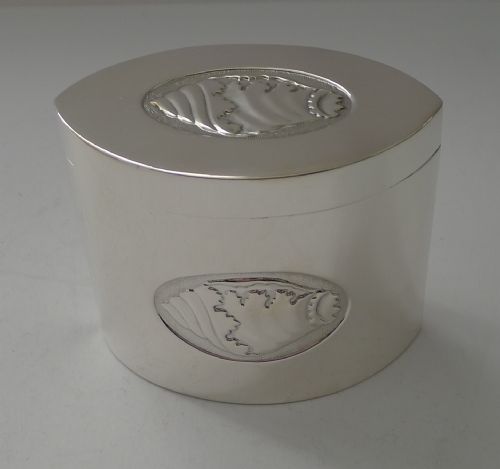
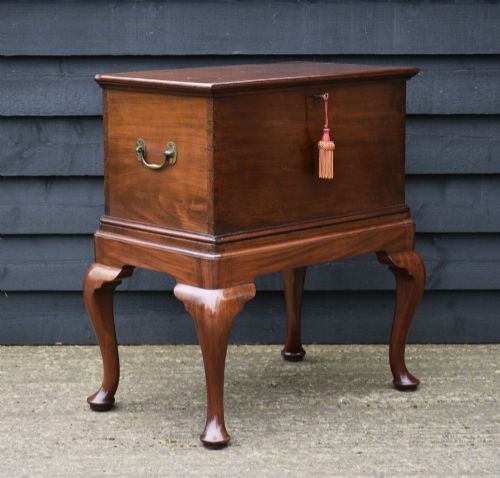
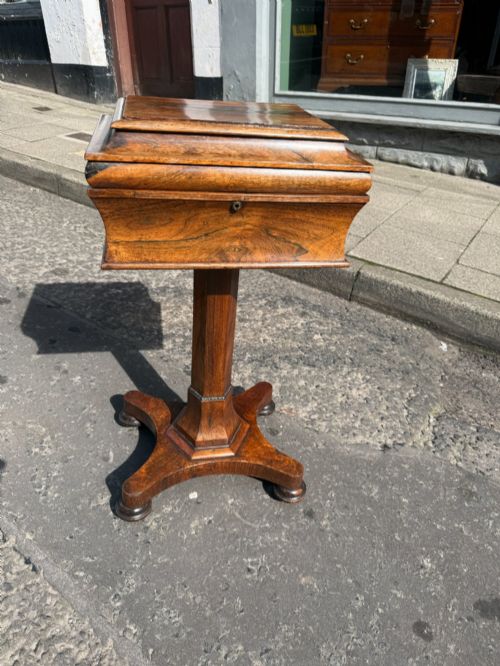
Buyers will encounter various forms, including rectangular wooden boxes, sarcophagus shapes on feet, domed lids, and larger freestanding teapoys designed to hold multiple canisters. Many examples incorporate fitted interiors with compartments or mixing bowls alongside the main storage sections.
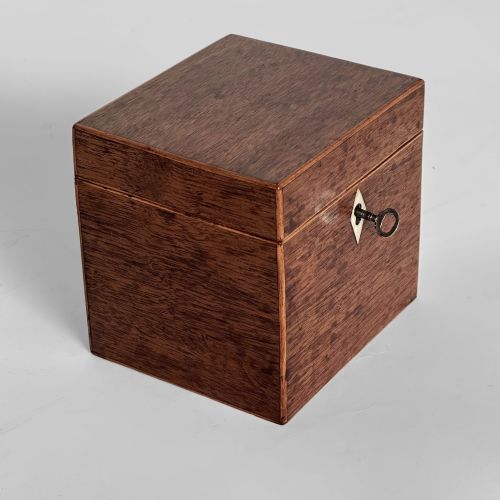
The materials reflect the prevailing tastes of their respective decades, utilising dense hardwoods such as mahogany and rosewood alongside delicate veneers like satinwood and tortoiseshell.
How They Were Made
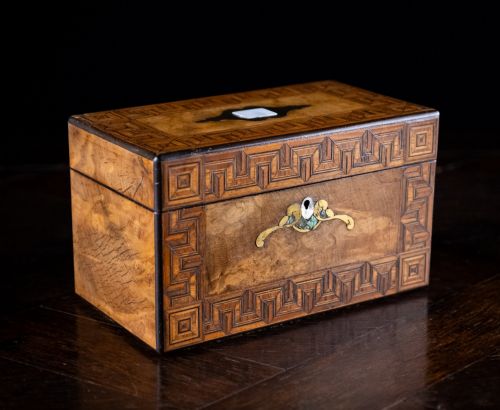
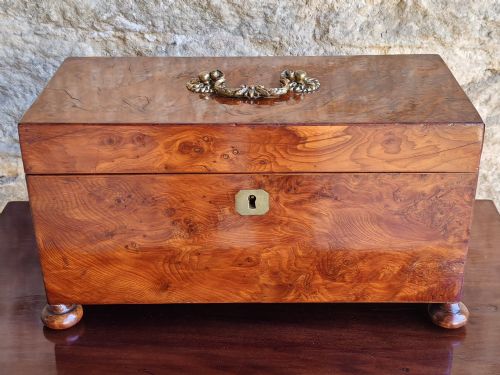
Cabinetmakers constructed these chests using solid timbers and decorative veneers applied to secondary woods, often employing complex parquetry, banding, and stringing to articulate the surfaces. Brass handles, escutcheons, and working locks provide structural hardware that secured the valuable contents within.
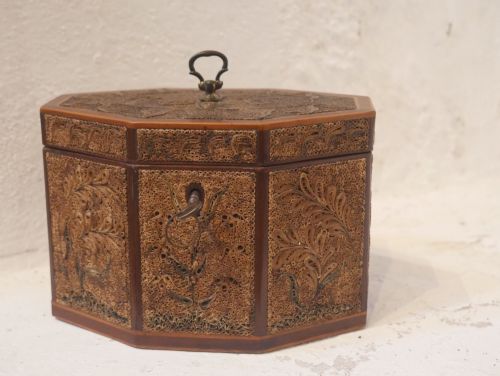
Specialist techniques such as Tunbridge ware mosaic work, paper filigree, and mother-of-pearl inlay frequently decorate the exteriors of nineteenth-century specimens. Interior compartments often retained small wooden lids or canisters designed to preserve the aroma of the leaf.
What Varies in Quality
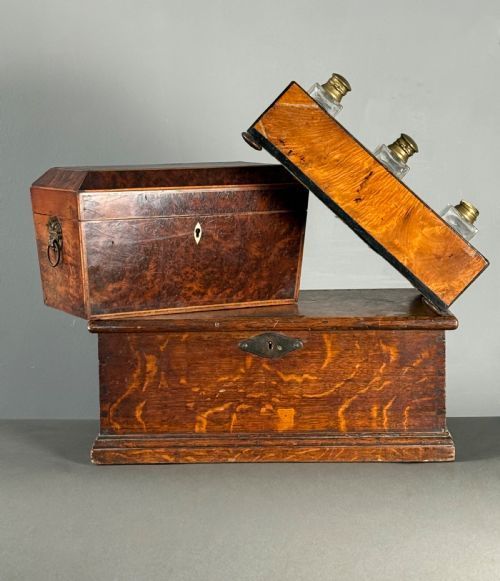
The standard of an antique tea caddy chest depends significantly on the choice of timber figure, such as burr yew or highly grained rosewood, and the precision of the cabinetwork. Finer examples maintain original internal fittings, working locks with keys, and intact decorative inlays without heavy restoration.
Design complexity also dictates the tier of the piece, moving from plain mahogany rectangles to elaborate sarcophagus forms with lion mask handles, carved feet, and multi-wood geometric parquetry.
Martin Hall And Co·Robert Hennell·Henry Hollamby·Nathan And Hayes
The Antique Tea Caddy Chest Glossary
- Teapoy
- A freestanding table or chest raised on a pillar or legs, specifically designed to support tea storage containers.
- Escutcheon
- A protective plate surrounding the keyhole of a chest, frequently cast in brass.
- Sarcophagus
- A monumental chest shape featuring a domed or sloping lid, popular during the Regency period.
- Tunbridge Ware
- A form of mosaic woodwork created from multiple tiny coloured wood blocks to form pictorial or geometric designs.
- Parquetry
- A geometric mosaic of wood pieces used for decorative veneering on box surfaces.
Antique Tea Caddy Chest: Frequently Asked Questions
What were tea caddy chests used for?
These chests stored expensive black and green teas when dry leaves were treated as precious commodities requiring protection from light, moisture, and theft. The locked compartments ensured household staff did not misappropriate the contents.
Inside, divided sections or individual canisters separated different tea varieties and enabled the blending of flavours before serving.
How do I date a wooden tea chest?
Dating relies upon architectural styles, construction methods, and secondary woods visible on the interior and base. Georgian pieces typically display simpler rectilinear proportions, while Regency examples introduce sarcophagus silhouettes and brass inlay.
Victorian iterations often feature heavier proportions, burr walnut veneers, or intricate Tunbridge ware decoration.
Do these chests still have their keys?
Many surviving examples retain their original or replacement working keys and functional locks, though some rely on friction fits or latches due to centuries of use. The presence of a working lock adds historical completeness to the piece.
Escutcheons around the keyhole often provide clues to the manufacturing date and stylistic period.
How do I care for antique wood surfaces?
Maintaining these wooden boxes involves keeping them away from direct sunlight and fluctuating radiator heat that causes veneer to lift or wood to split. Gentle dusting with a dry cloth preserves the aged patina without stripping the historic polish.
Waxing should be done sparingly using traditional formulations suited to antique mahogany and rosewood.