



Mahogany Teapoy Table
A mahogany teapoy table is a lidded container on a stand designed for storing loose tea leaves, offering collectors a striking piece of period furniture.
Mahogany Teapoy Table
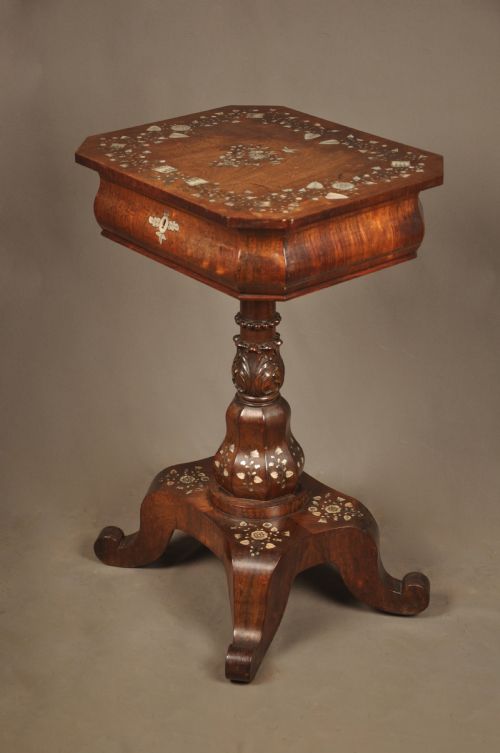
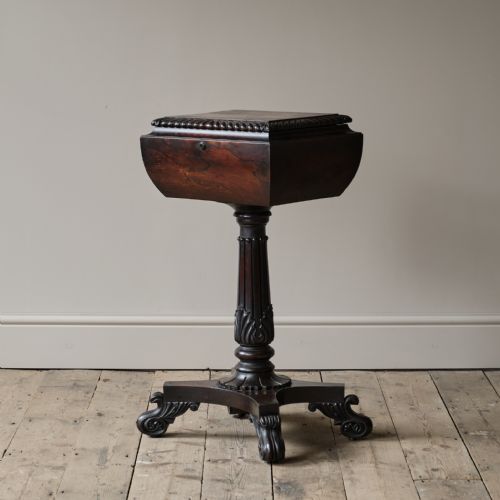
A mahogany teapoy table is a specialised piece of furniture designed to hold tea canisters securely inside a lidded box compartment. These items emerge from the Georgian, Regency, and Victorian eras, spanning the early nineteenth century.
The versions most commonly met on this page include Regency and William IV examples, alongside pieces dating to the broader nineteenth century. Forms range from sarcophagus-shaped boxes to standard teapoys on stands or side tables.
Makers and origins recorded in the evidence point to English and Scottish workshops, as well as Irish pieces attributed to specific cabinet makers. Collectors encounter both plain mahogany and flame mahogany constructions across these periods.
How they were made
Makers constructed these pieces using solid mahogany and figured flame mahogany veneers over secondary timbers. Selected timber displays rich grain patterns across the lidded box and the supporting stand.
Carpenters incorporated brass elements and carved details, such as carved feet, to elevate the appearance of the support. Structural joinery secured the heavy tea caddy boxes onto central pillars or four-footed pedestals.
Mahogany Teapoy Table Retail Price Guide 2026
Typical asking prices for mahogany teapoy table among the pieces listed under this phrase on Sellingantiques today, from the lower quarter to the upper quarter. They describe what is for sale here now, not the wider market.
Tea was once so valuable that keys to the teapoy box were kept strictly by the lady of the house.
What varies in quality
Quality in a mahogany teapoy table rests on the choice of timber and the sophistication of the cabinet work. Pieces featuring striking flame mahogany grain and crisp carving sit at the upper end of the range.
Attribution to documented makers influences the standing of a piece within the market. Surviving internal fitments and well-preserved stands separate standard examples from finer works.
Gillows·Strahan
The Mahogany Teapoy Table Glossary
- Teapoy
- A small stand or table equipped with a box for holding tea. This term encompasses both the container and its supporting pedestal.
- Flame mahogany
- A highly figured wood veneer showing flickering, flame-like grain patterns. Cabinet makers utilised this timber on prominent surfaces like box lids.
- Sarcophagus
- A box shape featuring a domed or sloping lid with panelled sides resembling a classical stone coffin. Makers adopted this architectural form for nineteenth century tea caddies.
- Regency
- A British design style dating from the early nineteenth century. Pieces from this period often display classical revival motifs and architectural restraint.
Mahogany Teapoy Table: Frequently Asked Questions
What is a mahogany teapoy table used for?
These tables served primarily to store expensive loose tea leaves safely under lock and key in a drawing room.
Today, collectors use them as decorative side tables or accent pieces in period interiors.
How do I identify a Regency teapoy?
Regency examples typically date from the early nineteenth century and feature classical architectural influences. They often stand on robust central pillars with brass paw feet.
Evidence shows these pieces frequently incorporate flame mahogany veneers and formal proportions characteristic of the era.
What periods do these tables come from?
The available selection spans the Georgian, Regency, and Victorian periods of the nineteenth century. Most recorded items date to the early eighteen hundreds up to the mid Victorian decades.
English, Scottish, and Irish examples all appear within these date ranges.
Are all teapoys mounted on stands?
Many teapoys are fixed directly to a pillar and pedestal base, forming an integrated table. Other variations function as side tables or work tables with fitted interiors.
The supporting structures range from four carved feet to pillar bases with brass castors.