

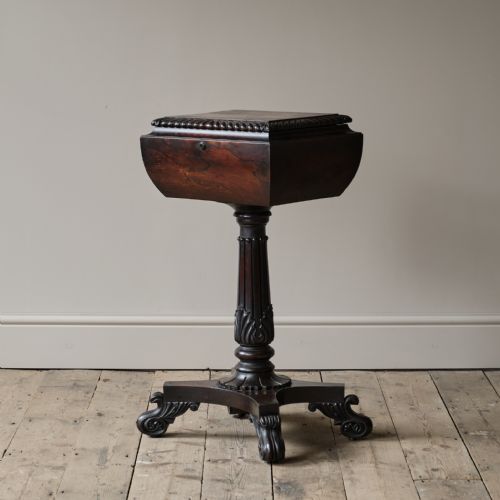


Georgian Tea Caddy Stand
A georgian tea caddy stand is a sturdy and elegant receptacle designed to house dry tea leaves safely under lock and key.
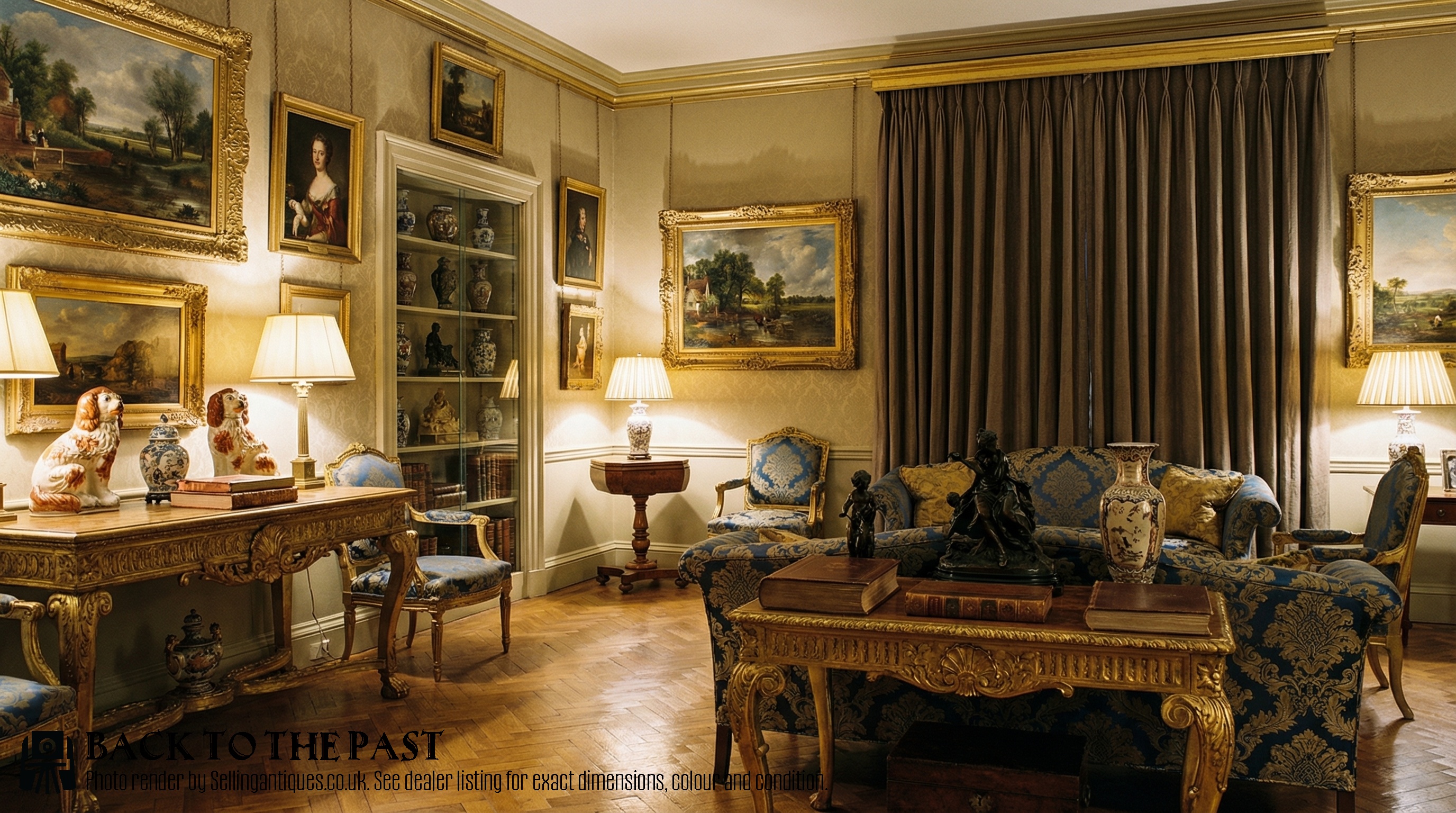
Georgian Tea Caddy Stand
A georgian tea caddy stand combines the functionality of a tea caddy with a dedicated supporting frame or pedestal, appearing across periods from the Georgian era through to the mid nineteenth century. Buyers searching for a georgian tea caddy stand will encounter forms variously described as teapoys, tea poys, and tea stoves or jardinieres.
The most common examples on this page are mahogany and rosewood boxes set on stands, featuring periods such as Regency and William IV alongside broader Georgian designations. These pieces reflect a time when tea was a costly commodity requiring secure storage in the drawing room or parlour.
Makers and craftsmen applied distinct regional variations, including Scottish mahogany pieces and intricate brass inlaid rosewood constructions, demonstrating how domestic storage evolved into a focal point of interior refinement.
How they were made
Cabinet makers utilised dense tropical timbers such as solid mahogany, flame mahogany, and rosewood, often contrasting the grain with delicate brass inlay. Selected pieces incorporate burr yew or walnut veneers over sturdy carcases, supported by carved feet or central pedestals.
Internal arrangements typically involved fitted compartments for canisters and a glass mixing bowl, housed within sarcophagus shaped or rectangular lidded boxes secured to rigid stands.
Georgian Tea Caddy Stand Retail Price Guide 2026
Typical asking prices for georgian tea caddy stand among the pieces listed under this phrase on Sellingantiques today, from the lower quarter to the upper quarter. They describe what is for sale here now, not the wider market.
Tea was once so valuable that keys to these stands were worn around the neck like prized jewellery.
What varies in quality
Quality rests upon the selection of timber figure, such as richly figured flame mahogany and well matched rosewood veneers, combined with the precision of brass inlay and joinery. Finer specimens display harmonious proportions, sophisticated box profiles like the sarcophagus shape, and accomplished carving on the feet and supports.
Simpler constructions rely on plain solid timbers with minimal ornamentation, whereas superior examples reflect the output of established workshops and incorporate sophisticated interior fittings alongside robust structural framing.
Gillows
The Georgian Tea Caddy Stand Glossary
- Teapoy
- A pedestal table or small chest designed specifically for holding tea, frequently fitted with internal caddies and a mixing bowl. The term derives from the Hindi word for three feet, though many later examples possess four feet or a central pillar.
- Sarcophagus
- A box shape featuring a domed or steeply sloped lid resembling a stone coffin, popular in Regency cabinet making. This profile added visual weight and dignity to tea containers placed upon stands.
- Jardiniere
- An ornamental receptacle designed to hold plants or flowers, occasionally sharing forms with tea stoves and boxes of this period. Such vessels utilised similar cabinet making skills and timber framing to interior storage boxes.
- Flame mahogany
- A veneer cut from the fork of a mahogany tree where the branches join the trunk, creating a distinctive flickering flame pattern. Cabinet makers reserved this highly decorative grain for prominent exterior surfaces.
- Brass inlay
- The technique of embedding thin strips or motifs of brass into the wooden surface of furniture to create geometric or floral patterns. This ornamentation defined much of the Regency aesthetic seen on rosewood boxes.
Georgian Tea Caddy Stand: Frequently Asked Questions
What is a georgian tea caddy stand used for?
These pieces served as secure storage containers for expensive dry tea leaves, keeping them locked away from domestic staff and dampness.
Inside the main box, partitioned compartments held different varieties of tea alongside a glass bowl used for blending leaves before brewing.
How do I tell a Regency tea caddy stand apart?
Regency examples frequently incorporate dark exotic timbers like rosewood contrasted with precise brass inlay or mounted on pedestal columns.
Earlier Georgian pieces lean towards plain mahogany box forms on simple stands, whereas later William IV iterations often feature heavy carved feet.
Where were these placed in a home?
They sat in the drawing room or parlour where the lady of the house prepared tea for assembled guests.
The height of the stand allowed the host to serve comfortably while seated in the room.
Are all these stands made of solid wood?
Most examples utilise a combination of solid timbers for structural frames and fine veneers applied to the visible box surfaces.
Cabinet makers used veneers such as flame mahogany and burr yew to achieve decorative grain patterns that solid boards could not provide.