



Regency Mahogany Teapoy
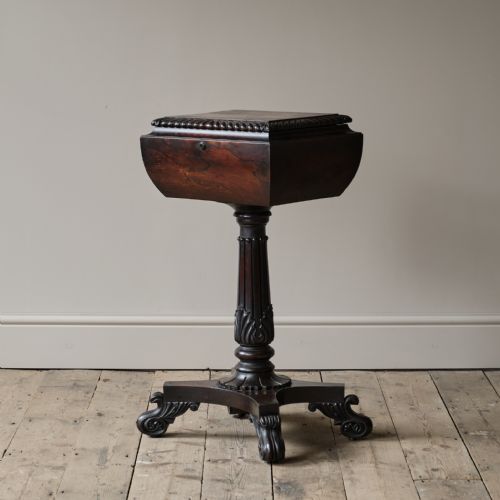
A regency mahogany teapoy is a grand tea-storage chest on a dedicated stand, prized for its timber and formal presence.
Regency Mahogany Teapoy
A regency mahogany teapoy is a specialised container designed to hold loose tea leaves safely under lock and key during the nineteenth century. Buyers searching this phrase encounter substantial pieces built during the Georgian, Regency, and Victorian eras, alongside related forms like tea caddies and jardinières.
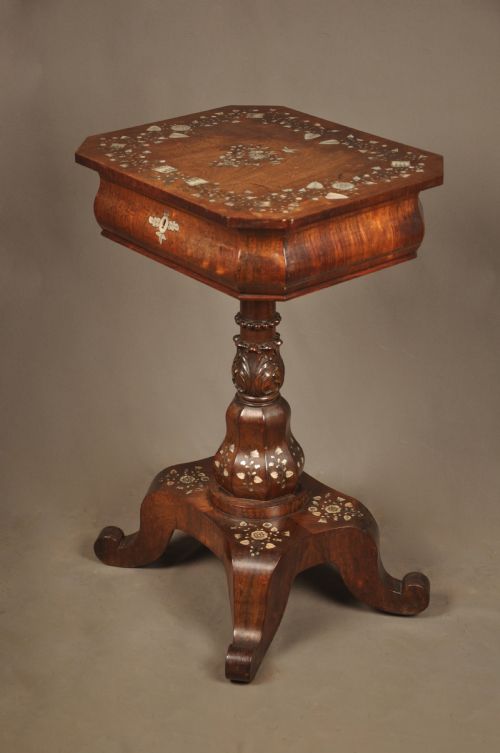
The standard format on this page is a lidded mahogany box supported by a pillar and claw feet or a fixed stand. Examples vary from plain timber surfaces to pieces featuring satinwood inlay, brass carrying handles, and marquetry decoration.
Origin and regional craftsmanship also shape the selection, with pieces originating from Scottish workshops, Irish makers, and English cabinet makers. Some exceptional forms bridge the gap between tea storage and alternative uses such as work tables or plant stands.
How they were made
Cabinet makers constructed these pieces primarily from solid mahogany and flame mahogany, utilising the distinct grain patterns for visual impact. Secondary timbers and decorative veneers such as satinwood were integrated into the box construction and lid surfaces.
Metal elements played a structural and decorative role, featuring cast brass fittings, handles, and carved wooden feet. Joinery techniques varied from simple box construction to elaborate sarcophagus shapes and mounted stands.
Regency Mahogany Teapoy Retail Price Guide 2026
Typical asking prices for regency mahogany teapoy among the pieces listed under this phrase on Sellingantiques today, from the lower quarter to the upper quarter. They describe what is for sale here now, not the wider market.
Listings feature mahogany, satinwood, and walnut across the Georgian, Regency, William IV, and Victorian periods.
What varies in quality
The grade of timber dictates much of the initial visual appeal, moving from standard mahogany boards to highly figured flame mahogany and contrasting satinwood veneers. Artisanal execution separates standard workshop production from documented pieces bearing maker stamps.
Structural complexity influences overall distinction, ranging from straightforward tea caddies to elaborate teapoys set on carved feet or combined with specialised stands. The presence of marquetry inlay, brass mounts, and sophisticated box profiles elevates the stature of the piece.
Gillows·Strahan
The Regency Mahogany Teapoy Glossary
- Teapoy
- A pedestal table fitted with a lidded box for storing loose tea leaves. These containers typically stood beside tea tables or in the centre of a drawing room.
- Flame mahogany
- A decorative cut of mahogany timber displaying a flamy, rippled grain pattern. Cabinet makers used this veneer to create striking visual movement on box lids.
- Sarcophagus
- A coffin-like box shape with a domed lid and panelled sides popular during the Regency period. This architectural form gave tea caddies and teapoys a monumental appearance.
- Jardiniere
- An ornamental stand or container used to hold plants and flowers. Some examples share the architectural form and pedestal base of nineteenth-century teapoys.
- Marquetry
- The art of applying pieces of veneer to a structure to form decorative patterns. Craftsmen utilised contrasting timbers like satinwood to embellish the exterior surfaces.
Regency Mahogany Teapoy: Frequently Asked Questions
What is a regency mahogany teapoy?
A regency mahogany teapoy is a lidded storage box for tea leaves mounted on a dedicated stand or pedestal base. These pieces date from the early nineteenth century and served a central role in formal hospitality.
Cabinet makers utilised mahogany and flame mahogany to build these containers, frequently adding brass handles and satinwood details. They provided a secure place to store expensive imported tea leaves.
How were teapoys used originally?
Teapoys were used in the drawing room to store high-value loose tea leaves away from damp air and pilfering. The host unlocked the box to measure out the leaves before tea service.
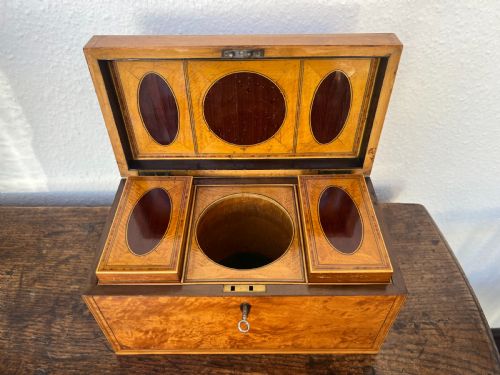
Inside, the boxes typically featured fitted interior canisters and mixing bowls. Some versatile examples also doubled as work tables for sewing or letter writing.
How do I tell periods apart?
Periods are identified through architectural styles, wood selections, and decorative motifs present on the piece. Regency and Georgian examples often feature clean classical lines, brass mounts, and sarcophagus shapes.
Later Victorian and William IV versions tend toward heavier proportions and more substantial carved feet. Documented pieces may also bear stamps or attributions linking them to specific makers.
Where were teapoys made?
Teapoys were produced by cabinet makers across England, Scotland, and Ireland during the nineteenth century. Regional workshops developed distinct characteristics in their timber selection and base construction.
Prominent firms such as Gillows in England and Strahan in Dublin produced notable examples. Imported styles like Federal pieces also appear alongside domestic British production.