


Regency Teapoy Stand
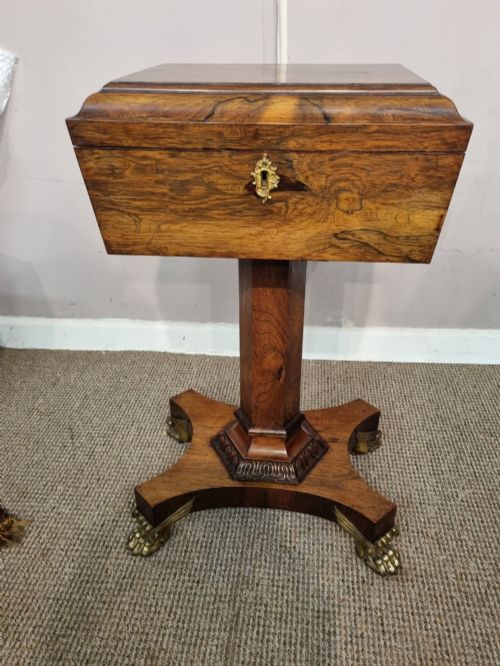
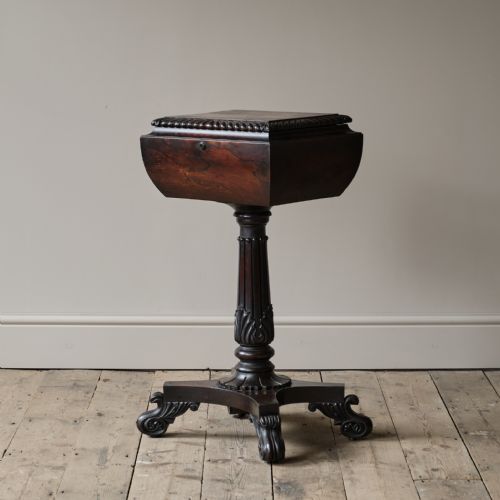
A regency teapoy stand is a remarkably refined piece of nineteenth-century furniture designed to hold tea canisters and keep precious leaves secure.
Regency Teapoy Stand
When you search for a regency teapoy stand, you are looking at specialised tea storage chests raised on pillars and stands, predominantly dating from the Regency and William IV periods through to the Victorian era. These pieces served as the centrepiece of formal tea service in affluent drawing rooms, housing internal caddies for different tea varieties and sometimes mixing bowls.
The versions you will most commonly encounter on this page are fashioned from richly grained timbers like rosewood and mahogany, often featuring sarcophagus-shaped boxes or rectangular compartments. Alongside traditional teapoys, you will also discover related variants such as spirits tables, work boxes, and tea stoves or jardinieres from the same decades.
What Varies in Quality
The distinction between ordinary examples and exceptional pieces rests primarily on the choice of timber veneer, the crispness of any carved wooden details, and the precision of brass inlay work. Finer items exhibit superior architectural proportions, highly figured grains such as flame mahogany or burr maple, and well-executed pillar supports.
Attribution to documented makers and the survival of original internal fittings, such as crystal mixing bowls and fitted tea caddies, elevate the standing of a piece considerably. Conversely, later conversions or heavy alterations diminish the integrity and historical value of the stand.
Tea was once so valuable that keys to the teapoy were kept strictly by the lady of the house.
Gillows·Strahan
The Regency Teapoy Stand Glossary
- Teapoy
- A small stand or box designed for holding tea caddies and blending tea leaves. They became essential items in upper-class nineteenth-century parlours.
- Sarcophagus
- A distinct coffin-like box shape with a domed or peaked lid, frequently utilised for Regency teapoy bodies. This classical form lent a monumental architectural presence to the small furniture piece.
- Caddy
- A small container or box inside the teapoy used for storing distinct varieties of tea. These often featured individual hinged lids and matching glass mixing bowls.
- Jardiniere
- An ornamental stand or container for holding flowers or plants. Certain examples listed share forms and periods closely related to tea storage furniture.
- Veneer
- A thin layer of highly figured wood applied over a base timber to create a decorative surface. Master craftsmen selected cuts like flame mahogany and burr maple for maximum visual impact.
Regency Teapoy Stand: Frequently Asked Questions
What is a regency teapoy stand?
A regency teapoy stand is a decorative chest mounted on a central pillar or legs, created during the early nineteenth century to store dry tea leaves safely under lock and key.
Because tea was an expensive commodity, these stands kept the leaves secure while serving as elegant decorative items in the principal rooms of grand houses.
How were teapoys used originally?
In the nineteenth century, the mistress of the house used the teapoy to mix different varieties of tea leaves before servants prepared the brew for guests.
The internal compartments held green and black teas alongside a central glass bowl used for rinsing spoons or blending proportions.
Where should I place a teapoy at home?
These versatile pieces work exceptionally well as side tables in a drawing room or living area, positioned beside a sofa or reading chair where their detailed tops can be admired.
The lidded compartments also provide practical concealed storage for small contemporary items like remote controls or stationery.
How do I identify a Regency period teapoy?
Regency teapoys typically display classical architectural influences, including brass stringing, bold rosewood or mahogany grains, and robust pillar supports resting on platform bases with carved feet.
They date from the early nineteenth century and reflect the Regency and William IV design vocabulary through their symmetry and restrained ornamentation.