
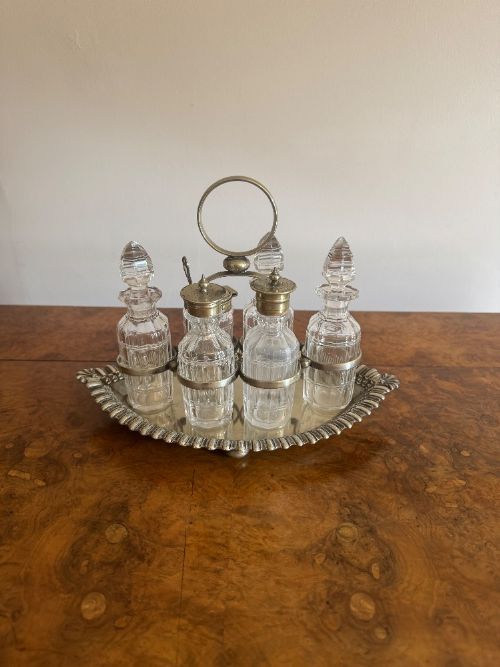
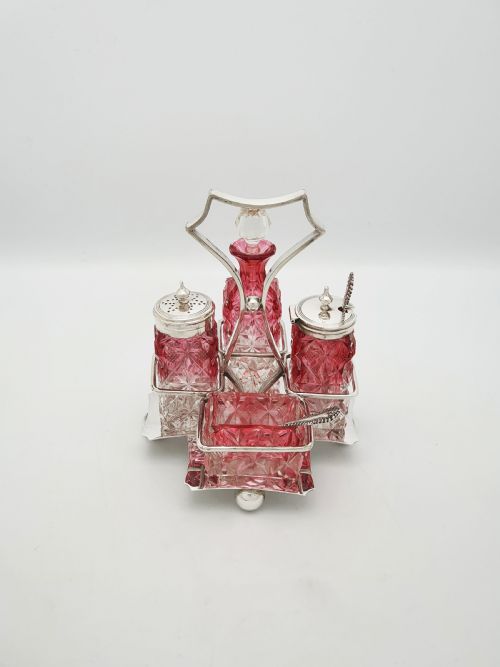


Antique Table Cruet
An antique table cruet brings formal dining tradition to the table, holding essential seasonings in silver and glass frames.
Antique Table Cruet
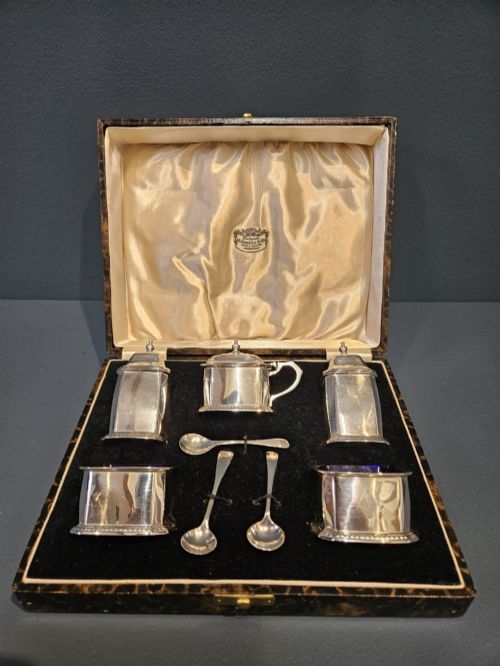
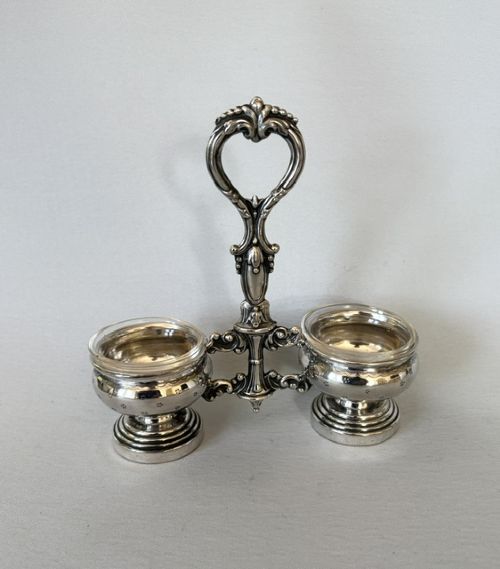
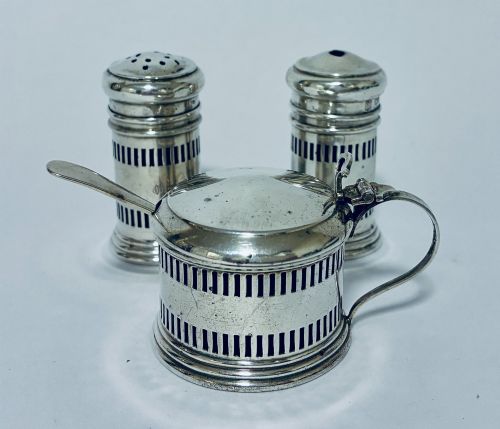
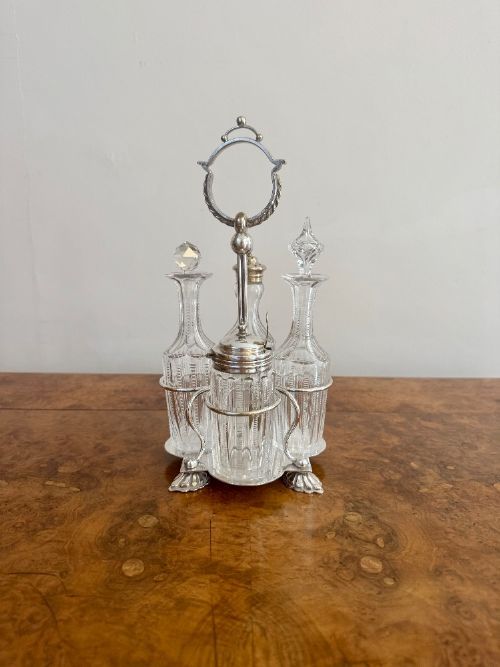
An antique table cruet comprises a stand holding bottles, jars, or shakers for condiments such as vinegar, oil, mustard, salt, and pepper.
The pieces listed on this page span from the eighteenth century through the Georgian, Victorian, and Edwardian eras into the Art Deco period.
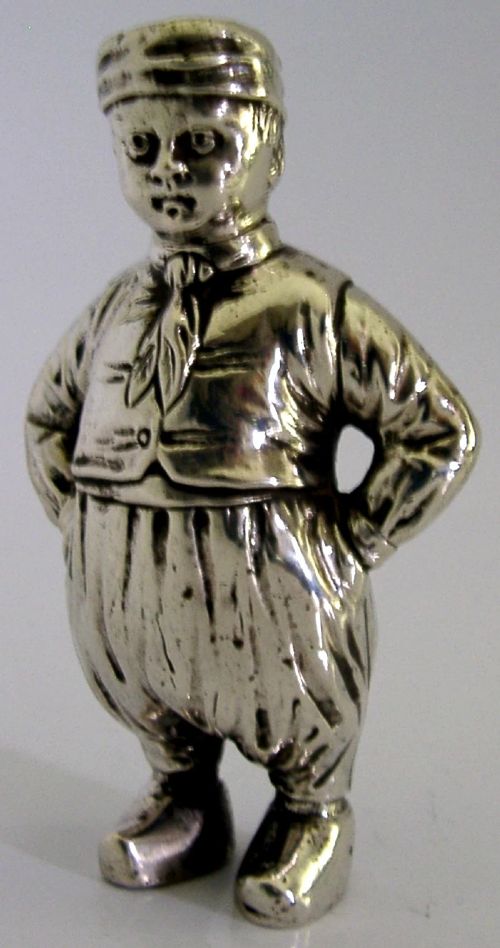
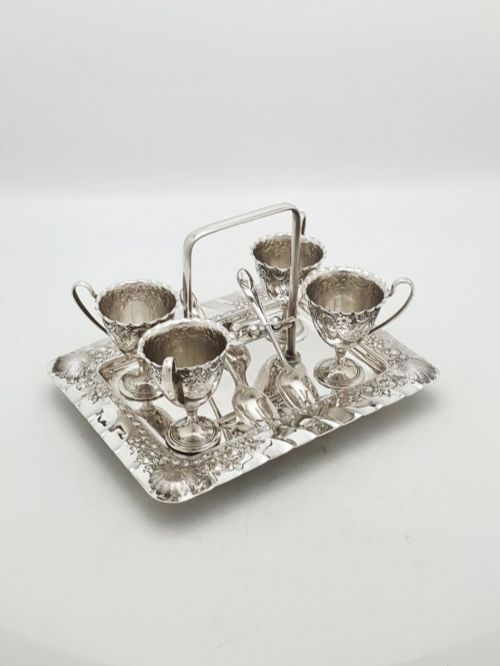
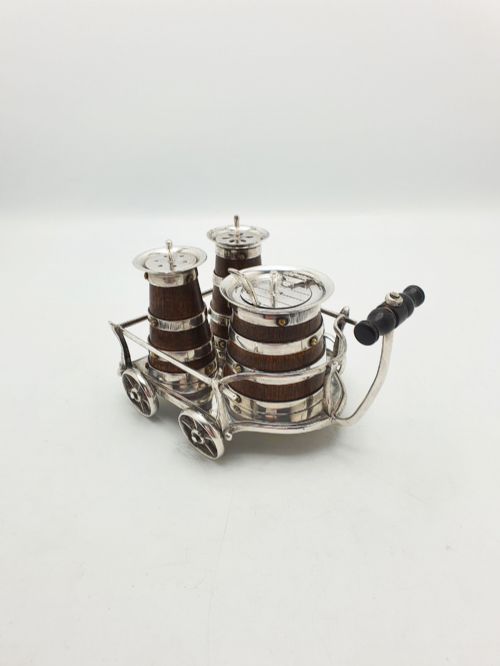
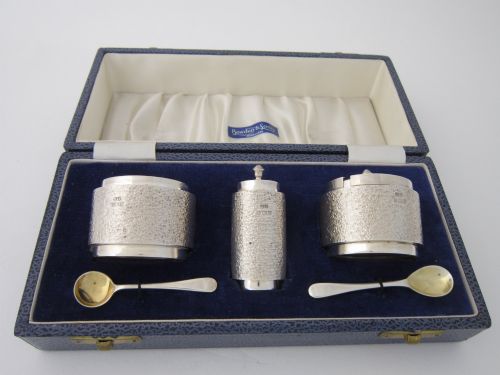
Sets range from small bachelor cruets and individual condiment stands to large multi-bottle frames and novelty designs shaped like animals or carriages.
Materials and construction
Frames and stands are fashioned from sterling silver, solid 800 silver, or silver plate upon a base metal such as electroplated nickel silver.
Vessels are formed from clear, cut, or flashed glass, often featuring coloured crystal alongside fitted metal mounts and stoppers.
Victorian silversmiths occasionally transformed everyday condiment sets into farmyard menageries, creating cruets shaped like chicks, owls, and entire carriages.
Distinctions in quality
The standard of a cruet set depends on the integrity of the silver work, the precision of the cast or embossed details, and whether the glass bottles match the frame.
Complete sets retaining their original matching cut glass bottles and stoppers command greater regard than composite assemblies gathered later.
Goldsmith & Silversmith's·Mappin Brothers·Hester Bateman·Bricks & Sons·Sampson Mordan·Wilmot Manufacturing Co.
The Antique Table Cruet Glossary
- Cruet stand
- The central metal frame or rack designed to hold individual condiment bottles and pots securely.
- Caster
- A small shaker with a pierced top used for sprinkling sugar or fine dry spices over food.
- Bachelor cruet
- A smaller version of a condiment set intended for single-person dining or smaller household tables.
- Flashed glass
- Glass coated with a thin layer of coloured glass over a clear body before being cut to reveal the contrast.
Antique Table Cruet: Frequently Asked Questions
What is an antique table cruet used for?
A table cruet serves to organise and present condiments at the dining table. It holds bottles of oil, vinegar, and sauces alongside shakers for salt, pepper, and mustard.
Historically, diners used these sets to adjust flavours during the meal itself. Today, they remain functional centerpieces for formal dining and period table settings.
How do I identify a Victorian cruet set?
Victorian cruet sets typically exhibit heavier silver plating, ornate embossed decoration, or Gothic and Rococo revival styles. Many feature intricate metal frames holding cut glass bottles.
Maker marks and hallmarks stamped on the silver portions can confirm the exact decade and origin. Novelty forms such as carriages or farmyard animals also emerged strongly during this period.
Are the glass bottles original to the stand?
Original glass bottles fit snugly into the designated rings of the metal stand and match the design period. Replacements often differ slightly in glass tint, cutting pattern, or height.
Inspect the bases and rims of the bottles for consistency in wear and glass quality. Complete original sets retain higher collectible standing.
How do I clean an antique silver plated cruet?
Clean silver plate gently using a soft cloth and a specialised silver polish formulated for plated items. Avoid abrasive materials that can wear away the thin silver layer.
Glass components can be washed separately in warm, soapy water. Ensure all parts are dried thoroughly before reassembling the cruet.