





Antique Swedish Mirror
An antique swedish mirror brings pale elegance and bright reflection to a room, drawing on centuries of northern European design.
Antique Swedish Mirror
When you search for an antique swedish mirror, you encounter pieces spanning from the seventeenth century through to the early twentieth century, taking the form of wall mirrors, pier mirrors, and vanity mirrors. These objects often arrive paired with dressing tables or console tables, reflecting the comprehensive interior schemes typical of northern European cabinet-making.
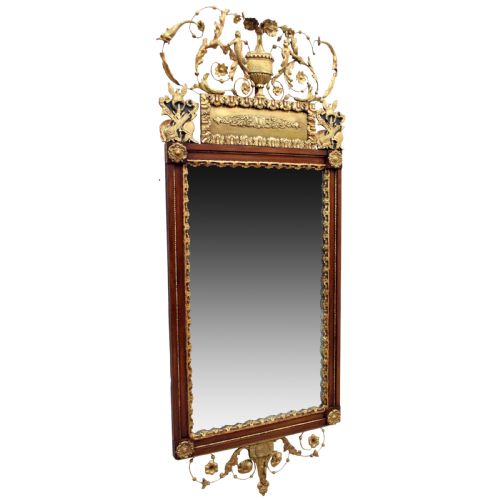
The version you are most likely to meet on this page is a nineteenth-century wall or pier mirror, executed in birch, mahogany, or giltwood. Styles range from Swedish Gustavian and Neoclassical to Biedermeier, Swedish Empire revival, and Swedish Grace, showing how makers adapted continental influences to local tastes.
Older examples lean towards carved wood and gesso with distressed painted finishes in grey or neutral tones, while later pieces favour the clean grain of birch or the dark contrast of ebonised wood. Each type serves a distinct architectural purpose, whether placed between tall windows as a pier glass or hung simply above a mantelpiece.
How they were made
Makers constructed these frames using native timbers such as birch, pine, and mahogany, frequently applying gilding, gesso, or ebonised treatments to the wooden surfaces. Giltwood and carved wood provide a bright, reflective border that catches natural light, while painted finishes in grey or other muted shades offer a softer integration with wall panels.
Techniques combined joinery with sculptural carving, particularly in Neoclassical and Gustavian pieces where swags, fluting, and urn motifs decorate the crests. The combination of glass plates with substantial wooden or gessoed frames required careful proportioning to ensure stability when wall-mounted.
Antique Swedish Mirror Retail Price Guide 2026
Typical asking prices for swedish mirror among the pieces listed under this phrase on Sellingantiques today, from the lower quarter to the upper quarter. They describe what is for sale here now, not the wider market.
Listings incorporate timber varieties including birch, mahogany, pine, and ebonised wood alongside traditional giltwood.
What varies in quality
Quality reveals itself in the crispness of the carved detail on the gesso and wood, alongside the depth and warmth of the original gilding or painted finish. Pieces with well-preserved surface treatments show a harmony between the frame's ornamentation and its underlying timber.
The integrity of the mirror plate and the proportion of the frame relative to its height separate standard examples from finer creations. Pier mirrors and console combinations demonstrate superior craftsmanship through the balance of their structural joinery and decorative motifs.
The Antique Swedish Mirror Glossary
- Giltwood
- Wood covered with a thin layer of gold leaf or gilt. This finish is frequently seen on Neoclassical and Gustavian frames to catch the light.
- Pier mirror
- A tall mirror designed to hang on the wall space or pier between two windows. These often sit above console tables.
- Biedermeier
- A Central European and Scandinavian style from the nineteenth century prioritising utility and clean wooden grains. Birch is a common choice for these pieces.
- Ebonised
- Wood finished to resemble ebony through dark staining or painting. This technique creates a strong contrast against gilded details.
Antique Swedish Mirror: Frequently Asked Questions
Where should I hang a pier mirror?
Pier mirrors work best on narrow wall spaces between windows or above matching console tables to amplify natural light in a room.
Their tall proportions draw the eye upward, making them suited for hallways or reception rooms with high ceilings.
How do I identify a Gustavian mirror?
Gustavian mirrors usually feature Neoclassical motifs like urns, fluting, and swags rendered in carved wood and gesso.
They often carry grey or neutral painted finishes that reflect the light-toned interiors characteristic of late eighteenth-century Swedish design.
What wood is most common in these pieces?
Birch and mahogany appear frequently alongside pine frames that support gesso and paint finishes.
Nineteenth-century examples often highlight the blonde grain of Swedish birch, especially within Biedermeier designs.
Can I place these mirrors above a fireplace?
Many wall mirrors function well above mantelpieces, provided the scale of the frame suits the width of the fireplace surround.
Horizontal or vertical formats can anchor the chimney breast while brightening the surrounding living space.