


Antique Suzani Throw
An antique suzani throw brings vibrant Central Asian needlework into a room as a textile panel or wall hanging.
Antique Suzani Throw
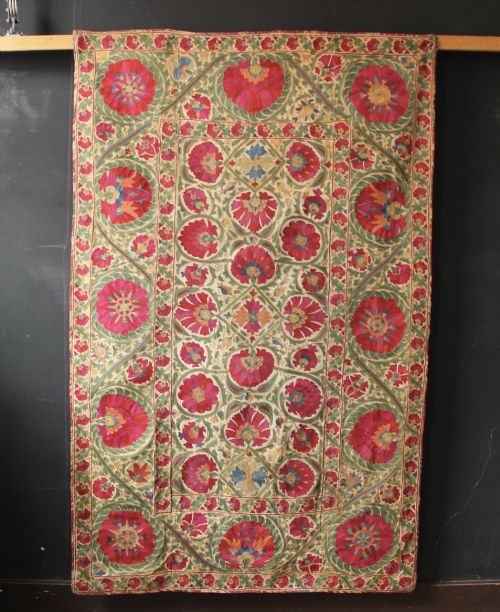
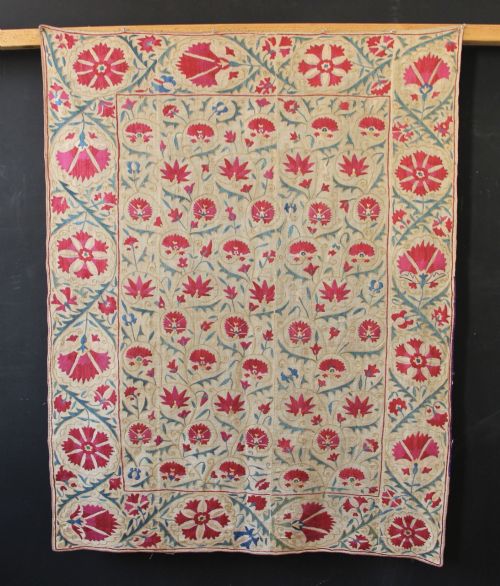
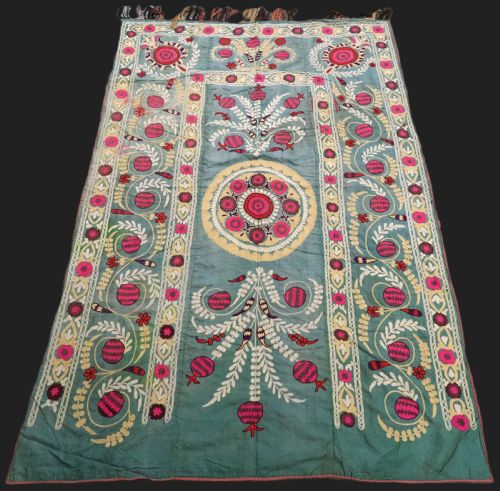
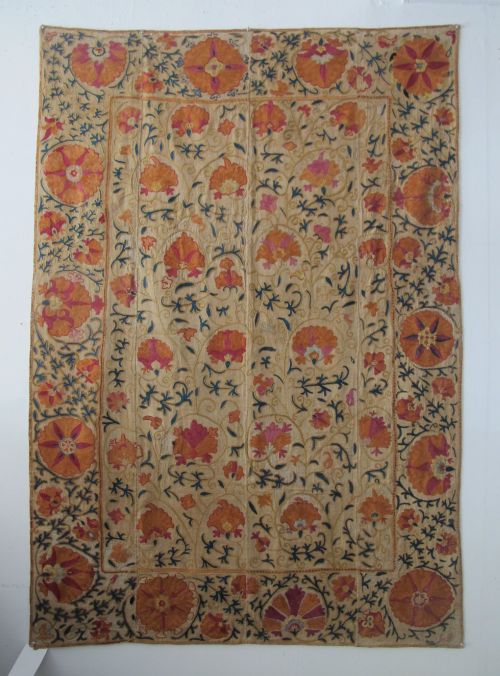
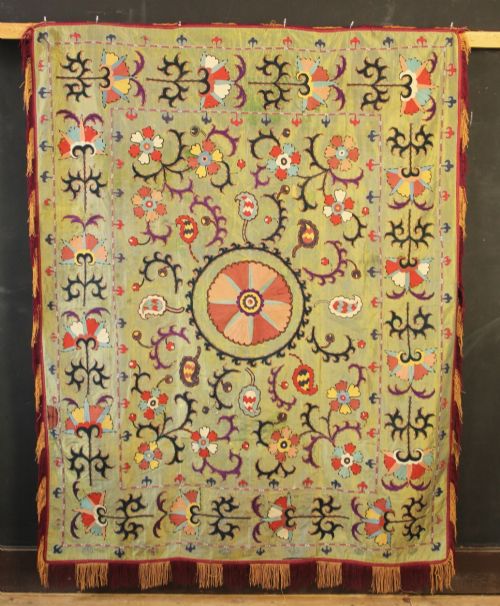
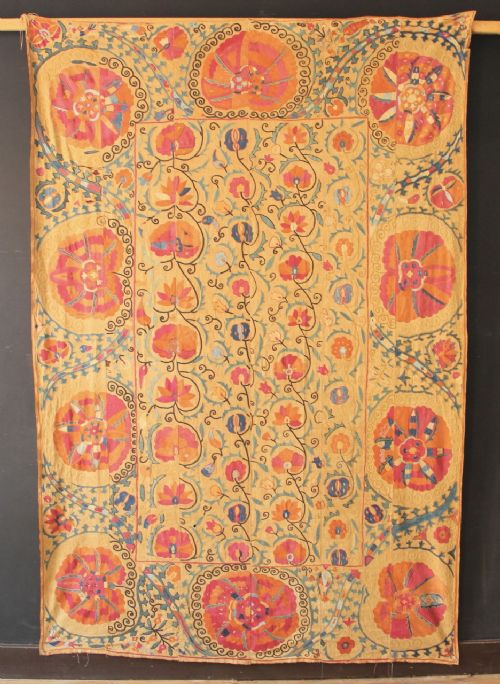
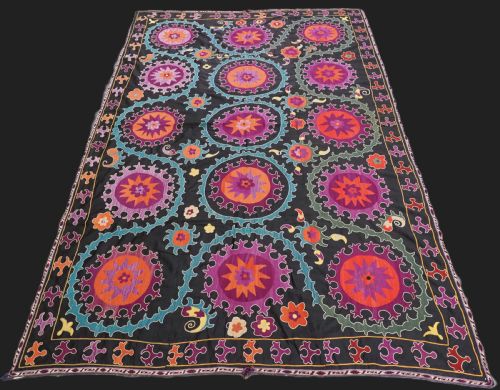
An antique suzani throw is a hand-embroidered textile created across Central Asian regions including Uzbekistan, with notable examples originating from Bokhara, Tashkent, Samarkand, and Shahrisabz. When searching for an antique suzani throw, a buyer encounters traditional embroidered covers, bed covers, and wall hangings dating from the nineteenth and early twentieth centuries. These pieces display distinct regional styles such as Lakai tribal work, Palak designs with central stars, and Nim suzanis.
The pieces listed on this page span diverse formats, from smaller Nim suzanis to large medallion variants and fully embroidered full work panels. Most examples originate from the broader Uzbek cultural sphere, executed by makers belonging to various regional traditions. They function primarily as decorative textiles, serving as wall hangings or statement throws within an interior space.
How they were made
Makers stitched intricate floral and geometric motifs using silk thread applied to various foundational cloths. These grounds include plain cotton, red cotton, black cotton, wool, velvet, and adras, which is a local silk and cotton blend.
The embroidery technique relies on specialist needlework executed by hand to cover the fabric ground densely. Fully embroidered pieces require substantial labour, building up the rich colour palettes seen in traditional designs.
Nomadic makers sometimes stitched secret protective amulets directly into the borders of their embroidery.
What varies in quality
Quality rests upon the density of the embroidery and the complexity of the design layout, distinguishing full work panels from simpler variants. The vibrancy of the silk thread and the preservation of the ground fabric dictate the visual impact of each textile.
Regional provenance and tribal attribution add distinction, with specific workshops and nomadic groups producing highly characteristic motifs. The integrity of the stitching and the clarity of the colour combinations separate standard examples from superior survivals.
The Antique Suzani Throw Glossary
- Suzani
- An embroidered hanging or textile panel originating from Central Asia, traditionally worked in silk on a cotton or wool ground. The word derives from the Persian term for needle.
- Nim suzani
- A smaller or half-scale version of a full suzani, often utilised as a compact wall hanging or cover. These pieces share the same intricate embroidery techniques as larger examples.
- Adras
- A traditional woven fabric composed of a silk warp and a cotton welt, frequently utilised as a foundation ground for embroidery. It provides a distinct textural base for the needlework.
- Palak
- A specific type of large suzani featuring a fully embroidered ground, frequently dominated by a central star or medallion motif. These heavily worked panels represent significant technical investment.
- Lakai
- A Central Asian tribal group known for distinctive, energetic embroidery styles characterised by specific geometric forms and bold colour contrasts.
Antique Suzani Throw: Frequently Asked Questions
How were antique suzani throws used?
These textiles served primarily as ceremonial and domestic furnishings within traditional Central Asian households. Families utilised them as bed covers, wall hangings, and decorative wedding panels.
Today, modern collectors repurpose them as wall displays or decorative throws to introduce texture and historic pattern into interior spaces.
How do I care for a silk suzani?
Protect antique textiles from direct sunlight to prevent the natural silk threads and dyed grounds from fading over time. Gentle surface cleaning by a specialist textile conservator maintains the material integrity.
Mounting wall hangings correctly distributes the weight evenly across the backing cloth, avoiding undue strain on the historic fibres.
Which regions produced these embroidered throws?
Production centred on historical cities and nomadic communities across Central Asia, particularly within regions of modern Uzbekistan. Prominent centres included Bokhara, Tashkent, Samarkand, and Shahrisabz.
Tribal groups such as the Lakai also produced distinct works with recognizable geometric aesthetics and specific ground materials.