


Hand Embroidered Silk Suzani
A hand embroidered silk suzani brings Central Asian textile artistry into a room, offering rich botanical motifs and traditional needlework from nineteenth- and early twentieth-century Uzbekistan.
Hand Embroidered Silk Suzani
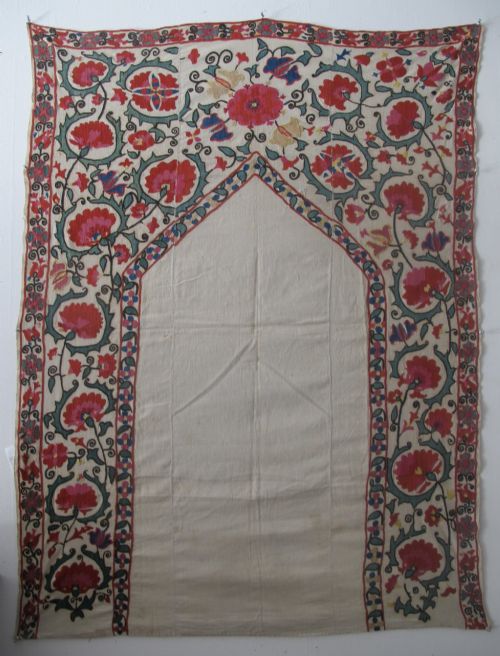
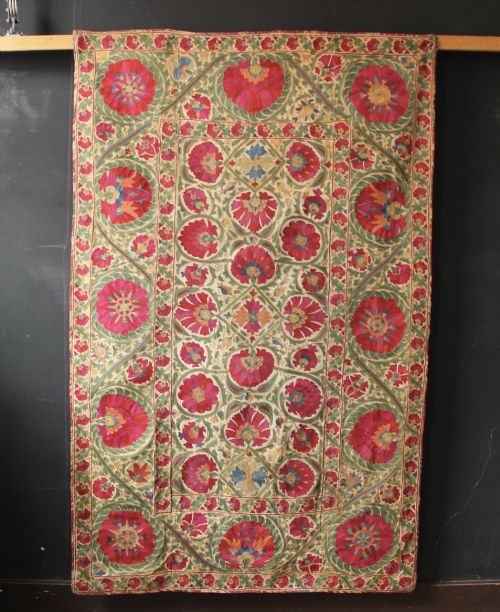
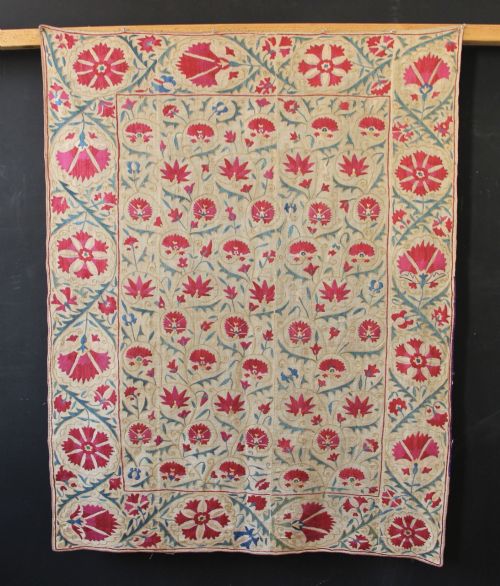
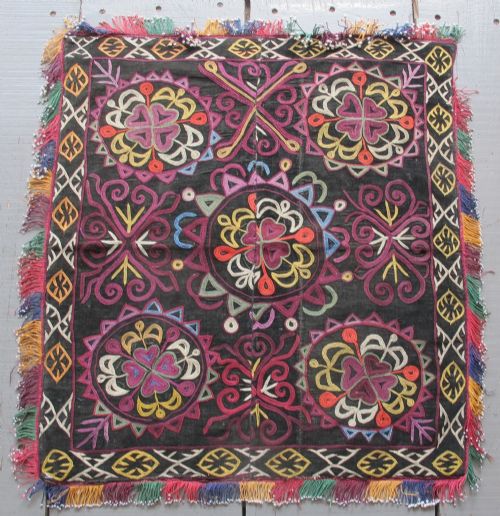
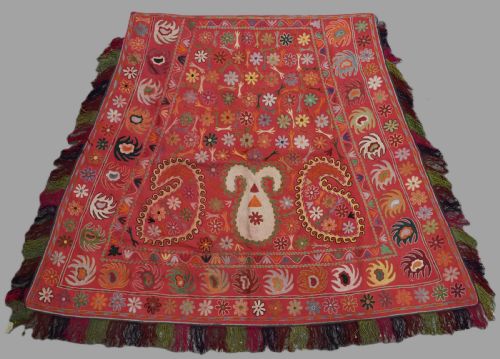
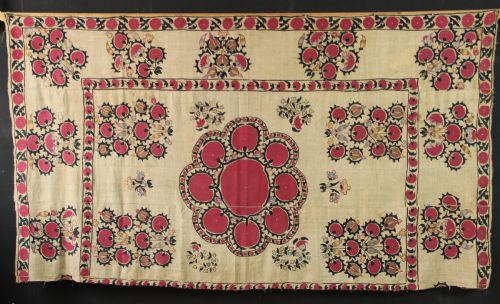
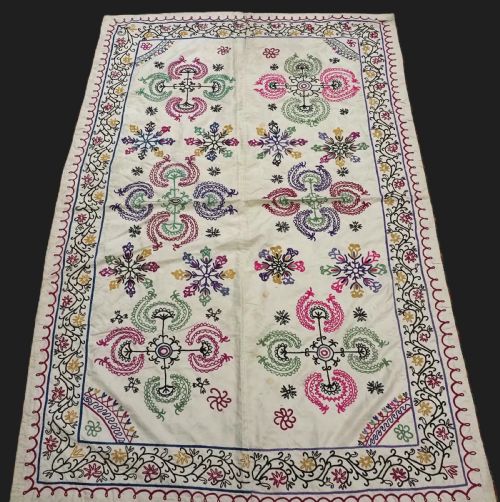
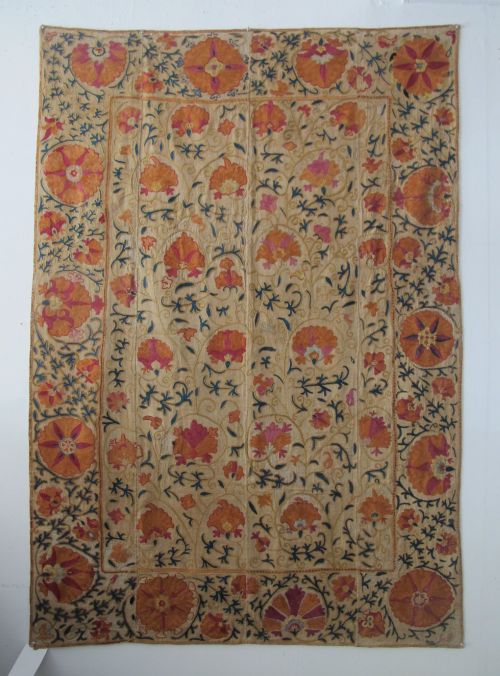
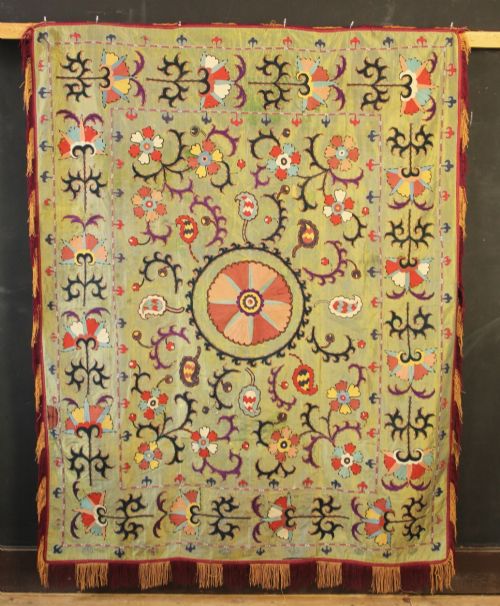
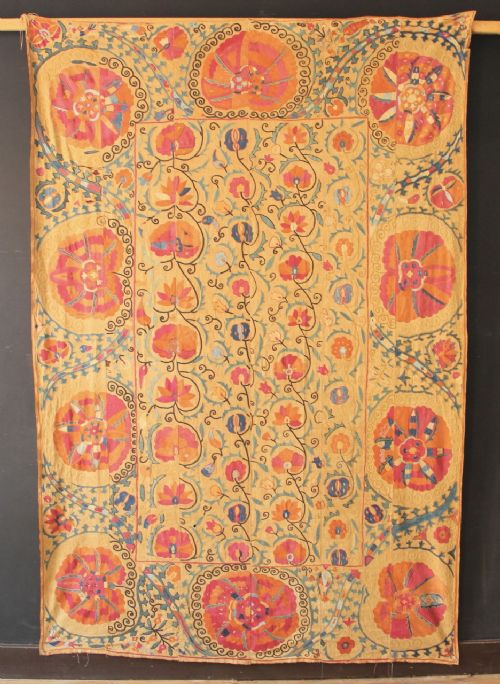
A hand embroidered silk suzani is a traditional Central Asian wall hanging, bed cover, or ceremonial textile created by artisans across regions such as Bokhara, Tashkent, Samarkand, and Shakrisabz. These pieces function primarily as decorative textiles, wall hangings, and mounted textile art originating from Uzbek, Tajik, Kyrgyz, and Lakai tribal traditions.
Buyers encounter various formats on this page, ranging from full-sized medallion and architectural design suzanis to smaller nim suzanis, mirror covers, and horse or saddle covers. The designs span specific regional styles including Tashkent palak suzanis featuring central stars, prayer formats, and tribal compositions dated from the mid nineteenth century through the early twentieth century.
How They Were Made
Artisans worked silk embroidery threads onto various foundation grounds, including plain cotton, red cotton, yellow cotton, black cotton, wool, linen, and adras, which is a traditional silk and cotton hybrid fabric. Certain pieces also incorporate glass beads to accent the needlework.
The construction relies on specialist hand embroidery techniques executed across regional workshops and tribal communities. Embroiderers stitched intricate floral, architectural, and geometric motifs panel by panel before assembling the final textile.
What Varies in Quality
Quality rests upon the density of the embroidery and the complexity of the design layout, distinguishing full-work palak panels from simpler compositions. The precision of the needlework and the harmony of the natural dye palette also determine the standing of an individual piece.
The condition of the silk thread and the stability of the cotton, wool, or adras ground fabric influence the durability and visual impact of the textile. Original proportions, intact borders, and well-preserved regional characteristics elevate the execution of the work.
The Hand Embroidered Silk Suzani Glossary
- Nim Suzani
- A smaller half-scale version of a full suzani format, often produced for regional domestic use or specific ceremonial functions. These compact pieces display the same intricate silk embroidery as their larger counterparts.
- Palak
- A fully embroidered suzani type characterised by large medallion or central star motifs that cover almost the entire ground fabric. Originating largely from Tashkent, these dense panels represent an intensive investment of needlework.
- Adras
- A traditional woven fabric composed of a silk warp and a cotton welt, utilised as a foundation ground for embroidery. This blended textile provides a sturdy yet lustrous base for silk thread work.
Hand Embroidered Silk Suzani: Frequently Asked Questions
What is a suzani used for?
Historically, a hand embroidered silk suzani served practical and ceremonial roles within Central Asian households, functioning as bed covers, wall hangings, and dowry items.
Today, collectors mount and display these textiles as wall art or decorative pieces to introduce regional colour and pattern into interior spaces.
How do I care for an antique suzani?
Protect antique textiles from direct sunlight to prevent the silk threads and cotton grounds from fading over time.
Mount the pieces professionally with breathable support materials and avoid washing them with water or chemical solvents.
What is the difference between a full suzani and a nim suzani?
A standard suzani is a large format textile designed to cover a bed or a substantial wall space within a room.
An im suzani is a smaller variation, roughly half the size, which makes it easier to place in modern domestic interiors.
Where were these textiles made?
These decorative textiles originated in Central Asia, primarily across historic Uzbek centres such as Bokhara, Samarkand, Tashkent, and Shakrisabz.
Nomadic and settled groups including the Lakai, Tajik, and Kyrgyz communities also produced distinct regional variants.