


Red Embroidered Suzani
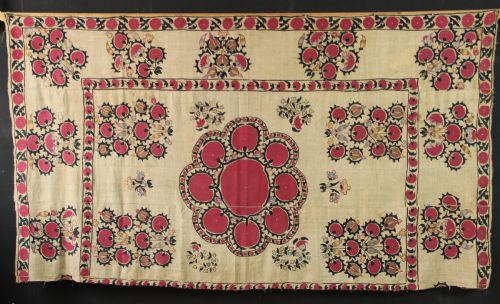
A red embroidered suzani brings Central Asian tribal artistry into a room through vibrant silk needlework on traditional woven grounds.
Red Embroidered Suzani
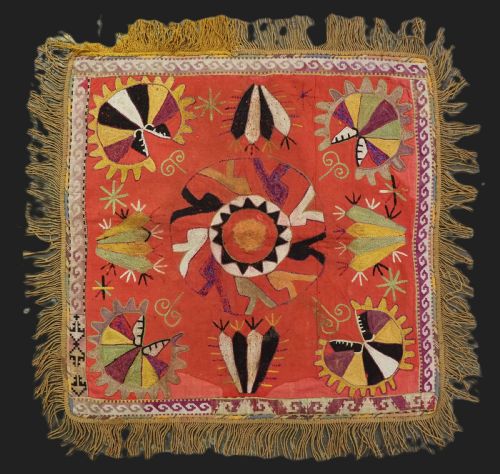
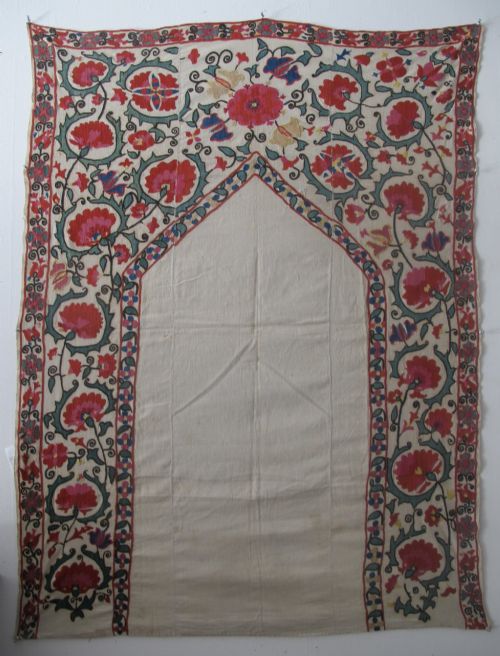
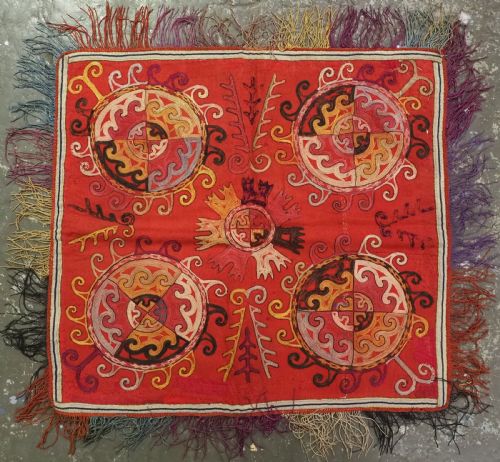
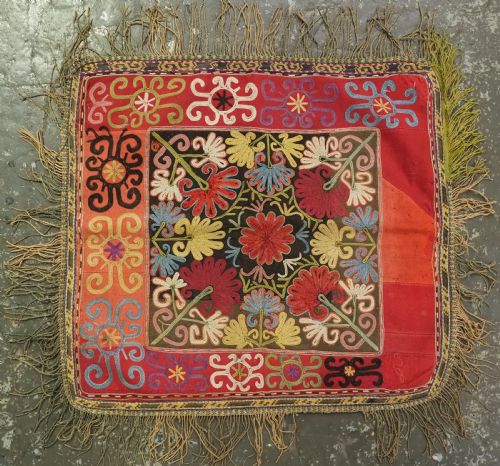
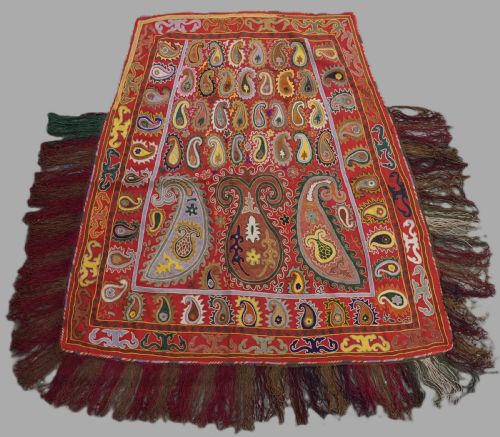
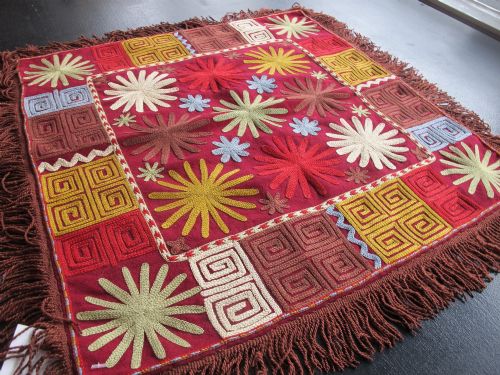
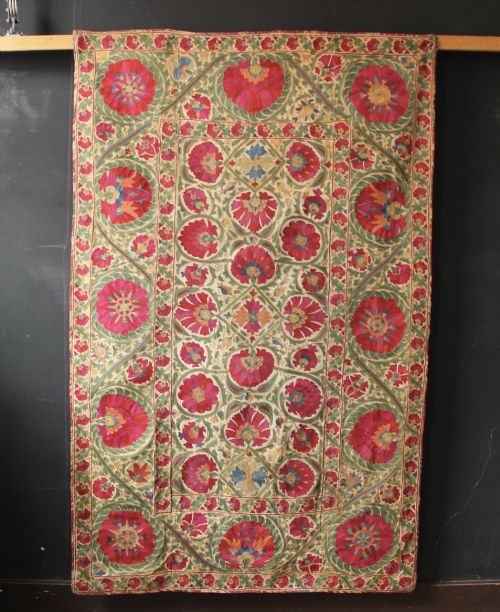
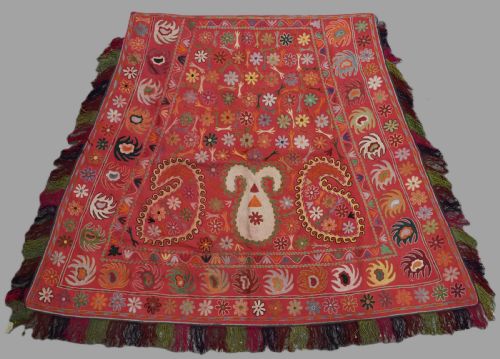
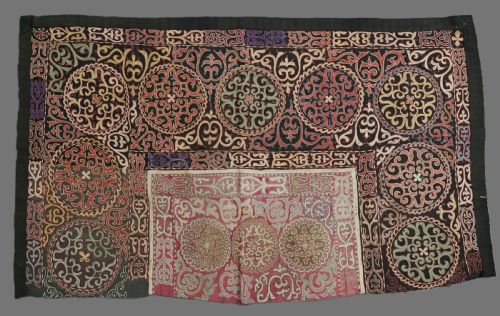
A red embroidered suzani is a large, decorative textile originating from Central Asian regions such as Uzbekistan, traditionally created as dowry items or wall furnishings by nomadic and tribal groups including the Lakai. These pieces manifest in various formats, from full wall hangings and smaller nim suzanis to horse covers, saddle rugs, and architectural compositions originating between the mid nineteenth century and the early twentieth century.
Buyers encountering these textiles on this page will frequently see examples attributed to Tashkent, Bokhara, Shakrisabz, and Nurata, often worked in rich floral, star, or geometric motifs. The ground fabrics supporting these intricate silk embroideries range from plain cotton and wool to traditional adras, a warp-faced mixture of silk and cotton.
Materials and construction
These textiles rely on hand-spun or woven base foundations of cotton, wool, linen, or adras silk-cotton blends, upon which artisans executed dense needlework using dyed silk thread. The stitching incorporates specialised techniques unique to Central Asian embroidery traditions, creating textured surfaces that cover substantial portions of the underlying fabric.
Makers utilised natural dyestuffs to achieve deep crimson and red tones for the background cloths and contrasting shades for the botanical or tribal patterns. The resulting panels reflect regional workshop practices and nomadic household production methods spanning the Victorian era through the early decades of the twentieth century.
Listings feature textiles from 1850 through 1930, utilising wool, cotton, linen, silk, and adras grounds.
Assessing quality in needlework
Quality in these Central Asian textiles rests upon the density of the needlework and the completeness of the embroidery coverage, where fully worked examples like Tashkent palaks demonstrate immense artisan commitment. The clarity of the design layout, the retention of natural dye vibrancy, and the structural integrity of the ground cloth further distinguish superior examples from simpler ones.
The fineness of the silk thread work and the complexity of regional motifs, such as architectural elements or specific tribal symbols found in Lakai ilgiches, mark the upper tiers of the surviving pieces. Condition plays an important role, with well-preserved grounds and intact edges elevating the textile's integrity.
The Red Embroidered Suzani Glossary
- Suzani
- A traditional embroidered tribal wall hanging or textile panel originating from Central Asia. The word derives from the Persian term for needlework.
- Nim Suzani
- A smaller or half-sized version of the traditional suzani panel. These scaled formats were often used for specific domestic spaces or as dowry components.
- Adras
- A traditional Central Asian fabric woven with a silk warp and a cotton weft. This blended material frequently serves as the supportive ground cloth for silk embroidery.
- Ilgich
- A specific type of embroidery or dowry hanging produced by the Lakai tribe in Uzbekistan. These pieces often feature bold geometric and talismanic motifs.
- Palak
- A fully embroidered suzani style characterised by dense, overall needlework featuring large central star medallions. Tashkent workshops are particularly noted for this elaborate design.
Red Embroidered Suzani: Frequently Asked Questions
What is a suzani used for?
These textiles served primarily as ceremonial dowry items, wall hangings, and decorative covers within Central Asian households and nomadic yurt dwellings.
Today, collectors mount them as wall art or utilise them to introduce rich historic texture into interior spaces.
How do I care for an antique textile?
Protect the fabric from direct sunlight to prevent fading of the natural silk dyes and underlying red wool or cotton grounds.
Mount the textile professionally with weight-distributed support rather than hanging it by a single edge.
How are regional styles identified?
Different towns and nomadic groups utilised distinct motifs, colour palettes, and stitching densities that signal their geographic origins.
Bokhara, Tashkent, Shakrisabz, and Lakai tribal pieces each display characteristic patterns in their floral and geometric layouts.
What does nim mean in a title?
The term nim denotes a smaller format textile panel compared to a full-sized wall hanging.
These pieces offer a more compact scale while retaining the same dense silk embroidery and traditional design vocabulary.