
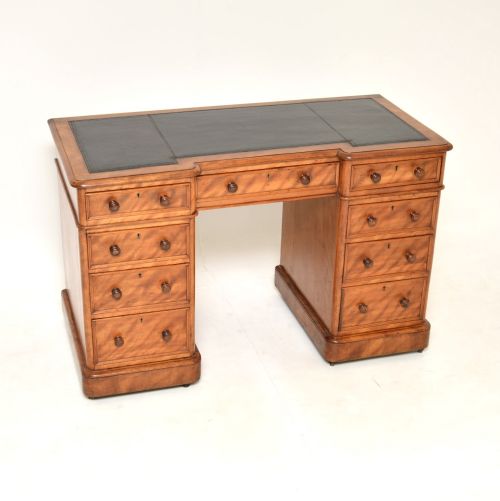
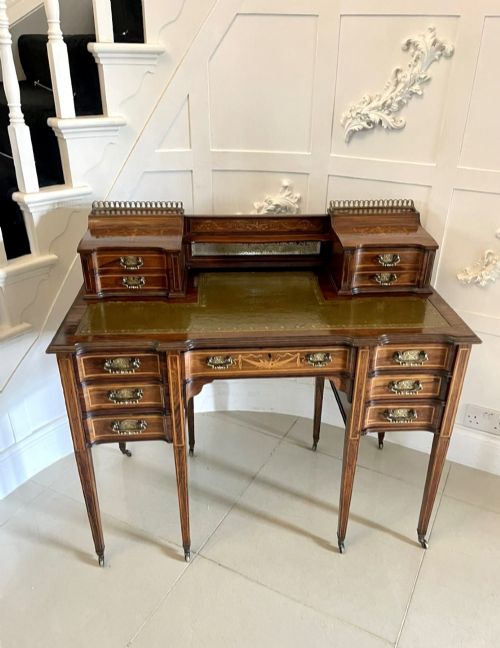
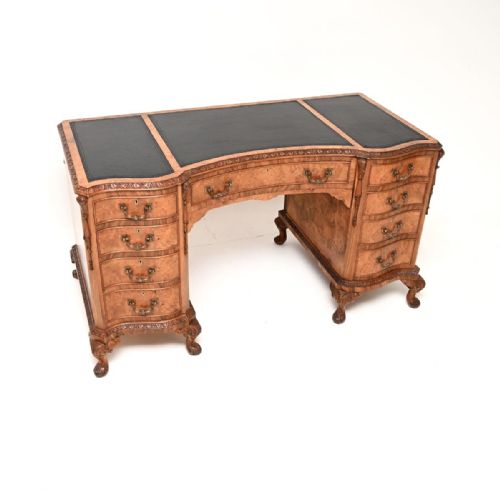
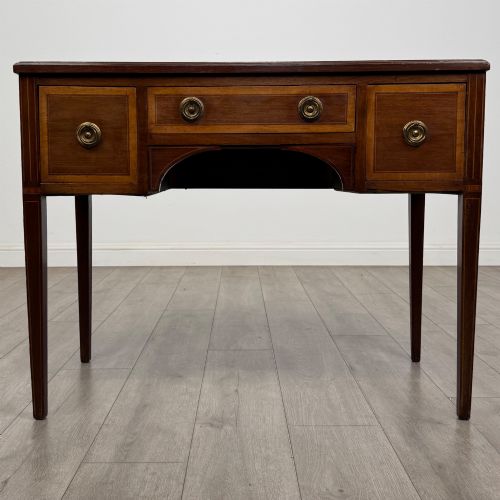
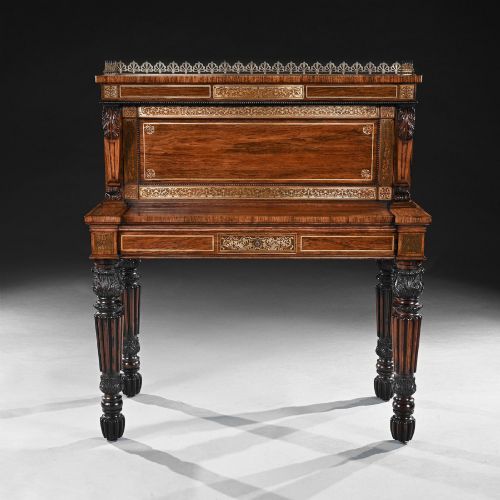
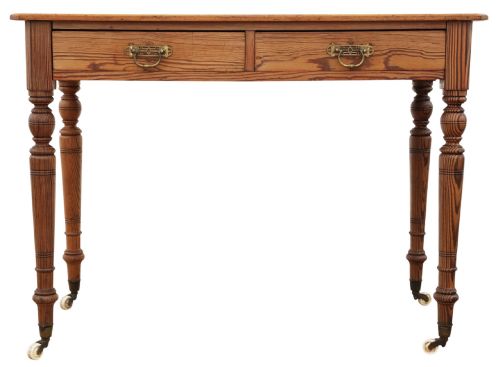
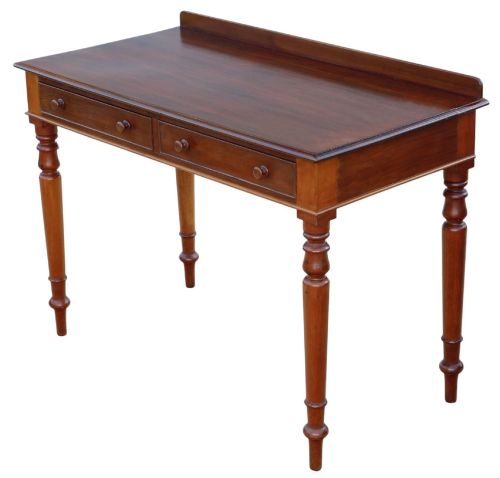
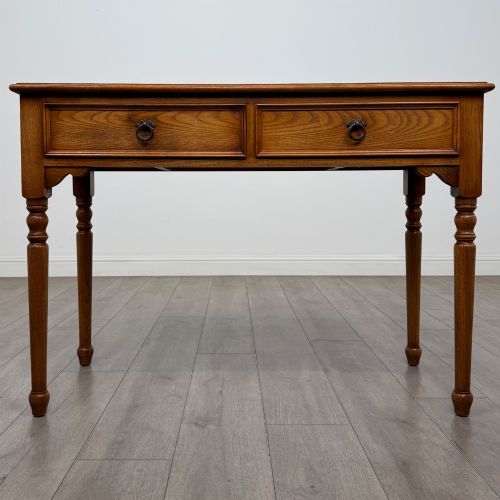
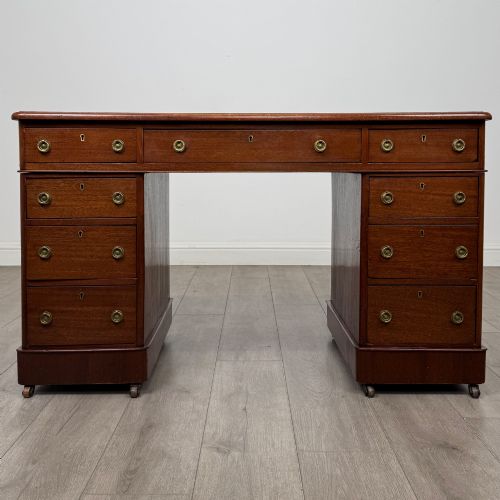
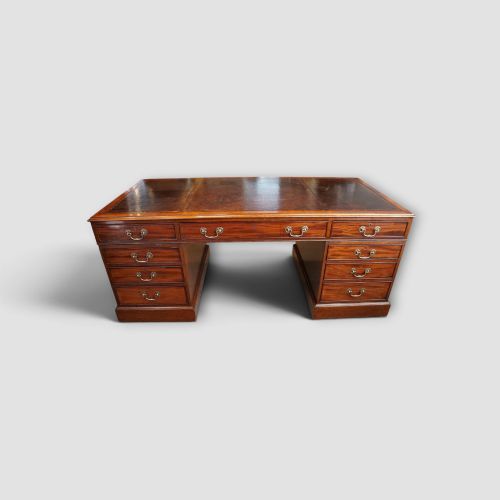
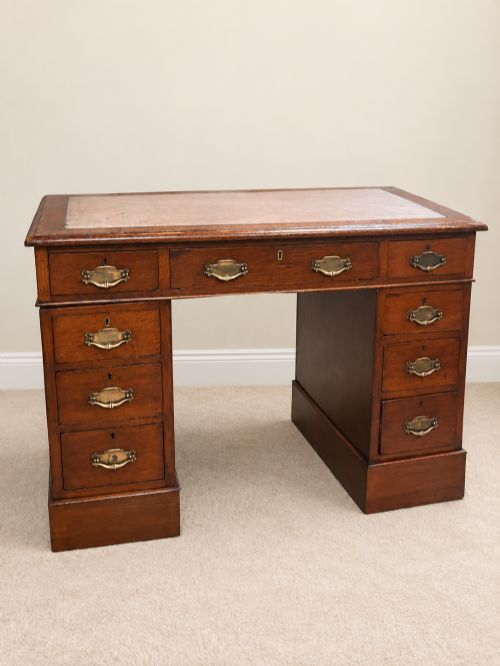
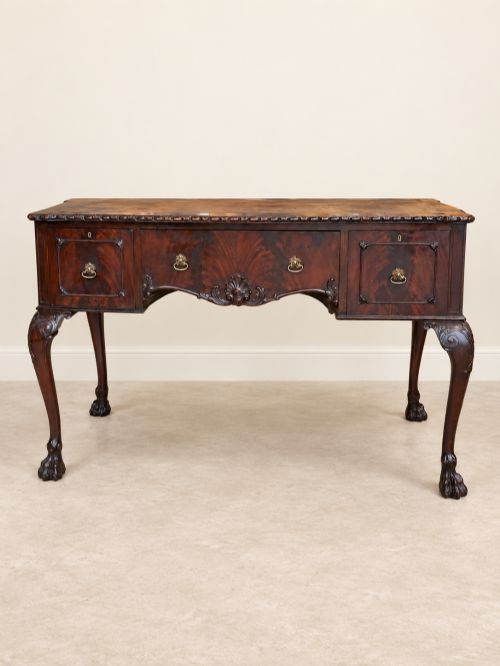
Antique Study Writing Table
An antique study writing table provides a disciplined workspace, bringing period character and substantial timber construction directly into a working room.
Antique Study Writing Table
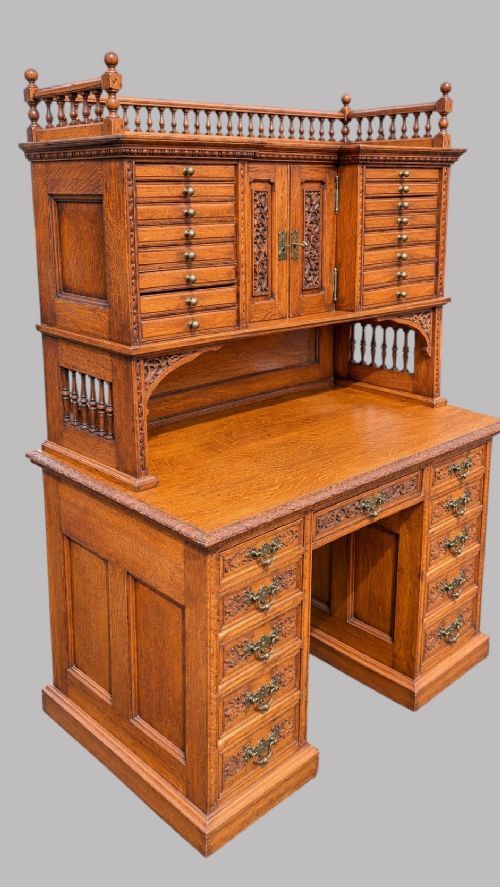
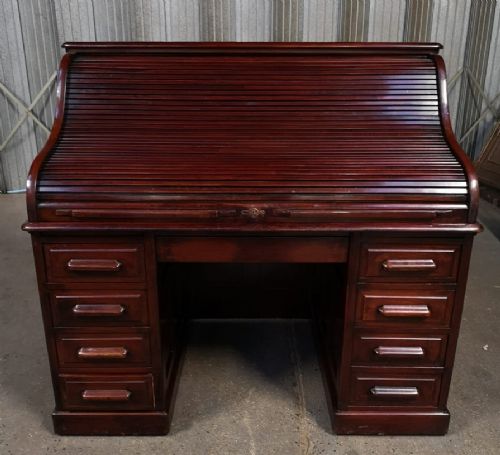
An antique study writing table encompasses freestanding writing desks, twin pedestal desks, and library tables designed for domestic studies and home offices. The pieces found here span the nineteenth century, the Edwardian era, and the art deco period, originating primarily from English workshops.
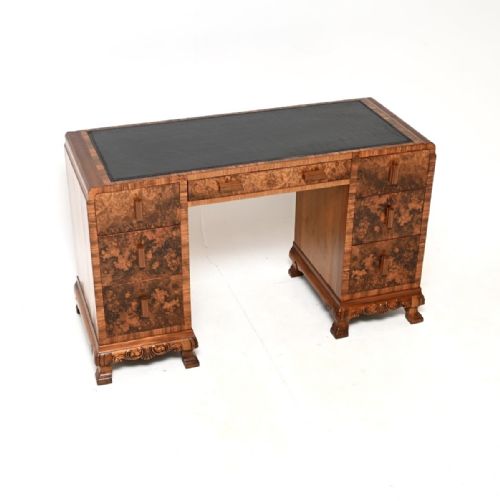
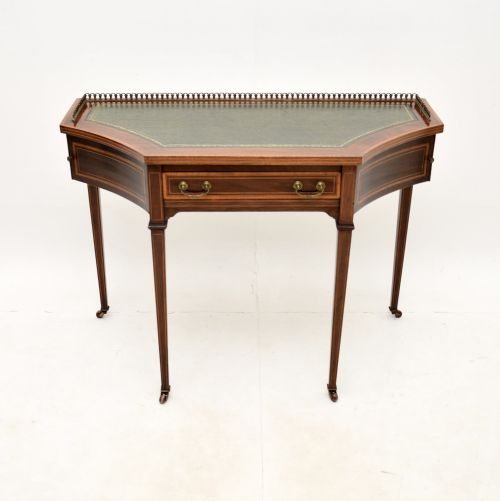
The most common forms on this page are mahogany and oak pedestal desks alongside lighter Edwardian writing tables in inlaid mahogany and satinwood. Buyers also encounter walnut, burr walnut, and rosewood examples, ranging from compact single-pedestal formats to large double-sided partners desks.
These tables served as the primary administrative furniture for libraries, studies, and private offices during the Victorian and Edwardian periods. Their enduring appeal lies in combining functional writing surfaces with deep structural drawers suitable for modern study use.
What varies in quality
Quality rests in the selection of timber figures, such as the richness of flame mahogany or the striking patterns of burr walnut veneers. Superior examples display meticulous attention to secondary timbers, original brass or cast-metal hardware, and precise hand-cut dovetails.
Design sophistication sets finer pieces apart, seen in restrained proportions, balanced brass inlay, and fully finished back panels intended for open room placement. Workshops known for high-tier production integrated superior cabinet-making techniques that preserved structural stability across large pedestal forms.
Some Edwardian models adopted a kidney shape, hugging the writer closely to ensure all inkwells remained within immediate arm's reach.
Gillows Oxford Street Workshop·Heal and Son·Trollope and Sons·Edwards and Roberts·Maple and Co
The Antique Study Writing Table Glossary
- Pedestal desk
- A heavy desk comprising two freestanding drawer stacks supporting a single top writing surface. These units often feature banks of graduated drawers and a central modesty panel.
- Partners desk
- A large double-sided desk designed for two people to work opposite one another, featuring drawers and cupboards on both faces. These pieces were standard in large institutional libraries and executive offices.
- Library table
- A large freestanding table with a finished perimeter, utilised in open rooms for general reading and writing rather than heavy administrative storage. They typically stand on robust legs or columnar supports.
- Bureau
- A desk form featuring a sloping fall-front flap that opens to reveal internal pigeonholes and small drawers. They frequently stand upon bracket feet or dedicated framework stands.
- Stringing
- Thin inlaid lines of contrasting timber or light-coloured wood used to outline drawer fronts and table tops. This decorative technique highlights the geometric boundaries of fine cabinetwork.
- Ormolu
- Gilded bronze mounts and decorative fittings applied to furniture frames, common on continental pieces. This material provides metallic contrast against dark exotic woods like kingwood and rosewood.
Antique Study Writing Table: Frequently Asked Questions
What is the difference between a writing table and a pedestal desk?
A writing table typically stands on four legs without built-in under-desk drawer columns, offering a lighter profile and more legroom. Pedestal desks incorporate two fixed banks of drawers beneath the writing surface, providing substantial storage capacity.
Pedestal variants suit rooms requiring permanent filing space, while writing tables function well as lighter architectural accents in smaller studies.
What woods were commonly used for Edwardian writing tables?
Edwardian tables frequently utilise mahogany, often with satinwood crossbanding, boxwood stringing, and elaborate marquetry inlay. Oak and walnut also appear regularly, alongside limed oak variations produced during the arts and crafts movement.
Cabinetmakers of this period favoured lighter timbers and refined proportions compared to heavy Victorian equivalents.
Can I use an antique writing table for daily computer work?
Antique writing tables accommodate modern laptops and desk lamps comfortably, provided the writing surface height matches ergonomic requirements. Many traditional tables offer adequate knee clearance and surface depth for contemporary peripherals.
Care should be taken to protect antique leather inserts with suitable desk pads when writing directly on the surface.