

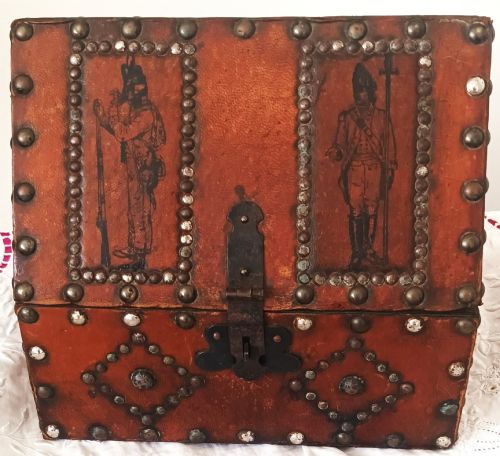


Antique Studded Trunk
An antique studded trunk brings centuries of travel and craftsmanship into a room, offering sturdy storage rich in historic character.
Antique Studded Trunk
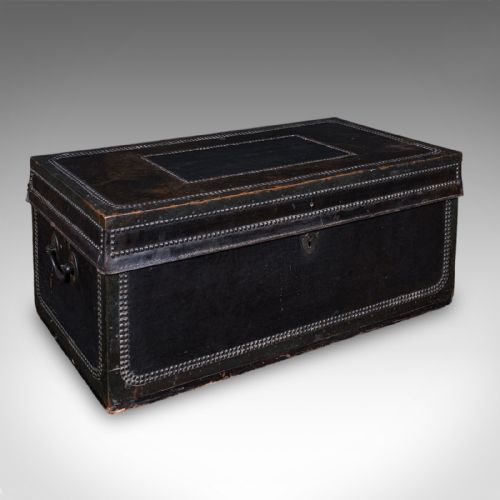
When you search for an antique studded trunk, you encounter robust storage pieces spanning from the seventeenth century through the Victorian era. These items encompass travelling chests, campaign cases, blanket boxes, and leather-bound coffers designed for transit and domestic storage.
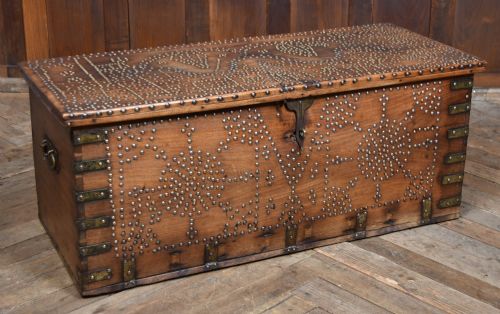
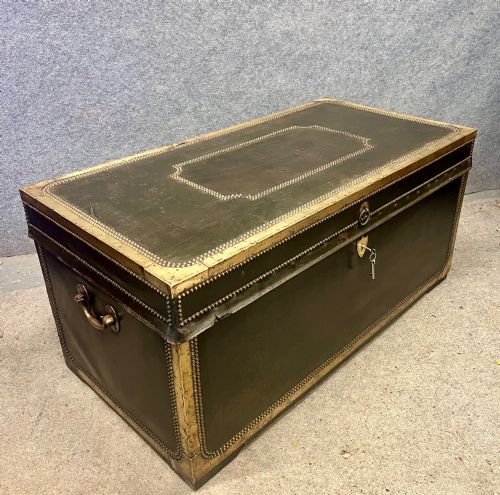
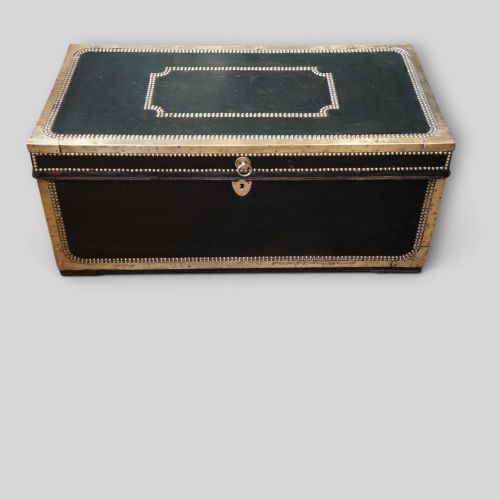
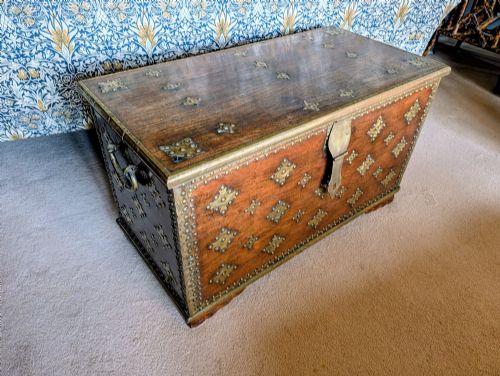
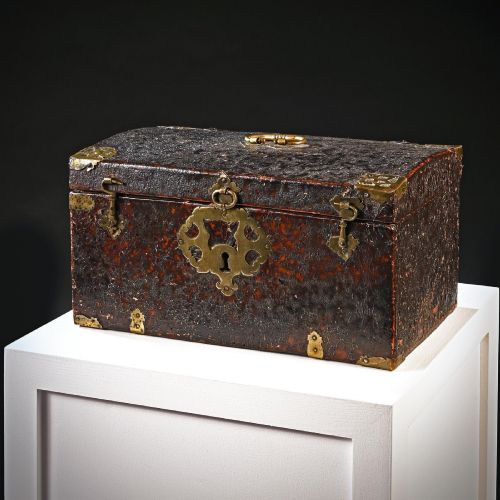
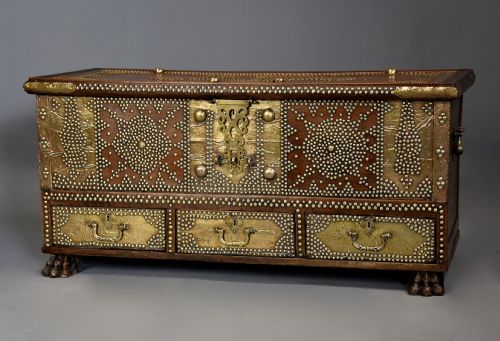
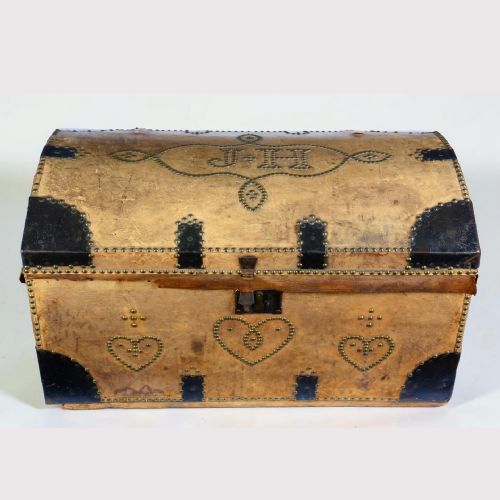
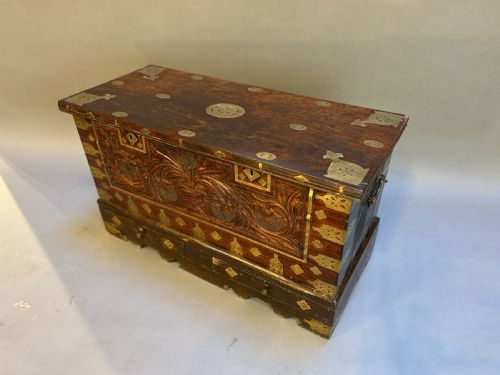
The pieces appearing most frequently range from nineteenth-century camphorwood and teak Zanzibar chests to eighteenth-century dome-top leather coffers and Regency campaign trunks. Their forms reflect global trade routes, military travel, and domestic country house furnishings.
Makers and merchants utilised dense hardwoods, sturdy hides, and protective metal fittings to ensure durability during long journeys. Today, these trunks function as coffee tables, ottomans, and statement storage units within contemporary interiors.
How they were made
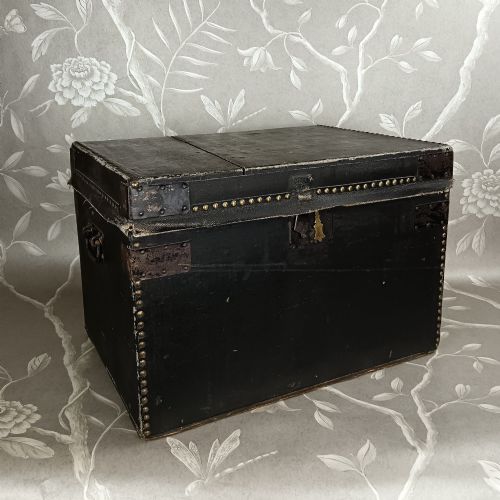
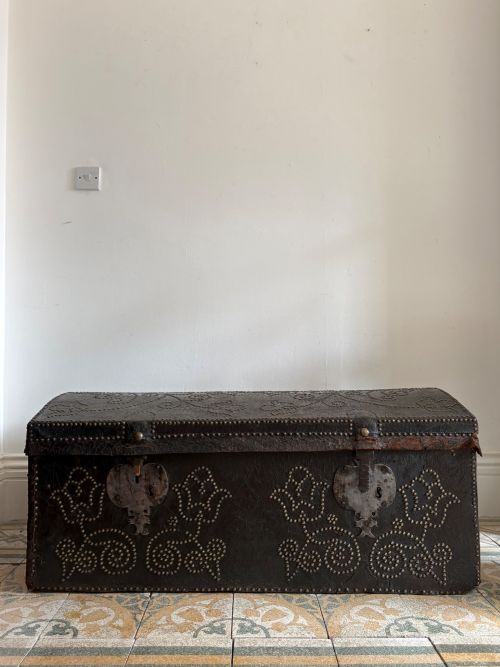
Carpenters and trunk-makers constructed the foundational carcase from durable timbers such as teak, padouk, camphorwood, oak, and mahogany, selecting them for strength and resistance to travel conditions. These wooden structures were then clad in protective layers of cowhide, leather, or cloth.
Metal components, including brass straps, iron bands, and countless individual metal studs or nailheads, were hand-fixed to secure the exterior coverings and reinforce the corners. These studs often formed decorative geometric patterns alongside their structural purpose.
Listings feature woods including camphorwood, teak, padouk, and mahogany alongside leather, hide, and iron.
What varies in quality
The standard of a piece rests upon the integrity of its timber frame and the completeness of its original metalwork, studs, and carrying handles. Finer examples retain their original hinges, locks, and maker's plaques without modern structural intervention.
Surface patination distinguishes superior trunks, particularly where leather, hide, or hardwood has aged gracefully through decades of use. The density of the brass studding and the precision of the joinery mark the distinction between utility transport boxes and high-status commissioned pieces.
Samuel Pratt·Wm Insall of Bristol·Chapple and Sons·Seabrook of St Pauls London
The Antique Studded Trunk Glossary
- Campaign trunk
- A portable storage chest designed for military officers or travellers on the move during the eighteenth and nineteenth centuries. These pieces typically feature recessed brass handles and reinforced corners for transit.
- Zanzibar chest
- A heavy hardwood storage box originating from East Africa and India, characterised by brass studding and strapwork. They were traded extensively across the Indian Ocean.
- Coffer
- A large wooden chest traditionally used for storing valuables, linen, or documents. They often feature domed lids to shed water during travel.
- Portmanteau
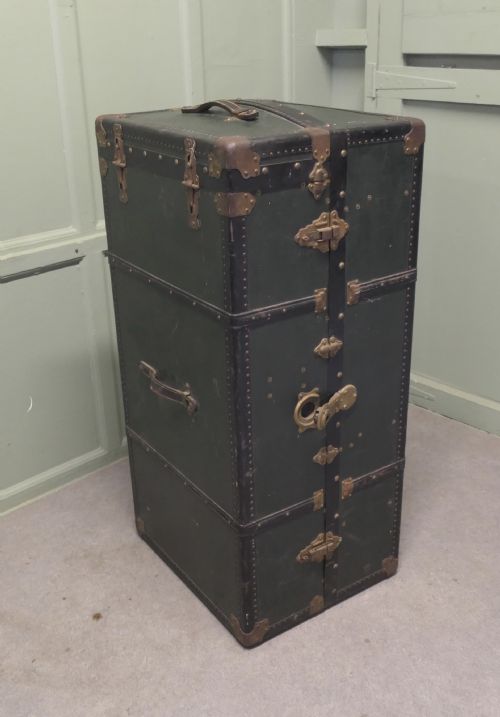
- A large travelling case or suitcase, typically opening into two equal compartments. These items became essential for railway and steamship travel.
- Padouk
- A dense tropical hardwood prized for its reddish hue and durability. It frequently appears in maritime and colonial furniture.
Antique Studded Trunk: Frequently Asked Questions
How were antique studded trunks used?
These trunks served primarily as portable luggage for officers, merchants, and diplomats embarking on long journeys by sea or coach. Their robust construction protected valuable clothing, documents, and personal effects against moisture and rough handling.
In domestic settings, similar chests functioned as secure storage for household linens, blankets, and valuables. Many were kept at the foot of beds or within grand hallways for daily utility.
How do I style a trunk at home?
An antique trunk makes a practical coffee table in a living room, providing hidden storage for blankets and books while offering a solid surface for trays. Their flat or domed tops add texture and historical contrast to modern interiors.
Smaller caskets and boxes sit well upon side tables, chests of drawers, or desks to hold smaller items. Larger blanket boxes anchor the end of a bed or serve as hallway seating.
How can I tell the period of a trunk?
Dating relies on examining the construction methods, locking mechanisms, and materials used in the carcase and linings. Seventeenth and eighteenth-century examples often feature heavy hand-stitched leather over oak or pine with wrought iron mounts.
Nineteenth-century pieces frequently display machine-made brass studs, camphorwood or teak construction, and sophisticated campaign hardware. Maker's stamps or paper trade labels inside the lid also provide precise chronological clues.