
Antique Sterling Silver Condiments
Antique sterling silver condiments bring character to the dining table through salt cellars, mustard pots, and pepper shakers.
Antique Sterling Silver Condiments
When you search for antique sterling silver condiments, you encounter items designed to hold table seasonings like salt, mustard, and pepper. These utilitarian objects served formal dining tables across centuries, evolving in shape from simple vessels to ornate tableware.
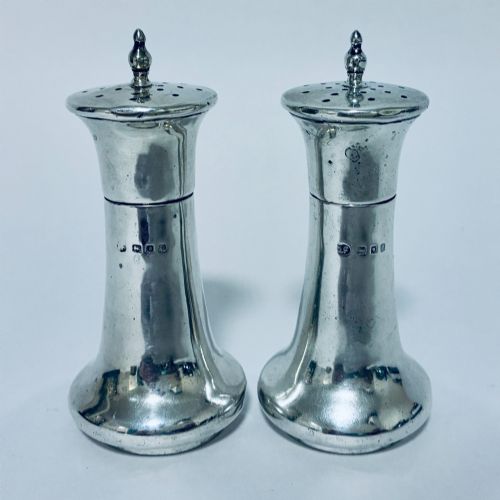
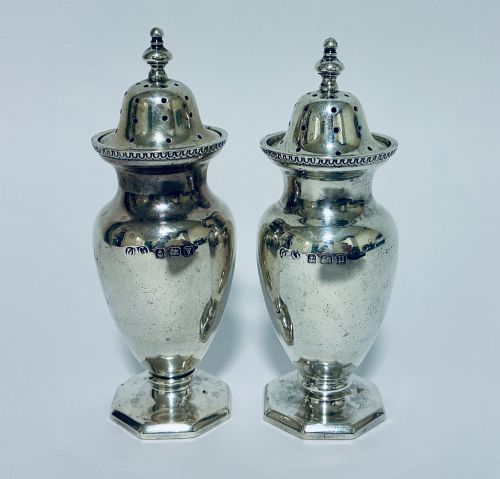
The selections span distinct periods, with Victorian and Edwardian examples appearing frequently alongside Georgian, George V, and Art Deco designs. Common forms include salt cellars, mustard pots, pepper pots, and complete cruet sets.
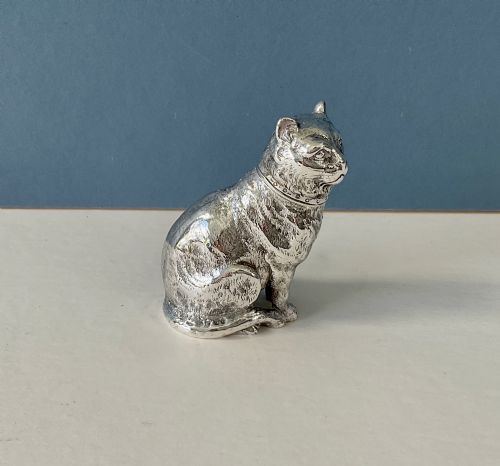
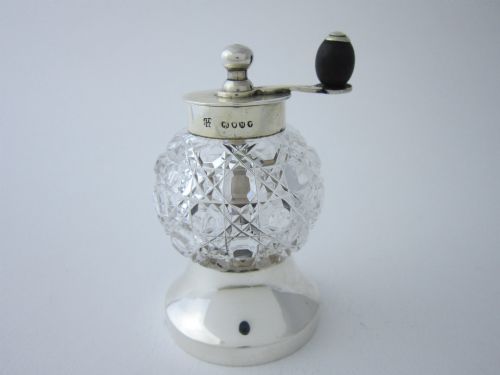
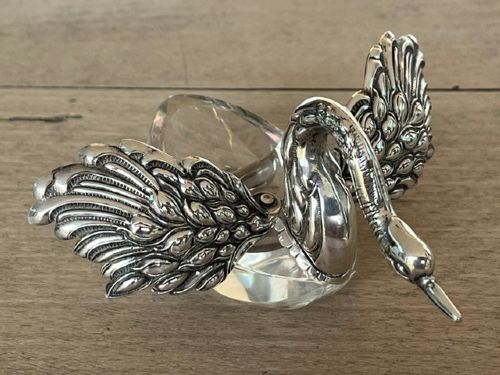
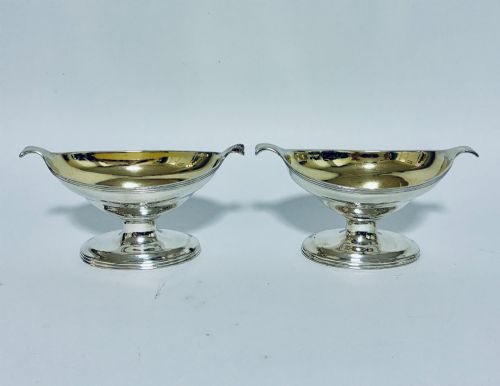
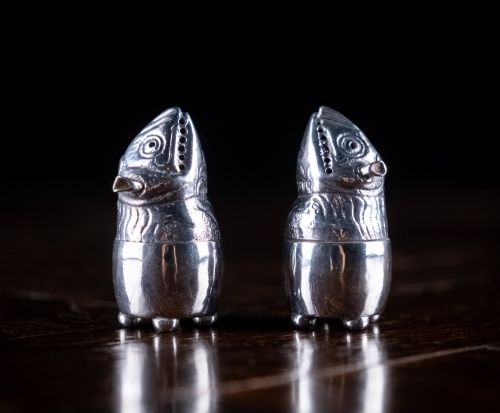
Makers utilised various functional shapes, ranging from traditional drum mustard pots and salt boats to novelty animal forms like cats and dogs. Many pieces incorporate coloured glass liners or crystal bodies to contain the condiments safely.
Materials and construction methods
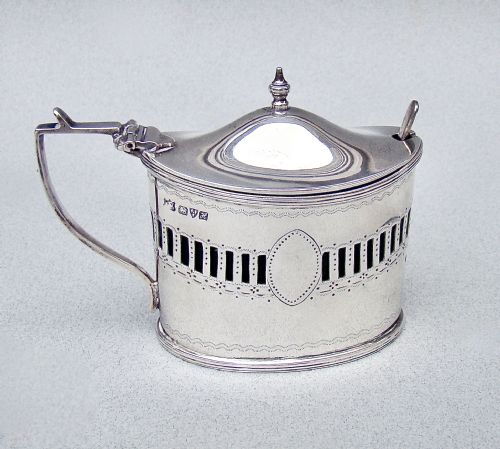
Silversmiths constructed these vessels primarily from sterling silver, shaping the metal through casting, hammering, and piercing techniques. Pierced silverwork creates delicate open patterns on mustard pots and baskets, often backed by contrasting coloured glass liners.
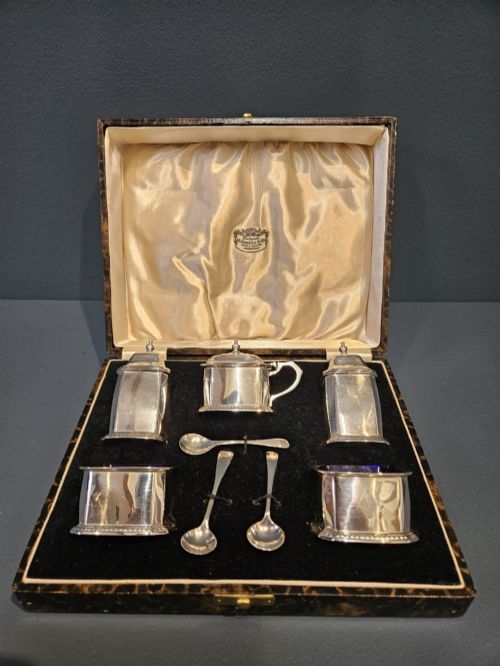
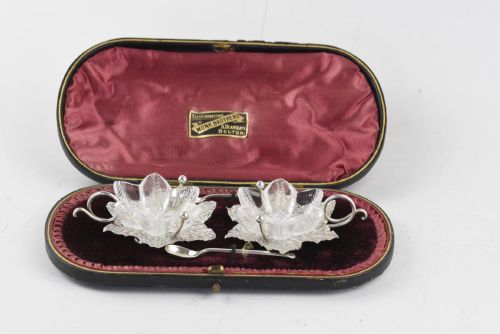
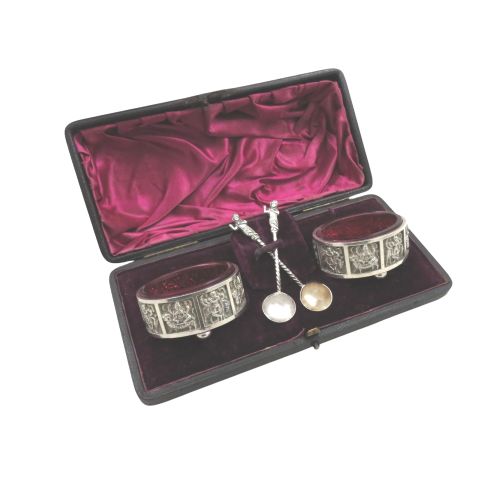
Makers integrated secondary materials such as cobalt glass, clear cut glass, and crystal to form the body of salt cellars and oil bottles. Specialised items also combine the silver frames with velvet or silk linings inside fitted presentation cases.
Silver cats and dogs stand ready on the dining table, hiding their seasoning duties behind removable heads.
Assessing quality in silver condiments
Quality rests in the weight of the metal and the crispness of the chasing or piercing work applied to the silver surface. Substantial silver gauge and well-defined decorative details distinguish superior tableware from standard production items.
The presence of original matching components, such as glass liners, spoons, and fitted leather cases, elevates the integrity of a set. Maker marks from recognised silversmiths also contribute to the distinction of individual pieces.
Goldsmith & Silversmith's·Alfred Marston·Frederick Brasted·Nathan & Hayes·Barnards·Charles & George Fox·William Neale·Charles Fox II·Josiah Williams & Co·William Plummer
The Antique Sterling Silver Condiments Glossary
- Cruet set
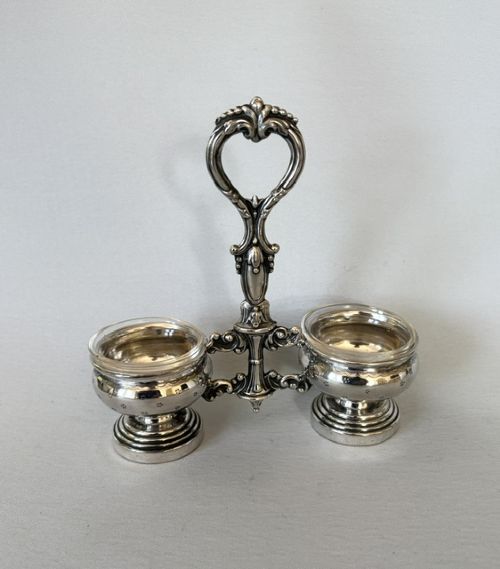
- A matched group of bottles or pots for holding condiments like oil, vinegar, salt, and pepper on the dining table. These sets typically sit within a dedicated silver frame or stand.
- Salt cellar
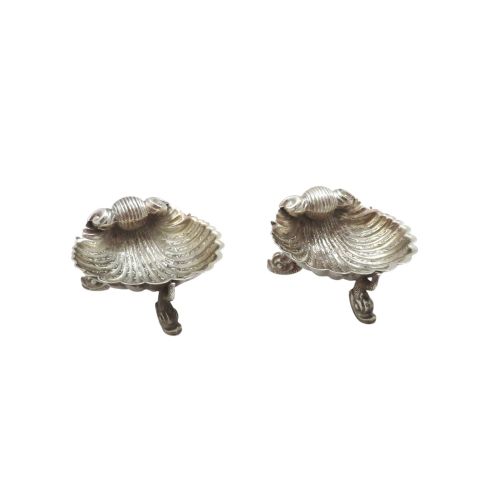
- An open vessel or dish used to hold loose salt before the invention of the spring-loaded salt shaker. They frequently feature removable cobalt glass or blue glass liners.
- Mustard pot
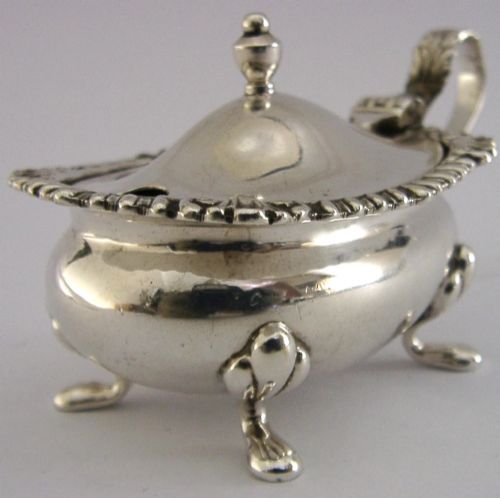
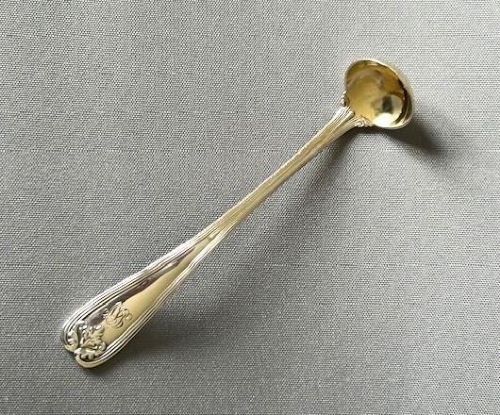
- A small covered jar designed to serve prepared mustard, usually accompanied by a tiny spoon. Many examples feature hinged lids and pierced silver bodies.
- Sugar caster
- A tall shaker container with a pierced dome top used for sprinkling sugar over food. They date across Georgian, Victorian, and Edwardian periods.
- Chasing
- A metalworking technique where the silversmith punches and hammers the metal from the front to raise decorative motifs in relief. This creates textured surface designs like foliage.
Antique Sterling Silver Condiments: Frequently Asked Questions
How do you use antique salt cellars?
Antique salt cellars are open dishes meant to hold dry salt that guests pinch out using small matching spoons or their fingers. They require glass liners to prevent the salt from corroding the silver over time.
Placing them beside individual table settings or sharing them between diners brings a traditional ritual back to modern dining.
What are novelty pepper pots?
Novelty pepper pots are condiment shakers formed into playful shapes such as animals, figures, or objects rather than standard urns or cylinders. Victorian and Edwardian silversmiths specialised in these humorous designs, creating cats, dogs, and grotesque characters with functional shaker holes.
Collectors prize them for their sculptural humour and imaginative craftsmanship.
How do I date antique silver?
Dating antique silver relies on reading the hallmarks stamped into the metal, which typically indicate the maker, the assay office, the purity standard, and the year of production. British pieces feature specific date letters that change annually according to the governing office.
Style indicators like Georgian neoclassical lines or Art Deco geometry also help narrow down the period of manufacture.