





Antique Sterling Milk Jug
An antique sterling milk jug brings the weight and bright gleam of Georgian and Victorian silver directly to the daily tea tray.
Antique Sterling Milk Jug
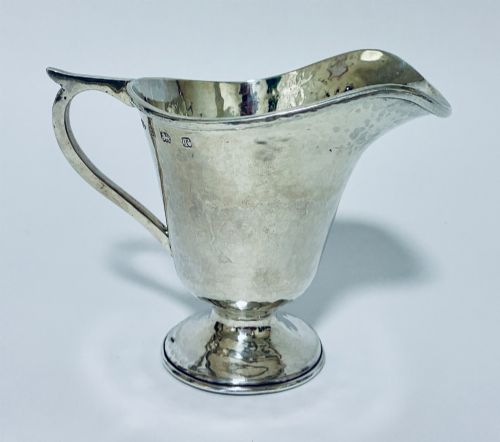
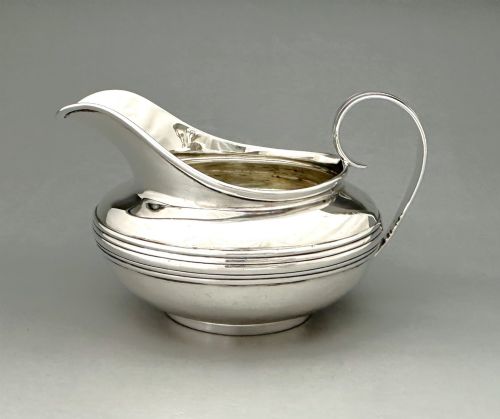
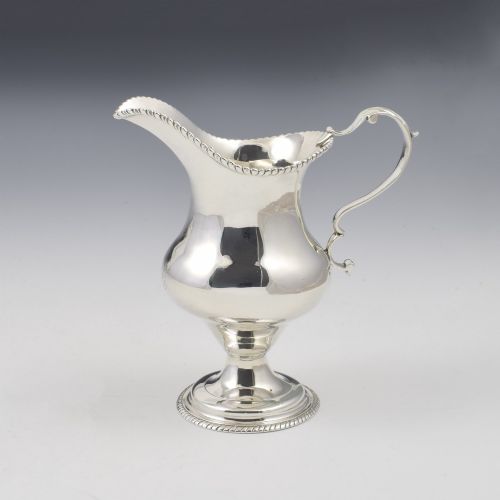
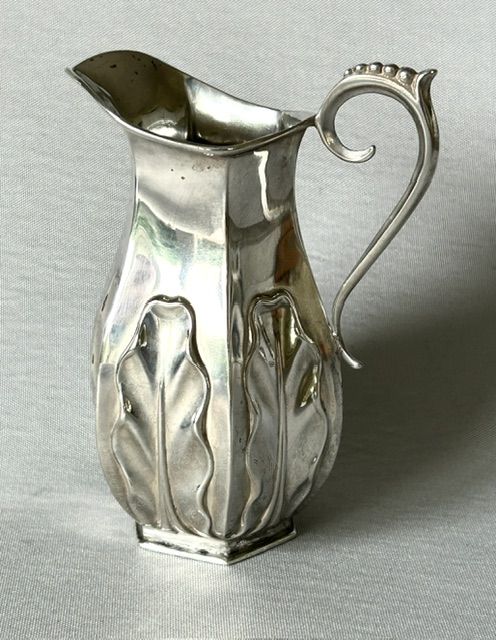
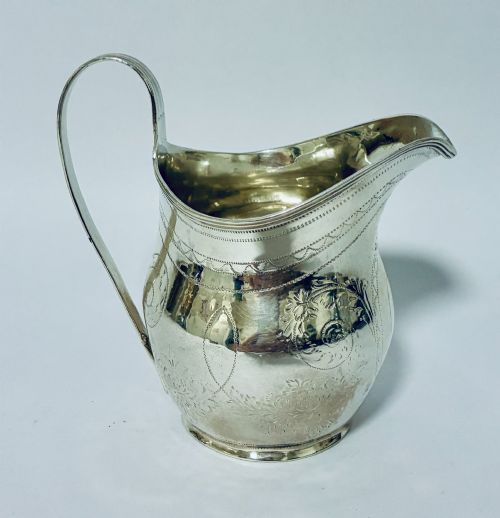
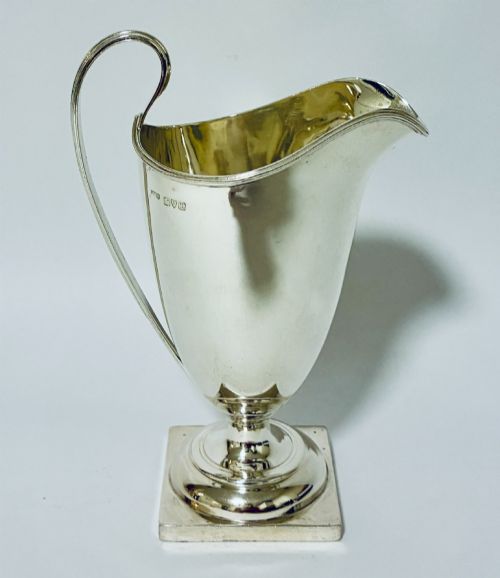
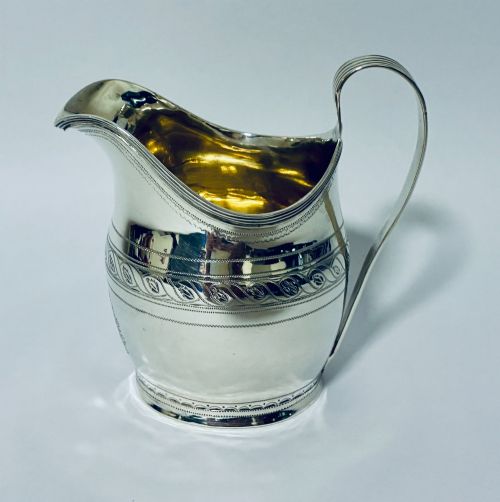
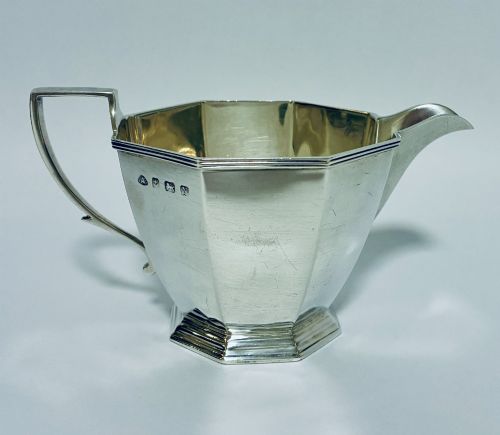
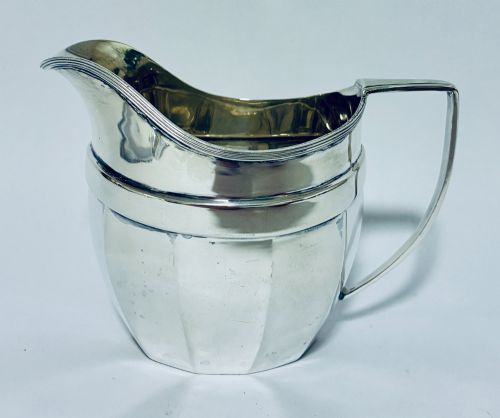
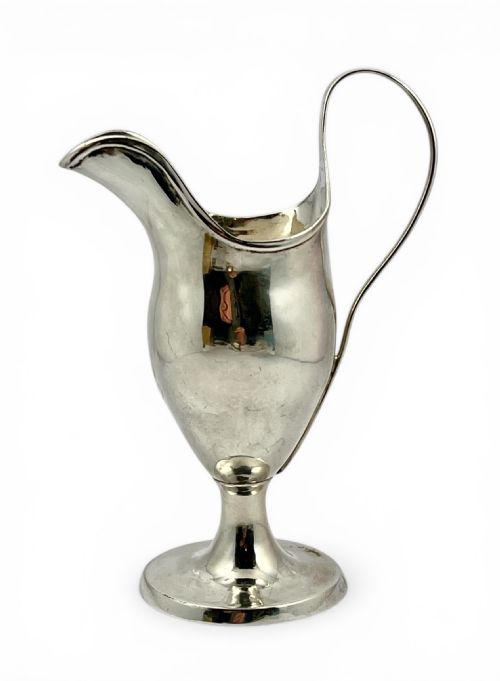
An antique sterling milk jug is a small vessel designed for serving cream or milk alongside tea, taking shapes that range from early sparrow beak and helmet forms to later pedestal and churn designs. Buyers browsing this selection encounter pieces spanning the Georgian, Victorian, and Edwardian eras, alongside later twentieth-century styles.
The most common forms on this page are Georgian cream jugs and Victorian milk jugs, frequently cast or hammered from solid sterling silver in workshops across London, Chester, and provincial centres like Aberdeen and Glasgow.
Materials and Techniques
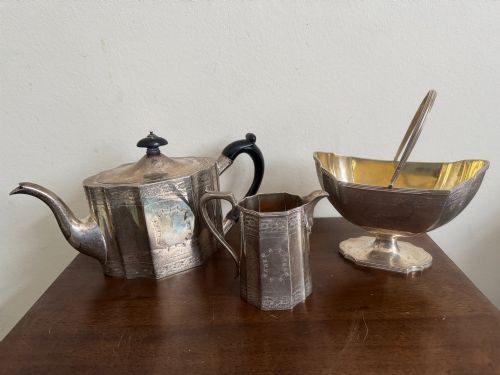
Silversmiths constructed these jugs from sterling silver, occasionally enhancing the interior with gold wash or gold gilding to prevent tarnishing from dairy acids. Certain pieces incorporate insulating handles fashioned from wood or ebony to protect fingers from hot contents.
Makers utilised techniques such as hand-raising, bright cut engraving, and casting to shape the bodies, soldering applied feet, rims, and handles before submitting the finished vessel for official hallmarking.
Makers occasionally turned dairy into art by shaping solid silver containers as miniature Guernsey milk cans, complete with tiny working lids.
Evaluating the Pieces
Quality rests upon the crispness of the original chasing and engraving, where sharp lines in bright cut patterns distinguish superior handwork from worn or soft decoration. The weight of the silver and the balance of the handle relative to the spout determine how solidly the vessel rests in the hand.
The clarity and completeness of the hallmarks stamped into the metal establish the maker and year of origin with certainty, while interior gilding that remains intact adds a further layer of preservation.
Stalker & Mitchison·James Gordon·John Emes·Peter & Ann Bateman·John Mackfarlan·Robert Pringle & Sons·Harrison Brothers & Howson·Walter Brind
The Antique Sterling Milk Jug Glossary
- Hallmark
- Official marks stamped into the silver indicating the standard of purity, the assay office, and the date letter. These stamps provide a definitive record of when and where the jug was made.
- Sparrow beak
- An early eighteenth-century form of cream jug featuring a distinctive, pinched triangular spout resembling a bird's bill. This style typically sits on three small feet.
- Bright cut
- A style of engraving executed with faceted flat-bottomed cuts that reflect light brightly. It creates crisp geometric or floral patterns across the silver surface.
- Gilt
- A thin layer of gold applied to the interior surface of the silver jug. This treatment protects the metal from the corrosive action of milk or cream.
Antique Sterling Milk Jug: Frequently Asked Questions
How do I clean an antique silver milk jug?
Wash the jug gently in warm water with mild washing-up liquid and dry it immediately with a soft cloth to protect the finish.
Avoid abrasive dips or harsh commercial polishes that wear away engraved details and remove centuries of gentle patination.
Can I still use these jugs for serving milk?
These vessels were created for daily dairy service and remain entirely suitable for holding milk or cream on the table today.
Ensure you rinse the interior promptly after use, particularly if the piece lacks an original gold wash, to prevent tarnishing from dairy residues.
How do I identify a Georgian jug from a Victorian one?
Georgian jugs frequently display neoclassical helmet profiles, delicate bright cut engraving, or sparrow beak spouts associated with the eighteenth century. Victorian examples tend towards heavier pedestal bases, naturalistic floral embossing, and more robust casting.
Checking the stamped hallmarks provides the definitive date of manufacture for each piece.
What does a gold wash inside the jug mean?
A gold wash, or gold gilding, is a thin layer of gold applied to the interior silver surface during production. Silversmiths added this finish to protect the reactive sterling silver from the acidic properties of milk and cream.
Finding intact gilding inside an antique jug indicates careful preservation over generations.