

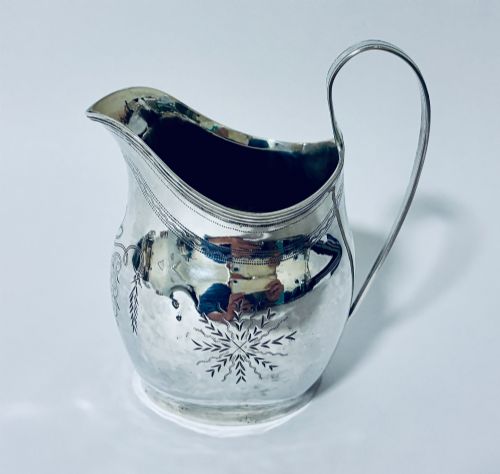
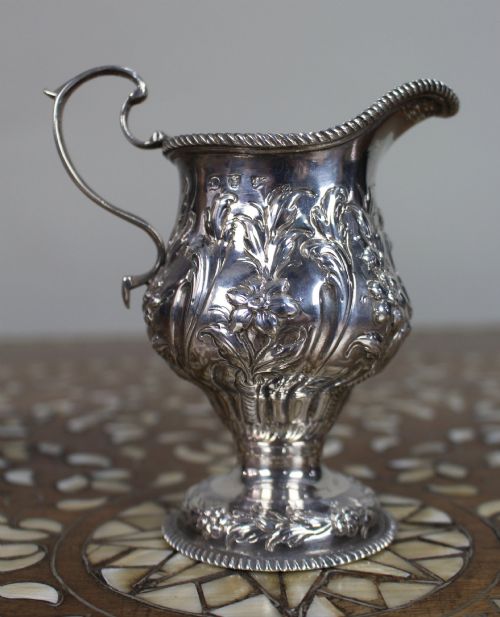
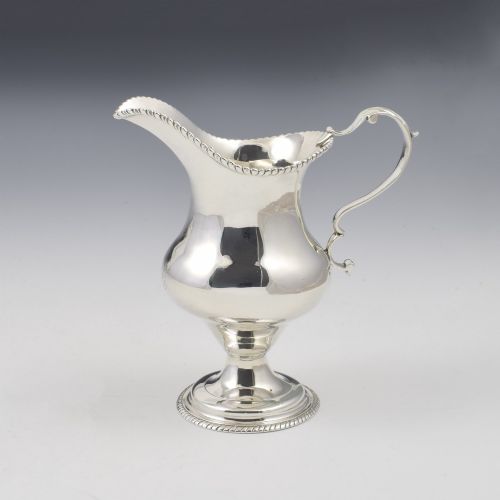
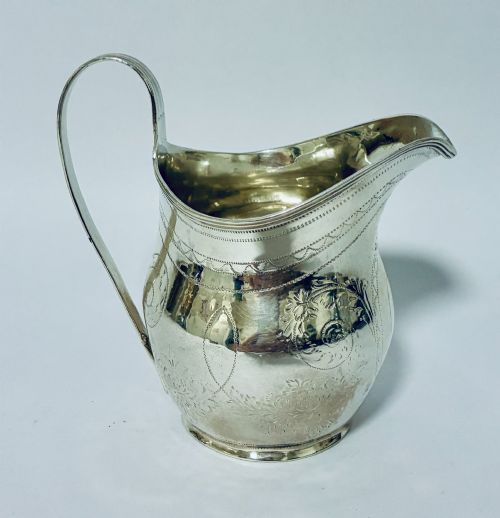




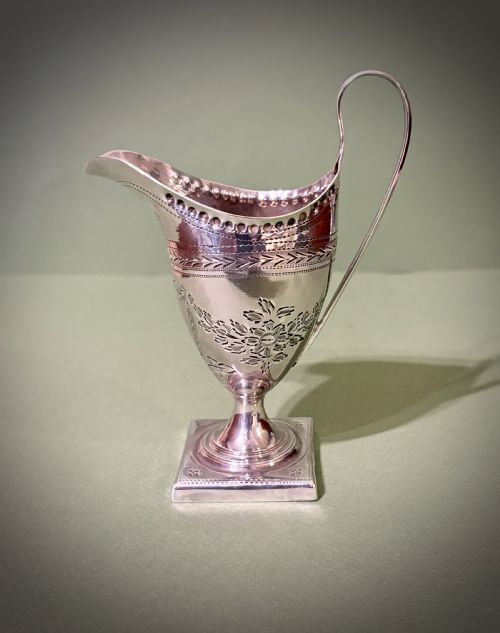


Georgian Silver Cream Pitcher
A georgian silver cream pitcher brings the weight and bright polish of the eighteenth and nineteenth centuries straight to the tea table.
Georgian Silver Cream Pitcher
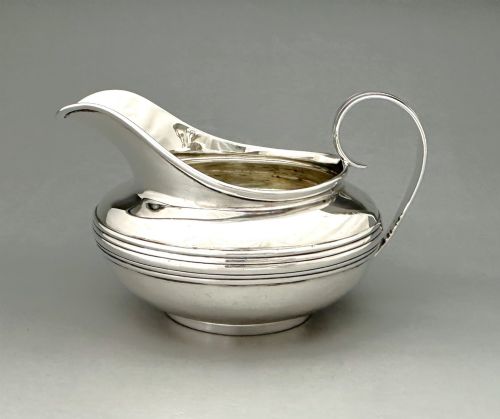
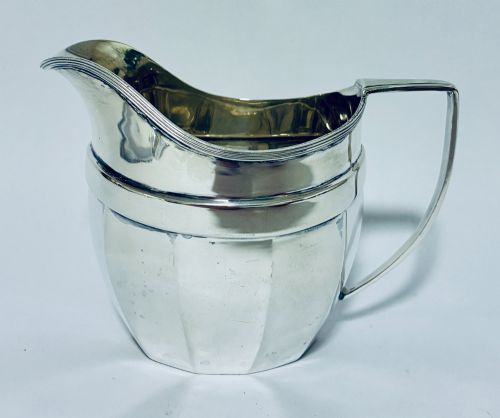
A georgian silver cream pitcher is a small domestic vessel designed to hold milk or cream for the tea service, appearing in forms ranging from diminutive sparrow beak jugs to footed ewers and helmet shapes. The pieces on this page span the Georgian period alongside later revivals, reflecting the changing tastes of British silversmiths from the reign of George I through to the early twentieth century.
Most examples you encounter here belong to the broad Georgian era, encompassing provincial and London-made items with distinct regional traits. You will also find pieces produced by provincial makers in centres such as Exeter, Newcastle, Aberdeen and Dublin, each showing local handling of weight and handle attachment.
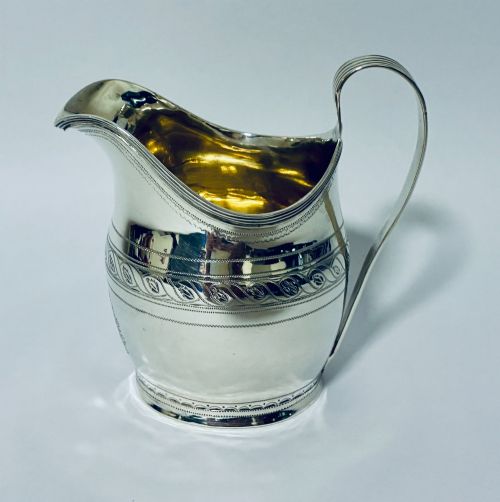
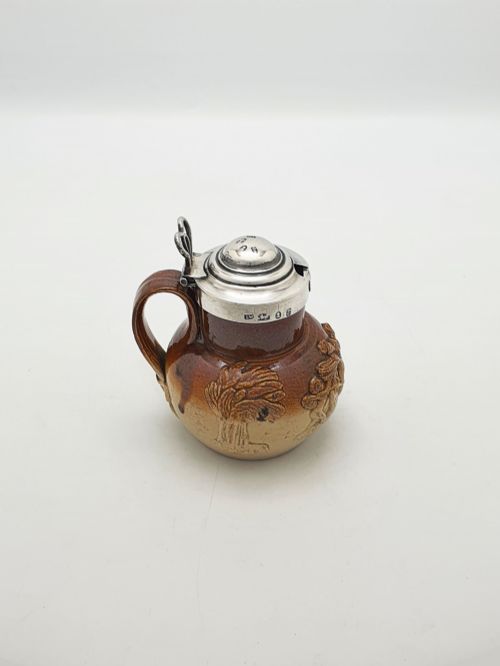
Alongside standard cream jugs and milk jugs, the selection includes related teaware such as sugar bowls and mustard pots fitted with silver collars. The forms shift from early pear-shaped bodies to bright-cut neoclassical helmet designs and nineteenth-century naturalist motifs.
Materials and construction methods
These vessels are formed primarily from sterling silver, solid silver or silver plate, often enhanced with gold gilt, gold wash or interior gilding to protect the metal from the acidic properties of dairy. Silversmiths raised bodies from flat sheets of metal or cast them in sections before soldering handles, feet and rims into place.
Decoration was achieved through hammering, chasing, bright-cut engraving and casting, resulting in crisp surface patterns and sturdy footed bases. Sheffield plating and silver plate appear alongside solid sterling, demonstrating the range of workshops producing teaware for different households.
Georgian Silver Cream Pitcher Retail Price Guide 2026
Typical asking prices for georgian silver cream pitcher among the pieces listed under this phrase on Sellingantiques today, from the lower quarter to the upper quarter. They describe what is for sale here now, not the wider market.
Early silversmiths shaped tiny spouts by hand, giving each sparrow beak jug its own distinct expression.
Markers of distinction and craftsmanship
Quality in a georgian silver cream pitcher rests on the crispness of the chasing, the balance of the handle against the body, and the clarity of the maker marks and hallmarks stamped into the silver. Pieces showing sharp bright-cut engraving or a well-proportioned sparrow beak reflect the higher tier of eighteenth-century silversmithing.
The weight of the metal and the integrity of soldered joints separate fine examples from standard production items. Provincial pieces with clear regional attributions and traceable maker histories command distinct attention from collectors who value local silversmithing traditions.
Stalker & Mitchison·James Gordon·John Emes·Peter & Ann Bateman·George Unite·Robert Pringle & Sons
The Georgian Silver Cream Pitcher Glossary
- Sparrow beak
- A small early eighteenth-century cream jug featuring a pointed, beak-like spout formed directly from the lip of the body. This shape is characteristic of early George I and George II designs.
- Bright-cut engraving
- A surface decoration technique using faceted gravers to cut shallow geometric or floral patterns that catch the light. It appears frequently on late eighteenth-century silver teaware.
- Helmet jug
- A cream pitcher shaped with a flared rim and sweeping foot reminiscent of a classical helmet. This form became popular during the George III period.
- Silver gilt
- Sterling silver that has been coated with a thin layer of gold. It is often found on the interior bowls of cream jugs to prevent tarnishing from milk.
- Hallmark
- A series of stamped symbols indicating the purity of the silver, the assay office, the date letter, and the maker. These marks allow collectors to verify the origin and age of a piece.
Georgian Silver Cream Pitcher: Frequently Asked Questions
What is a sparrow beak jug?
A sparrow beak jug is an early form of cream pitcher characterised by a pinched, pointed spout resembling a bird's beak. These pieces date predominantly to the early eighteenth century during the reigns of George I and George II.
They are typically smaller than later milk jugs and reflect the early days of tea drinking when cream was used sparingly. Their simple pear-shaped bodies rest on round bases without feet.
How do I know if a cream pitcher is Georgian?
You determine the age of a pitcher by examining the hallmarks stamped on the body or base, which indicate the assay office and the specific year of manufacture. Stylistic clues such as bright-cut engraving or helmet shapes also point to the late eighteenth century.
Provincial pieces often carry maker marks that link them to specific towns outside London, such as Newcastle, Exeter, or Dublin. Comparing the weight, handle style, and decorative motifs helps confirm the period.
Why are some cream jugs gilded inside?
Silversmiths applied a gold wash or gilt interior to protect the silver from the corrosive acids found in milk and cream. This interior plating prevented the metal from tarnishing or developing a metallic taste.
Over time, much of this original gilding may soften in colour, but surviving traces indicate careful domestic use and high-quality manufacture.
Can I use an antique cream pitcher daily?
Antique silver cream pitchers are durable enough for regular table use provided they are handled with care and washed by hand in warm soapy water. Avoid abrasive cleaners that can wear away crisp engraving and maker marks.
Their solid silver construction makes them practical for serving cream, while their historic designs add character to a modern table setting.