


Antique Sterling Hollowware
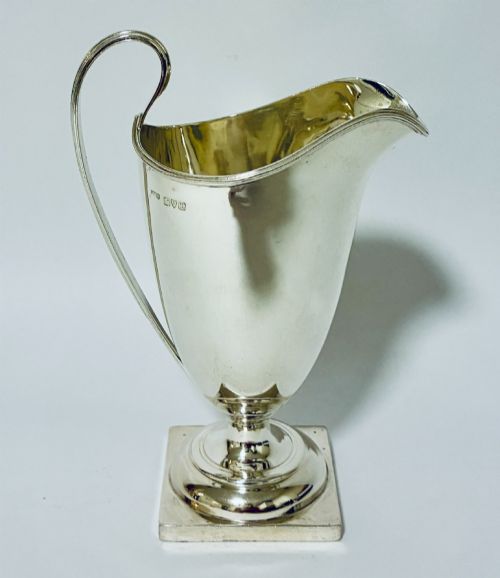
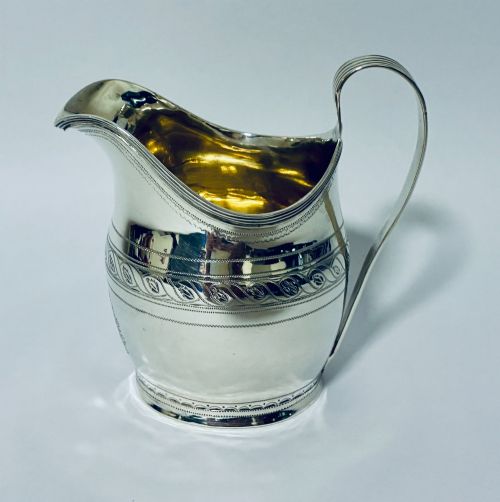
Antique sterling hollowware brings together centuries of domestic silver, from Georgian teapots to Edwardian cream jugs designed for the table.
Antique Sterling Hollowware
Antique sterling hollowware comprises domestic silver vessels and tableware, including teapots, cream jugs, tankards, bowls, and salt cellars. When exploring antique sterling hollowware, buyers encounter pieces spanning the Georgian, Victorian, and Edwardian eras, alongside later twentieth-century styles like Art Deco and Arts and Crafts. These vessels served functional roles in dining and hospitality, evolving from eighteenth-century bullet teapots to Edwardian tea caddies.
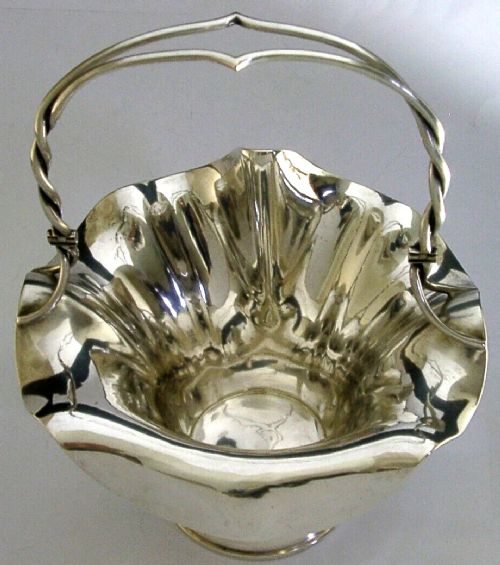
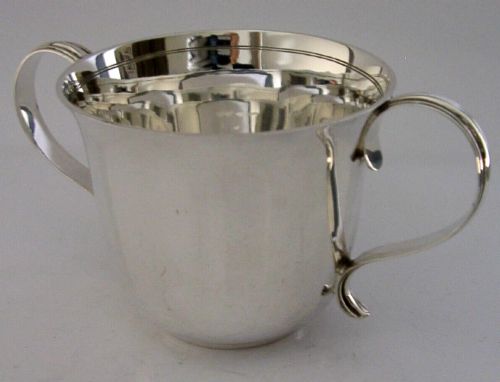
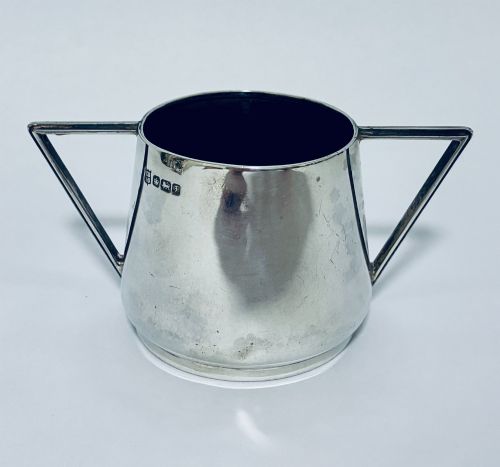
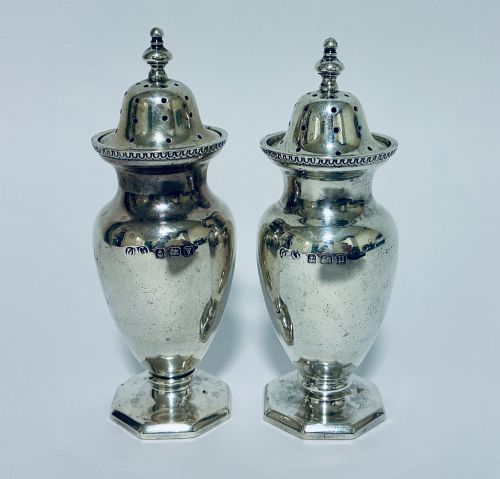
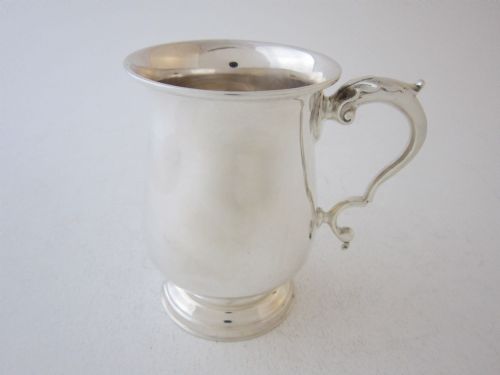
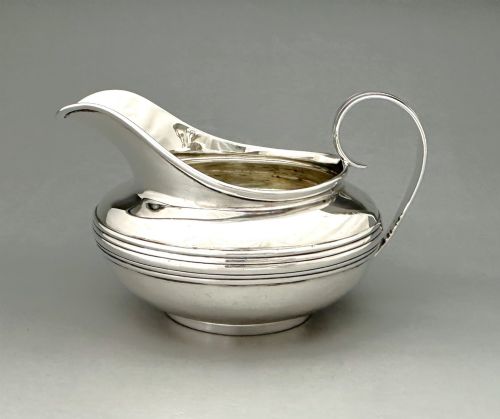
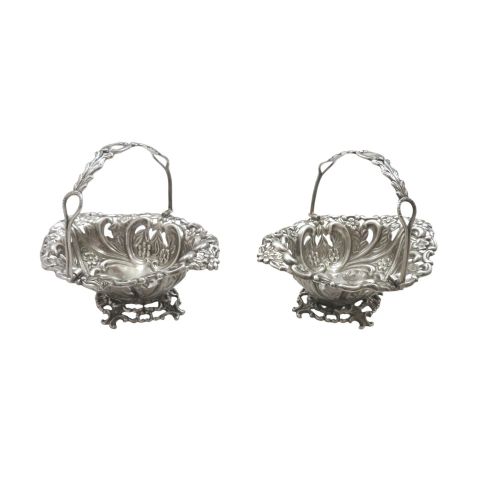
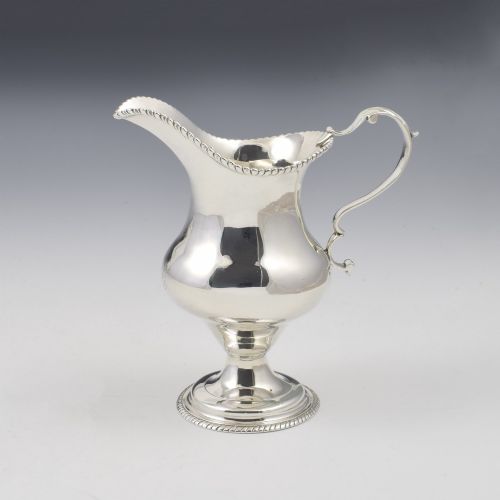
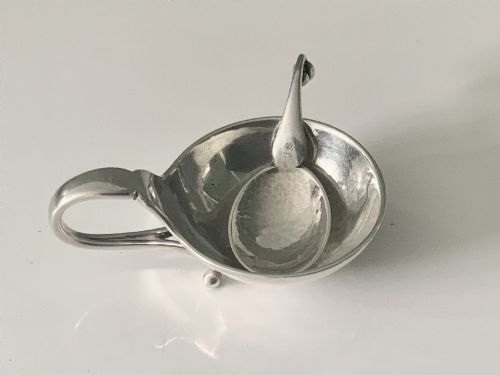
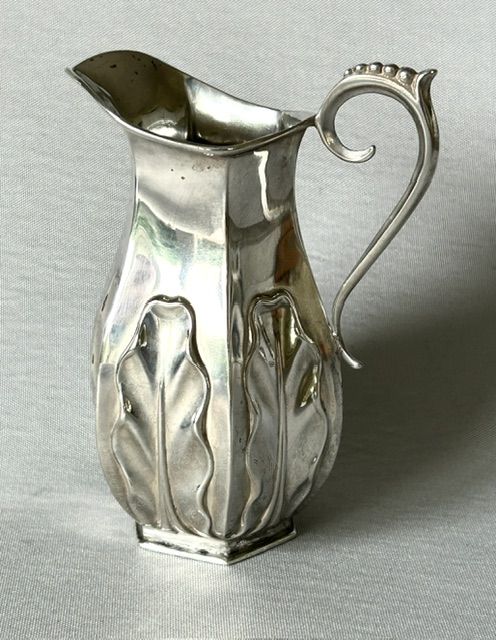
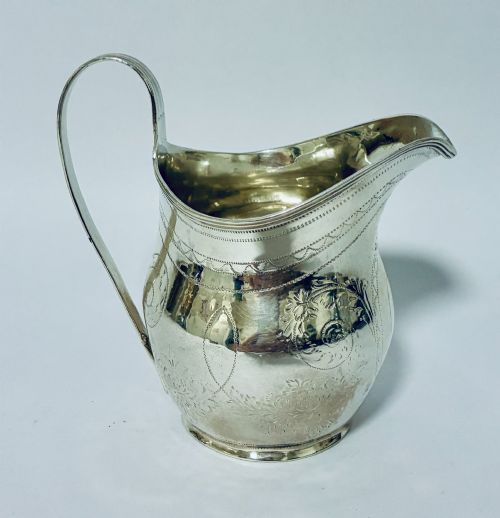
The pieces on this page are dominated by cream jugs, teapots, christening mugs, and mustard pots in solid silver. Items range from plain George III mustard pots to heavy Art Nouveau baskets and intricate Victorian pierced mustard pots. Makers and provincial silversmiths from London, Edinburgh, and Newcastle contributed distinct regional characteristics to these forms.
How antique sterling hollowware was made
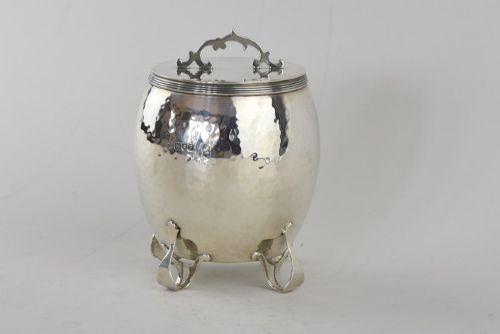
Silversmiths constructed antique sterling hollowware primarily from sterling silver, frequently employing wood for insulating handles on teapots, and bone or silver-gilt for interior contrast. Hammered surfaces appear in Arts and Crafts pieces, while earlier Georgian items demonstrate precision casting, raising, and hammering from sheet silver. Internal gold washes, known as silver-gilt, protected the silver from acidic contents like mustard or cream.
Techniques evolved from the clean, bullet-shaped bodies of the mid-eighteenth century to the pierced decorations of the Victorian period and the organic lines of Art Nouveau. Makers utilised soldering to join spouts, handles, and feet to the main bodies, finishing the exteriors with polished bright-cut engraving or hand-hammered textures.
Listings feature items spanning the Georgian, Victorian, and Edwardian periods, executed in sterling silver, silver-gilt, and solid silver with wood components.
What varies in quality
Quality in antique sterling hollowware rests upon the weight of the metal, the crispness of any chased or pierced decoration, and the integrity of the maker's mark. Heavier pieces, such as substantial porringers and baskets, show superior gauge metal that resists denting and maintains structural balance. The skill required to execute delicate piercing on mustard pots or handle insulation on teapots distinguishes standard production from exceptional work.
The reputation of the workshop also shifts the standing of a piece, with items by notable makers commanding attention for their refined proportions and assured execution. Original components, such as matching spoons for salt cellars or intact gilt interiors, preserve the completeness and historical integrity of the object.
Charles Edwards·Stalker and Mitchison·Georg Jensen·Paul Storr·Tiffany and Co
The Antique Sterling Hollowware Glossary
- Sterling silver
- A silver alloy containing 92.5 percent pure silver and 7.5 percent other metals, usually copper, chosen for durability in tableware.
- Hollowware
- A category of metalware comprising vessels intended to hold contents, such as bowls, teapots, jugs, and tankards, as opposed to flatware.
- Porringer
- A small, shallow vessel with one or two horizontal flat handles, used historically for porridge, broth, or as a christening bowl.
- Silver-gilt
- Sterling silver that has been coated with a thin layer of gold on the interior or exterior surfaces, sometimes referred to as vermeil.
- Caster
- A small container with a perforated lid used for sprinkling sugar or spices over food.
Antique Sterling Hollowware: Frequently Asked Questions
What is sterling hollowware?
Sterling hollowware refers to three-dimensional silver items used in domestic settings, including teapots, cream jugs, tankards, sugar bowls, and mustard pots. These pieces are shaped from solid silver rather than being flat objects like spoons.
Collectors prize them for their combination of fine craftsmanship and domestic utility across various historical periods.
How do I clean antique silver?
Antique silver benefits from gentle washing in warm water with mild soap, followed by drying with a soft cloth to protect the surface. Avoid harsh chemical dips that strip away the natural patina accumulated over decades.
Occasional use of a reputable silver polish maintains the shine without wearing down engraved details or hallmarks.
Were christening mugs used daily?
Christening mugs served primarily as commemorative gifts given to newborns, marking an important family milestone. While some saw use during childhood meals, many were kept as display pieces or presentation items.
Their survival in good condition often reflects their status as cherished keepsakes rather than kitchen utensils.