


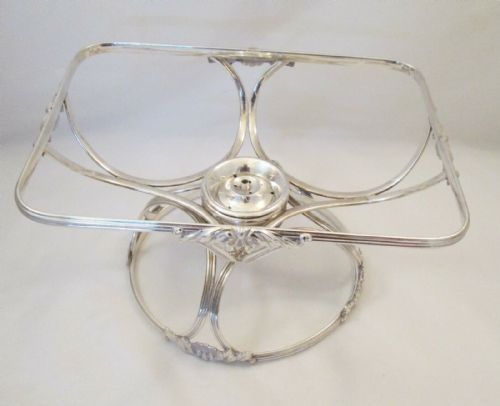
Victorian Entree Dishes
Victorian entree dishes are formal serving vessels designed for the nineteenth-century dining table, combining substantial silver plate or sterling silver with practical warming and rollover mechanisms.
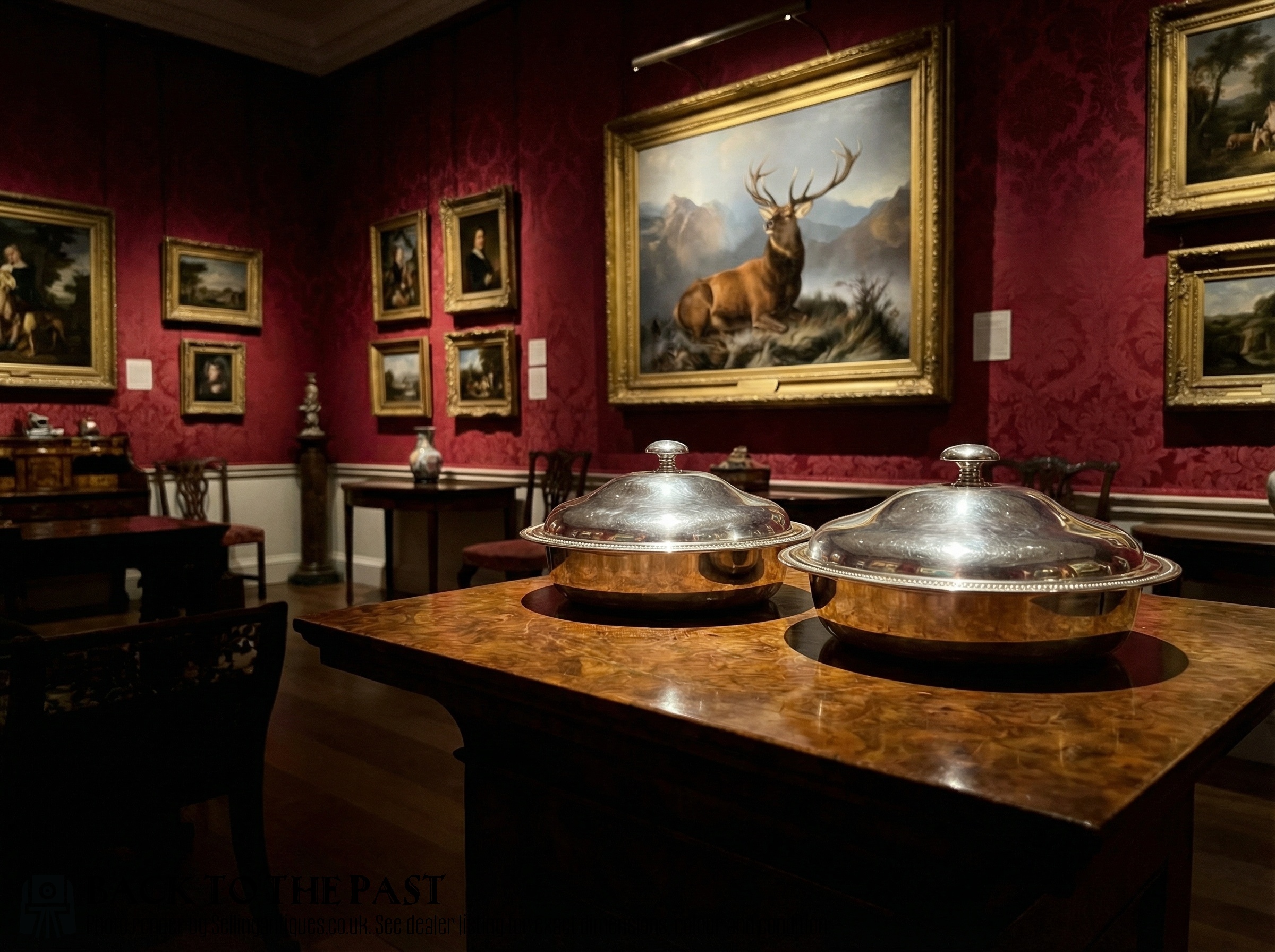
Victorian Entree Dishes
When you search for victorian entree dishes, you encounter heavy covered vessels created to keep food warm during multi-course meals. The examples on this page span the nineteenth century into the early twentieth century, taking the form of pairs, tureens, and double rollover dishes.
The dominant material across these listings is silver plate upon a base metal or nickel silver foundation, alongside select sterling silver iterations. Makers utilise sturdy handles and fitted lids that double as secondary serving platters when removed from the base.
Materials and Construction
The production of these serving pieces relies heavily on silver plating techniques applied over base metals, electroplated nickel silver, or copper. Artisans shape the heavy metal bodies through rolling and stamping before applying thick silver layers designed to withstand frequent polishing and use.
Complex mechanisms such as rotating rings, warming burners, and double rollover hinges require precise metalworking. Handles and crests are cast separately and soldered or riveted securely to the main dish bodies and covers.
Standards of Execution
Quality in these serving vessels rests upon the crispness of cast details, the weight of the metal, and the integrity of the silver plating. Better examples maintain thick, even silver coverage that resists wearing through to the underlying base metal on high-friction ridges.
Mechanical elements reveal the skill of the original maker through smooth operation. Superior double rollover dishes and warming stands move fluidly without binding, whereas simpler pieces rely on fixed covers and stationary bases.
Hamilton & Inches·Mappin and Webb·Edward & John Barnard·Walker and Hall·Elkington·William Hutton & Sons·Dan Holy
The Victorian Entree Dishes Glossary
- Silver Plate
- A thin layer of pure silver bonded to a base metal core such as copper or nickel silver. This technique allowed nineteenth-century makers to produce substantial dining vessels at a lower cost than solid sterling silver.
- Electroplated Nickel Silver
- An alloy of copper, nickel, and zinc coated with silver through an electrical process. It provided a durable and corrosion-resistant foundation for heavy serving dishes.
- Tureen
- A deep covered bowl designed for serving soups, stews, or entree dishes at the dining table. Many Victorian examples feature matched pairs with removable lids.
- Rollover Dish
- A serving vessel with a revolving lid mechanism that rolls back beneath the body. This clever design allows diners to access food from either side without removing the cover entirely.
Victorian Entree Dishes: Frequently Asked Questions
How were entree dishes used?
These covered vessels sat on the dining table to hold and present hot meats, vegetables, or courses between the main plates. Servants brought them from the kitchen and placed them before the host.
The fitted covers kept the food warm in the dining room and were frequently inverted to serve as auxiliary platters. Warming stands and burners beneath the dishes maintained the correct temperature throughout long meals.
How do I clean silver plated dishes?
Wash the metal gently using warm water, mild soap, and a soft cloth to remove everyday dust and oils. Avoid harsh abrasive cleaners or scrub sponges that strip the thin silver layer from the base metal.
Apply a specialist silver polish sparingly only when necessary, rubbing in straight lines rather than circles. Rinse thoroughly in warm water and dry immediately with a clean cotton cloth to prevent water spots.
Are these dishes safe for food?
Most silver plated and sterling silver serving vessels remain suitable for dry or moist foods provided the plating is intact. Inspect the interior surfaces to ensure the underlying base metal or copper does not show through the silver layer.
Avoid storing acidic foods or sauces inside silver plated containers for extended periods. Hand wash all items promptly after use rather than placing them inside modern dishwashers.
How do I date a piece?
Examine the stamped hallmarks or maker marks located on the base or rim of the vessel. Sterling silver pieces feature town marks, date letters, and maker initials that point to specific years of assay.
Silver plated items often carry manufacturer ciphers, registry marks, or sequential numbers that help establish the era of production. Stylistic clues such as Regency curves or Victorian floral cast decoration also narrow down the decade.