

Antique Stand on Castors
An antique stand on castors brings mobile utility to a room, offering a versatile surface or storage piece that moves effortlessly across the floor.
Antique Stand on Castors
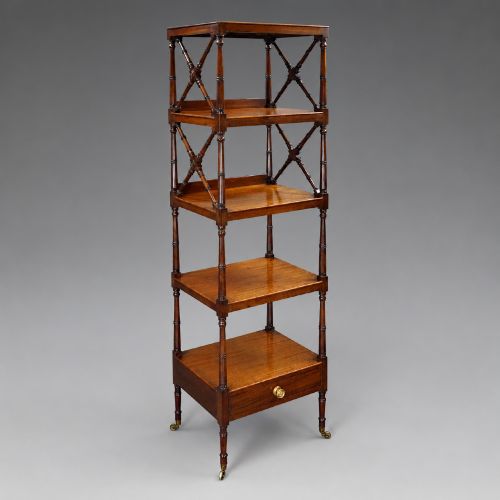
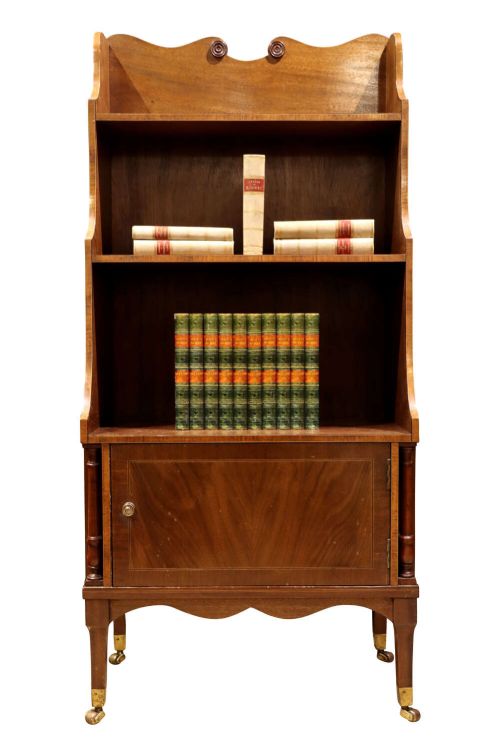
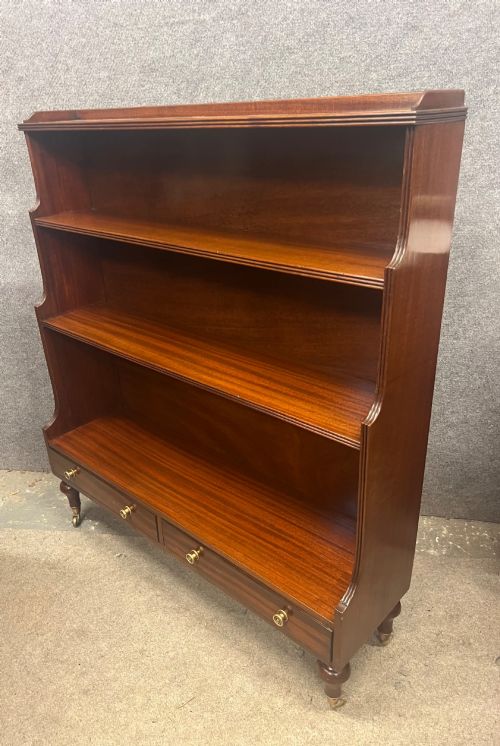
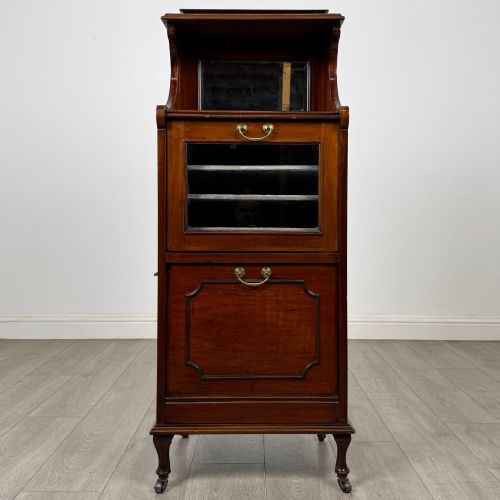
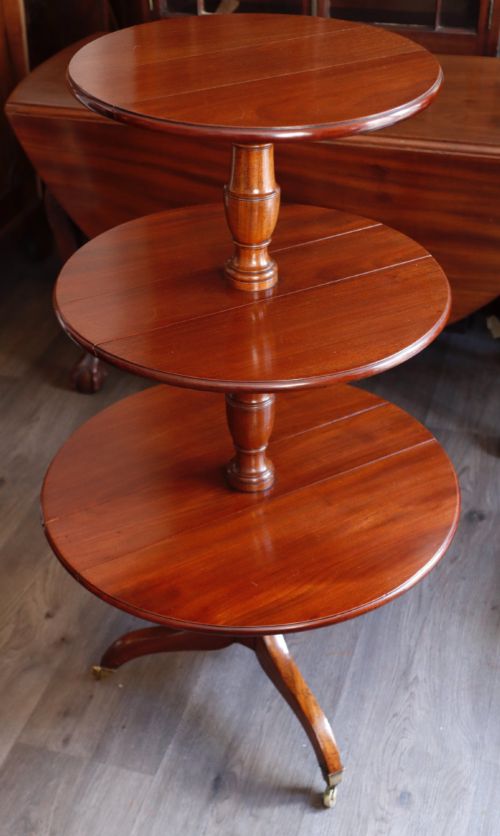
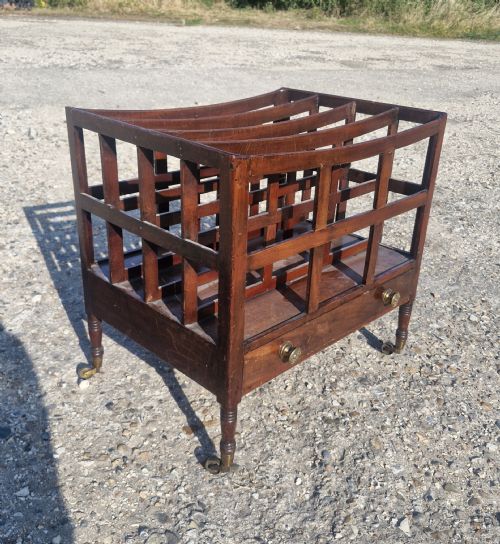
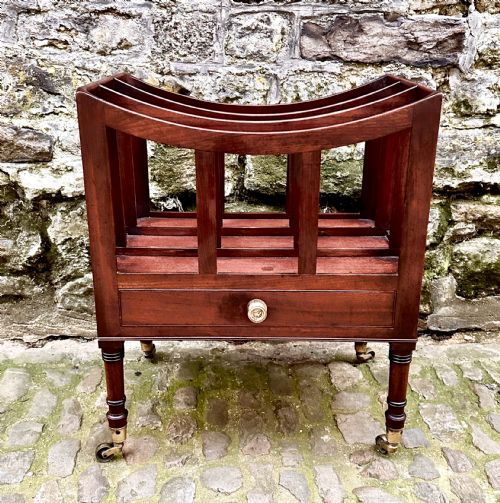
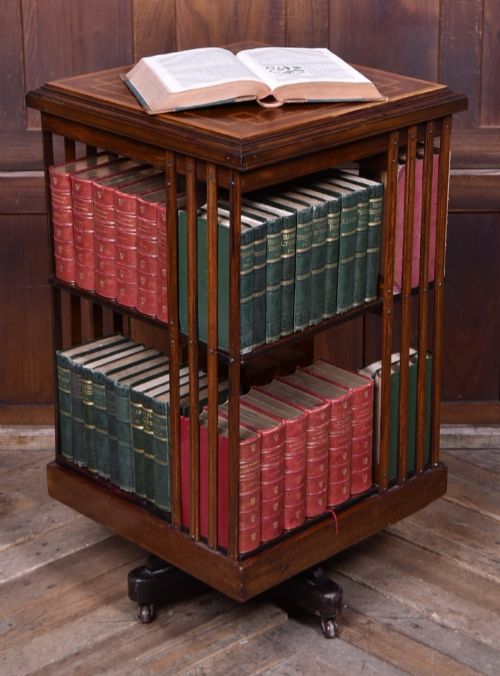
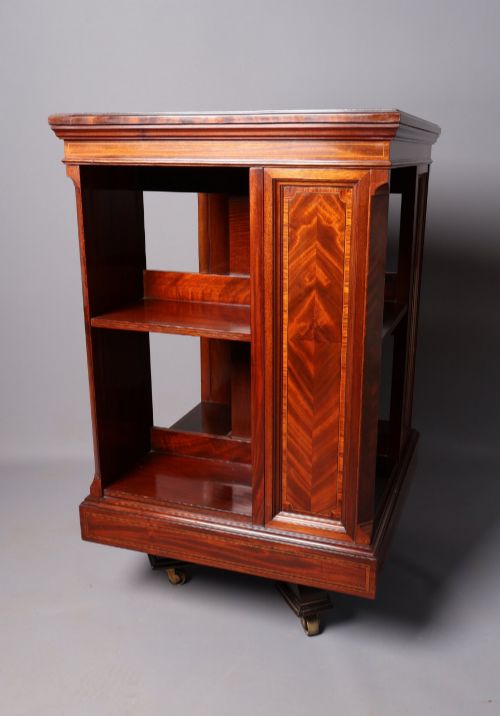
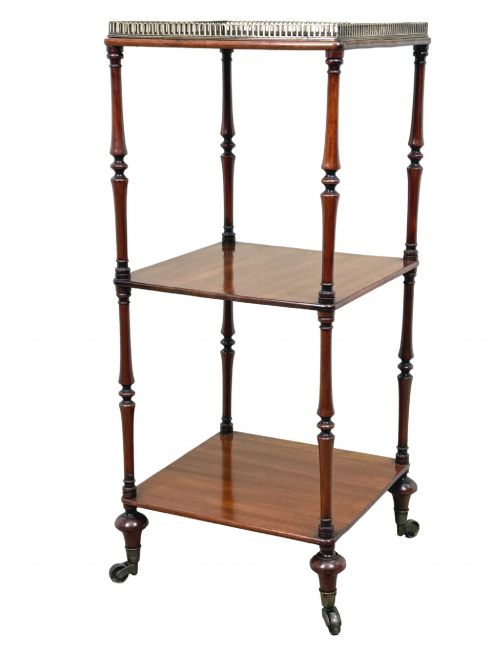
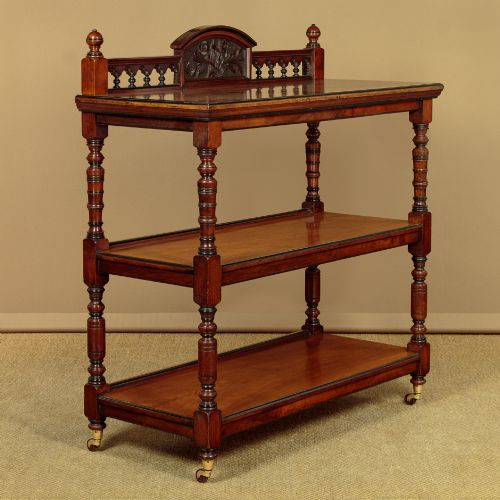
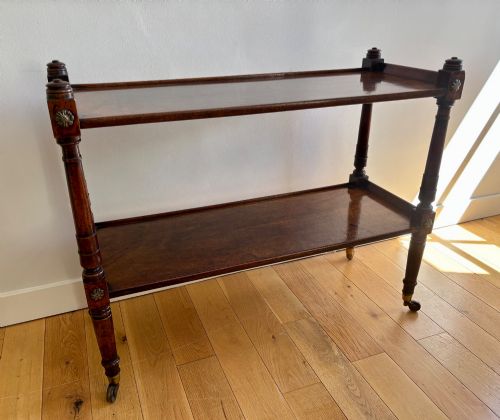
When searching for an antique stand on castors, buyers encounter a diverse selection of movable furniture spanning the Georgian, Regency, Victorian, and Edwardian eras. The listings here comprise multi-tiered whatnots, canterburys, bookcases, music racks, side tables, and cruet sets.
The most frequent forms met on this page are mahogany whatnots and canterburys from the nineteenth century, alongside Edwardian revolving bookcases and silver-plated cruet sets. These pieces reflect the functional domestic requirements of their respective periods, designed to be repositioned easily within a room.
Origins range across English country house pieces, aesthetic movement designs, and occasional continental items such as Italian book troughs. Each example integrates small wheels into its base, allowing the furniture to serve multiple rooms or adapt to changing daily domestic layouts.
Materials and construction
Cabinet makers utilised dense hardwoods such as mahogany, rosewood, walnut, and satinwood for the primary structures of these stands, often incorporating fine inlays or maple veneers. These timbers provided the necessary strength for multi-tiered shelves, revolving book drums, and compartmented storage racks.
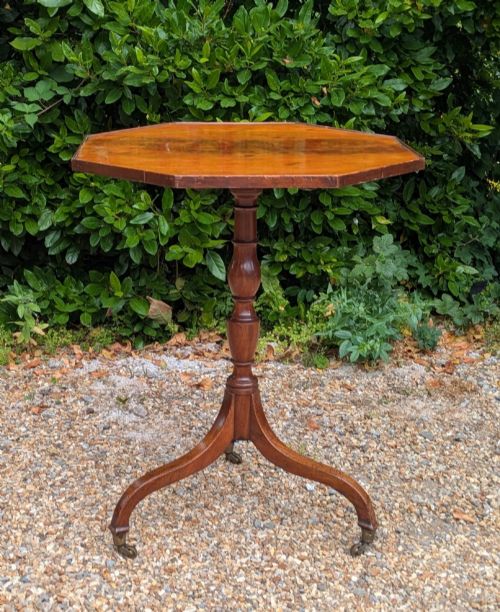
Metal components played a crucial role in mobility, with brass castors fitted to legs, sabots, or tripod bases to ensure smooth movement across carpets and wooden floorboards. Silver plate and cut glass also appear in tabletop cruet sets, combining reflective metalwork with transparent containers.
Period styles span Georgian, Regency, Victorian, Edwardian, and Aesthetic Movement designs.
Design and execution
The integration of the castor mechanism itself distinguishes standard utility pieces from exceptional commissions, where brass mounts, castors, and sabots are cast with precision and fitted flush into the legs to preserve both stability and aesthetic grace.
Carters Of London·E. W. Godwin
The Antique Stand on Castors Glossary
- Castor
- A small wheel fitted to the base of a piece of furniture to allow easy rolling across the floor. These are frequently fashioned from brass and mounted on legs or pedestals.
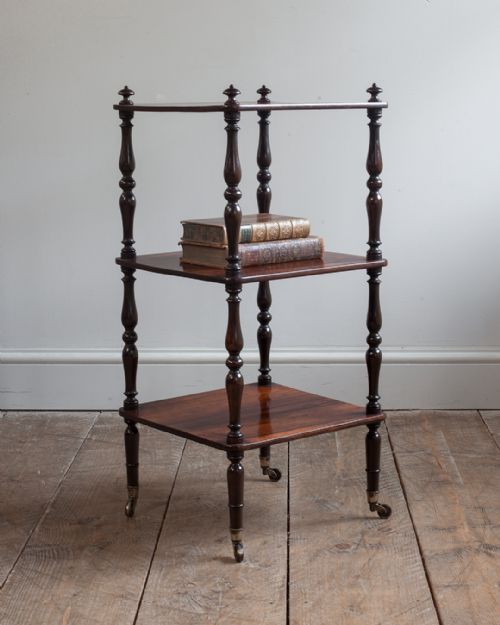
- Whatnot
- An open-shelved piece of furniture with multiple tiers used for displaying ornaments or holding books. They commonly appear in mahogany, rosewood, or walnut.
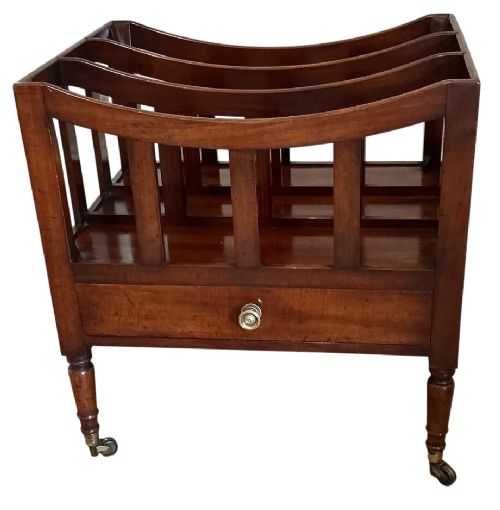
- Canterbury
- A low stand featuring partitioned sections designed specifically for holding sheet music, folios, or magazines. Many incorporate a small drawer beneath the compartments.
- Étagère
- A French term for a set of open shelves or a tiered stand used for ornamental objects. These items often feature slender upright supports and delicate proportions.
- Cruet set
- A table stand fitted with multiple glass bottles or jars for holding condiments, vinegars, and sauces. They typically feature a central carrying handle and a silver-plated frame.
Antique Stand on Castors: Frequently Asked Questions
What is an antique stand on castors used for?
These pieces served practical domestic functions ranging from holding sheet music and books to displaying ornaments or serving meals. Their built-in mobility allowed household staff or residents to reposition tables and shelving units according to the needs of the day.
Today, they function well as side tables, bedside surfaces, or compact bookshelves in smaller modern spaces. Their original mobility remains a useful feature for contemporary room layouts.
How do I identify a Regency period stand?
Regency stands typically display architectural restraint, clean lines, and dark timbers like mahogany, often accented with brass inlays or sabots. The forms lean towards classical revival shapes, boat-shaped compartments, and robust pillar supports.
They date from the early nineteenth century and possess a distinct structural clarity compared to later Victorian ornamentation. Castors on these pieces are frequently integrated smoothly into sabé legs or tripod bases.
What is the difference between a whatnot and an étagère?
While both terms describe multi-tiered open furniture used for display, a whatnot is traditionally an English form with fixed uprights, whereas an étagère often implies a lighter, French-influenced decorative stand. Both types rely on tiered shelving supported by slender columns.
On this page, both terms appear describing pieces used for books, ornaments, and small collections. The distinction often lies in the stylistic flourishes rather than the core utility.
Are the castors on these pieces original?
Castors endure significant mechanical wear and tear, meaning many surviving pieces feature period-appropriate replacements rather than their factory-original wheels. Inspecting the fixing points reveals whether the brass sockets and pins match the age of the timber.
Original brass castors add historical integrity to a piece, though well-matched antique replacements remain entirely acceptable for functional furniture. The primary concern is that the stand rolls smoothly and sits level.