



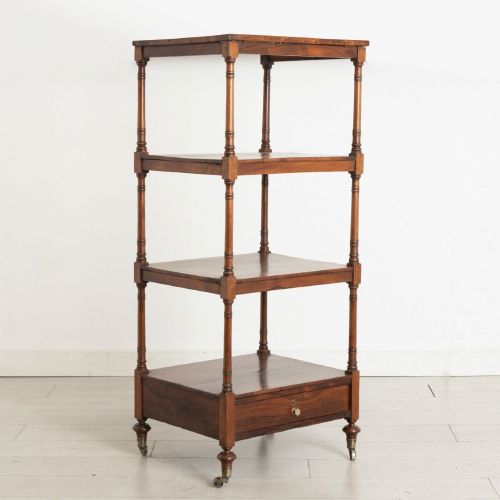
Dark Wood Etagere Shelf
A dark wood etagere shelf organises books and ornaments with tiered timber tiers that bring elegance to any room.
Dark Wood Etagere Shelf
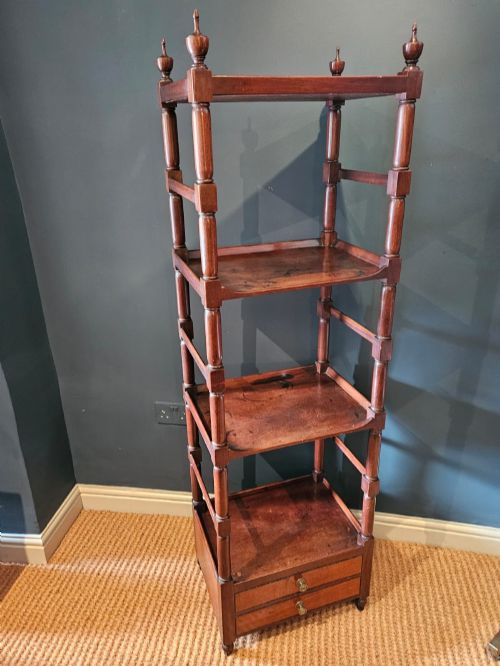
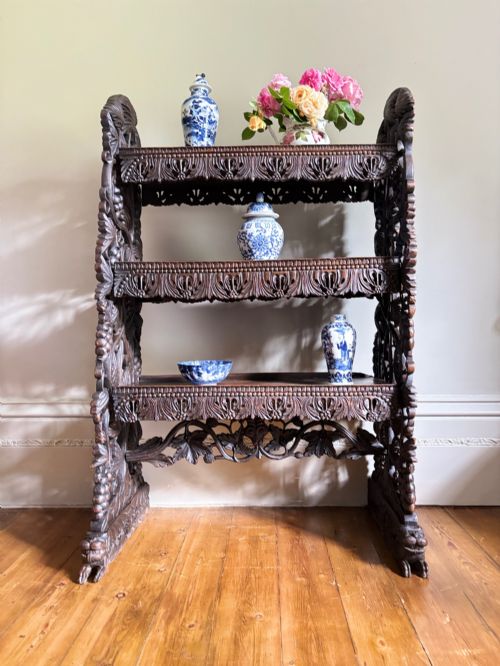
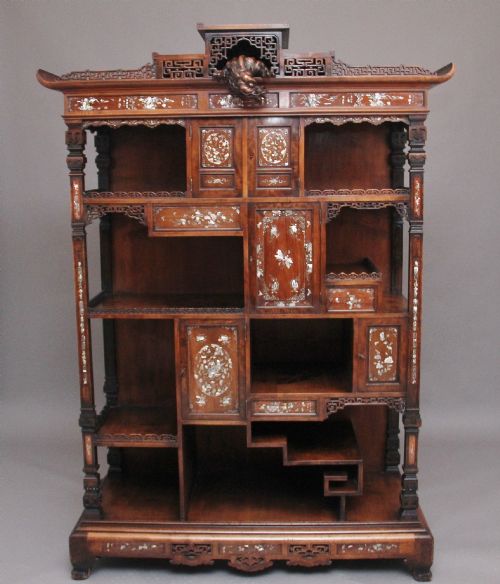
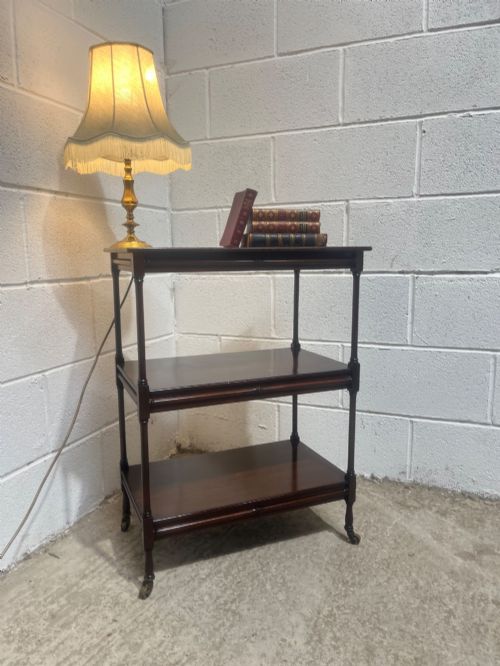
A dark wood etagere shelf provides open tiered storage for display and utility, spanning multiple vertical tiers supported by slender uprights. These freestanding or wall-mounted units serve as display surfaces for books, ceramics, and ornaments in a room.
The selections encountered here originate primarily from the nineteenth century, including Regency, William IV, and Victorian periods. Makers utilised rich dark timbers to construct multi-tiered formats designed for domestic display.
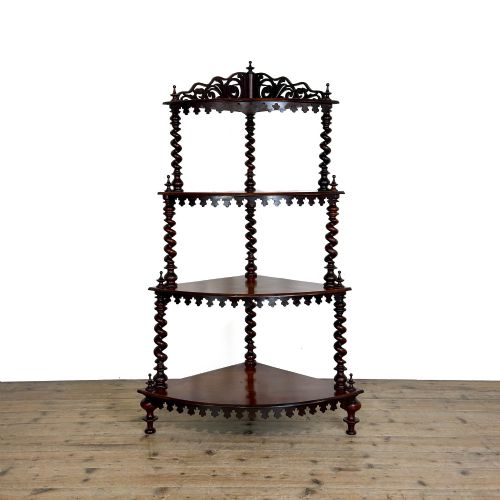
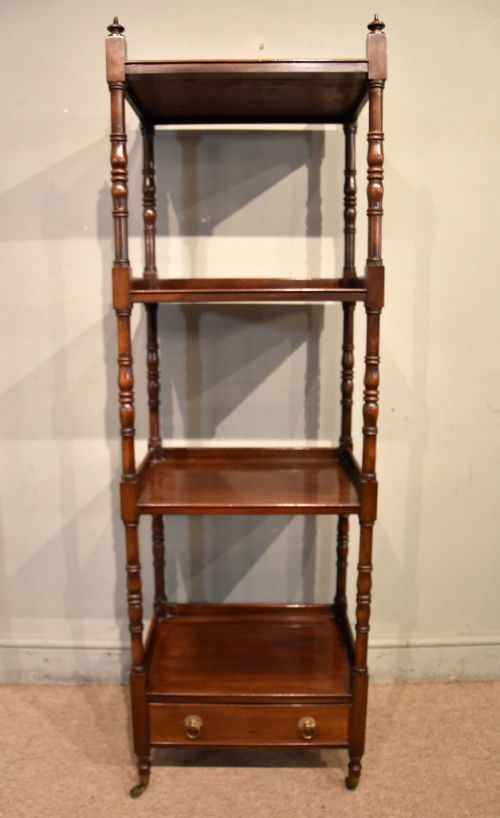
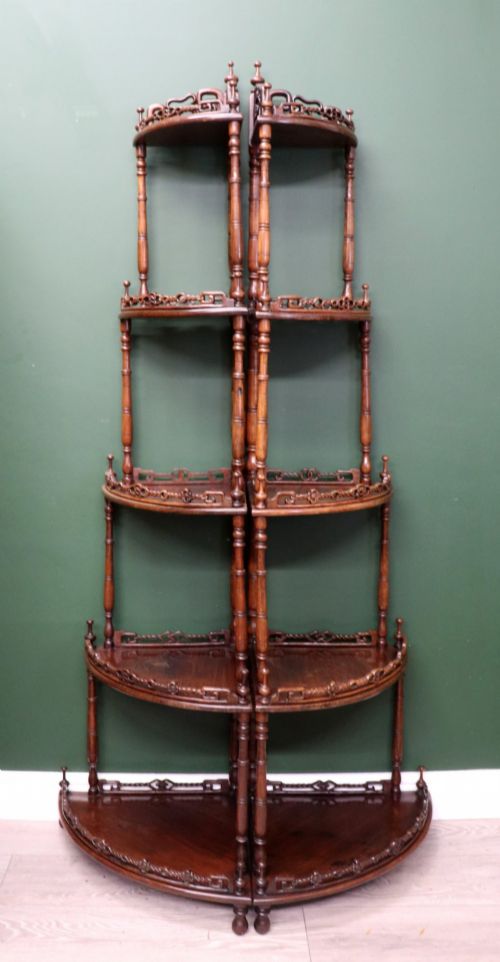
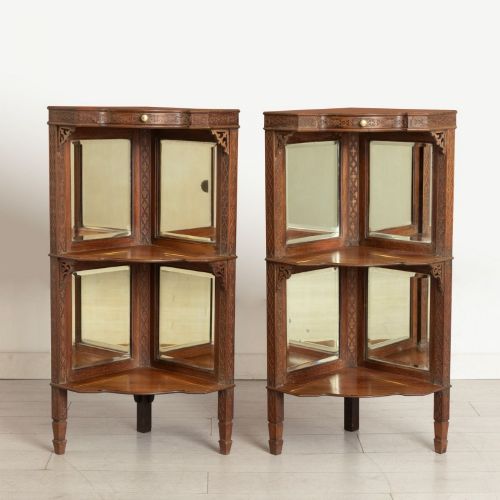
Common variants on this page include freestanding four-tier bookcases, corner whatnots, and wall-mounted shelves. Mahogany and rosewood predominate among the forms, often featuring turned supports or glazed cabinets.
How they were made
Cabinetmakers constructed these pieces using dense dark hardwoods such as mahogany, rosewood, walnut, and padauk. These timbers were selected for their stability and deep natural colour, which took a fine polish.
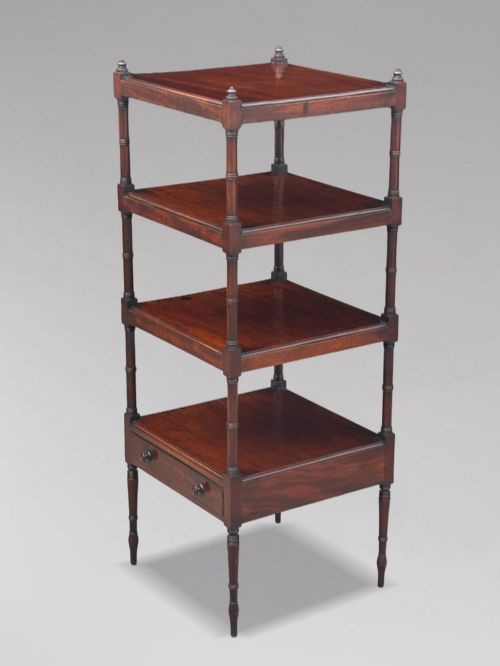
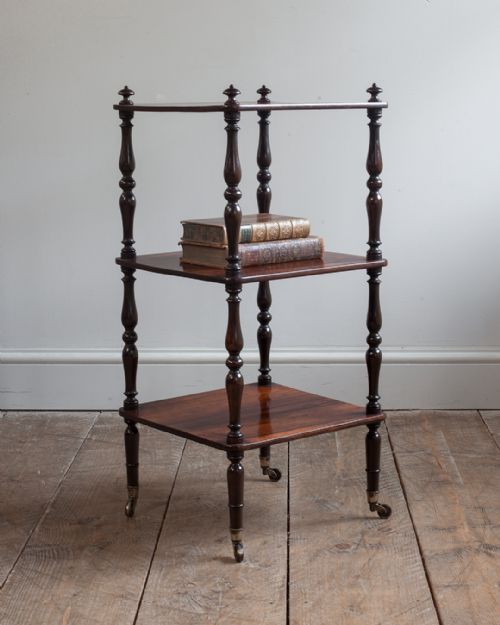
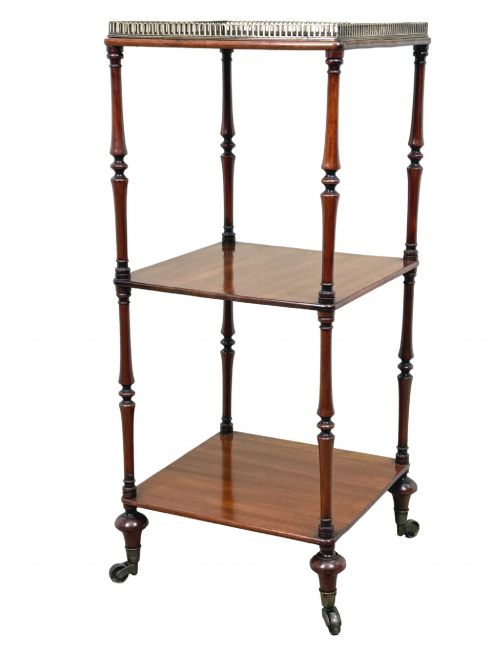
Construction techniques involve turned wooden uprights, delicate bobbin turnings, and brass castors on freestanding pieces. Joinery includes precise housing joints for shelves and occasional marquetry inlay or ormolu mounts on French examples.
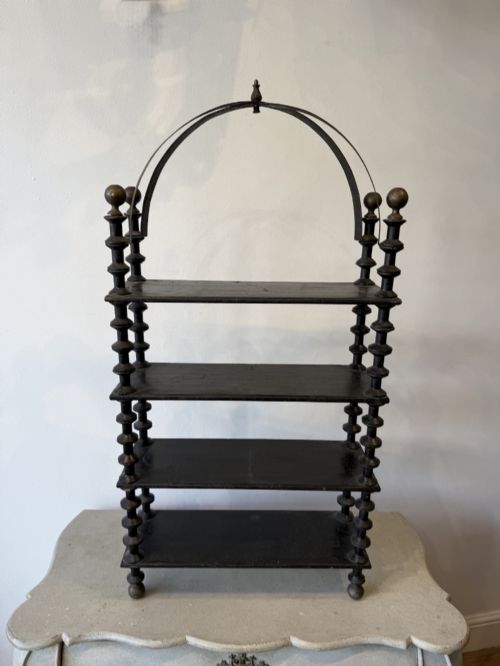
Bobbin shelves bring tiny wooden spools to life as structural columns.
What varies in quality
The distinction between standard domestic utility pieces and finer examples rests on timber selection and decorative detailing. Denser grains of figured mahogany or burr walnut elevate a piece beyond simple plank construction.
Finishing touches such as finely turned bobbin columns, brass gallery rails, and subtle marquetry inlay distinguish workshop output. Proportion and structural integrity determine how successfully a tiered unit sits within an interior.
Gabriel Viardot·Edwards & Roberts·Samson & Son
The Dark Wood Etagere Shelf Glossary
- Whatnot
- A tiered movable shelving unit designed for displaying ornaments or books. It gained popularity during the eighteenth and nineteenth centuries.
- Étagère
- A piece of furniture consisting of a set of open shelves for displaying small objects. The term originates from French furniture design.
- Mahogany
- A durable tropical hardwood with a reddish-brown colour. It formed the primary material for many nineteenth-century tier units.
- Rosewood
- A heavily grained dark timber prized for cabinetmaking. It offers rich colour variations and a smooth polished finish.
- Marquetry
- Decorative veneer work arranged in geometric or pictorial patterns. Craftsmen applied it to the surfaces of French and English cabinets.
Dark Wood Etagere Shelf: Frequently Asked Questions
What is a dark wood etagere shelf used for?
These tiered shelving units serve to display porcelain, books, and decorative objects in principal rooms. Their open format allows items to be viewed from multiple angles.
Historically, they stood in parlours and drawing rooms as both decorative furniture and practical storage for everyday items.
How do I identify a Regency period whatnot?
Regency pieces typically feature clean architectural lines, precise mahogany or rosewood grain, and understated brass detailing. They date from the early nineteenth century.
Look for fine turning on the upright supports and well-proportioned tiers that avoid excessive ornamentation.
Where should I place a corner whatnot?
A corner whatnot fits directly into room angles to utilise unallocated space for display. These triangular units maximise vertical storage without encroaching on floor area.
They work effectively in smaller rooms or transitional spaces where a standard rectangular bookcase would block circulation.
What is the difference between an etagere and a whatnot?
The terms often describe similar tiered shelving formats, though etagere frequently implies French stylistic origins with decorative mounts. Whatnot is the traditional English term for the same multi-tiered furniture.
Both types prioritize open display shelves supported by vertical posts rather than enclosed cupboard storage.