
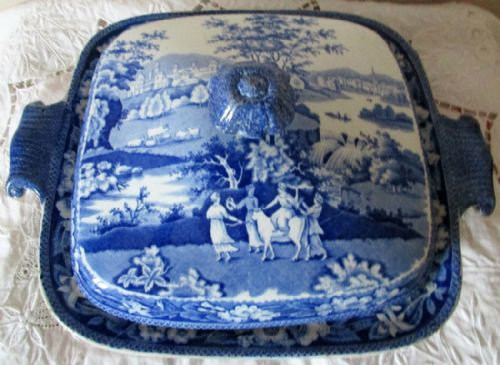


Antique Staffordshire Serving Dish
An antique staffordshire serving dish brings robust pottery and spirited transfer-printed scenes to the dining table, offering generous proportions for substantial feasts.
Antique Staffordshire Serving Dish
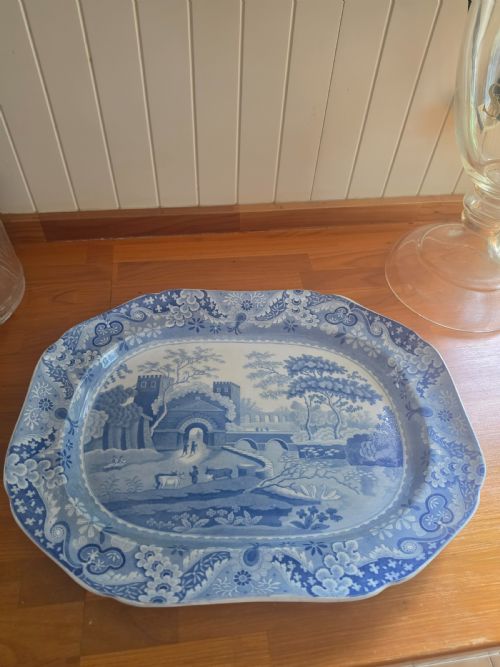
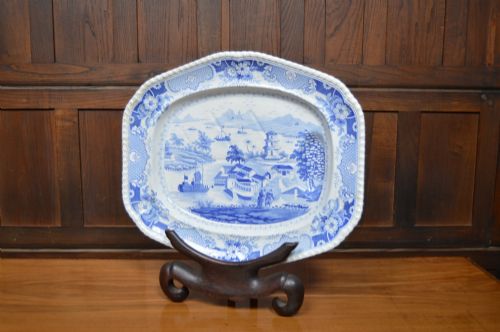
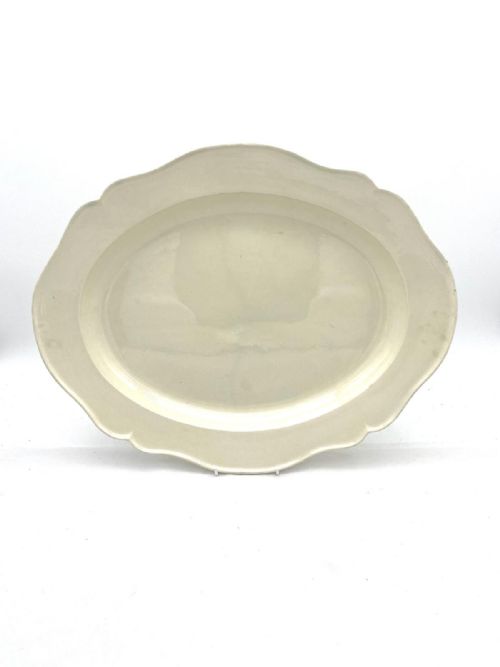
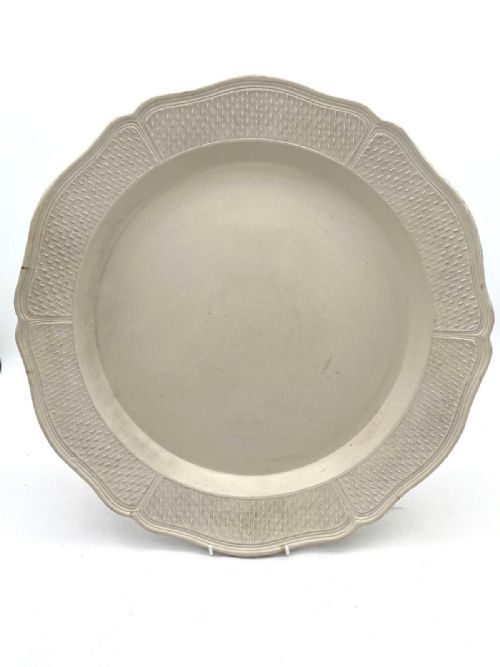
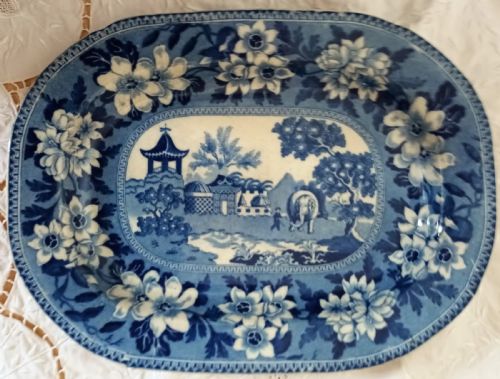
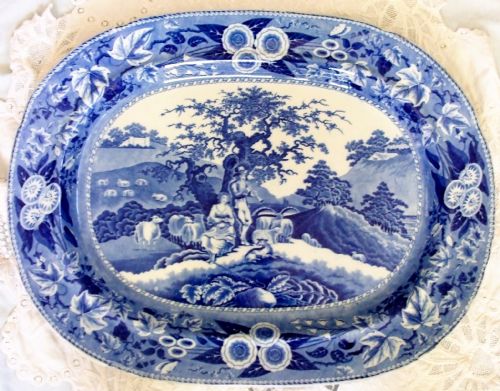
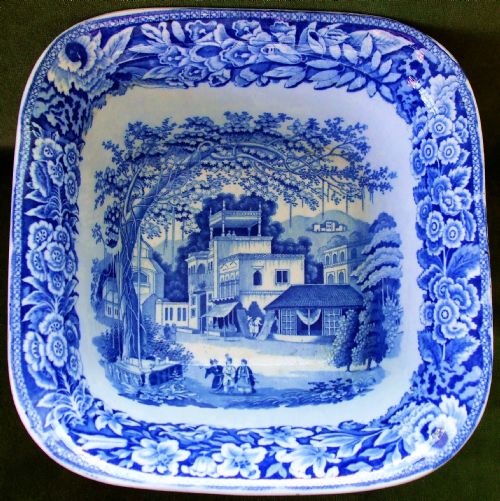
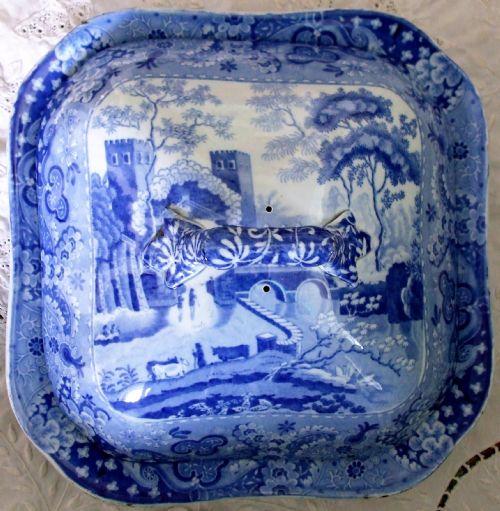
When searching for an antique staffordshire serving dish, collectors encounter an array of heavy platters, vegetable tureens with covers, and meat dishes designed for nineteenth-century dining. These large earthenware vessels span the Georgian, Regency, and Victorian periods, stretching back into the eighteenth century with creamware and saltglazed chargers.
The most common forms on this page are blue and white transfer-printed meat platters and covered tureens bearing romantic topographical or architectural titles. Pieces range from straightforward domestic serving plates to massive ironstone dishes complete with strainers and gravy wells.
Materials and technique
Potters shaped these vessels from earthenware, pearlware, and ironstone, applying lead glaze to seal the porous ceramic body. Cobalt pigment provided the deep blue colour for transfer-printing techniques that reproduced complex pictorial scenes onto the clay before firing.
Makers occasionally utilised hand-painted enamels over the glaze for dessert sets, while others relied on copperplate transfer printing to achieve crisp, repeatable patterns like castles, wildlife, and oriental landscapes across large chargers and platters.
Listings feature earthenware, pearlware, and ironstone forms spanning the eighteenth, nineteenth, and Victorian eras.
Judging the pieces
Quality rests in the clarity of the transfer print and the crispness of the moulded earthenware or ironstone form. Sharp, deep blue impressions without blurring indicate a superior strike from the copperplate during production.
The presence of specialised functional elements, such as integrated gravy wells, matching covers, or draining inserts, elevates the utility and character of a serving dish. Heavier, well-balanced potting and clean glaze surfaces separate standard utility ware from the finer output of established potteries.
Spode·John Rogers & Son·J. & R. Riley·J. & R. Clews·John Ridgway·James Wallace & Co.·Copeland and Garrett·Elkin Knight & Bridgwood·Mason’s Ironstone
The Antique Staffordshire Serving Dish Glossary
- Transferware
- Pottery decorated by applying a printed design from a copper plate onto tissue paper, which was then transferred onto the unglazed or bisque ceramic body before glazing and firing. This method allowed intricate pictorial patterns to be produced consistently.
- Pearlware
- A refined earthenware developed in the late eighteenth century featuring a subtle bluish tinge in the glaze, designed to mimic Chinese porcelain.
- Ironstone
- A heavy, durable type of feldspathic stoneware patented in the nineteenth century to provide a tough alternative to porcelain for large serving vessels.
- Tureen
- A deep covered bowl used for serving soups, vegetables, or sauces at the dining table. They frequently include matching stands or platters.
- Gravy well
- A sunken channel or reservoir moulded into a meat platter to collect juices during carving.
Antique Staffordshire Serving Dish: Frequently Asked Questions
How were these dishes used originally?
These large vessels formed the centrepiece of nineteenth-century dining tables, carrying joints of meat, vegetables, or fish to guests.
Platters with gravy wells caught meat juices during carving, while covered tureens kept food warm between courses.
Can I use an antique platter for food today?
Most of these ceramic pieces remain structurally sound and food safe for serving dry or cold foods at the table.
Hand washing is essential to protect the nineteenth-century glaze and prevent crazing from modern dishwashers.
How do I identify a transfer print pattern?
Makers usually titled their pictorial scenes, printing names like "Castle" or "Elephant" directly onto the pottery or stamping maker marks on the reverse.
Matching the pattern name and border style helps connect the dish to a specific Staffordshire pottery.
What is the difference between earthenware and ironstone?
Standard earthenware is softer and more porous, forming the basis for much of the early transferware on this page.
Ironstone is a much denser, heavier ceramic developed to resist chipping during heavy daily kitchen and dining use.