


Georgian Pottery Meat Platter
A georgian pottery meat platter brings undeniable scale and rustic presence to a room, offering a generous earthenware surface painted with vivid blue transfer scenes.
Georgian Pottery Meat Platter
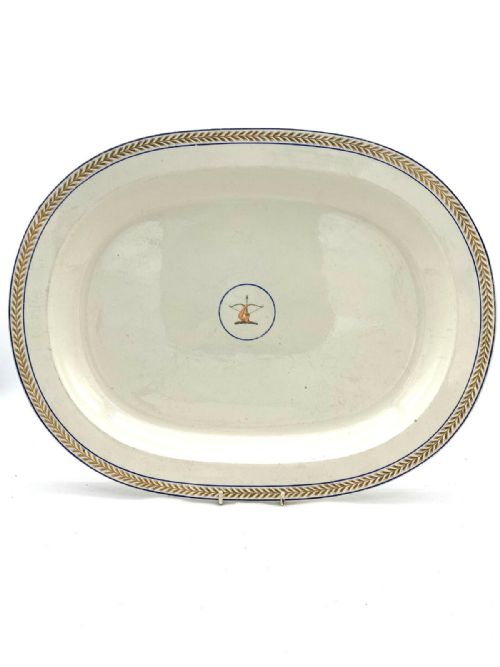
A georgian pottery meat platter is a substantial serving dish made for the dining table, recorded across periods from the eighteenth century into the nineteenth century. These objects function as grand serving vessels designed to hold large joints of meat, featuring deep wells or channels to catch juices.
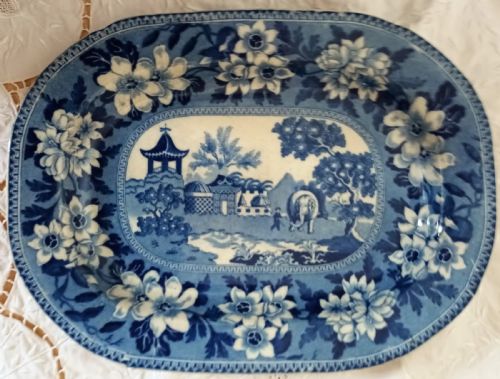
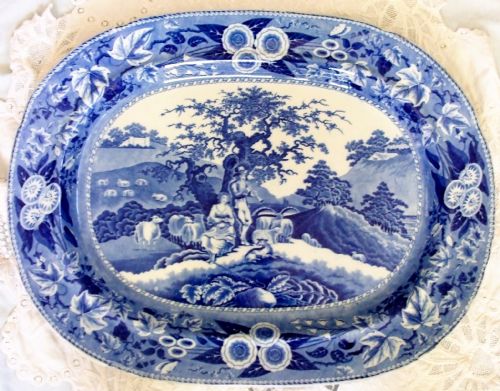
The versions most likely to be met on this page belong to the Georgian and early Victorian eras, shaped as large serving platters and dishes. Many of these examples display blue and white transfer printed designs, alongside creamware and pearlware bodies.
Makers working in Staffordshire and other pottery centres produced these large earthenware dishes to satisfy dining demands of the period. The decorative schemes range from pastoral landscapes and exotic ruins to heraldic armorials.
Materials and construction
Potters formed each georgian pottery meat platter from earthenware, creamware, or pearlware, shaping the heavy clay bodies to withstand daily culinary use. Cobalt pigment provided the rich blue colour for transfer printed patterns depicting architectural ruins, animals, and pastoral views.
A protective lead glaze or ceramic glaze was applied over the fired body and pigment, sealing the porous earthenware and imparting a glossy finish. Some platters incorporated an integrated meat drainer to separate joints from accumulated juices during carving.
Listings feature earthenware platters decorated with cobalt pigment transfer printing across the Georgian and early Victorian eras.
Assessing quality and character
Quality in a georgian pottery meat platter rests on the clarity of the transfer print and the depth of the cobalt pigment against the creamware or pearlware ground. Crisp lines in complex patterns like classical ruins or exotic animals demonstrate greater skill in the printing process.
The weight, proportion, and preservation of the heavy earthenware body also distinguish finer examples from standard production pieces. Platters that retain an even glaze without excessive firing flaws or warping show superior kiln management by the potter.
John Rogers & Son·Thomas Lakin·Don Pottery·Davenport·Elkin Knight & Bridgwood·Spode·Wedgwood
The Georgian Pottery Meat Platter Glossary
- Creamware
- A refined earthenware body with a pale yellowish cream hue developed in Staffordshire during the eighteenth century. This material formed the smooth ground for many early armorial platters.
- Pearlware
- An improved earthenware body containing a small amount of cobalt in the glaze to create a bluish-white appearance that imitated Chinese porcelain. It superseded creamware in popularity during the early nineteenth century.
- Transfer printing
- A technique where an engraved copper plate applied an ink design onto tissue paper, which was then transferred onto the unglazed or biscuit pottery surface. This allowed intricate pictorial scenes to be replicated consistently across multiple platters.
- Armorial
- A decorative scheme featuring a family coat of arms or crest. These heraldic designs were often hand-painted or transfer printed onto high-status creamware service pieces.
Georgian Pottery Meat Platter: Frequently Asked Questions
What were georgian pottery meat platters used for?
These large ceramic platters served as the centrepiece for presenting roasted meats at substantial dining tables during the eighteenth and nineteenth centuries.
Their generous dimensions allowed them to hold entire joints, while specific versions included integrated drainers to manage juices during carving.
How do I care for a georgian pottery meat platter?
Keep these earthenware vessels out of modern dishwashers and avoid harsh chemical cleaners to protect the historic glaze and delicate transfer print.
Wash them gently by hand in warm water with mild soap, drying them thoroughly afterwards to preserve the ceramic body.
Can I use these platters for serving food today?
While these pieces remain structurally sound, many collectors prefer to display them on walls, dressers, or plate stands rather than using them for daily dining.
Old earthenware can develop crazing in the glaze over centuries, making modern culinary use less practical than quiet appreciation.
How do I distinguish between creamware and pearlware?
Creamware displays a warm, buttery yellow tone in the earthenware body and glaze, typical of eighteenth-century production.
Pearlware exhibits a cooler, slightly bluish-white tint caused by cobalt additives in the glaze, which became widespread around the turn of the nineteenth century.