
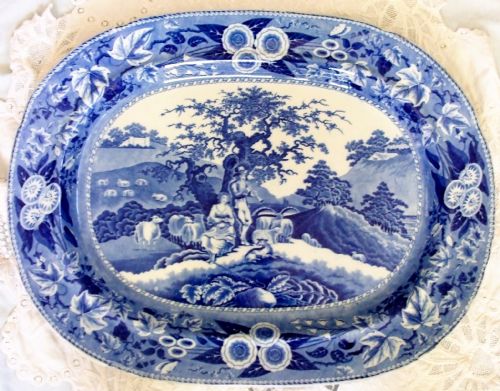


Cobalt Blue Printed Platter
A cobalt blue printed platter brings rich transfer-printed narrative scenes and deep earthenware tones directly to the table.
Cobalt Blue Printed Platter
When you search for a cobalt blue printed platter, you encounter large serving vessels designed to hold meat or bread during communal meals. These pieces display intricate pastoral, architectural, or exotic motifs transferred onto the ceramic surface.
The versions most likely to meet you on this page belong to the Georgian and Victorian eras, originating from English potteries. They range from expansive meat platters to smaller serving plates and bread stands.
Makers often drew inspiration from classical ruins, romantic landscapes, or pastoral figures to decorate the white earthenware surface. Each platter serves as both a functional table accessory and a vivid historical canvas.
How they were made
Potters shaped earthenware, pearlware, and ceramic bodies into broad, shallow platters capable of supporting heavy joints of meat. These clay forms were fired and then prepared for the transfer printing process.
Engraved copper plates applied cobalt pigment onto tissue paper, which transferred the detailed pattern onto the absorbent ceramic surface. Skilled artisans then applied a transparent lead glaze before a final high-temperature kiln firing fixed the design permanently.
Elephants, buffaloes, and piping shepherds share the same Staffordshire clay, proving nineteenth-century dinners were delightfully adventurous.
What varies in quality
The sharpness of the cobalt blue transfer print dictates much of the visual success of the piece. Crisp, deeply saturated lines without blurring or smudging distinguish the finer examples from softer, muddier impressions.
The clarity and depth of the glaze also separate standard domestic wares from exceptional pieces. Smooth surfaces free from excessive kiln scars or heavy warping reveal greater care during the manufacturing process.
Spode·Thomas Lakin·Brameld and Co·John Rogers and Son·Don Pottery
The Cobalt Blue Printed Platter Glossary
- Transferware
- A pottery decoration technique where a design is engraved on a metal plate, printed on paper, and transferred onto unglazed or biscuit ceramic. This method allowed for consistent, highly detailed pictorial scenes.
- Pearlware
- A refined earthenware developed in the late eighteenth century featuring a subtle bluish glaze that pooled in crevices. It was designed to mimic the whiteness of Chinese porcelain.
- Earthenware
- A porous pottery fired at lower temperatures and rendered impermeable to liquids through the application of a glaze. It forms the structural body for the majority of these serving vessels.
- Lead glaze
- A glassy coating applied to pottery before firing to provide a shiny, protective finish. It enhanced the brilliance of the underlying cobalt pigment.
Cobalt Blue Printed Platter: Frequently Asked Questions
What are cobalt blue printed platters?
These ceramic vessels are large serving dishes decorated with pictorial designs applied using cobalt pigment and copper plate printing techniques. Potters in England produced them primarily during the Georgian and Victorian periods.
They function as both durable tableware for serving meat and bread and as decorative display items featuring pastoral or classical scenes.
How were these platters used?
Households utilised these broad ceramic dishes to serve large joints of meat, bread, and substantial courses at the dining table. Their size and depth accommodated heavy portions while the glazed surface protected the earthenware from grease.
Over time, many transitioned from active dining service to decorative display on walls, dresser backs, or sideboards.
How do I care for an antique platter?
Wash these ceramic pieces gently by hand using mild soap and warm water rather than placing them in a dishwasher. Avoid harsh scrubbing pads that might scratch the historical lead glaze or dull the cobalt pigment.
Store or display them securely on stable surfaces to prevent accidental chipping of the earthenware body.
How can I tell the period?
Examine the ceramic body, glaze characteristics, and the style of the transfer-printed border to determine age. Pearlware bodies and subtle blue-tinted glazes often point toward earlier Georgian production, while later Victorian pieces utilise different earthenware standards.
Maker marks, where present on the reverse, provide definitive evidence of the pottery and operating era.