


Pastoral Blue Transferware
Pastoral blue transferware brings rural idylls into the home through deep cobalt scenes printed onto earthenware.
Pastoral Blue Transferware
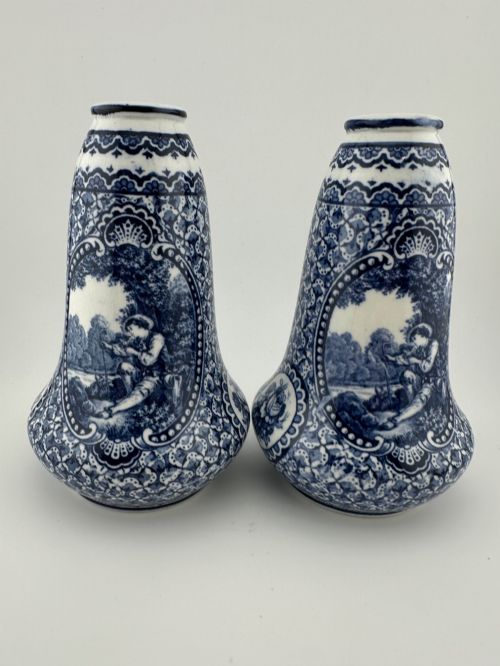
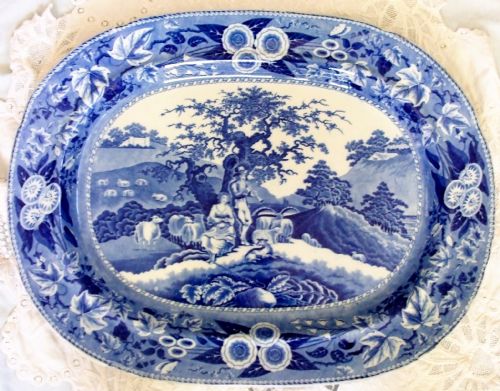
These pieces comprise plates, platters, jugs, vases, and footbaths originating mainly in the Georgian and Victorian eras. The category centres on ceramic table and decorative wares printed with pastoral motifs such as shepherds, cowmen, and rustic retreats.
Buyers encounter serving platters and decorative plates most frequently on this page, alongside larger statement items like footbaths and jugs. Most examples hail from English potteries working in the nineteenth century, utilising pearlware and standard earthenware.
How they were made
Potters shaped earthenware and pearlware bodies before applying cobalt pigment via copper plate transfer printing. This method allowed intricate pastoral scenes to be replicated onto ceramic surfaces with remarkable consistency.
A clear glaze was then applied over the cobalt transfer print before firing in a kiln to seal the design and produce a glossy finish. The interaction between the cobalt pigment and the glaze yielded deep blue tones characteristic of the period.
Cows and returning woodmen populate the landscapes, proving that nineteenth-century diners enjoyed a spot of rural drama with their roast beef.
What varies in quality
Quality depends heavily on the clarity and crispness of the cobalt transfer print upon the ceramic surface. Superior examples display sharp details in the rural scenes without blurring or smudging of the pigment.
The sophistication of the ceramic body and the depth of the glaze further distinguish standard production from finer work. Heavier forms like footbaths and large platters showcase the potter's ability to maintain balance and proportion on a grand scale.
Royal Bonn Franz Anton Mehlem·Pettys and Co Leeds·Brameld and Co·John Davenport
The Pastoral Blue Transferware Glossary
- Transferware
- Ceramic pottery decorated by printing a design from an engraved copper plate onto tissue paper and then transferring it onto the unglazed or bisque fired clay. This technique revolutionised pottery production in the nineteenth century.
- Pearlware
- A refined type of earthenware developed in the late eighteenth century featuring a subtle bluish glaze that pooled in crevices. It bridged the gap between creamware and later brilliant white ironstone.
- Footbath
- A large ceramic vessel designed for washing feet, often repurposed today as a decorative planter or wine cooler. These substantial pieces required considerable skill from the potter to fire successfully without warping.
- Earthenware
- Porous pottery fired at relatively low temperatures and typically coated with a glaze to render it waterproof. It forms the structural base for the vast majority of nineteenth century printed wares.
- Cobalt pigment
- A metallic oxide used to achieve the intense blue colour seen in transfer printing. It withstood high kiln temperatures without losing its distinctive hue.
Pastoral Blue Transferware: Frequently Asked Questions
What is pastoral blue transferware?
These items are ceramic vessels and tableware decorated with printed blue scenes depicting rural life, agricultural workers, and pastoral landscapes. They were produced primarily by English potteries during the Georgian and Victorian periods.
The category includes functional items like serving platters and plates alongside decorative vases and large footbaths. Each piece showcases detailed imagery transferred from engraved copper plates onto an earthenware or pearlware body.
How were these pieces used originally?
Platters and plates served food during formal meals, while large jugs held liquids for the household. Footbaths were utilised for personal hygiene in bedchambers before modern plumbing.
Over time, many of these utilitarian objects transitioned into decorative display items due to the intricate beauty of their printed blue scenes. Vases were specifically manufactured for floral arrangements in domestic interiors.
How do I date these ceramics?
Dating relies on stylistic clues, ceramic bodies such as pearlware versus later earthenware, and specific maker marks found on the underside. Georgian examples often feature softer blue tones and lighter potting.
Victorian pieces frequently display heavier bodies and different glaze formulations. Comparing the specific pastoral pattern name against known production periods also helps narrow down the decade.
Can I use these pieces daily?
While plates and platters remain physically robust, antique ceramics benefit from gentle hand washing rather than mechanical dishwashing. Older glazes can be sensitive to modern detergents and thermal shock.
Many collectors prefer to display them on walls, plate racks, or surfaces to preserve their historic surfaces. Careful handling ensures the nineteenth-century glaze and cobalt print remain protected.