

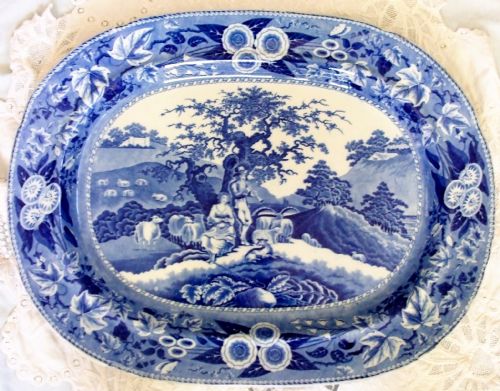


Antique Staffordshire Pottery Platter
An antique staffordshire pottery platter brings the rich transfer-printed narratives of nineteenth-century dining tables directly into modern spaces.
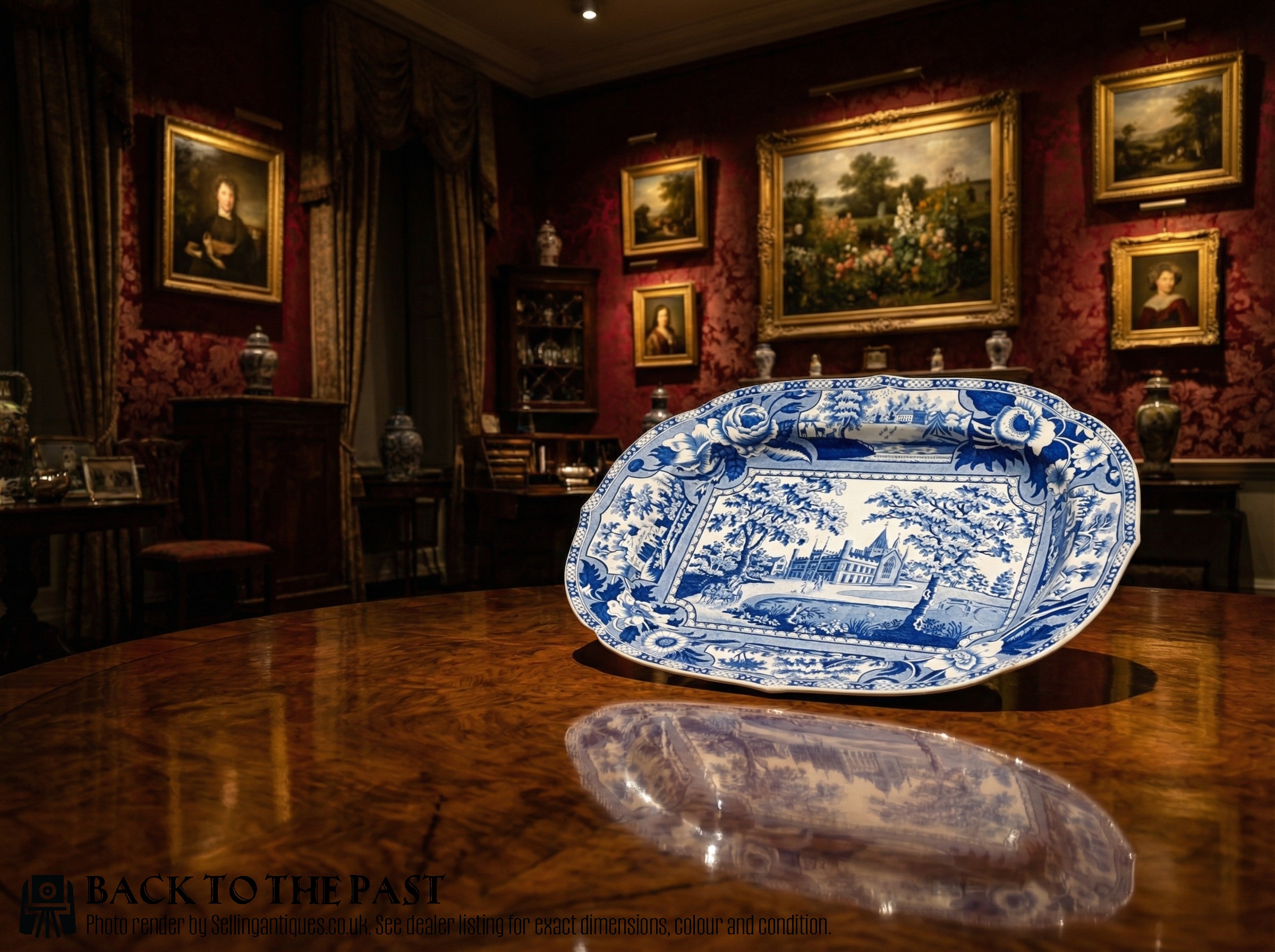
Antique Staffordshire Pottery Platter
When you search for an antique staffordshire pottery platter, you encounter large earthenware serving vessels designed for the heavy demands of historic dining rooms. These pieces appear primarily in eighteenth-century, georgian, and victorian periods, reflecting decades of evolving domestic service.
The serving platters, meat plates, and chargers in this selection present wide surfaces intended to hold joint meats and grand courses. You find forms ranging from standard silver-shaped edges to deep wells equipped with meat drainers.
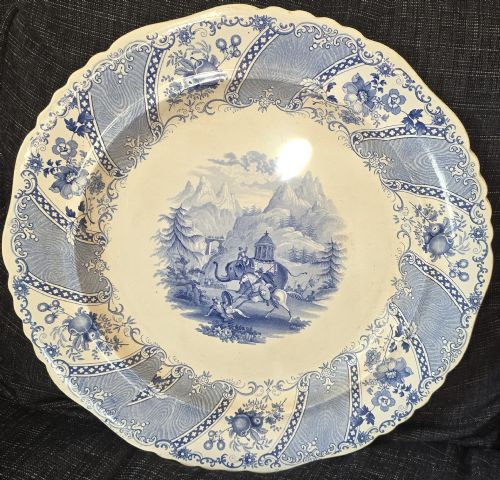
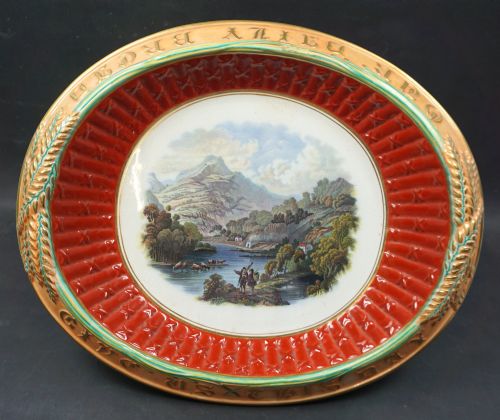
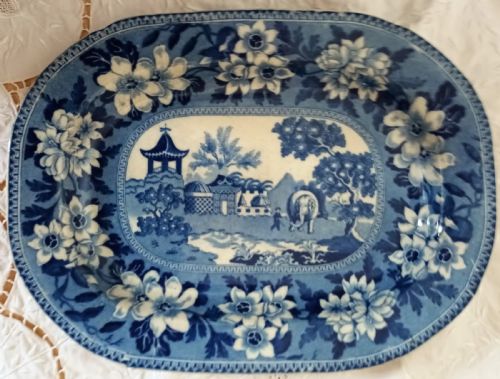
The decorative schemes span printed topographical views, oriental ruins, and pastoral scenes such as the elephant pattern or the returning woodman. These motifs define the visual character of the category, utilising deep cobalt pigment on white earthenware bodies.
Materials and methods of production
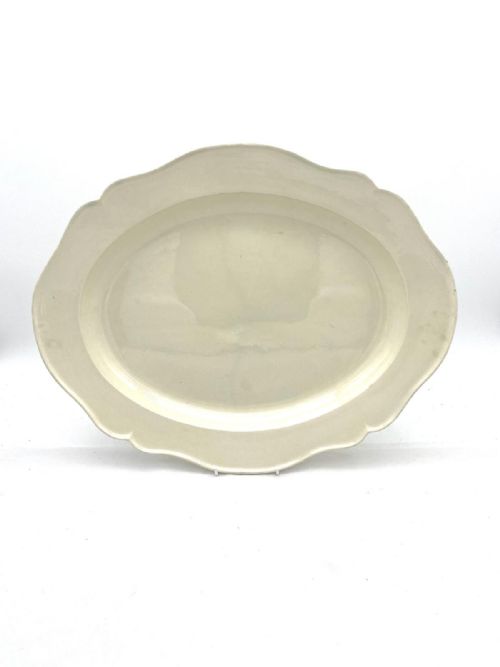
Potters constructed these vessels from earthenware, creamware, and pearlware, shaping them on moulds to achieve consistent silver-shaped or oval forms. Cobalt pigment was applied using copperplate transfer printing, a technique that transferred intricate engraved designs onto the ceramic surface.
A transparent glaze or lead glaze was then applied over the printed earthenware before firing in kilns to seal the pigment and create a glossy finish. Enamel colours occasionally augmented the monochrome transfer prints, adding highlights to specific patterned areas.
The inventory spans georgian, regency, and victorian styles, including specialised meat drainers and child's service sets.
Distinctions in quality and execution
Quality rests in the crispness of the transfer print and the registration of the cobalt pigment across the earthenware surface. Strong, even borders and clear details in complex scenes distinguish superior examples from blurred impressions.
The weight and balance of the ceramic body, alongside the smoothness of the lead glaze, dictate the overall refinement of the serving plate or charger. Master potters achieved cleaner lines and more uniform glaze application, elevating standard domestic ware into collectible pieces.
John Rogers Son·John Ridgway·Stubbs·Brameld Co·Davenport·Elkin Knight Bridgwood·Minton·Booths
The Antique Staffordshire Pottery Platter Glossary
- Pearlware
- A refined earthenware featuring a subtle blue-tinted glaze, developed to emulate Chinese porcelain.
- Transferware
- Ceramic decorated by printing an engraved design from a copper plate onto paper and then transferring it to the unglazed biscuit ware.
- Charger
- A large decorative or serving plate, typically exceeding standard dinner plate dimensions.
- Creamware
- A pale yellow-hued refined earthenware perfected during the eighteenth century.
- Flow blue
- A style of transfer printing where the cobalt pigment intentionally blurs into the surrounding glaze during firing.
Antique Staffordshire Pottery Platter: Frequently Asked Questions
How were these platters used?
These large ceramic vessels served as central platters for presenting roasted meats and main courses at formal dining tables. Their generous proportions accommodated heavy joints, while specialised forms included drainers to channel away cooking juices.
In domestic settings, they transitioned from kitchen service to sideboard display once dining fashions shifted. Their striking blue and white patterns made them decorative focal points within the historic dining room.
What periods do these pieces span?
The inventory encompasses items from the eighteenth century through the georgian and victorian eras, extending into early twentieth-century productions. Each period introduces subtle shifts in ceramic bodies, ranging from early creamware to mid-nineteenth-century ironstone and refined earthenware.
Stylistic influences transition from classical eighteenth-century symmetry to romantic victorian chinoiserie and topographical transfer prints. These chronological markers help establish the historical context of individual serving dishes.
How do I identify transferware patterns?
Examine the central motif and border details closely, comparing them against known ceramic archives and maker signatures stamped on the reverse. Common themes include romanticized foreign landscapes, historical landmarks, and pastoral animal scenes.
Makers frequently incorporated specific named titles within the printed design or maker's mark beneath the base. Tracing these titles reveals the specific pottery and production decade.