


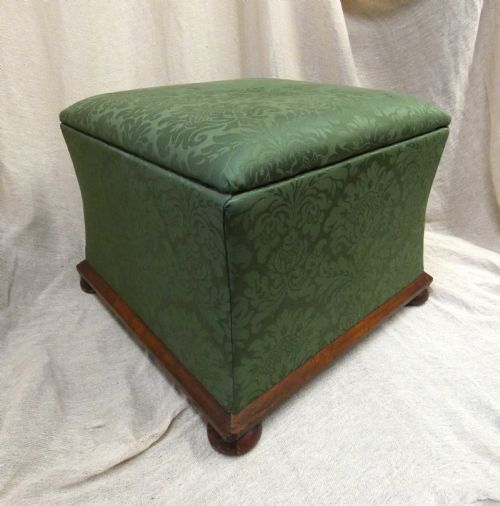


Antique Square Footstool
An antique square footstool brings practical low seating and rich period character to a room, offering sturdy timber frames and traditional upholstery.
Antique Square Footstool
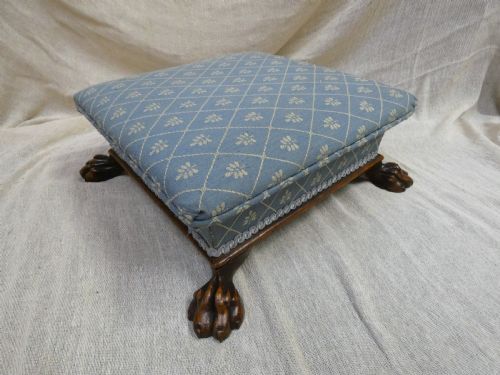
An antique square footstool is a compact, low-set piece of seating furniture designed to support the feet or serve as an occasional seat. These pieces appear across various historical eras, including the Georgian, Regency, and Victorian periods.
The selections available here range from simple jointed oak frames to sophisticated mahogany and walnut designs with needlepoint, leather, or fabric upholstery. Many examples demonstrate the robust craftsmanship of the eighteenth and nineteenth centuries, utilised beside firesides and dressing tables.
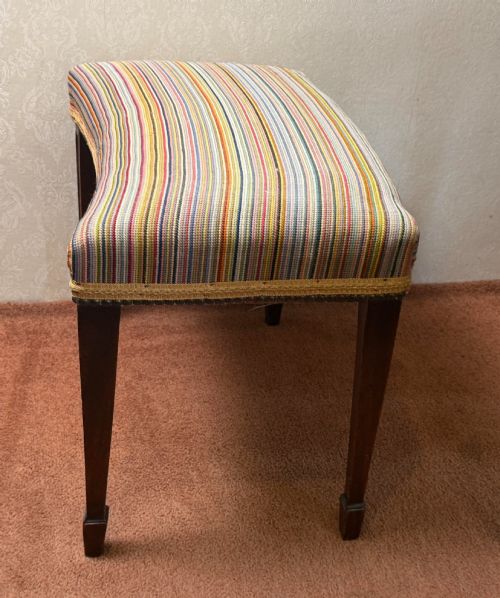
Buyers will encounter formal mahogany models with tapering legs alongside heavy oak joint stools and buttoned leather ottomans. Each variation reflects the interior fashions of its specific decade, from strict classical proportions to ornate revival styles.
How they were made
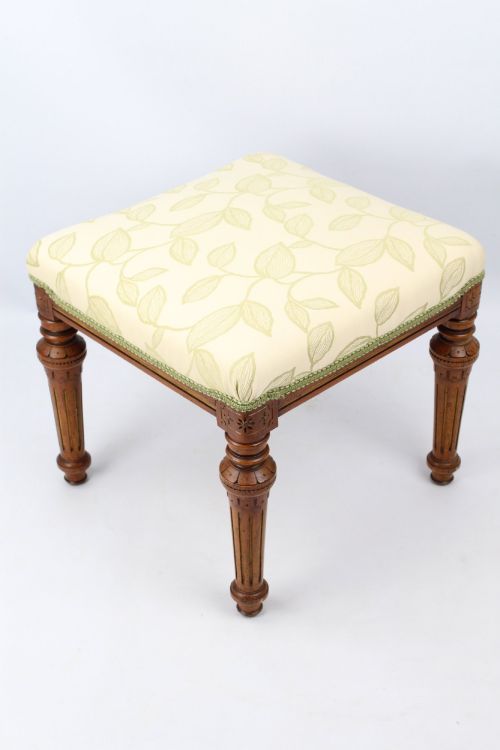
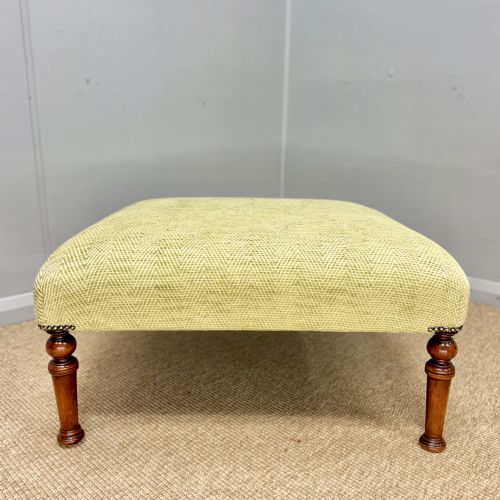
Cabinetmakers constructed the frames primarily from solid timbers such as mahogany, oak, walnut, elm, and rosewood, employing traditional joinery methods to ensure long-term stability. Turned, tapered, or spiral-carved legs provide the vertical support, occasionally fitted with brass castors.
Upholstered surfaces utilise traditional stuffing materials secured beneath fabrics, needlepoint, or buttoned leather. Caned tops also appear on specific forms, woven tightly within wooden rebated frames.
The listings span from the late seventeenth century through the Victorian era, utilising solid mahogany, oak, walnut, and rosewood.
What varies in quality
The distinction between standard examples and exceptional pieces lies in the choice of timber and the crispness of the carving. Finely figured mahogany or richly patinated oak elevate a piece above utilitarian workshops.
Proportion and structural integrity dictate the overall merit of the stool. Pieces retaining their original show wood, uncompromised frame joints, and period-appropriate upholstery display superior provenance.
Howard and Sons
The Antique Square Footstool Glossary
- Joint stool
- A low wooden stool constructed with mortise and tenon joints pegged together. These sturdy early seating forms frequently double as small tables.
- Needlepoint
- Stitched canvas embroidery utilising wool or silk threads. Victorian examples frequently display this colourful textile work on top of footstools.
- Buttoned leather
- Upholstery secured by deep indentations formed by stitching through the leather to the padding beneath. This technique creates a distinct diamond pattern across the seat.
- Tapering legs
- Furniture supports that gradually narrow toward the foot. This design element defines many Georgian and Regency pieces.
- Spiral carved
- A decorative twisting pattern turned into a wooden leg or stretcher. This ornamentation is characteristic of seventeenth-century revival designs.
Antique Square Footstool: Frequently Asked Questions
How were antique square footstools originally used?
These low seats served primarily beside firesides to keep feet elevated above cold drafts, or functioned as dressing table stools in bedrooms. Larger variations also operated as small ottomans or impromptu coffee tables.
Their compact proportions allowed them to be easily moved around drawing rooms and parlours as household needs required.
How do I distinguish between Georgian and Victorian stools?
Georgian pieces typically display cleaner classical lines, simpler timber frames, and straightforward mahogany or oak construction. Victorian examples often introduce heavier carved walnut, buttoned leather, and elaborate revival styles.
Examining the turning on the legs and the style of the upholstery provides clear clues to the exact period of manufacture.
Can I use an antique footstool every day?
Solid timber frames and robust traditional joinery make these stools remarkably durable for daily household use. Many examples have survived centuries of active service without losing their structural integrity.
Placing them on level floors prevents undue strain on individual legs and joints during daily deployment.
What is the difference between a footstool and an ottoman?
Footstools are generally smaller pieces intended solely for supporting the feet or providing low auxiliary seating. Ottomans often cover a larger surface area and were traditionally designed as multi-purpose upholstered seats.
Both forms utilise similar internal framing and textile coverings across different historical periods.