

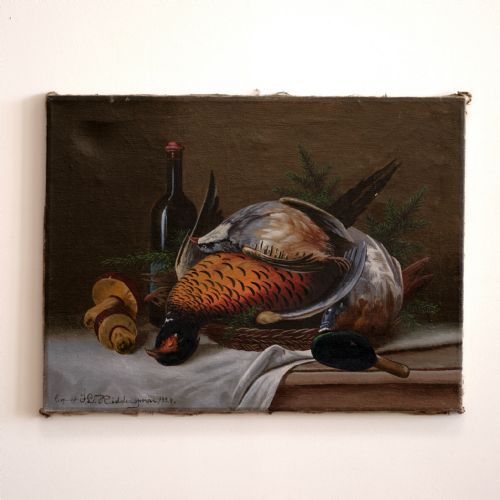
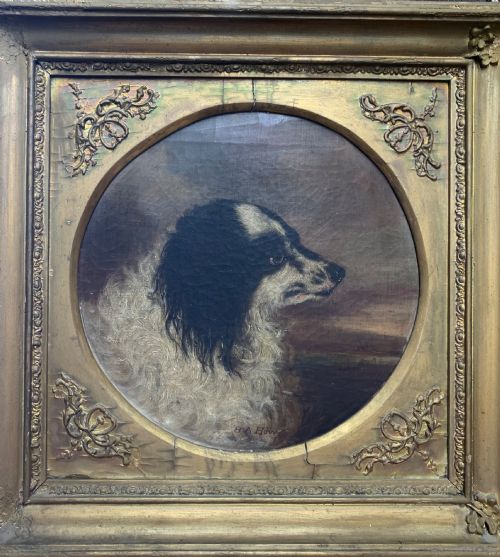
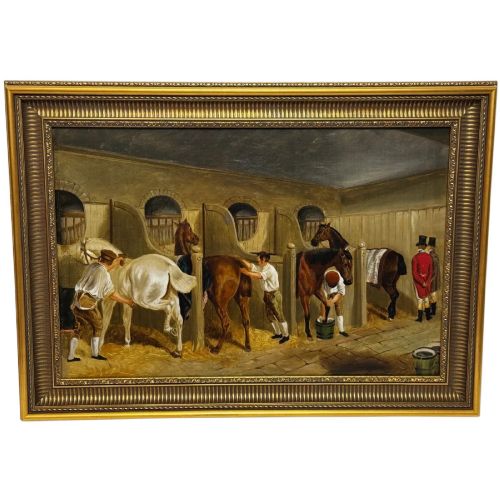
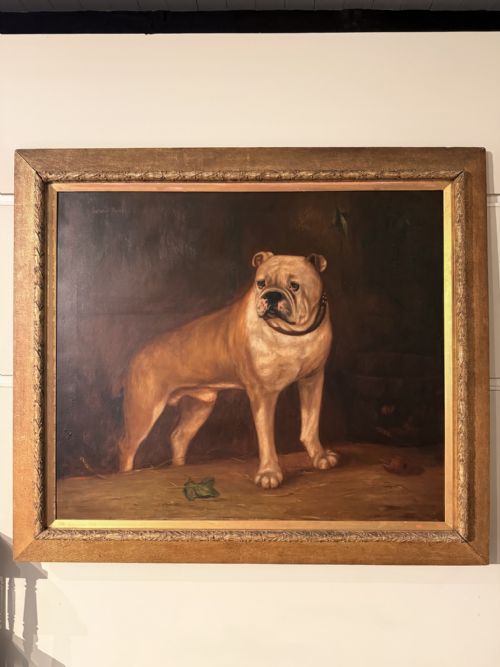
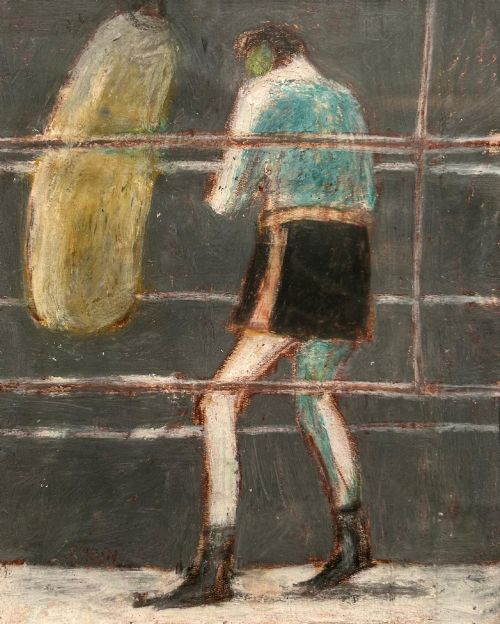
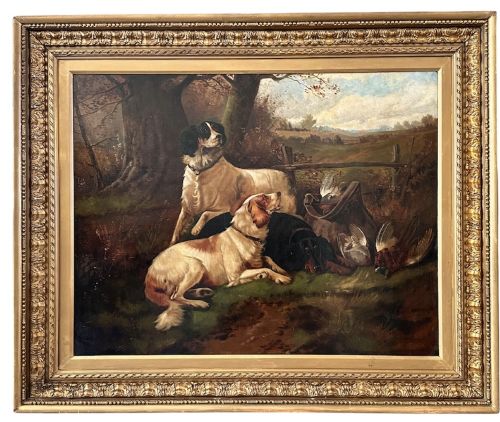
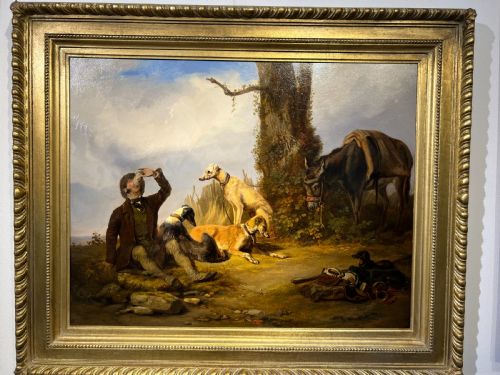
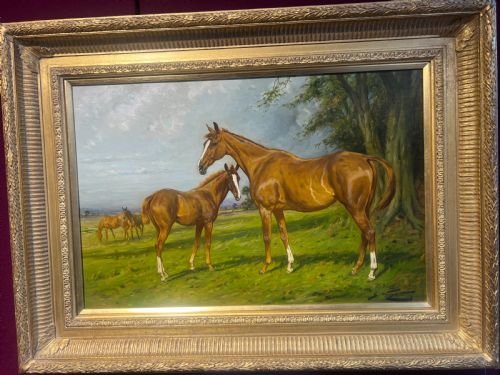

Antique Sporting Oil Painting
An antique sporting oil painting brings the vigour of the field and stable directly onto the interior wall.
Understanding the genre
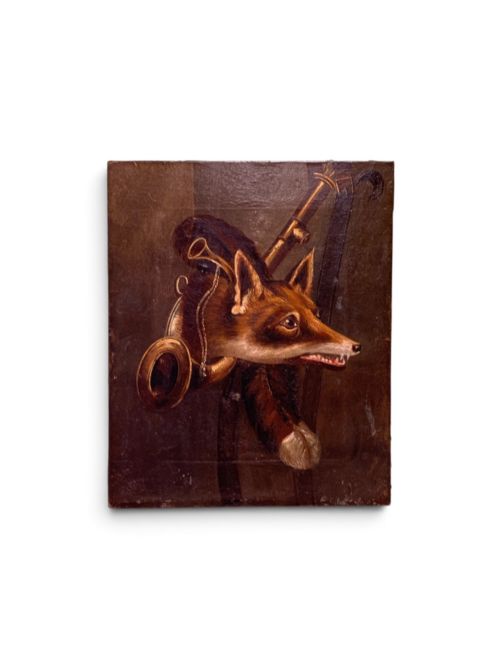
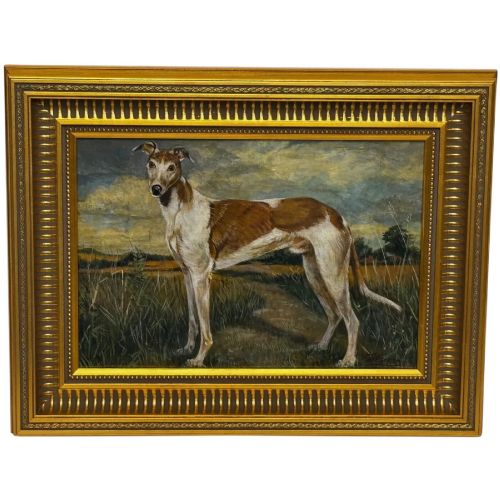
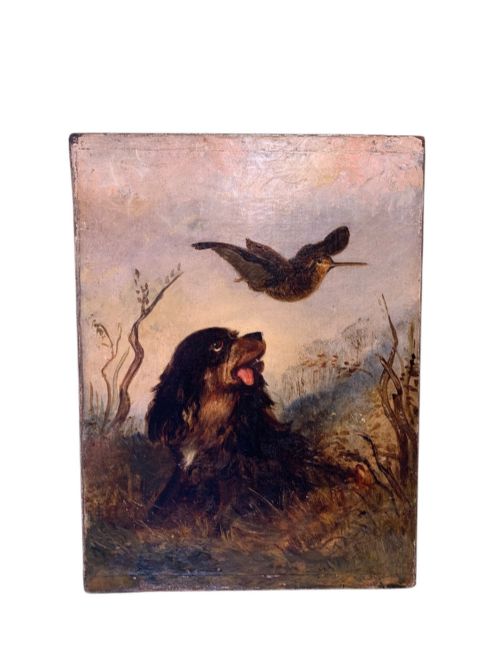
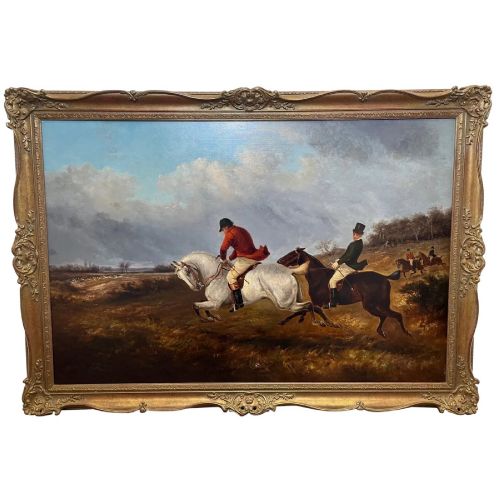
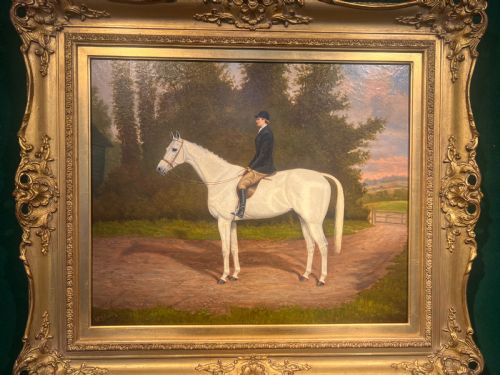
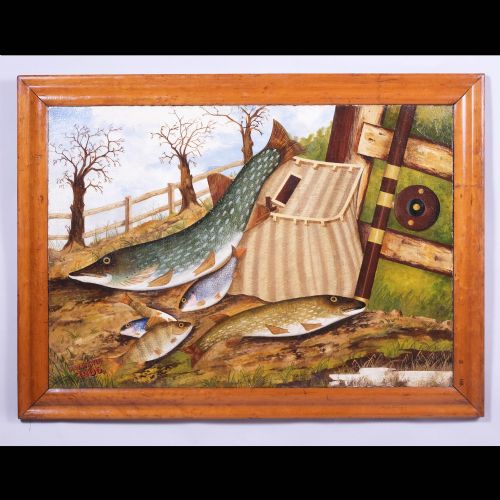
When you search for an antique sporting oil painting, you encounter works celebrating horses, hounds, carriage driving, hunting and canine subjects. These canvases record the rural pursuits and animal portraits commissioned by landowners and enthusiasts across past centuries.
The examples on this page span the Georgian era through to the nineteenth century and the early twentieth century. You will meet British sporting art, Victorian sporting art, and nineteenth-century British naive styles executed on canvas, wood, and board.
The subjects range from intimate stable portraits of individual bay horses to dramatic narratives such as bears and hounds in combat or foxes pursued across country scenes. Each piece captures a specific moment of rural activity preserved in oil paint.
Materials and construction
The artists painted primarily using oil paint applied to prepared canvas, wood panels, or timber boards. These grounds received layers of pigment that built up the depth of the animals, landscapes, and period clothing.
Many works retain their original framing, incorporating gilt wood and gold leaf to complement the rich tones of the oil paintings. The combination of timber supports and traditional oil media ensures the longevity of these rural records.
Retail Price Guide 2026
Typical UK retail prices for sporting oil painting, calculated from the Sellingantiques database of over a million retail prices indexed since 2003. This retail price guide relies exclusively on Sellingantiques data; no external sources or auction records are used, so the figures do not describe the wider market.
The listings feature works executed in oil paint on canvas, wood, and timber boards across the nineteenth and early twentieth centuries.
Distinguishing the finer works
Quality in these works rests upon the precision of animal anatomy and the vitality of the composition. A superior hand captures the tension in a hound or the exact conformation of a horse with confident brushwork rather than stiff outlines.
The handling of the surrounding landscape and atmospheric perspective also separates standard decorative canvases from accomplished artistic records. Stronger paintings integrate the animal subjects harmoniously into their country settings.
C W Tuck·Edward Lloyd of Ellesmere·John Vine of Colchester·John Sanderson Wells·AMJ Dodsley
The Antique Sporting Oil Painting Glossary
- Canvas
- A heavy woven fabric stretched across a wooden frame to serve as a foundation for oil painting. It provides a slightly flexible surface that responds well to traditional layering of pigments.
- Gilt Wood
- Timber that has been coated with a thin layer of gold leaf or metallic gilt finish. This framing technique enhances the visual weight and warmth of nineteenth-century artworks.
- British Sporting Art
- A genre of painting dedicated to horses, hounds, shooting, and rural sports. It reflects the deep social history of the British countryside and landed estates.
- Naive Style
- An art form characterised by a direct, unacademic perspective and charmingly flat proportions. These works prioritise clear storytelling over strict adherence to classical academic rules.
Frequently Asked Questions
What subjects appear in these paintings?
The works depict horses in stables, hunting scenes with hounds and foxes, carriage driving, and portraits involving sporting guns. Animal subjects dominate the compositions.
Scenes range from intimate individual animal studies to dynamic multi-figure narratives set in the British countryside.
How do I date an antique sporting oil painting?
Dating relies on the costume of any human figures, the style of the frame, and the painting technique itself. Georgian and nineteenth-century works often carry distinct stylistic markers.
Signatures, artist inscriptions, and the type of canvas or wood support also provide reliable clues to the period of creation.
Were these works originally framed?
Most of these oil paintings were housed in wooden frames finished with gold leaf or gilt. These traditional surrounds protected the edges of the canvas and added formal presence.
Many surviving pieces retain their period frames, which form an integral part of the artwork's history.
Where should I hang a sporting oil painting?
These works suit traditional panelled rooms, studies, and hallways where rural themes complement the interior. Keep them away from direct sunlight to protect the oil pigments.
Ensure the hanging wall remains stable and dry to preserve both the canvas and any original gilt wood framing.