


Antique Spelter Sculpture Pair
An antique spelter sculpture pair offers ornamental presence through cast metal figures spanning the Victorian era and the early twentieth century.
Antique Spelter Sculpture Pair
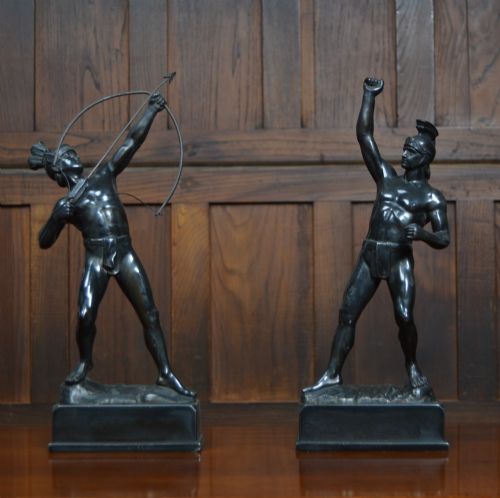
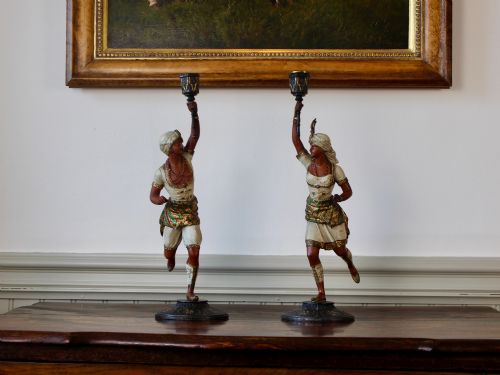
An antique spelter sculpture pair comprises matching cast metal figures, statues, candlesticks, or figural groups originating predominantly from nineteenth-century France and Victorian Britain. These decorative pairs frequently depict Roman figures, medieval characters on stilts, cavaliers, French soldiers, harvesters, and mythological horses.
The pairs you meet on this page range from compact mantel ornaments to large statues and figural candlesticks. Makers utilised this accessible alloy to produce decorative groupings that mirrored the appearance of more costly bronze works for domestic interiors.
Stylistically, these pieces draw upon French nineteenth-century design, Neoclassical motifs, Orientalist themes, Gothic Revival, and Art Nouveau. They function primarily as decorative garnitures for mantelpieces, sideboards, and architectural brackets.
How they were made
Spelter, essentially a zinc alloy often referred to in trade listings simply as cast metal, forms the foundational body of these sculptures. The metal was poured into moulds to capture intricate details of drapery, facial expressions, and surface ornamentation.
Manufacturers applied various surface finishes after casting to simulate the appearance of bronze or precious metals. These finishes include bronze patina, cold painting, and gilding over wood or alabaster bases.
Medieval characters balanced precariously on stilts join the usual cast of Roman figures, cavaliers, and French soldiers.
What varies in quality
The integrity and application of the surface finish dictate much of the visual appeal. Original cold painting, careful bronze patination, and intact gilding demonstrate higher manufacturing standards than heavily retouched or stripped surfaces.
Ernest Rancoulet
The Antique Spelter Sculpture Pair Glossary
- Spelter
- A zinc-based alloy commonly used as a cost-effective substitute for bronze in nineteenth-century decorative sculptures and figures. It is softer and lighter than bronze.
- Cold painted
- A finishing technique where pigment is applied to the metal without heat firing after the initial casting process. This method produces vibrant polychrome surfaces on figures and garments.
- Bronze patina
- A chemical or applied surface treatment designed to simulate the aged appearance of genuine bronze. It gives the spelter a darker, metallic tone.
- Garniture
- A set of ornamental objects, often a pair of figures flanking a central clock or vase, designed for display on a mantelpiece. These matched sets provide symmetrical decoration.
- Neoclassical
- A decorative style inspired by the classical art and architecture of ancient Greece and Rome. It appears frequently in the classical drapery and balanced poses of these figures.
Antique Spelter Sculpture Pair: Frequently Asked Questions
What is spelter metal?
Spelter is a zinc alloy that sculptors and foundries utilised extensively during the nineteenth century for decorative figures and statues. It provided an economical alternative to bronze while allowing intricate mould castings.
Because the metal is softer than bronze, pieces made from spelter require careful handling to prevent bending or surface damage over time.
How do I clean an antique spelter sculpture pair?
Cleaning requires only a soft, dry cloth to remove dust from the surface crevices and detailed areas. Avoid using liquid cleaners, polishes, or abrasive materials that can strip away original cold painting or artificial patination.
Keeping the sculptures in a stable environment away from excessive moisture preserves the integrity of the metal and any applied finishes.
Are these figures solid bronze?
These sculptures are made from spelter or zinc alloy rather than solid bronze. Many pieces feature a bronze patina finish applied to resemble genuine bronze statuary.
Weight and surface examination help distinguish the softer zinc alloy from heavier bronze, though both materials share similar historical patination techniques.
Where were these sculptures displayed?
Original owners typically displayed these pairs on mantelpieces, sideboards, or console tables as decorative garniture sets. They often flanked clocks or architectural ornaments to create symmetry in Victorian and continental interiors.
Larger pairs stood directly on furniture tops or pedestals to showcase historical, mythological, or genre subjects.