

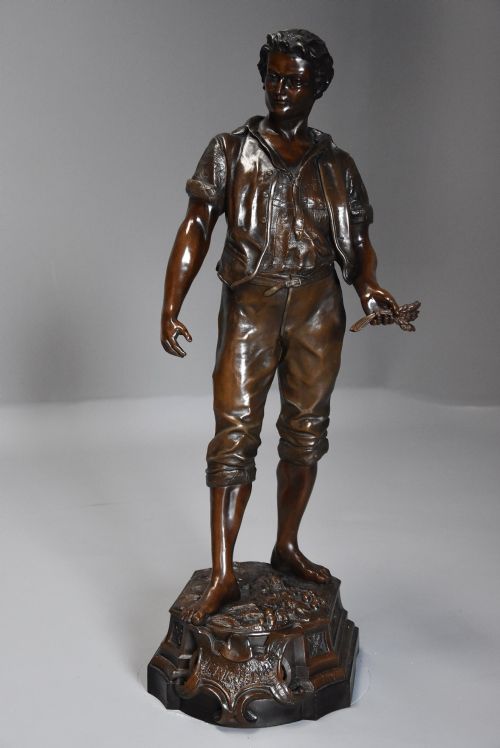


Bronze Finish Metal Statues
Bronze finish metal statues bring character and historical presence into a room, spanning periods from the nineteenth century through the art deco era with remarkable sculptural detail.
Bronze Finish Metal Statues
Bronze finish metal statues encompass figural sculptures, animal studies and desk ornaments produced across the nineteenth and early twentieth centuries. When searching for bronze finish metal statues, buyers encounter predominantly French works executed in spelter or patinated metal alongside American cold painted bronze studies and heavy iron pieces.
Materials and construction methods
Makers utilised spelter, a zinc alloy, as a primary casting material for figurative and decorative sculptures, applying patinated metal finishes or bronze effects to emulate solid bronze. These figures were frequently cast in sections and secured to heavy stone supports such as green marble or onyx bases.
Alternative pieces incorporate cast iron and cold painted bronze, demonstrating varied foundry techniques across American and European workshops. Surface patination was carefully applied to achieve the characteristic bronze finish seen on farm labourers, soldiers, female models and animal subjects.
Current listings feature pieces spanning seven distinct decades from the 1880s through the 1930s.
Judging quality and craftsmanship
The integrity of the structural materials also defines the tier of a piece, from the stability of the marble or onyx base to the precision of the metal joins. Signed works by known makers exhibit a superior level of anatomical and proportional accuracy compared to anonymous foundry output.
F.Milliot·Jennings Brothers
The Bronze Finish Metal Statues Glossary
- Spelter
- A zinc alloy commonly utilised as a cost-effective alternative to bronze for nineteenth and early twentieth century figural sculptures. It accepts patinated finishes remarkably well.
- Patinated metal
- Metal treated with chemicals or heat to produce a specific surface coloration, often designed to mimic aged bronze. This treatment enhances the visual depth of the sculpture.
- Animalier
- A nineteenth century artistic movement and style focused on realistic depictions of animals, particularly in motion or repose. French animalier bronzes and spelter studies are highly collectible.
- Grand Tour
- Souvenir models and sculptures purchased by wealthy travellers touring the cultural sites of Europe during the nineteenth and early twentieth centuries. These pieces often replicate famous classical antiquities.
- Cold painted bronze
- A manufacturing technique where bronze sculptures are painted with oil or enamel colours without subsequent firing. This method yields vibrant details particularly popular in early twentieth century studies.
Bronze Finish Metal Statues: Frequently Asked Questions
What is spelter?
Spelter is a zinc-based alloy that European foundries frequently utilised during the nineteenth and early twentieth centuries to produce affordable decorative figures. It is lighter and softer than true bronze.
Makers applied various patinated coatings to these alloy castings to achieve the desired bronze finish appearance.
How do I care for a bronze finish?
Maintain the surface by dusting gently with a soft, dry cloth to prevent the accumulation of grit. Avoid using chemical cleaners or abrasive polishes which can strip away the applied patina.
Keep the sculpture away from direct sunlight and excessive moisture to preserve the original metal finish.
Are these pieces solid bronze?
Most items encountered in this category are cast from spelter, iron or other metals with an applied bronze finish rather than being cast from solid bronze. Foundry marks and weight often help distinguish the material composition.
Cold painted bronze is also found among American studies from the early twentieth century.
What periods do these statues represent?
The pieces span from the late nineteenth century through the art deco period of the 1930s. This timeframe encompasses Victorian animalier works, art nouveau naturalism and neoclassical revivals.
Each era brought distinct stylistic preferences to the sculpting of figures and desk ornaments.
Why are some mounted on marble?
Marble and onyx bases provided necessary weight and stability for figures cast in lighter alloys like spelter. They also added an architectural element that elevated the status of the desk ornament or sculpture.
Green marble bases were particularly favoured during the art nouveau era.