

Antique Spark Screen
An antique spark screen guards a hearth against escaping embers while anchoring the room's decorative scheme with period metalwork.
Antique Spark Screen
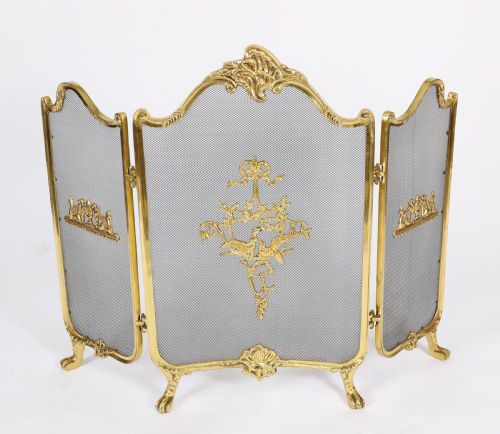
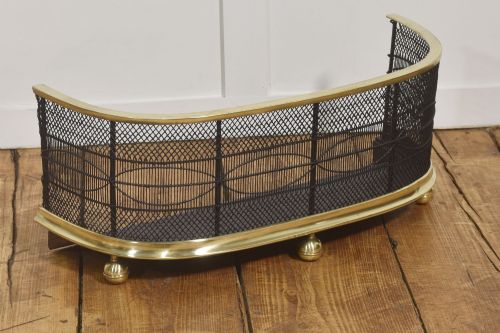
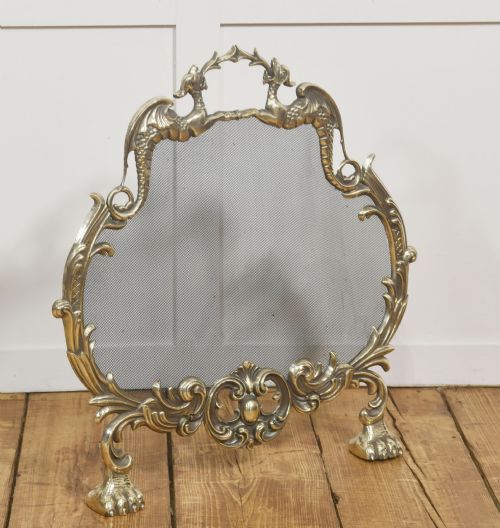
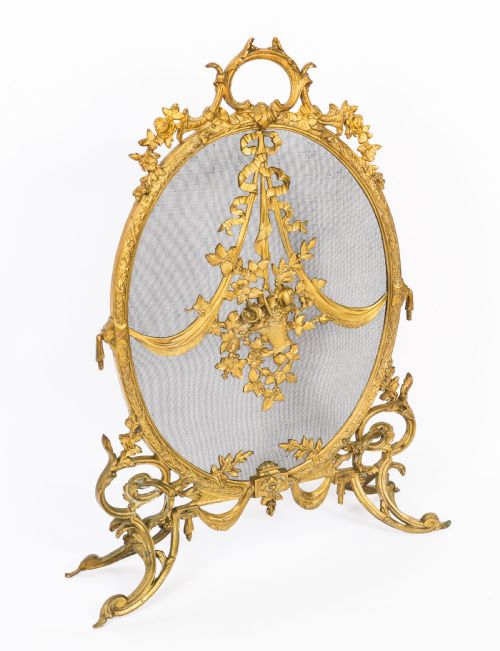
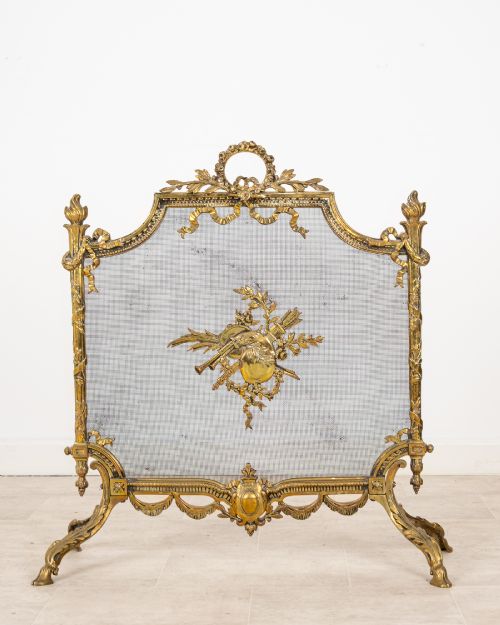
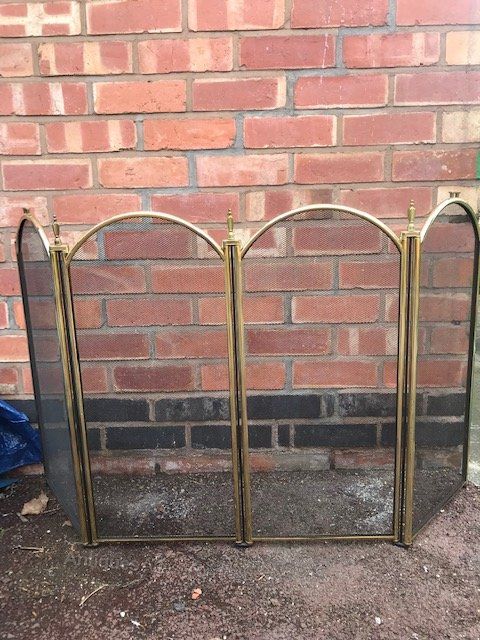
When searching for an antique spark screen, buyers encounter fireplace guards, fire screens, and nursery fenders originating from the nineteenth and early twentieth centuries. These functional hearth accessories take several structural forms, ranging from folding peacock fan designs to rigid tripartite panels and mesh guards.
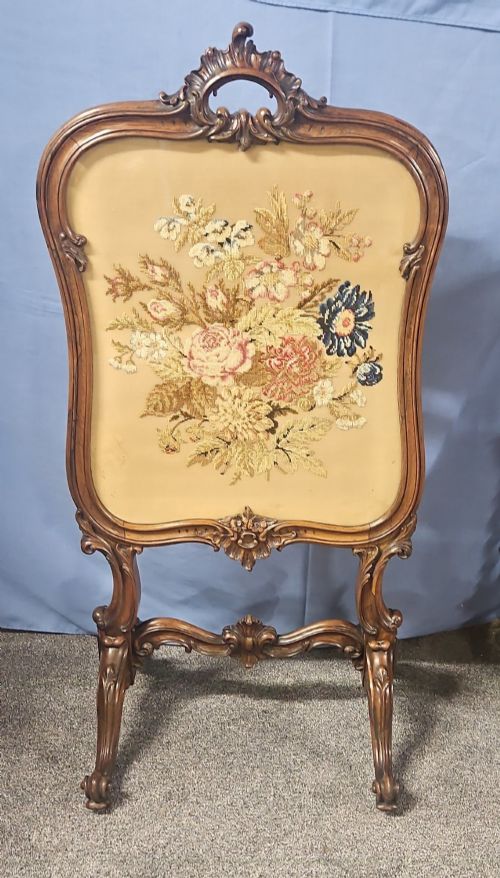
The pieces appearing most frequently on this page belong to the Victorian era and the decades immediately following, executed in varied stylistic revivals. French Rococo, Empire, Gothic, and Arts and Crafts movements dominate the design vocabulary, appearing alongside simpler utilitarian brass and wirework constructions.
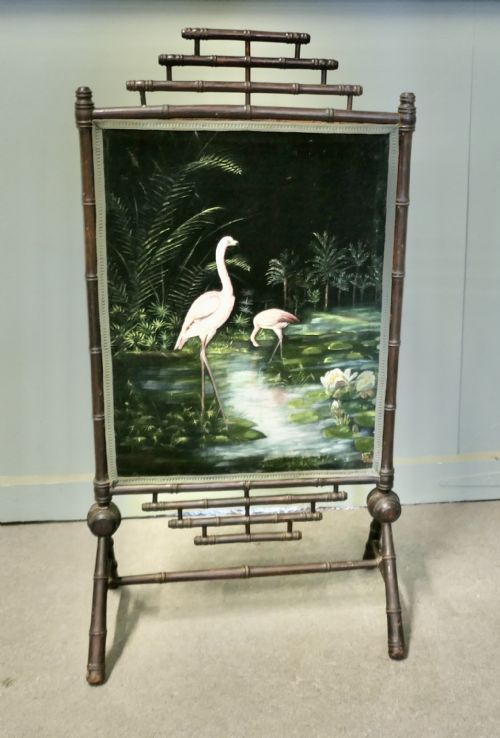
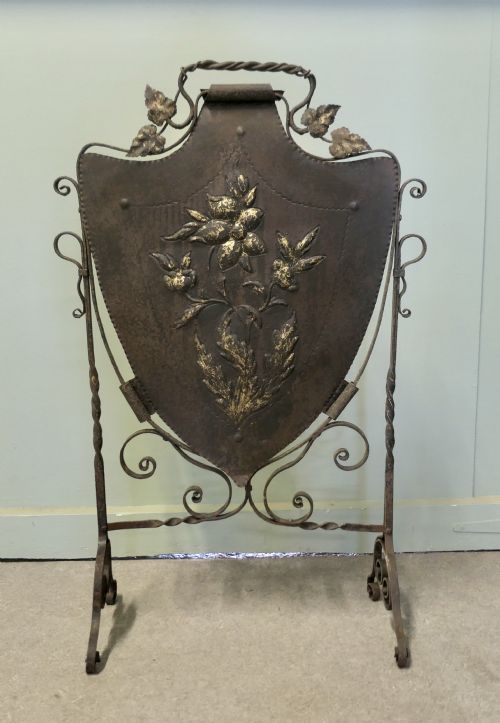
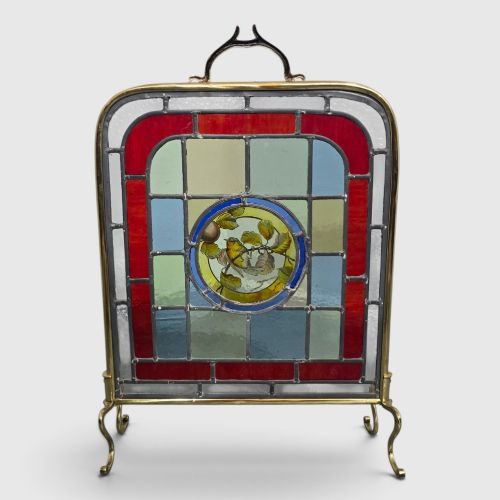
Makers adapted these screens for daily domestic service, incorporating folding sections for compact storage or adjustable frames for heat reflection. Alongside standard metal mesh panels, examples emerge featuring stained glass, painted lacquer, and embroidered panels mounted on wooden or metallic frames.
Materials and Technique
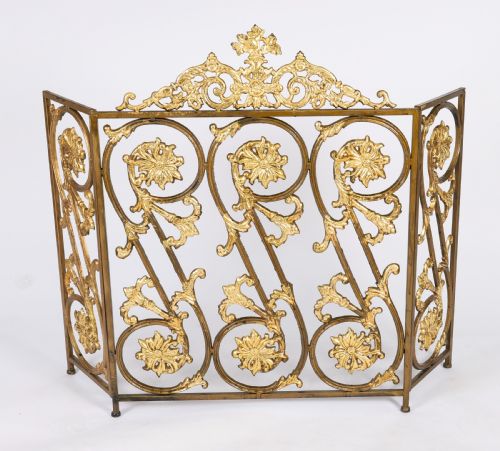
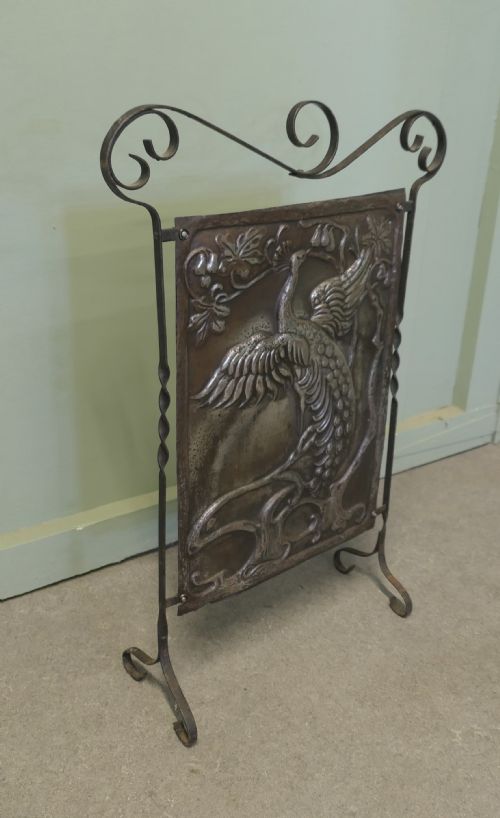
Hearth furniture relies primarily on brass, wrought iron, copper, and wire mesh, manipulated through casting, piercing, chasing, and riveting. Brass frames often receive polished or gilt finishes, while iron variants employ hammered and patinated surfaces consistent with Arts and Crafts ideals.
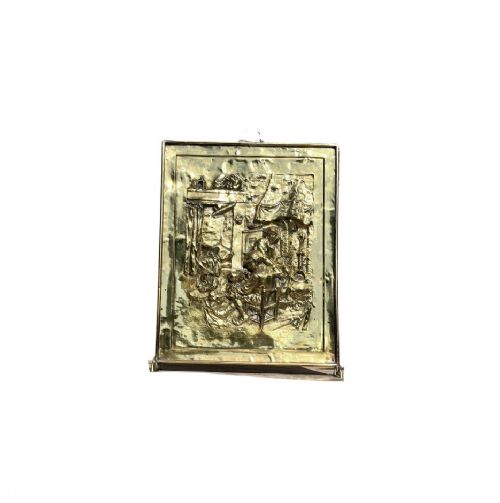
Artisans combined rigid metallic frameworks with flexible elements such as folding wire mesh or pivoting fan blades. Decorative panels incorporate specialised techniques including embossed metalwork, painted decoration on lacquer or glass, and leaded stained glass inserted into iron or wooden supports.
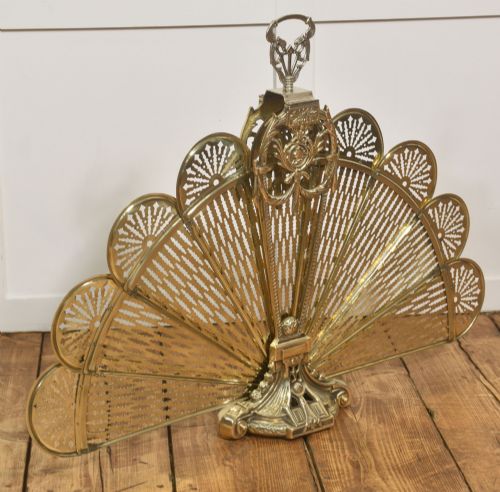
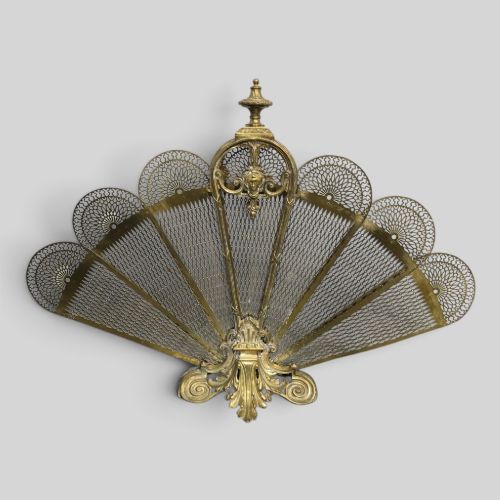
Several folding fan screens mimic the plumage of Victorian peacocks, bringing avian geometry straight to the fireside.
Design and Execution
Quality rests upon the crispness of the casting, the weight of the gauge metal, and the structural integrity of the hinges and joints. Finer examples display deeply chased ornamentation, hand-hammered detailing, and substantial frames that stand securely without warping near a heat source.
Simpler utilitarian wire guards prioritize protective function over ornament, whereas decorative salon screens utilise gilt bronze, fine ormolu, and integrated decorative arts media. The sophistication of the mechanism, particularly in folding fan and tripartite designs, separates standard production pieces from finer artisan work.
The Antique Spark Screen Glossary
- Spark Guard
- A protective barrier placed before an open fireplace to contain flying embers and ash. These screens use fine wire mesh or perforated metal to maintain visibility of the fire while blocking sparks.
- Peacock Fan Screen
- A hearth guard featuring rigid metallic blades that pivot outward into a semicircular fan shape. When closed, the segments fold compactly against one another.
- Tripartite
- A screen composed of three hinged panels that fold inward or outward to enclose the hearth opening. This configuration permits adjustable angles for stability and coverage.
- Chasing
- A metalworking technique where patterns are hammered into the front surface of the metal using punches to create low-relief ornamentation. This differs from engraving, which removes material.
- Ormolu
- Finely ground high-carat gold applied to a bronze base metal using a mercury amalgamation process. The resulting surface provides a rich, durable golden finish on French revival pieces.
Antique Spark Screen: Frequently Asked Questions
How do I choose the right size screen?
Measure the width and height of the fireplace opening to ensure the screen extends beyond the hearth parameters for adequate protection. Consider whether a rigid flat panel or a folding multi-section design suits the spatial constraints of the room.
Account for fireplace accessories like fenders that might sit forward of the hearth opening when calculating placement depth.
Were these screens used for heat or sparks?
Hearth screens served multiple domestic functions, operating as spark guards for safety, draught excluders, and physical deflectors of intense open fire radiation. Some designs also provided privacy or protected feminine complexions from excessive heat.
Decorative panels often doubled as summer fireboards when the hearth was not in active seasonal use.
How do I clean brass spark screens?
Dust the wire mesh and metal frame regularly with a dry cloth to prevent soot accumulation from settling into crevices. Avoid harsh chemical polishes that strip historical patination from older brass and copper surfaces.
Gentle cleaning with mild soap and warm water suffices for most stable metallic finishes, followed by immediate drying.