




Gilt Brass Fireguard
These gilt brass fireguard pieces manage a room's hearth with French revival brass, bronze, and wired mesh.
Gilt Brass Fireguard
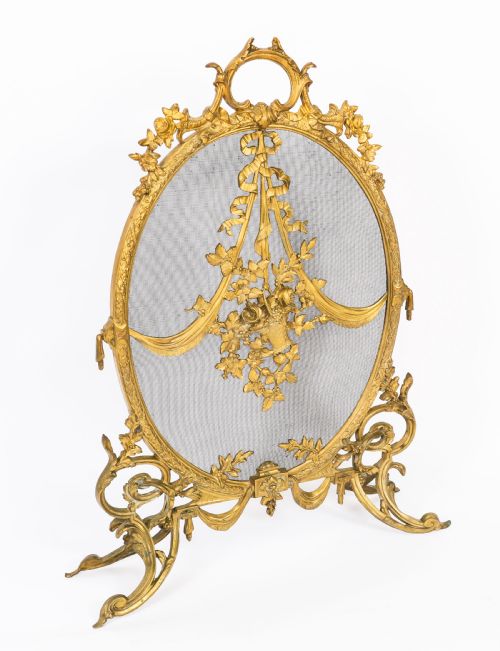
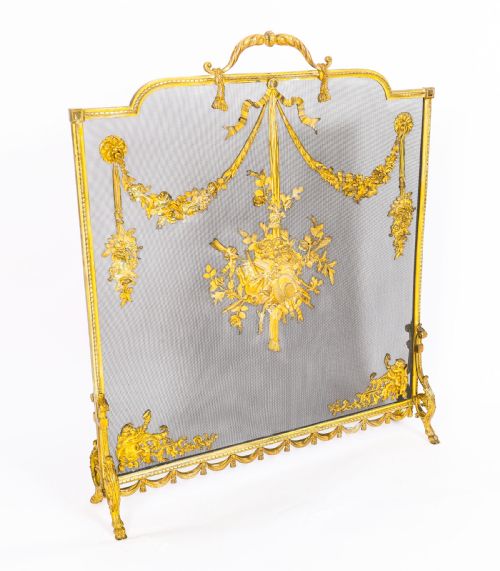
When you search for a gilt brass fireguard, you are looking at hearth furniture designed to shield a room from stray embers while adding decorative metalwork to a fireplace. These domestic accessories take the form of fire screens and fireplace fenders, standing before active grates or framing the hearth opening.
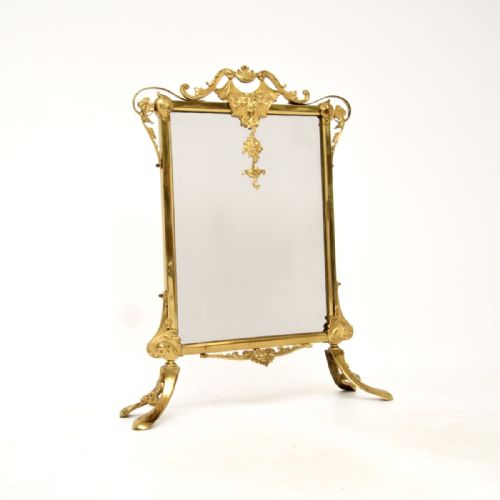
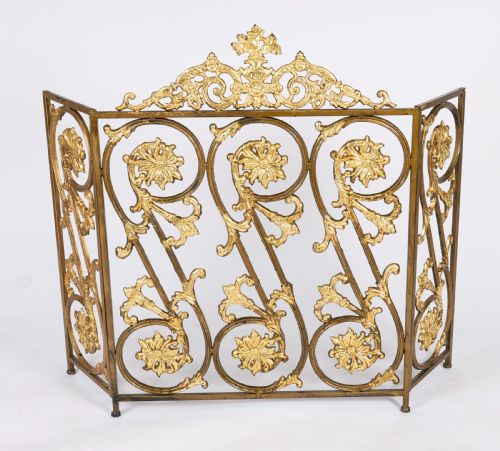
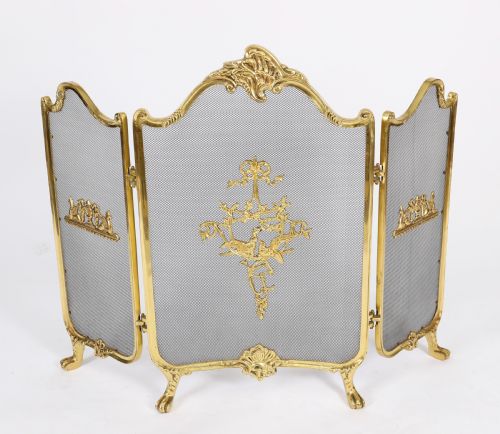
Many examples incorporate pierced metal frames, wire mesh panels, or hinged triple folds designed to adjust around the hearth. Alongside standard brass construction, pieces frequently employ gilt bronze, ormolu, and occasionally mounted needlepoint embroidery or gilded wood.
How they were made
The construction relies fundamentally on heavy cast brass and bronze, shaped into elaborate revival frames and detailed mounts. Foundries utilised techniques like fire gilding or ormolu application to impart a rich golden surface finish to the metal components.
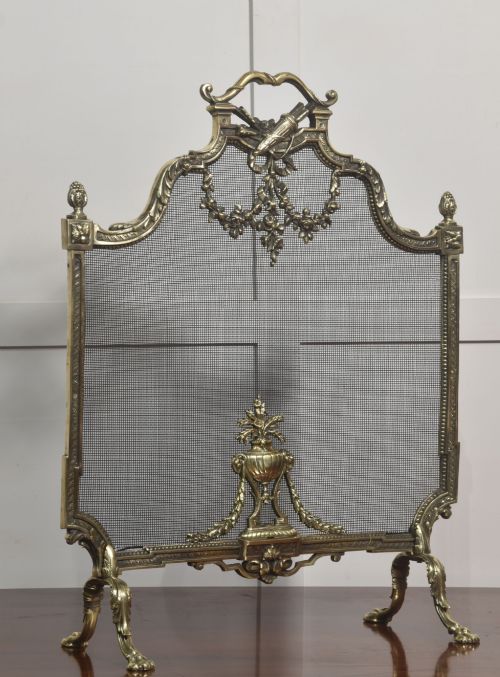
Makers integrated structural wire mesh into screen panels to contain sparks while maintaining visibility of the fire. Decorative elements such as musical trophies, flaming torches, and floral motifs were separately cast and secured to the primary frame.
Gilt Brass Fireguard Retail Price Guide 2026
Typical asking prices for gilt brass fireguard among the pieces listed under this phrase on Sellingantiques today, from the lower quarter to the upper quarter. They describe what is for sale here now, not the wider market.
Some screens feature hidden musical trophies cast in metal, letting you play silent tunes to the hearth forever.
What varies in quality
The distinction between ordinary and exceptional pieces lies in the crispness of the cast ornamentation and the depth of the gilding. Finer examples display hand-chiselled detailing on the bronze mounts, whereas simpler items rely entirely on the initial casting.
Structural weight and the integrity of the hinges on multi-fold screens separate robust domestic items from lighter decorative pieces. The presence of sophisticated iconography, such as finely rendered musical trophies or classical swags, indicates higher workshop standards.
E F Caldwell New York
The Gilt Brass Fireguard Glossary
- Ormolu
- Gilded bronze, where a gold and mercury amalgam is applied to a bronze base and heated. This technique creates a durable, luminous metallic surface common in high-status French decorative arts.
- Fire screen
- An upright movable piece of furniture placed before a fireplace to deflect radiant heat when a fire is low. They often feature hinged panels or embroidered inserts.
- Fender
- A low metal barrier placed on the floor around the hearth to keep burning coals and ash contained. They echo the decorative style of the surrounding fire screen.
- Rococo Revival
- A nineteenth-century design movement inspired by eighteenth-century French excess, characterised by asymmetrical scrollwork, C-scrolls, and naturalistic plant motifs. It dominates much of the brasswork seen here.
- Neoclassical Revival
- A style drawing on classical Greek and Roman antiquity, featuring symmetrical lines, urns, swags, and architectural motifs. It provides a more restrained alternative to Rococo exuberance.
Gilt Brass Fireguard: Frequently Asked Questions
What is a gilt brass fireguard used for?
These pieces serve a dual function at the hearth, acting primarily as a protective barrier against sparks while adding decorative metalwork to the fireplace.
In period rooms, they also helped deflect excessive radiant heat from the fire away from those sitting nearby.
How do I identify a Rococo Revival fire screen?
Rococo Revival pieces are easily recognised by their asymmetrical scrollwork, C-scroll motifs, and organic plant forms. They avoid straight lines in favour of flowing, curved brass and bronze casting.
Makers often incorporated themes like musical trophies or flaming torches into these ornate nineteenth-century frames.
What is the difference between a fender and a screen?
A fender is a low frame sitting flat on the floor around the hearth perimeter to contain stray logs and falling ash. It stays in place continuously.
An upright screen stands taller on feet or supports, positioned directly in front of the opening to block heat and sparks.
How should I clean gilt brass and ormolu?
Metal surfaces require gentle dusting with a soft dry cloth to prevent the accumulation of grime in the cast recesses. Avoid aggressive metal polishes that can strip away the historical gilding.
If the piece incorporates wool needlepoint or fabric panels, keep moisture entirely away from the textile elements during cleaning.
Are these pieces from the nineteenth century?
The majority of the items originate from the nineteenth century, encompassing periods like eighteen eighty and eighteen seventy. Many represent later revivals of earlier French court styles.
Nineteenth-century foundries frequently looked back to the reigns of Louis the fourteenth, fifteenth, and sixteenth for aesthetic inspiration.