
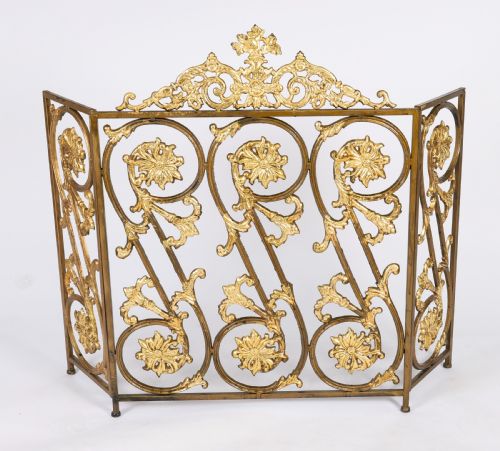
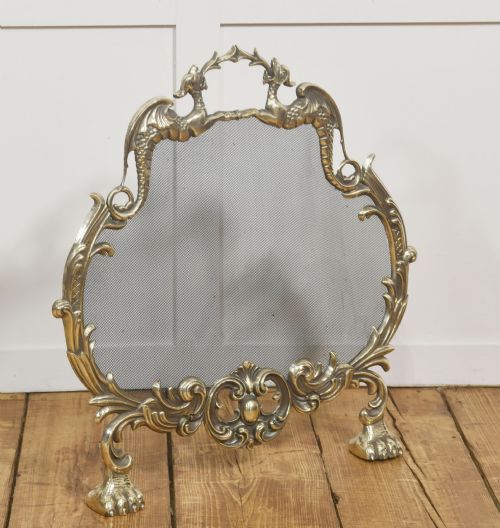
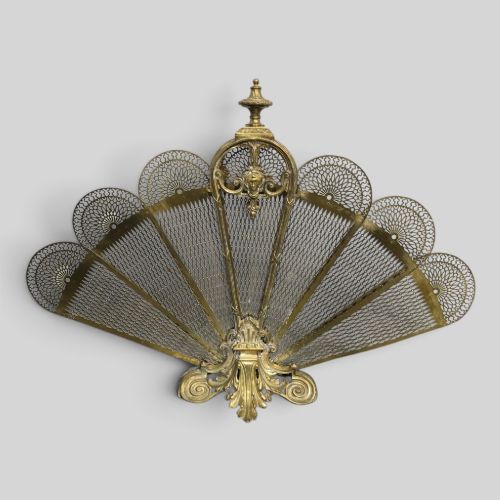
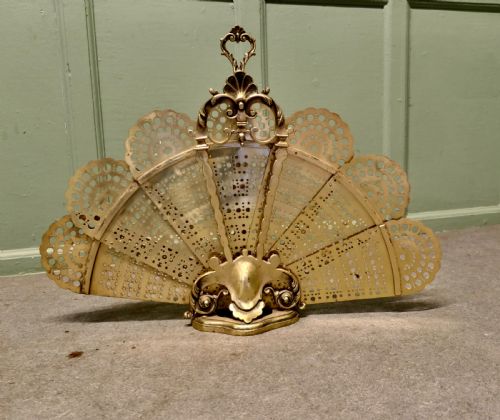


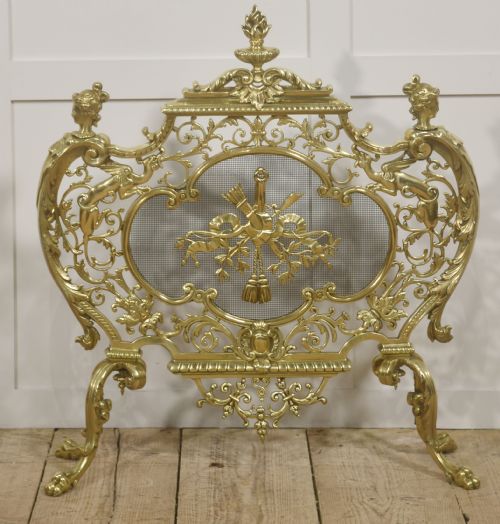

French Hearth Screen
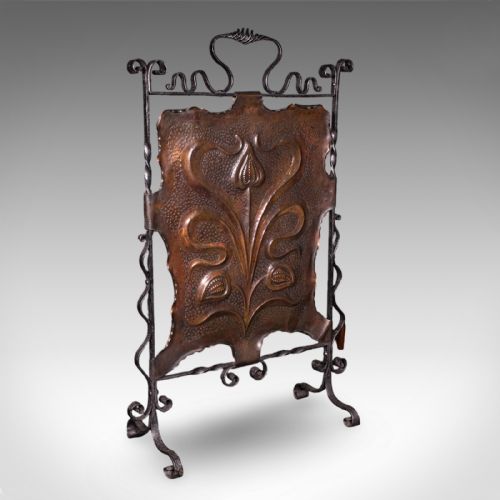
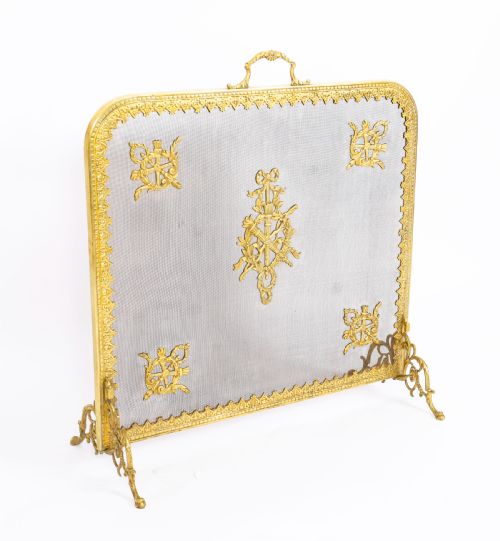
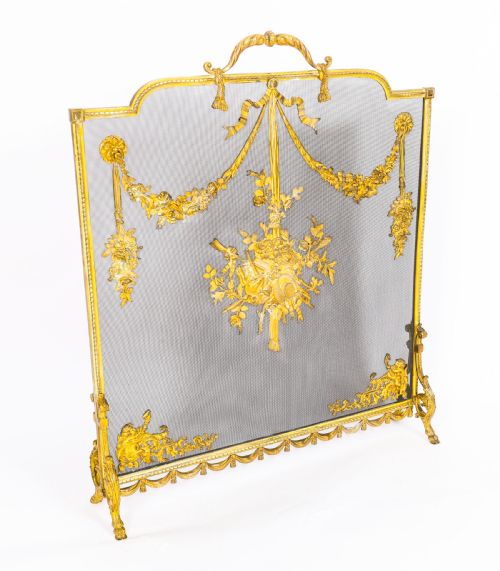
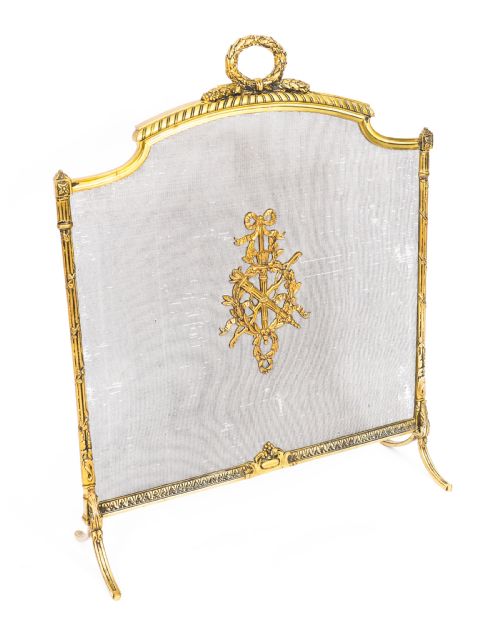
A French antique hearth screen stops wandering sparks while framing the fireplace in cast metal and mesh.
French Hearth Screen
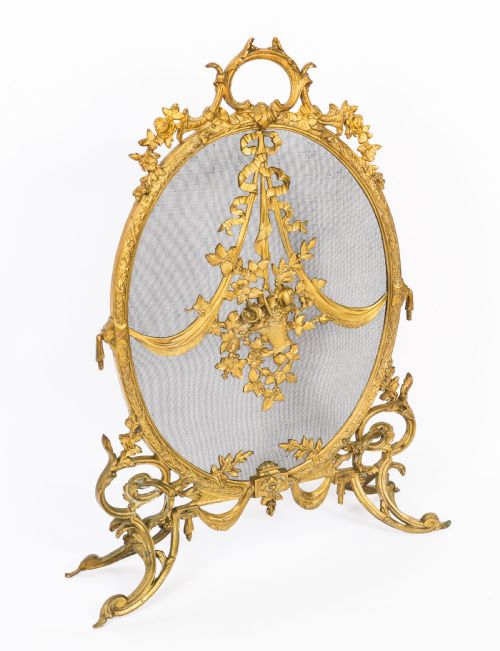
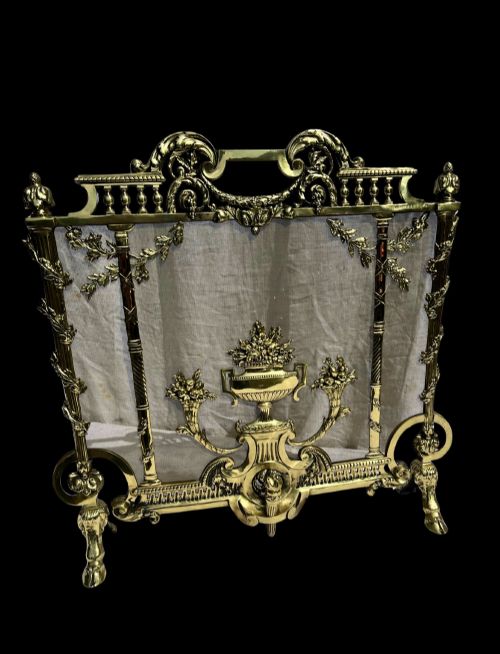
A French antique hearth screen protects the room from stray embers while adding a decorative focal point to the fireplace. Buyers hunting for a French antique hearth screen frequently encounter folding peacock designs, rigid frames with wire mesh, and ornate panels shaped by revival aesthetics.
The objects span the nineteenth century into the early twentieth century, drawing on Victorian tastes and continental revivals. Most examples rely on brass or gilt bronze frames, often incorporating mesh or folding fan blades to shield the hearth.
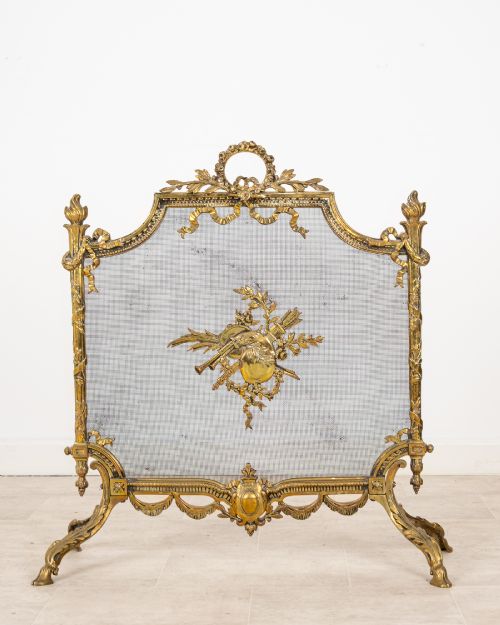
Makers and designers channelled historical periods such as Louis XIV, Louis XVI, and Rococo styles into domestic hardware. These fireplace accessories range from simple wire guards to heavy cast bronze frames adorned with musical trophies and classical motifs.
Assessing quality in hearth guards
Quality rests upon the crispness of the casting and the weight of the metal utilised in the frame. Finer examples display deeply chased gilt bronze or brass work where floral motifs, dolphins, and musical trophies retain sharp relief.
The construction of the mesh or folding mechanism dictates the durability of the piece. Robust hinges on multi-fold screens and securely woven wire mesh separate superior domestic hardware from lighter production.
Design influences span Rococo Revival, Louis XIV, Louis XVI, and Empire Revival styles across the nineteenth century.
The French Hearth Screen Glossary
- Rococo Revival
- A nineteenth century design movement favouring asymmetrical C-scrolls, shell motifs, and naturalistic foliage. This style dominates many French fireplace screens.
- Gilt Bronze
- Metal alloy coated with a thin layer of gold, frequently used for decorative mounts on high end fireplace accessories. It provides a warm metallic lustre.
- Spark Screen
- A protective barrier of wire mesh or metal panels placed before an open fire to catch flying embers. These guards protect flooring and furnishings.
- Empire Revival
- A neoclassical design style drawing on ancient Roman and Greek military trophies, flaming torches, and classical laurel wreaths. Pieces from this tradition appear in mid nineteenth century listings.
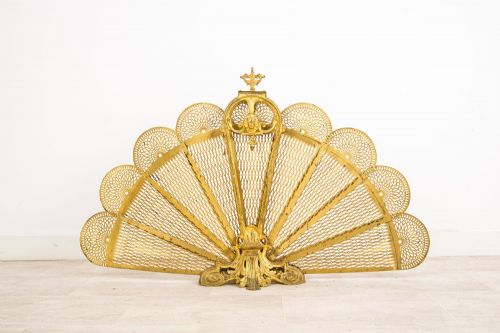
- Peacock Fan
- A folding screen design featuring overlapping metal blades that fan outward like a tail. This ingenious format expands to cover the opening and contracts for storage.
French Hearth Screen: Frequently Asked Questions
How do I clean a brass fire screen?
Dust the metal gently with a soft dry cloth to remove soot and surface debris. Avoid harsh chemical polishes that strip historical patination from antique brass and gilt surfaces.
Take care around wire mesh and painted sections, as vigorous rubbing can damage fragile nineteenth century finishes. Gentle maintenance preserves the metallic sheen without altering the age of the piece.
Are these screens safe for an active fire?
Many examples feature sturdy wire mesh designed specifically to catch flying sparks from an open hearth. Heavy cast frames provide stable positioning against the fireplace opening.
Verify that folding joints and mesh panels remain secure before placing the guard near intense heat. Lighter decorative screens serve primarily as summer fireplace inserts when fires are unlit.
What is a peacock fan screen?
A peacock fan screen utilises expanding metal blades that pivot open to form a semicircular fire guard. This folding mechanism allows the accessory to adjust across varying hearth widths.
Victorian and Edwardian makers favoured this clever design for its combination of practicality and theatrical flair. When closed, the compact fan takes up minimal floor space.
How do I date a nineteenth century screen?
Examine the casting style, fastening methods, and material composition to estimate the period of production. Pieces bearing heavy gilt bronze and classical trophies often align with mid nineteenth century Empire revivals.
Later Victorian and 1900 examples frequently incorporate spring hinges or distinct brass mesh patterns. Comparing stylistic details against documented revival periods helps narrow down the decade of manufacture.