

Antique Smokers Chair
When you search for an antique smokers chair, you are looking at sturdy English country seating designed for comfort and sustained daily use.
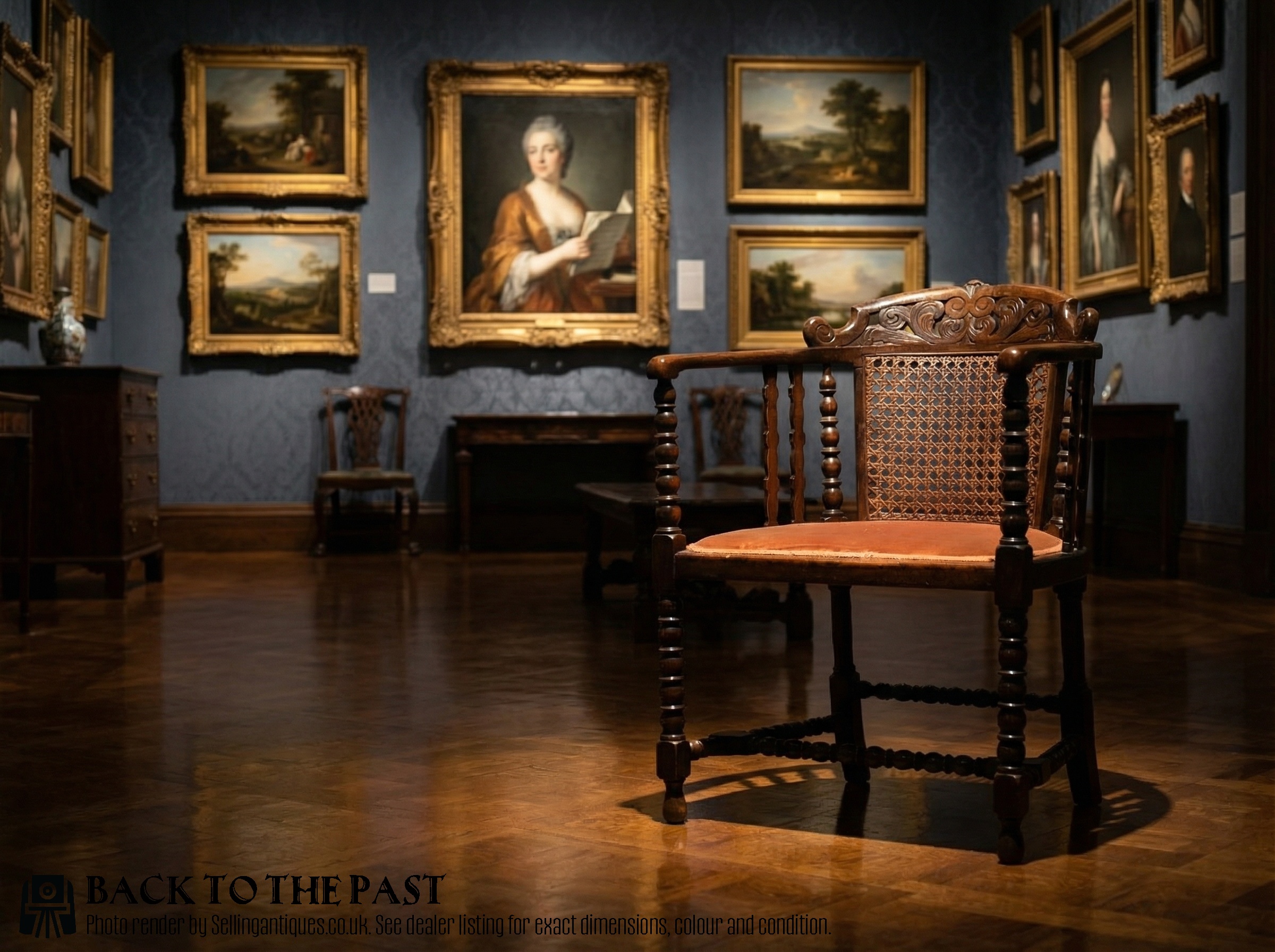
Antique Smokers Chair
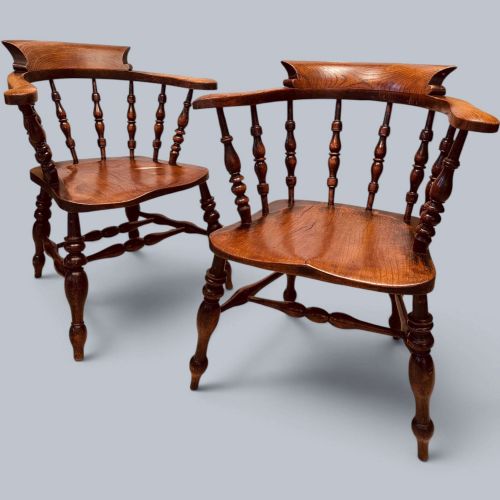
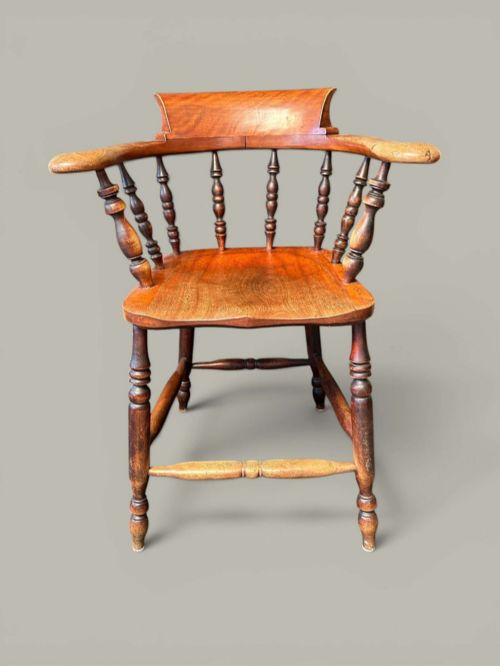
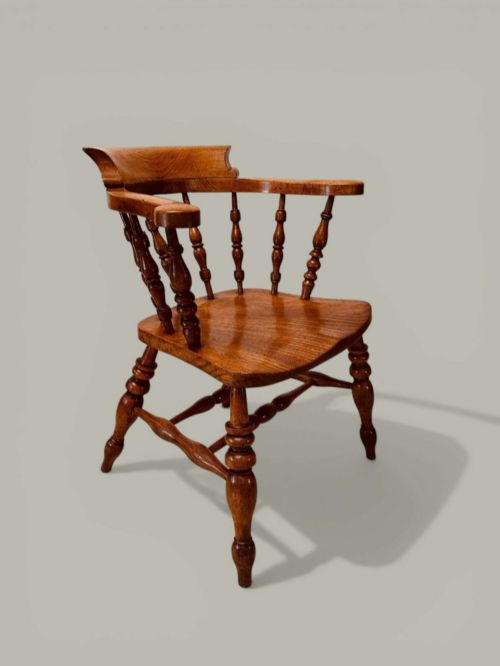
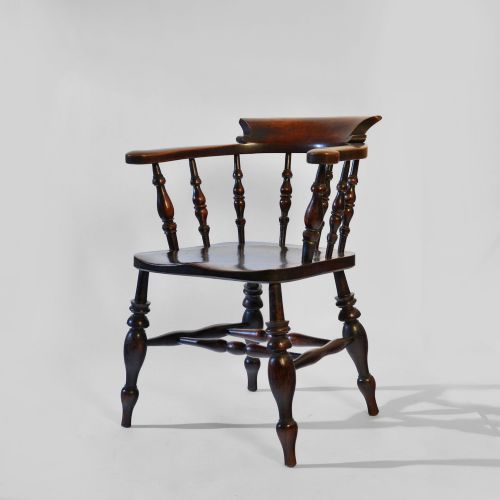
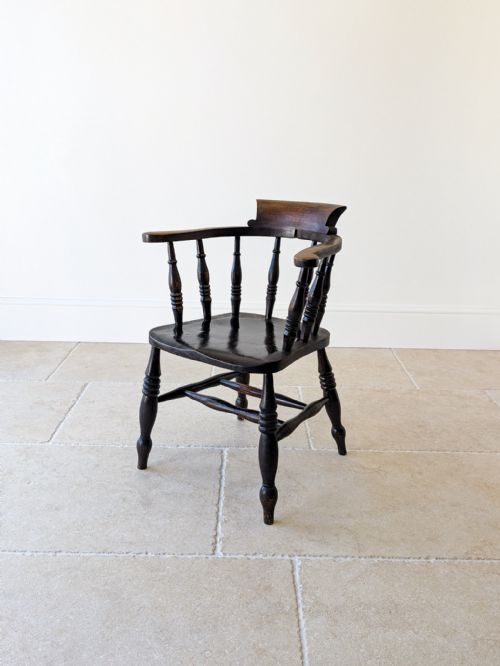
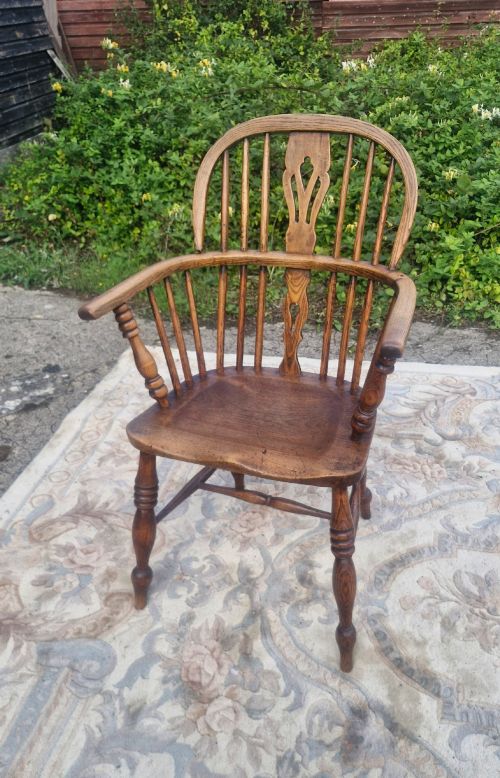
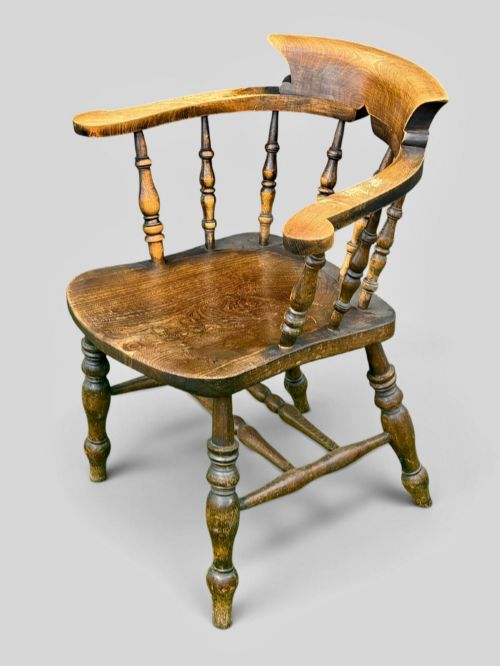
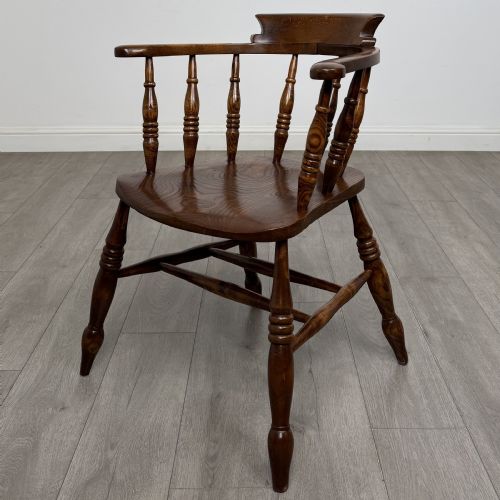
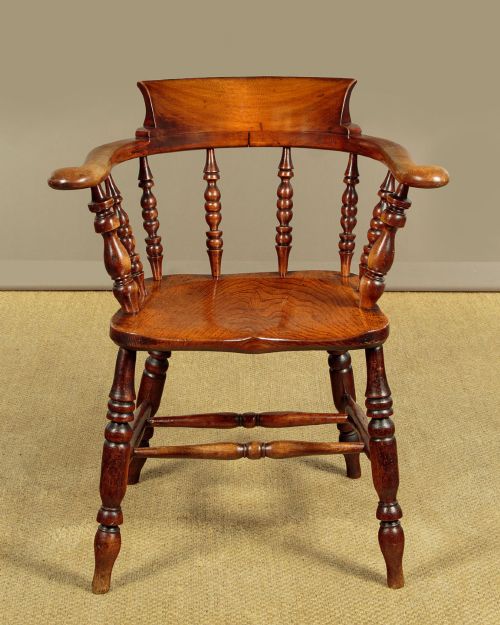
The antique smokers chair, frequently encountered as a smokers bow, captain's chair, or low-back Windsor, serves as a robust wooden armchair rooted in English country house and farmhouse traditions. These forms date primarily from the Victorian and Edwardian eras, spanning the nineteenth and early twentieth centuries, though earlier Georgian examples also appear.
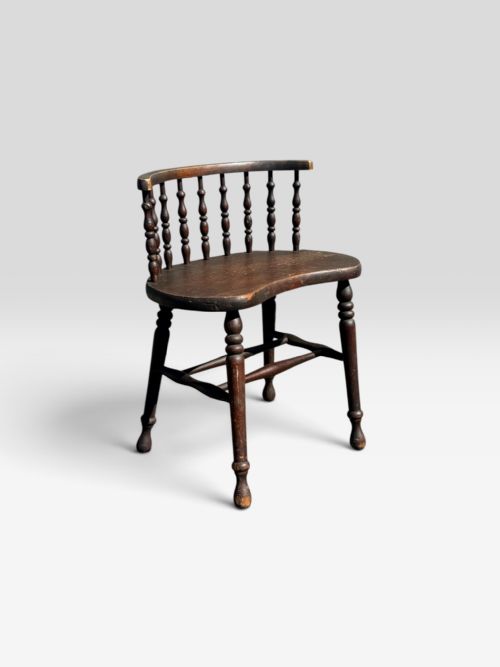
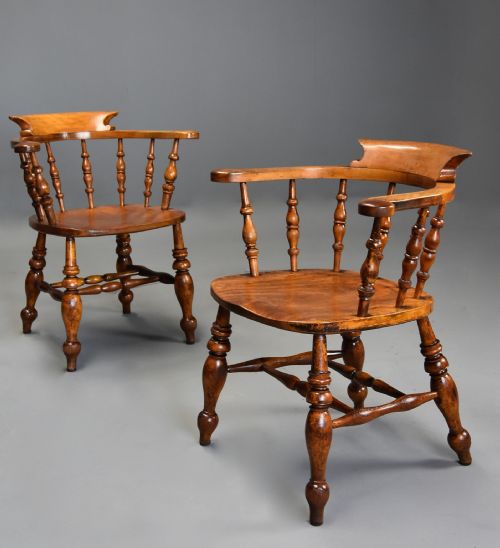
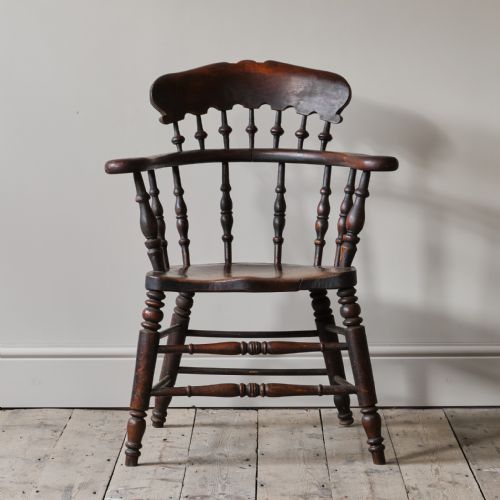
Most pieces on this page combine a low, arched backrest with a solid carved wooden seat, often fitted with turned spindle supports and armbows. Makers constructed them for parlours, smoking rooms, and studies where durable elbow seating was required for long periods.
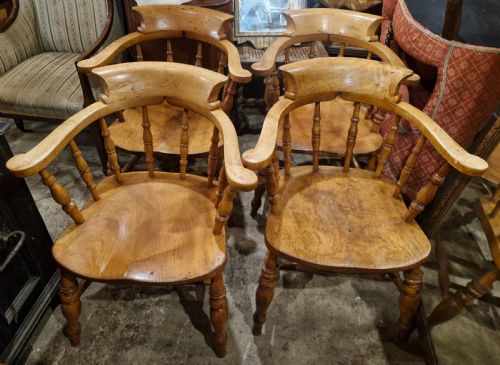
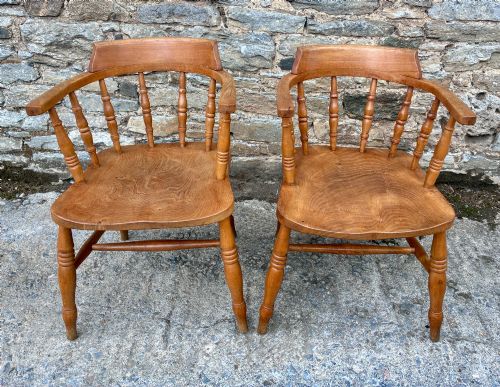
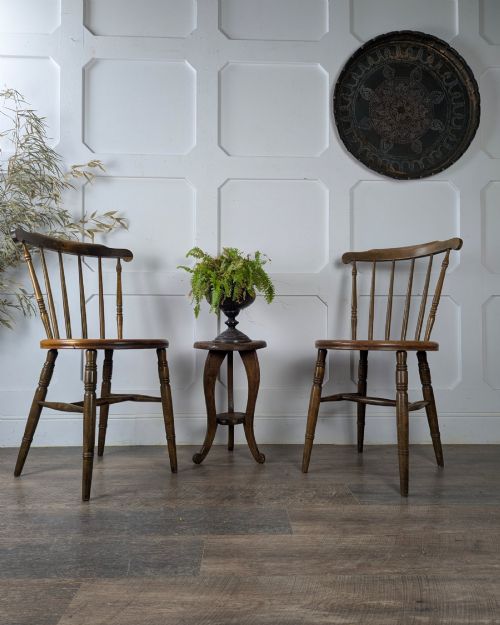
Buyers will find regional variations in timber and turning, ranging from straightforward provincial ash and elm models to more refined oak and mahogany library chairs. Sets of chairs appear alongside individual armchairs, offering practical seating solutions for modern dining tables and desks.
How they were made
Country joiners and chairmakers relied on native British hardwoods, frequently pairing elm for deeply saddled seats with ash, beech, or birch for bentwood armbows and spindle legs. This mixed timber construction provided the necessary flexibility for steam-bent components alongside the hard-wearing density required for seating.
Makers utilised traditional green woodworking techniques, turning uprights on lathes and securing legs and spindles through bored joints wedged from above. Steam bending allowed craftsmen to form the continuous curved backrail from a single piece of timber, creating strength without modern metal fasteners.
Antique Smokers Chair Retail Price Guide 2026
Typical asking prices for smokers chair among the pieces listed under this phrase on Sellingantiques today, from the lower quarter to the upper quarter. They describe what is for sale here now, not the wider market.
Some provincial makers incorporated oversized armbows specifically designed to accommodate bulky Victorian smoking jackets.
What varies in quality
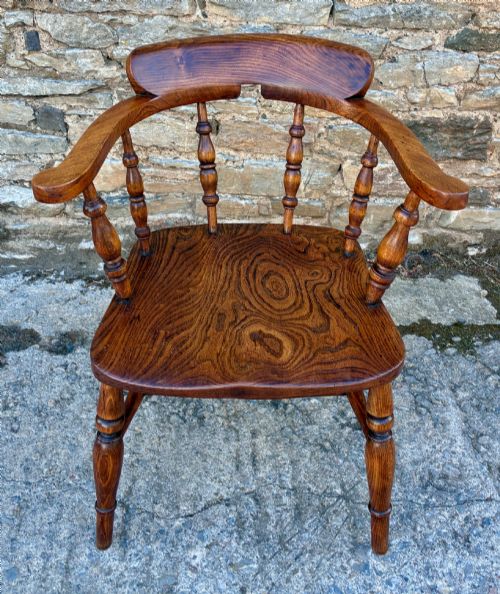
Quality rests primarily in the figure of the timber and the depth of the seat carving, with figured elm displaying striking grain patterns that elevate standard utility furniture. Thicker plank seats and generously proportioned armbows indicate superior construction originating from skilled regional workshops.
The integrity of the original joints and the survival of a rich, patinated surface distinguish well-preserved examples from heavily restored pieces. Chairs retaining their original turned undercarriages and unblemished wood polish command greater appreciation among collectors.
The Antique Smokers Chair Glossary
- Smoker's bow
- A low-backed wooden armchair featuring a continuous curved armrail supported by turned spindles above a solid saddle seat. This form shares common ancestry with traditional Windsor designs.
- Captain's chair
- A compact wooden armchair with a low, rounded back designed to fit beneath a desk or library table. These chairs often feature sturdy turned supports and robust elm or mahogany construction.
- Saddle seat
- A wooden chair seat sculpted with hollowed depressions for ergonomic comfort. Makers shaped these thick planks using adzes and travishes.
- Windsor chair
- A chair constructed with structural components inserted directly into a solid wooden seat rather than a traditional frame. They typically feature turned legs and a multiplicity of slender back spindles.
- Patina
- The surface sheen and mellow tone developed by wood through decades of handling, polishing, and exposure to light. Collectors value this natural indicator of age and honest use.
Antique Smokers Chair: Frequently Asked Questions
What is a smokers bow chair?
A smokers bow is a low-backed wooden armchair originating in nineteenth-century England, characterised by a continuous curved armrail and turned spindles.
These sturdy chairs were common in country houses, farmhouses, and smoking rooms, providing robust seating with a low profile.
How do I use an antique desk chair?
Antique wooden armchairs integrate smoothly into modern workspaces, offering comfortable elbow support and compact footprints for standard desks.
Their solid wooden seats require no upholstery maintenance, making them practical for daily seating at writing tables.
Are these chairs comfortable to sit in?
The saddle seats are carved to fit the body, and the curved armbows provide natural support for the arms during prolonged sitting.
While lacking modern cushioning, their ergonomic wooden construction ensures surprising comfort for dining or desk work.
How do I date a Windsor chair?
Dating relies on examining the species of timber, the turning style of the legs, and the construction methods used for the seat joints.
Victorian and Edwardian examples show specific turning profiles and wood combinations that distinguish them from earlier Georgian pieces.