
Antique Single Chair
When searching for an antique single chair, buyers encounter versatile standalone seating spanning centuries of domestic life, from formal mahogany dining chairs to rustic country elm.
Antique Single Chair
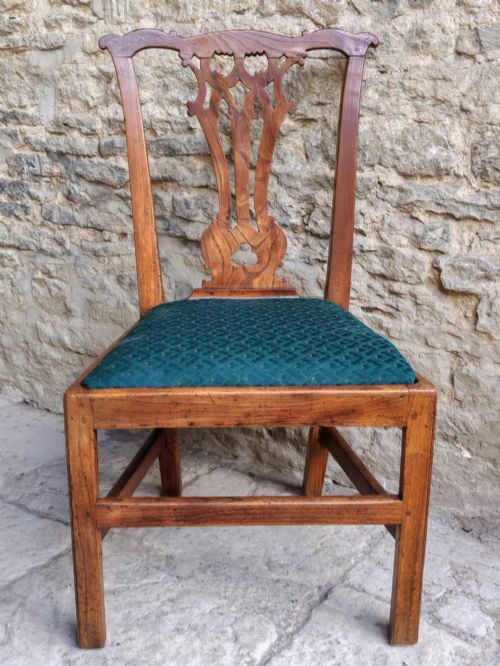
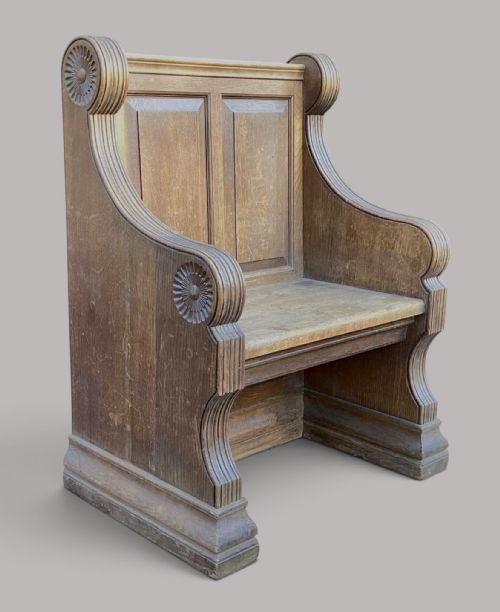
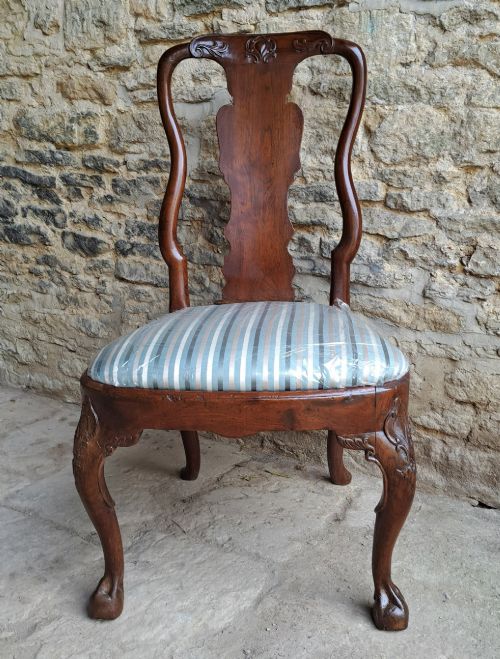
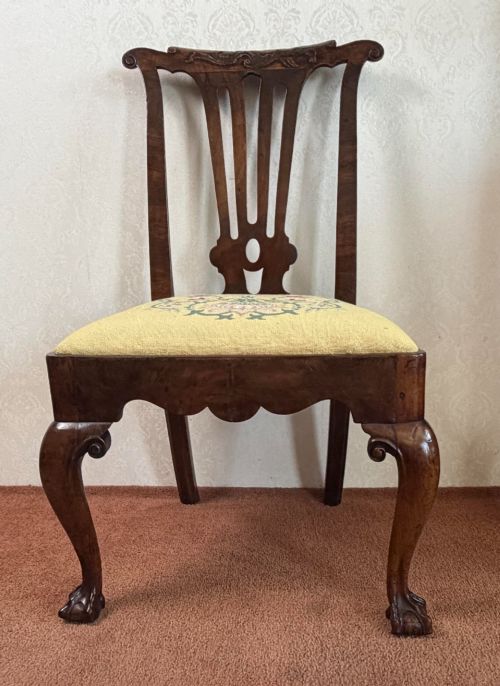
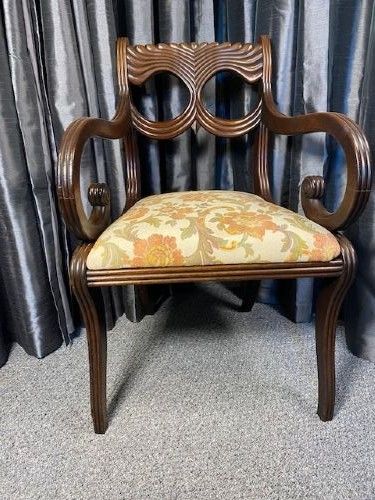
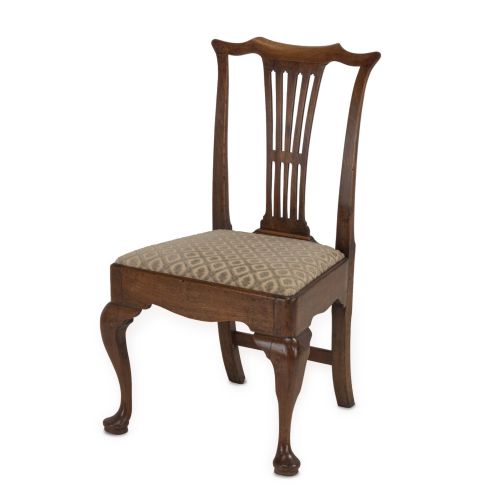
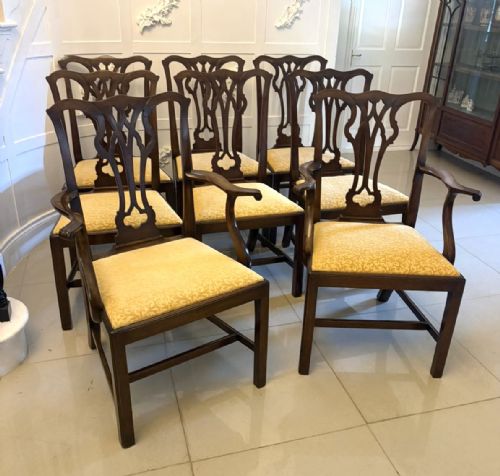
An antique single chair refers to individual standalone seating rather than matching pairs or large sets, though many originate from broken dining suites or occasional parlour seating. When exploring this category, buyers frequently encounter single dining chairs originally made to accompany large mahogany or walnut tables, alongside side chairs and hall chairs intended for specific rooms.
The selections span distinct periods including the 17th, 18th, and 19th centuries, capturing shifts from joined oak construction to refined Georgian mahogany and Victorian walnut. Forms range from high-backed country farmhouse seating in elm and ash to sophisticated Chippendale and Sheraton style parlour seats.
While large dining sets remain intact, individual pieces survive independently as desk chairs, hallway seats, or bedroom furniture. These standalone items offer a practical way to introduce period craftsmanship into modern interiors without committing to matching sets.
How they were made
Cabinet makers utilised dense hardwoods such as mahogany, walnut, and oak for formal seating, shaping splats, legs, and rails using hand saws, chisels, and traditional joinery like mortise and tenon. Country makers relied on local timbers including elm, ash, and beech, frequently employing bodging techniques to turn spindles and legs on pole lathes.
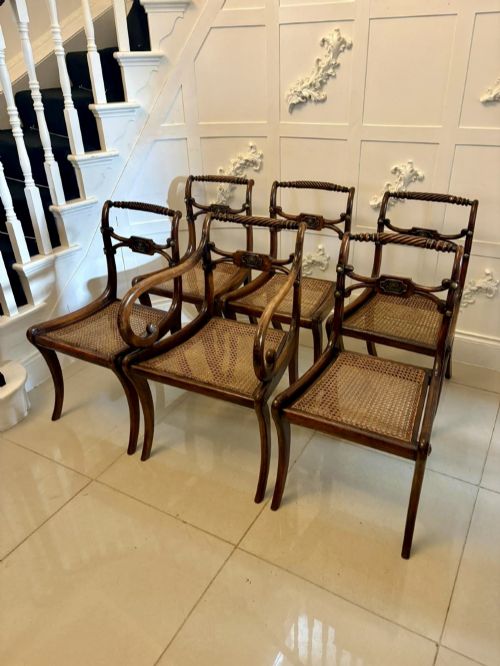
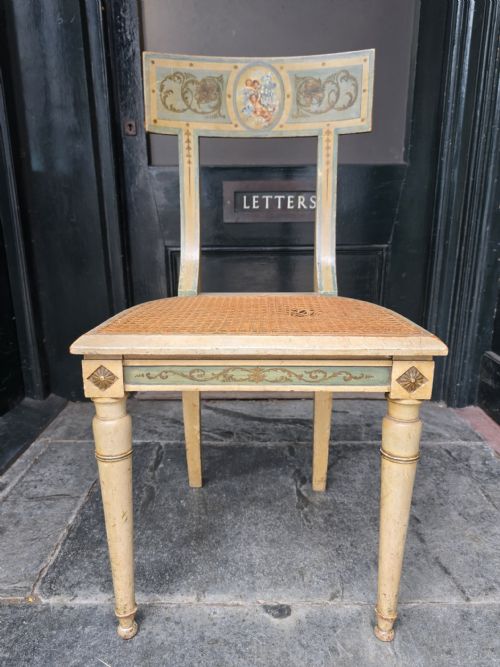
Upholstered elements involved webbing, horsehair stuffing, and heavy textile, leather, or needlepoint coverings secured with brass tacks. Alternatively, many seats utilised woven cane or rush integrated directly into the wooden frames for lighter support.
Among the small-scale seating, antique child chairs survive complete with tiny hand-turned spindles and miniature rush seats.
What varies in quality
The standard of carving and timber selection marks the primary distinction across pieces, with crisp pierced splats and finely figured mahogany veneers representing high workshop output. Simpler country iterations display straightforward pegged construction and utilitarian timber selection intended for everyday durability rather than display.
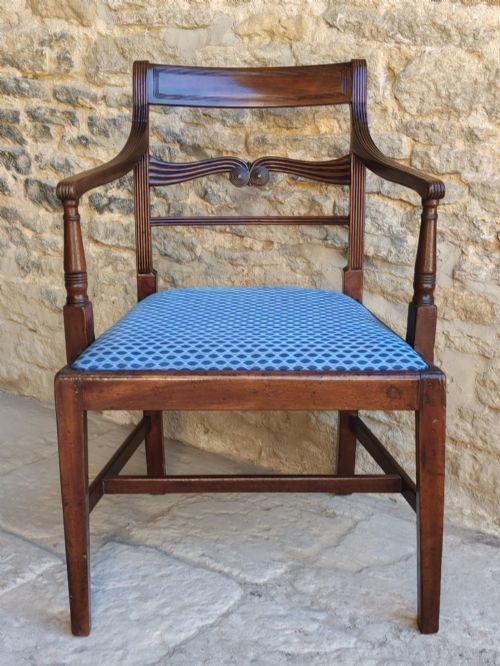
Structural integrity depends upon original joinery remaining tight and unaltered by heavy restoration or replacement components. Pieces retaining their early surface patination, original drop-in seat frames, and untouched timber colour command greater regard among collectors.
James Shoolbread·Heals
The Antique Single Chair Glossary
- Carver
- An armchair, typically sharing a design with matching single dining chairs in a larger set. These were traditionally placed at the head of a dining table.
- Splats
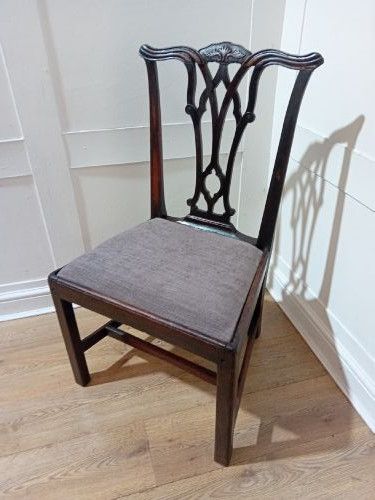
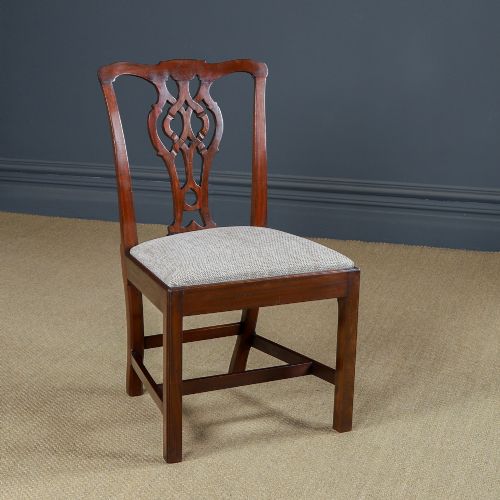
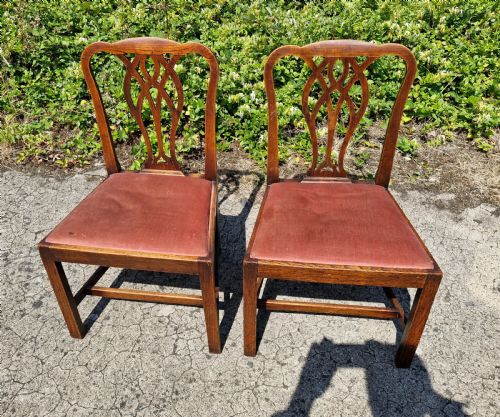
- The vertical wooden strip down the centre of a chair back. Elaborate pierced splats are characteristic of mid-18th-century styles.
- Drop-in seat
- A removable wooden frame upholstered separately and dropped into the seat rail rebate. This allowed easy recovering of the textile.
- Rush seat
- A seating surface woven from dried marsh rushes. Common in vernacular country chairs and Arts and Crafts pieces.
- Bar back
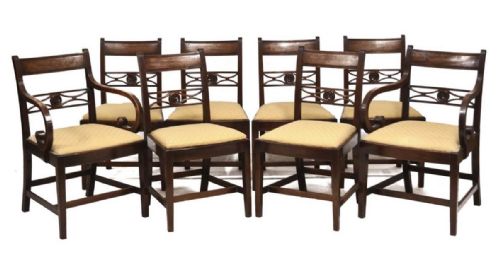
- A horizontal top rail shaped like the crossbar of a piece, popular during the Regency and William IV periods.
Antique Single Chair: Frequently Asked Questions
How do I use a single antique chair today?
These pieces function effectively as desk chairs, hallway seats, or decorative accents in bedrooms and living spaces.
Their compact scale allows them to sit comfortably against walls or paired with modern tables to create deliberate contrast.
Were these chairs always sold individually?
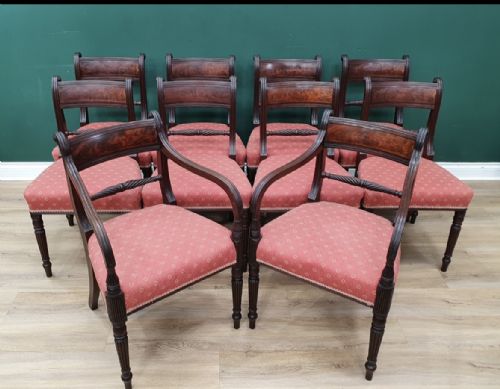
Most formal dining chairs originated as part of larger matching sets comprising six, eight, or twelve single chairs alongside carvers.
Over the centuries, sets became dispersed through inheritance or separation, leaving individual pieces to survive on the market.
How can I tell a Georgian chair from a Victorian one?
Georgian examples typically exhibit lighter proportions, hand-carved mahogany details, and restrained classical ornamentation like pierced splats.
Victorian pieces generally feature heavier timber construction, darker finishes, and more robust balloon backs or Gothic revival motifs.
What is the difference between a side chair and a hall chair?
Side chairs are light, moveable seats designed for parlours, bedrooms, or dining tables, frequently featuring upholstered or caned seats.
Hall chairs are constructed entirely from solid wood with carved or painted crests, intended for fleeting use in entrance halls.