
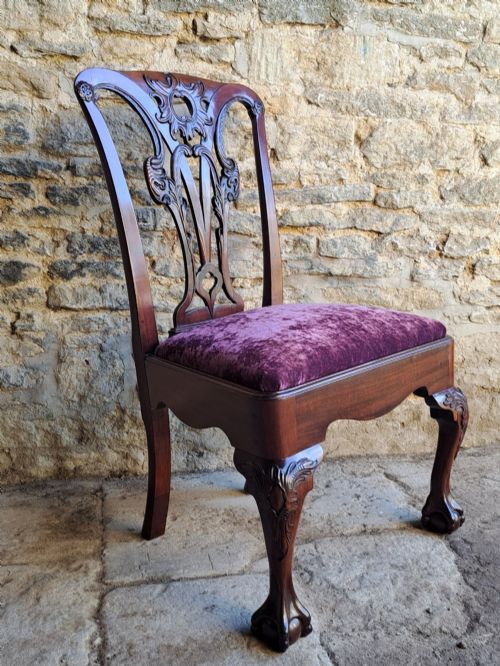
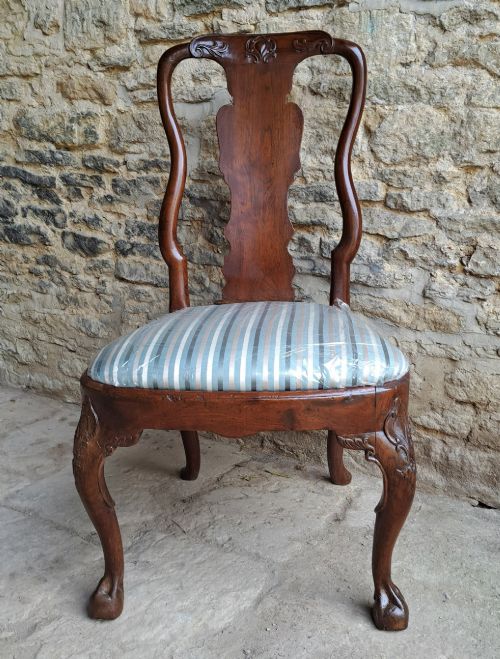


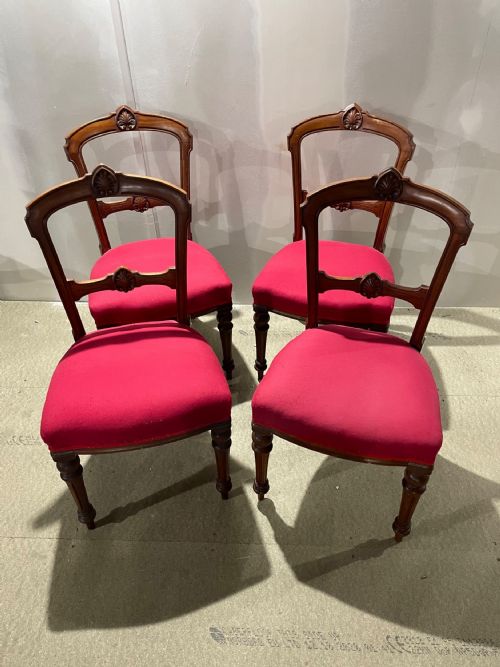
Red Walnut Side Chair
A red walnut side chair offers sturdy timber and rich grain, bringing period character directly to a dining table or hallway.
Red Walnut Side Chair
A red walnut side chair is a formal or dining seat constructed without arms, designed to be placed at the side of a room or around a table. When you search for this phrase, you encounter examples stretching from early eighteenth-century Georgian designs through to Victorian and Edwardian revivals.
The pieces appearing on this page range from single Irish chairs dated around seventeen-fifty up to complete sets of six or eight Victorian dining seats. Walnut timber dominates the selection, occasionally supplemented by fruitwood or mahogany depending on the workshop and period.
Origin and form vary considerably across the inventory, including Dutch Baroque influences, Queen Anne style cabriole legs, and late nineteenth-century balloon backs. Most surviving examples function as dining chairs or hall seating, retaining their original timber frames and various historic upholstery treatments.
Materials and construction
Cabinetmakers built these frames primarily using walnut and red walnut timber, often supplemented by secondary woods like fruitwood for structural elements. The wood was selected for deep grain patterns and strength, allowing intricate carved details on splats, knees, and crest rails.
Upholstery methods evolved across the centuries, moving from early drop-in seats and tapestry coverings to button-backed velvet, silk damask, leather, and needlework. Frames relied on traditional joinery techniques, including mortise and tenon joints, held together with wooden pegs or early metal fasteners.
Several Victorian models feature balloon backs designed to cradle tired guests after long parlour debates.
Quality factors
The distinction between ordinary and superior pieces rests on the crispness of the carving and the quality of the timber selection. A higher-grade red walnut side chair displays deep, well-defined hand-carving on the back splat and cabriole legs, whereas lesser examples show softer detailing or mechanical production marks from later eras.
Proportion and structural integrity also separate standard items from the finest pieces. Chairs that retain their original timber surfaces without excessive alteration command greater respect from collectors, while heavily restored or structurally compromised frames sit at the lower end of the range.
The Red Walnut Side Chair Glossary
- Cabriole leg
- A furniture leg that curves out at the knee and tapers inward to an ankle, mimicking an animal's limb. This form appears frequently on eighteenth-century and revival dining chairs.
- Splat
- The vertical wooden strip down the centre of a chair back. It provides structural support and often carries elaborate carving or veneering.
- Balloon back
- A rounded, oval-shaped chair back popular during the Victorian period. It ergonomics offered comfortable lumbar support for dining.
- Drop-in seat
- A removable wooden frame upholstered separately and dropped into the seat rails of a chair. This construction method facilitated easy reupholstering.
- Husk carving
- An ornamental carving motif resembling descending wheat husks or bellflowers. Carvers applied this detail to the knees and rails of Georgian seating.
Red Walnut Side Chair: Frequently Asked Questions
How do I spot a true red walnut chair?
Examine the timber under natural light to identify the characteristic reddish-brown warmth and dense grain pattern distinct from standard European walnut or mahogany.
Check the construction beneath the seat for period joinery methods, tool marks, and appropriate timber shrinkage that match the stated age of the piece.
Are these chairs suitable for daily dining?
Many eighteenth-century and Victorian dining chairs remain structurally robust enough for regular daily use when maintained properly.
Ensure joints are secure and consult a conservator if the antique frame requires tightening before heavy seating.
How should I clean the wooden frame?
Dust the timber regularly with a soft, dry cloth to prevent grit accumulation on the polished surface.
Avoid modern silicone polishes and apply microcrystalline wax sparingly to nourish the antique wood without building up a sticky residue.
How do I tell an 18th century chair from a Victorian copy?
Early pieces display hand-cut joinery, pegged tenons, and timber patination developed over centuries of handling.
Revival pieces from the nineteenth or twentieth century often feature standardised machine cuts, uniform timber colour, and stylistic clues from later manufacturing techniques.