



Irish Mahogany Side Chair
An irish mahogany side chair brings robust timber and singular carving straight into your dining room or hall.
Irish Mahogany Side Chair
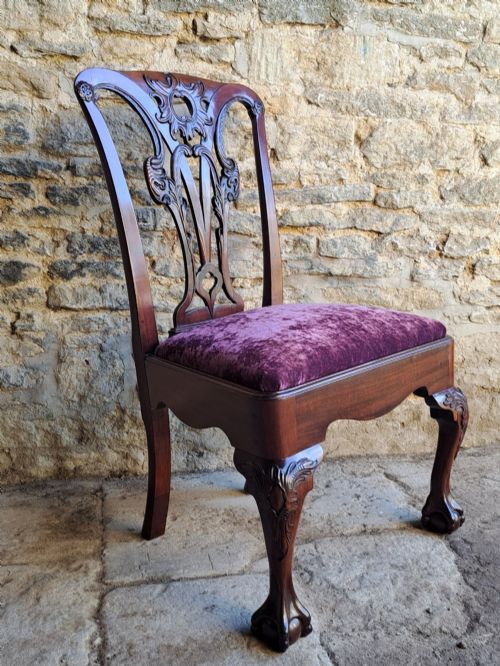
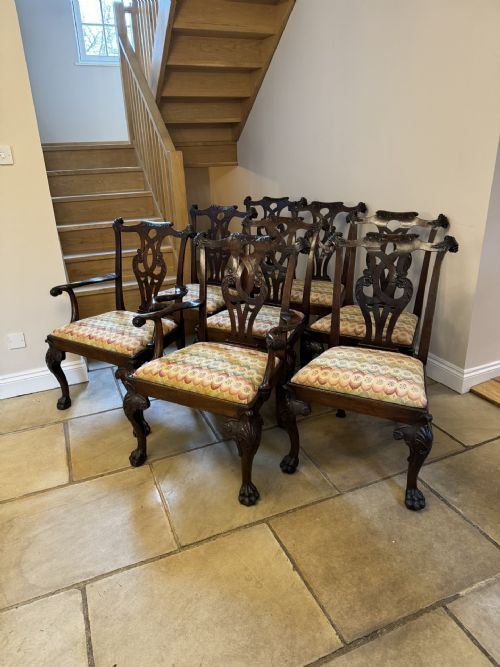
When you search for an irish mahogany side chair, you are looking at substantial seating built in mahogany, red walnut, and dark hardwood across the eighteenth and nineteenth centuries. These pieces appear as single examples, pairs, or matched sets intended for dining and hall use.
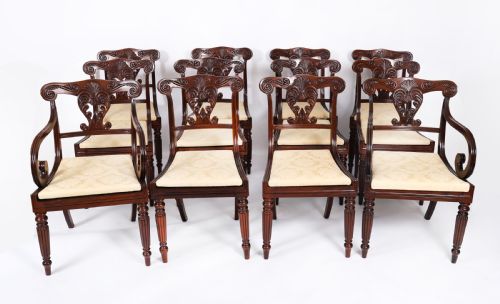
The versions you are most likely to meet on this page date from the eighteenth century through to the Victorian era and the Georgian Revival. They arrive in styles spanning Georgian, Regency, Victorian, and nineteenth-century Irish interpretations of Chippendale designs, often featuring ladder backs or bar backs.
Makers and workshops across Ireland shaped these dining and side chairs to serve formal rooms and domestic spaces alike. Their forms draw on regional traditions that emphasise sturdy timber frames and distinct regional carving motifs.
How they were made
The primary construction relies on dense mahogany and dark hardwood, supplemented by secondary timbers such as oak for internal framing. Upholstery materials include leather, fabric, and velvet, while brass details occasionally appear on structural or decorative elements.
Joinery techniques demand heavy, durable timber frames capable of supporting daily dining use over centuries. Carvers applied detailed ornamentation directly into the solid mahogany and red walnut components, following Chippendale and regional Irish aesthetic conventions.
One inquisitive eighteenth-century survivor comes with a companion nineteenth-century copy, proving imitation truly is the sincerest form of flattery.
What varies in quality
Quality separates single chairs and later copies from original period sets produced in the eighteenth century. The crispness of the carved detail on the mahogany surfaces distinguishes standard workshop production from finer examples.
The integrity of the timber frame and the presence of period upholstery materials or appropriate later replacements alter the overall character. Complete sets maintain higher consistency than assembled groups combining original eighteenth-century chairs with nineteenth-century copies.
The Irish Mahogany Side Chair Glossary
- Irish mahogany side chair
- A formal or dining seat constructed from mahogany timber within Irish design traditions. These chairs lack armrests and function around dining tables or along hallway walls.
- Bar back
- A chair back featuring a horizontal crossbar or splat shaped like a flattened rail. This design appears frequently on nineteenth-century Regency examples.
- Ladder back
- A chair back composed of several horizontal wooden slats resembling the rungs of a ladder. The evidence shows these forms executed in mahogany during the Georgian and Victorian periods.
- Chippendale style
- A decorative manner drawing on eighteenth-century design patterns associated with Thomas Chippendale. Irish interpretations often incorporate pronounced carving on dark hardwood frames.
- Red walnut
- An alternative timber material noted in early mid-eighteenth-century Irish seating. It shares the dense qualities and rich tone of mahogany.
Irish Mahogany Side Chair: Frequently Asked Questions
What is an irish mahogany side chair?
An irish mahogany side chair is a dining or hall seat built from dense tropical timber within Irish regional traditions. These pieces date from the mid-eighteenth century onward.
They function as individual chairs, pairs, or larger matched sets designed for formal domestic interiors.
How do I date an irish mahogany side chair?
Dating relies on stylistic markers such as Chippendale carving, ladder backs, bar backs, and Georgian or Regency proportions. Timber choice also indicates age, shifting from red walnut in the seventeen-fifties to various grades of mahogany later.
Construction methods and the integration of nineteenth-century copy elements further help establish the period of manufacture.
Were these chairs used for dining?
Yes, many examples form parts of large dining sets intended for formal meals in country houses and town residences. They were built sturdy to withstand regular use around the dining table.
Others functioned as hall chairs, standing against walls to furnish entryways and reception rooms.
What styles are common?
The listings show Georgian, Regency, Victorian, and Georgian Revival styles alongside distinct nineteenth-century Irish interpretations. Chippendale influences appear prominently across multiple periods.
Ladder back and bar back configurations represent the primary backrest designs found in the evidence.