
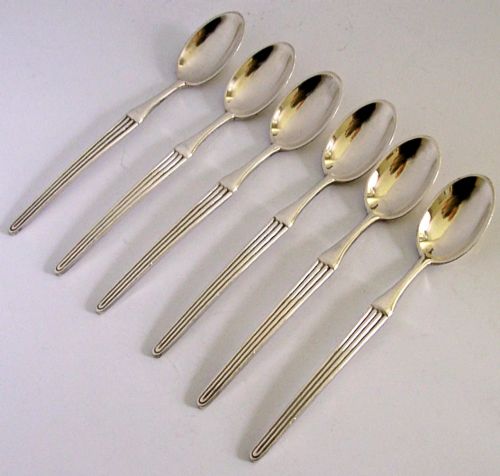
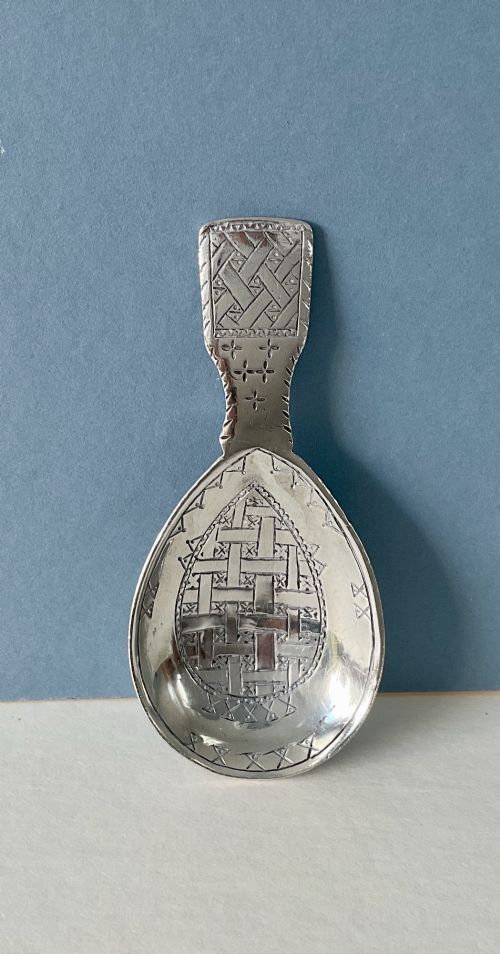
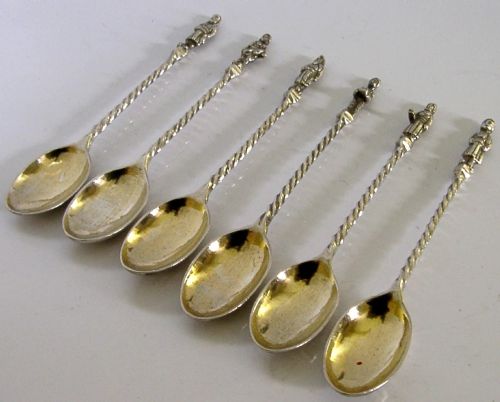

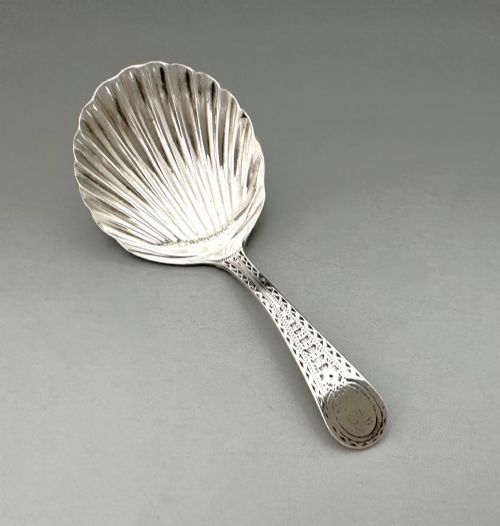


Antique Silverware Tea Spoon
An antique silverware tea spoon brings daily ritual into the hand, offering small-scale metalwork from Georgian, Victorian and Edwardian makers.
Antique Silverware Tea Spoon
An antique silverware tea spoon is a small domestic implement designed for measuring or stirring loose leaves, taking many forms across the Georgian, Victorian and Edwardian eras. Buyers searching this phrase meet everything from plain Georgian tea spoons to enamelled Russian pieces and specialist caddy spoons.
The selection ranges across distinct historical styles, including Arts and Crafts, Danish Modern, Ottoman and French Empire designs. Alongside standard tea spoons, the listings include caddy spoons, souvenir spoons and butter knives paired with silver sugar sets.
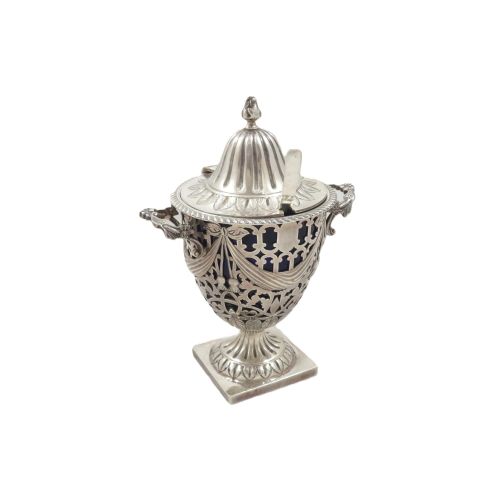
Makers utilised solid silver, silver gilt and sterling silver, occasionally combining the metal with cobalt glass, silk, velvet or enamel. These variations reflect both everyday domestic utility and elaborate decorative production across the eighteenth, nineteenth and early twentieth centuries.
How they were made
Makers fashioned these spoons from sterling silver and solid silver, sometimes applying a layer of silver gilt for a richer surface finish. Workshops also incorporated enamel work, such as cloisonne details on nineteenth-century Russian spoons.
Techniques varied from double striking in the Georgian period to figural casting in Ottoman pieces and detailed silversmithing by named firms. Handles and bowls were shaped to balance utility with ornamental styles ranging from Edwardian restraint to ornate revival designs.
Listings span the eighteenth, nineteenth and twentieth centuries, featuring sterling silver, silver gilt, enamel and cobalt glass.
What varies in quality
Quality rests upon the crispness of the maker's marks, the weight of the metal and the depth of the silversmith's work on bowls and handles. Double-struck patterns and intact enamel sections show greater care in original manufacture.
The distinction between standard utility spoons and works by notable makers shapes the range. Pieces showing careful casting, figural detail or fine cloisonne enamel sit apart from simpler mass-produced items.
Liberty·Mappin & Webb·Georg Jensen·Vasily Agafonov·Evald Nielsen·Robert Stebbings
The Antique Silverware Tea Spoon Glossary
- Caddy spoon
- A short-handled spoon specifically designed for scooping loose tea leaves from a caddy into a pot. These often feature broad bowls and decorative handles.
- Silver gilt
- Silver that has been coated with a thin layer of gold on its surface. This technique provides a warm golden tone while using a silver base.
- Double struck
- A method where a die is struck twice against the metal to impart a clearer, sharper pattern on both sides of the handle. It indicates finer silversmithing.
- Cloisonne
- An enamelwork technique where thin metal wires are soldered to the metal base to create compartments filled with coloured paste and fired. It appears on nineteenth-century Russian pieces.
- Sterling silver
- An alloy consisting of ninety-two point five percent silver and seven point five percent other metals, usually copper, chosen for durability.
Antique Silverware Tea Spoon: Frequently Asked Questions
How do I clean antique silver spoons?
Wash silver spoons gently in warm water with a mild, non-abrasive soap and dry them immediately with a soft cloth. Avoid harsh chemical dips that strip away patination and age.
Store them away from rubber or damp materials to prevent tarnishing. Regular handling often keeps the high points bright while leaving the recesses dark.
What is the difference between a tea spoon and a caddy spoon?
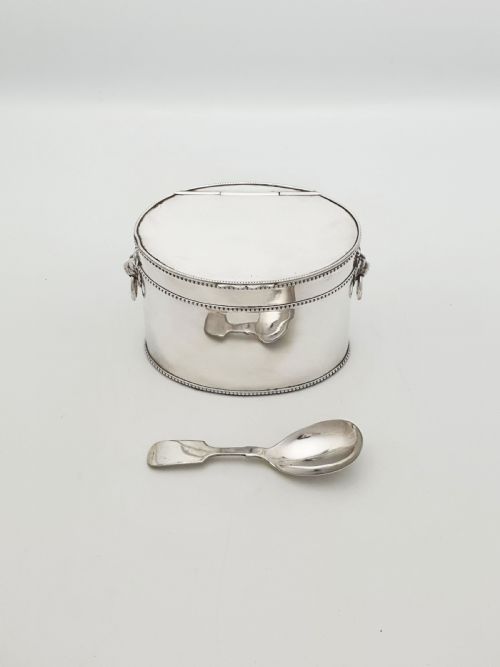
Tea spoons feature longer handles and narrower bowls intended for stirring tea in a cup. Caddy spoons have much shorter handles and wide, shallow bowls shaped to measure loose leaves from a container.
Caddy spoons are often more decorative because they remained with the tea caddy rather than passing through daily table use.
How can I date an antique silver spoon?
Look for hallmarks stamped into the metal, which typically include assay office marks, date letters and maker's marks. These symbols provide exact years or narrow date ranges for British items.
Stylistic cues such as the deep bowl of an eighteenth-century piece or the geometric lines of a 1920s Danish design also help narrow the period.
Are antique silver spoons safe for daily use?
Most solid silver spoons remain sturdy enough for daily dining or stirring tea. Enamelled or gilt pieces require more care to protect fragile surfaces from scratching or wear.
Hand washing is essential, as modern dishwashers use aggressive detergents that pit silver and ruin delicate details.