
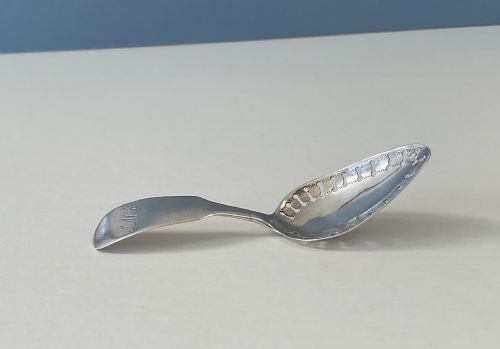


Tea Caddy Scoop
A tea caddy scoop measures dry leaves into your caddy with precision, and these small silver and hardwood utensils span Georgian leaf designs to modern Scandinavian work.
Tea Caddy Scoop
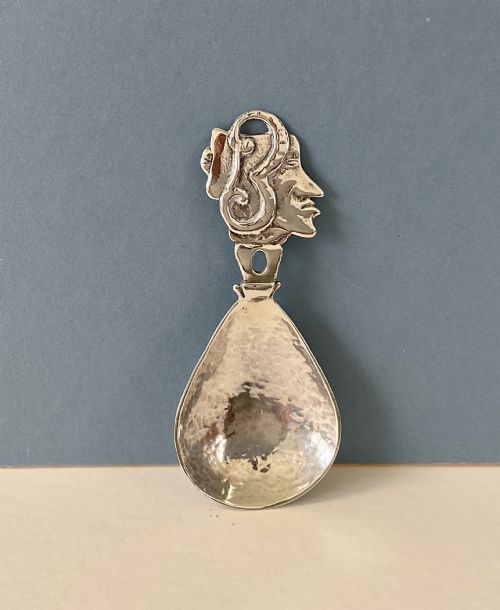
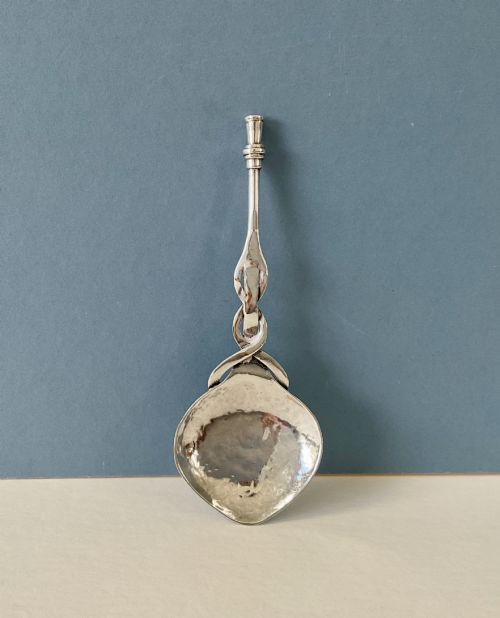
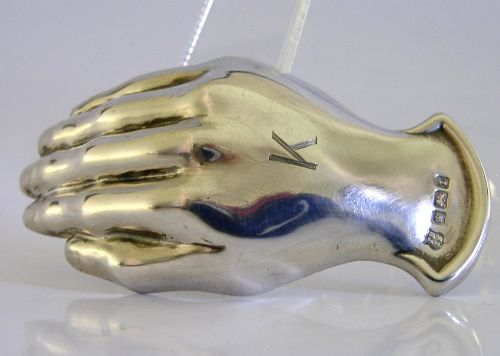
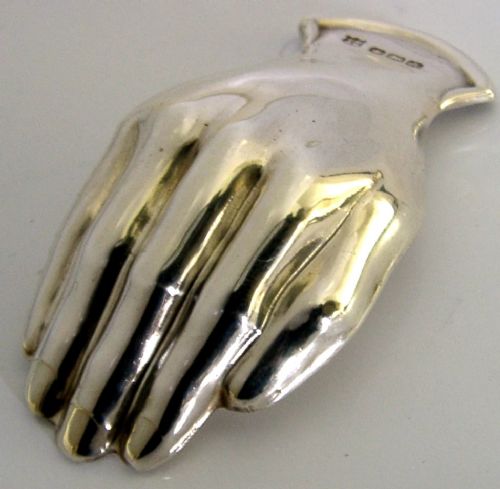
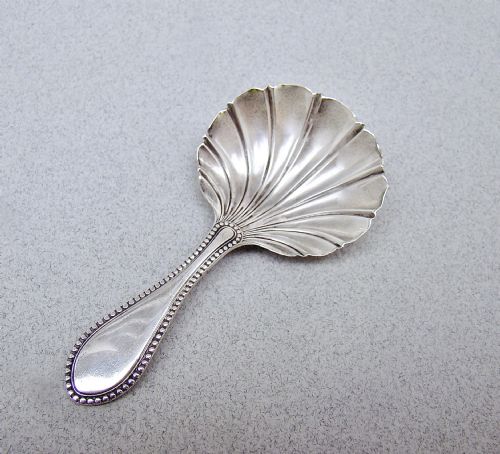
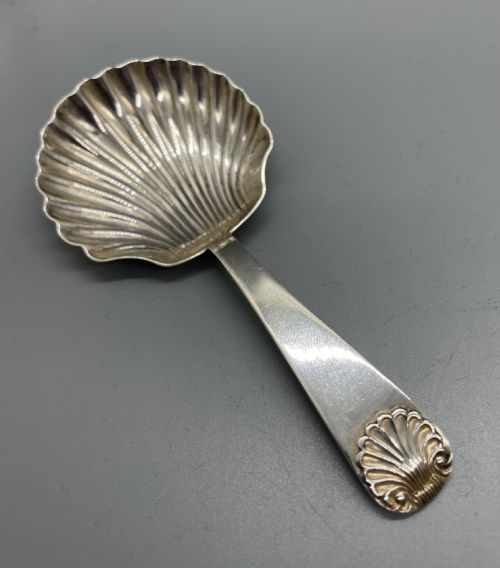
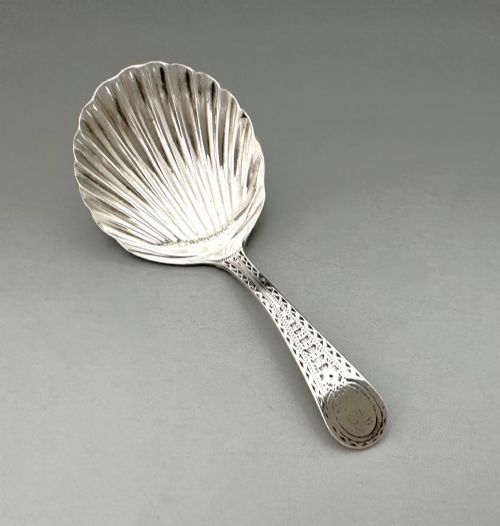
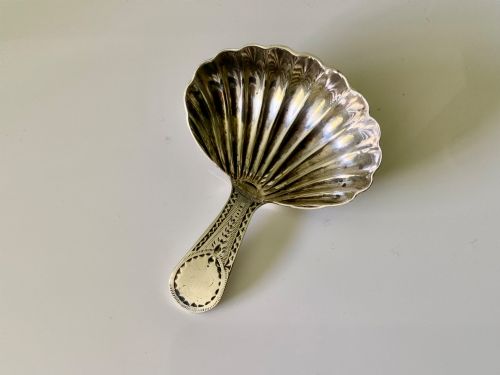
A tea caddy scoop is a small spoon designed specifically to portion loose tea leaves into a caddy or pot, appearing across Georgian, Victorian, Edwardian, and later twentieth-century periods. When you search for this phrase, you meet forms that range from simple shell bowls to novelties shaped like hands, jockey caps, and natural leaves.
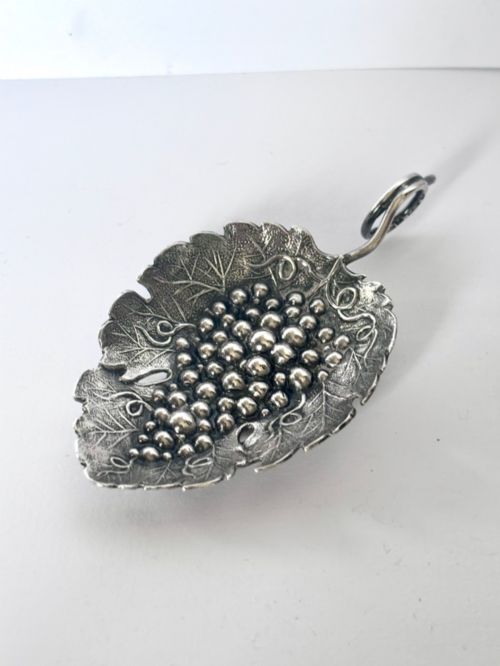
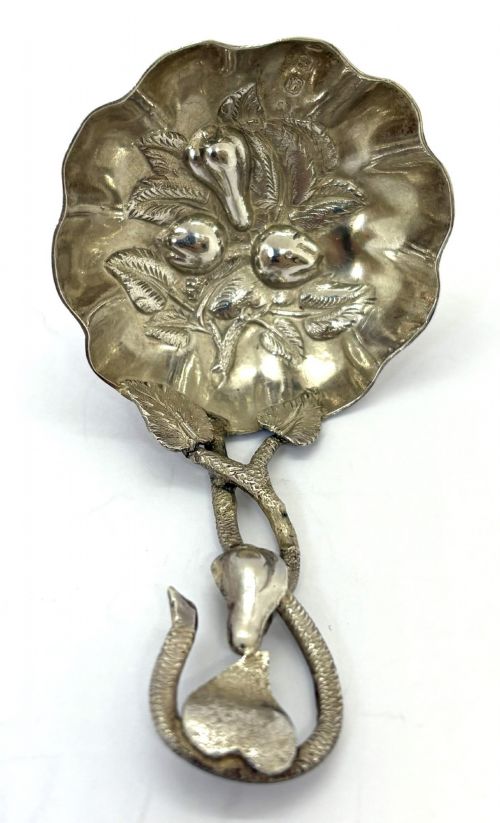
The most common versions on this page are sterling silver examples originating from English workshops, alongside notable continental pieces from Danish makers. Styles traverse plain utility, ornate vine motifs, and the clean lines of the Arts and Crafts and Art Deco movements.
Materials and construction
Silversmiths formed these spoons primarily from sterling silver, occasionally applying parcel-gilt or silver-gilt finishes to create rich internal bowl colours, alongside contrasting uses of hard wood for carved oriental forms. Handles and bowls were frequently worked separately through stamping, casting, or hammering before being joined.
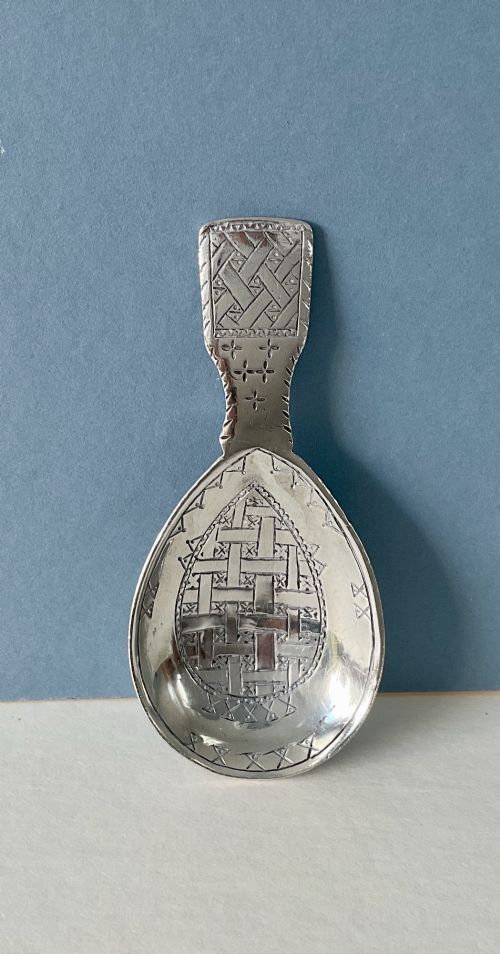
Makers integrated surface decoration via hand engraving, enamel work, and piercing, particularly evident in the rendering of leaf veins, acorn cups, and jockeys' caps.
The listings span pieces from the eighteenth, nineteenth, and twentieth centuries, utilising sterling silver, silver gilt, enamel, and hardwood.
Judging execution and form
Quality rests in the crispness of the detail and the weight of the metal in the hand, separating standard utility pieces from sculptural novelty designs. Well-modelled pieces show precise casting on items like hands or caps, where fingers and peaks maintain sharp definition rather than soft, worn outlines.
Engraved decoration on bowls and handles demonstrates the hand of a skilled artisan, where deep, clean cuts hold their definition against years of use and cleaning.
Martin Hall & Co·Joseph Willmore·William Neale·David Andersen·Georg Jensen·Mappin & Webb·George Unite
The Tea Caddy Scoop Glossary
- Silver-gilt
- Sterling silver that has been coated with a thin layer of gold on the surface. This technique gave bowls a rich, warm interior tone.
- Parcel-gilt
- Silver objects where only specific portions are gilt, leaving other areas as plain silver. This created deliberate contrast on leaf and floral motifs.
- Novelty spoon
- A spoon shaped to represent an object, animal, or figure rather than following a standard spoon silhouette. Collectors prize these for their imaginative forms.
- Hallmark
- Official stamps struck into precious metals indicating the maker, assay office, and year of testing. These marks provide the definitive date for antique silver.
- Arts and Crafts
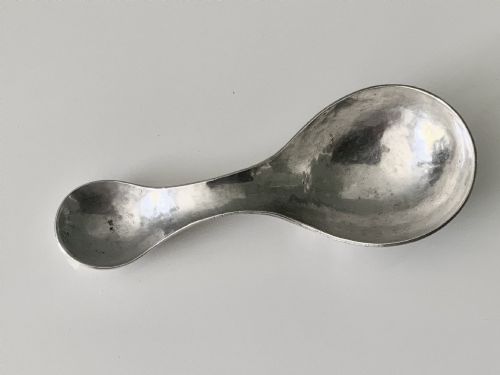
- A design movement prioritising hand craftsmanship and simple forms over mass production. Pieces from this style often feature hammered surfaces and natural motifs.
Tea Caddy Scoop: Frequently Asked Questions
How were tea caddy scoops used?
They sat alongside tea canisters and caddies, utilised daily to transfer dry leaves without spilling. Their short handles allowed them to rest neatly inside or beside the tea storage vessel.
As tea became a central social ritual in British homes, these specialised scoops turned functional kitchen tools into decorative tabletop accessories.
How do I date an antique silver scoop?
Dating relies primarily on the hallmarks stamped into the metal by official assay offices. These tiny marks record the town, the sterling standard, and a date letter corresponding to the exact year of manufacture.
Stylistic markers, such as the naturalistic vine leaves of the Georgian period or the geometric restraint of Art Deco, offer further clues when marks are faint.
How do I care for silver tea scoops?
Silver tea scoops require gentle washing in warm, soapy water followed by thorough drying with a soft cloth. Avoid harsh chemical dips that strip away the aged character accumulated over decades.
Storing them away from direct moisture protects the metal and any delicate enamel work from unnecessary tarnishing and wear.