

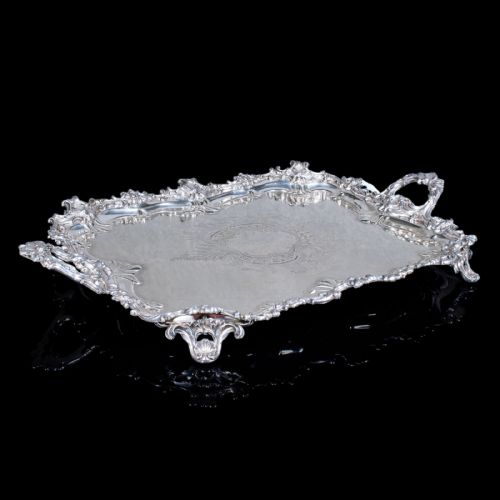
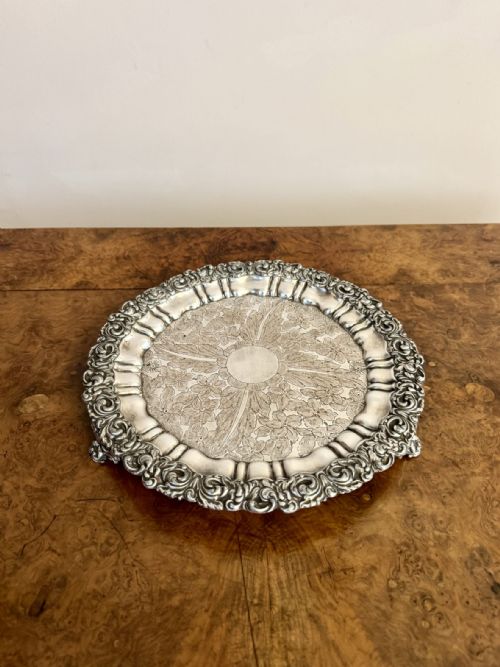
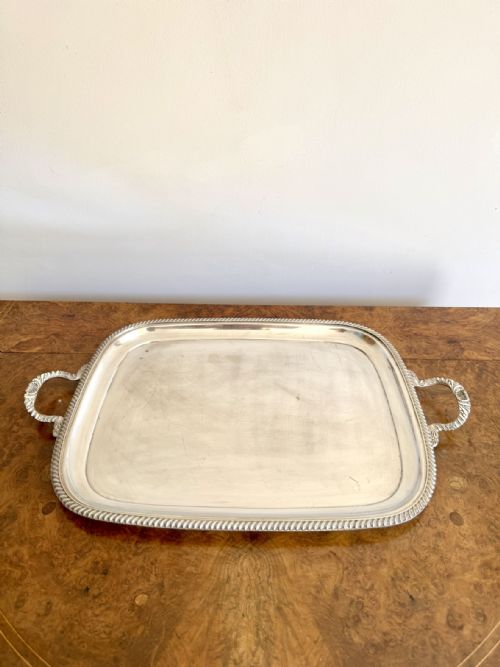
Antique Silver Tea Platter
An antique silver tea platter serves as the centrepiece of formal hospitality, bringing solid proportion and bright metal to the afternoon table.
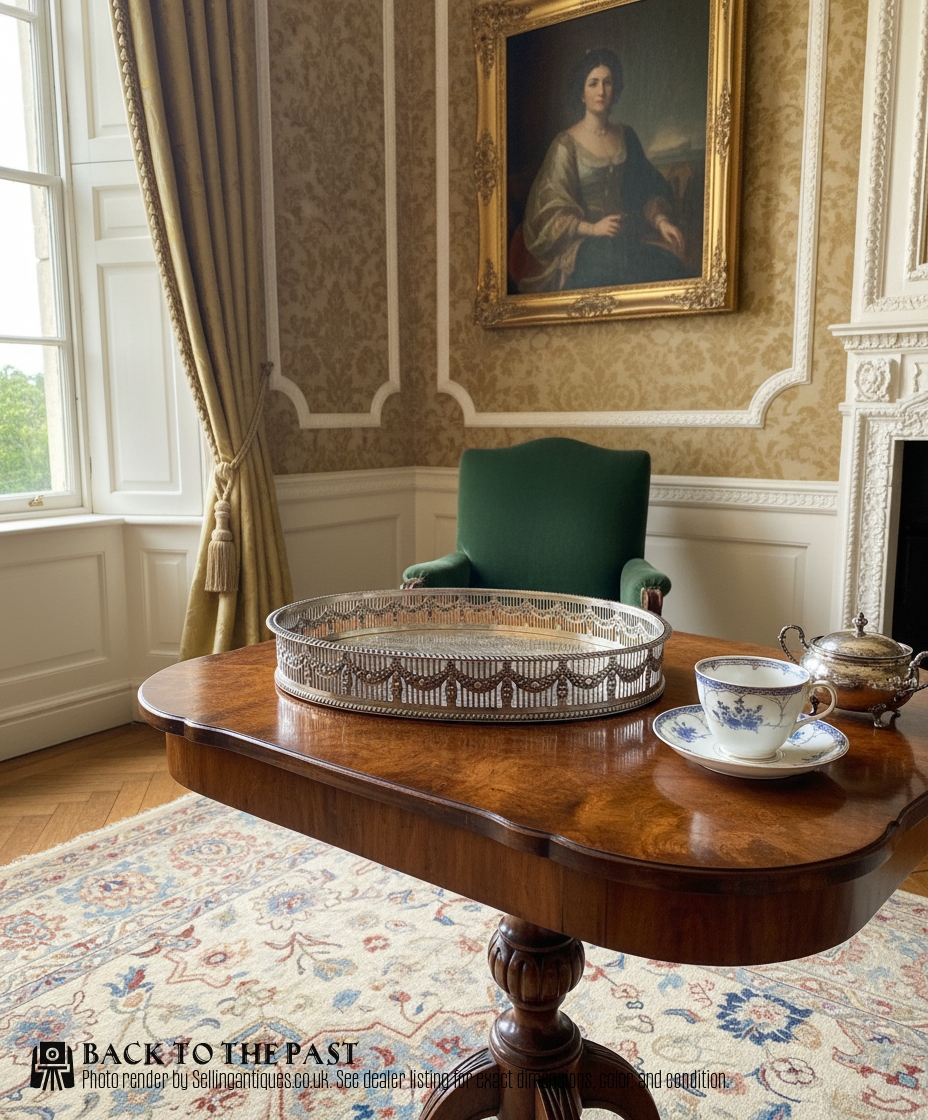
Antique Silver Tea Platter
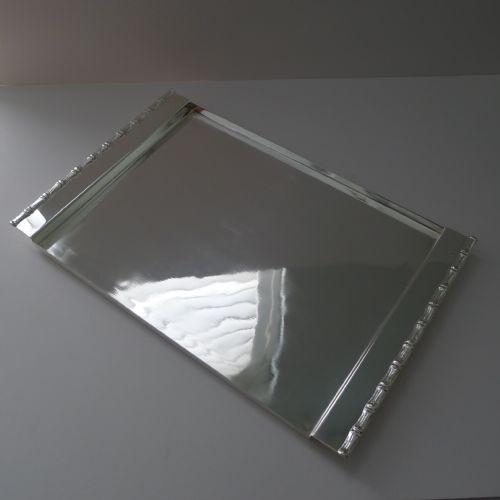
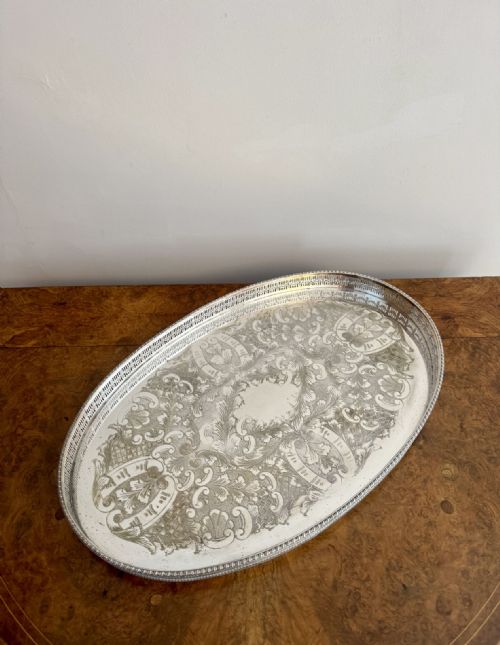
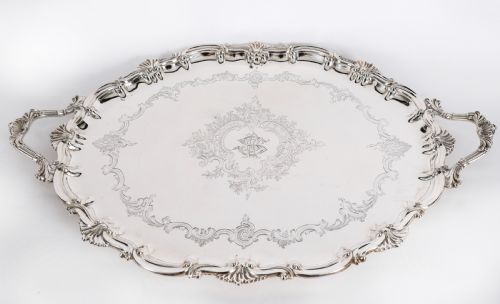
An antique silver tea platter encompasses large serving trays, salvers, and gallery trays designed for the formal presentation of tea and coffee services. Buyers inspecting this page will frequently encounter Edwardian and Victorian pieces alongside later Art Deco examples.
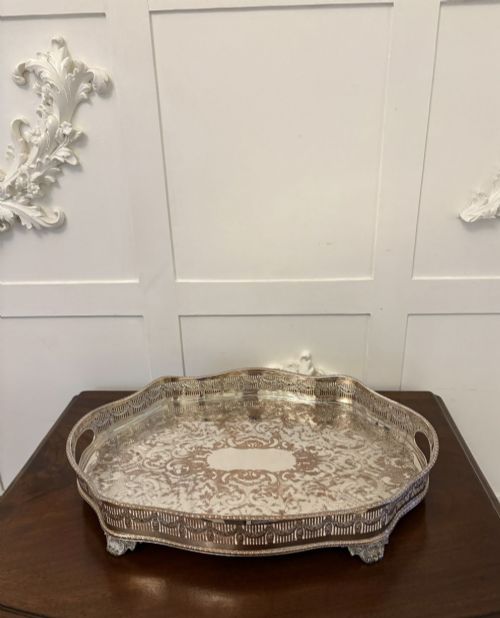
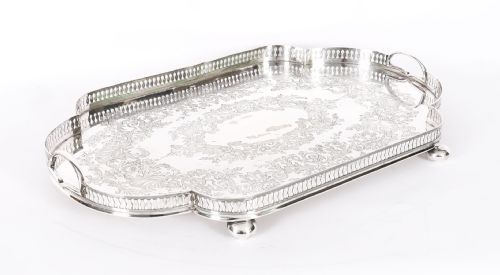
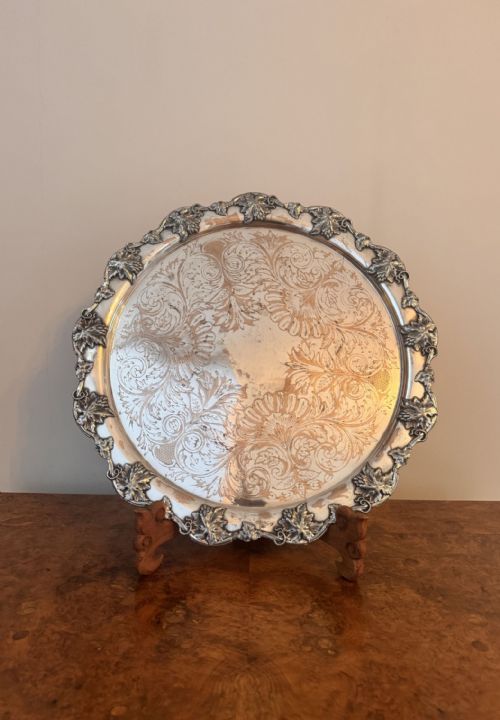
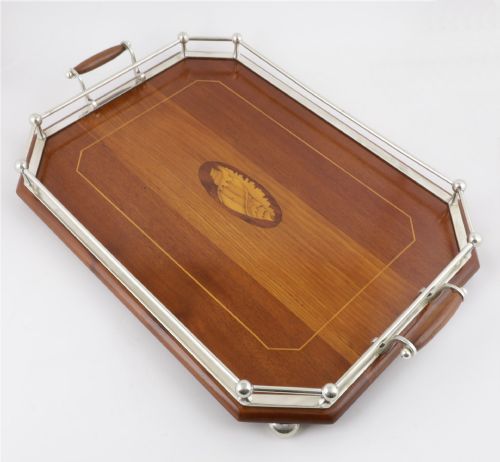
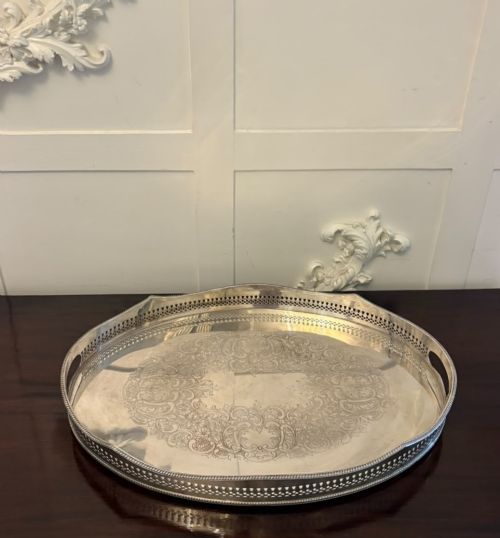
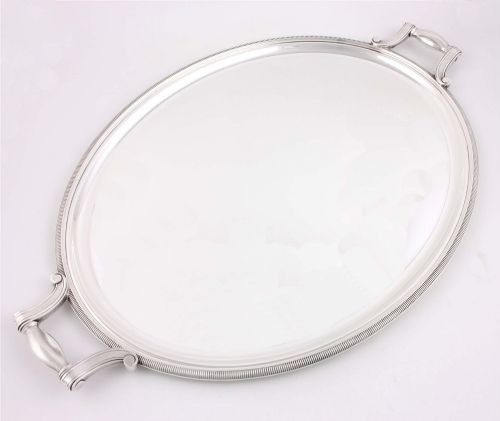
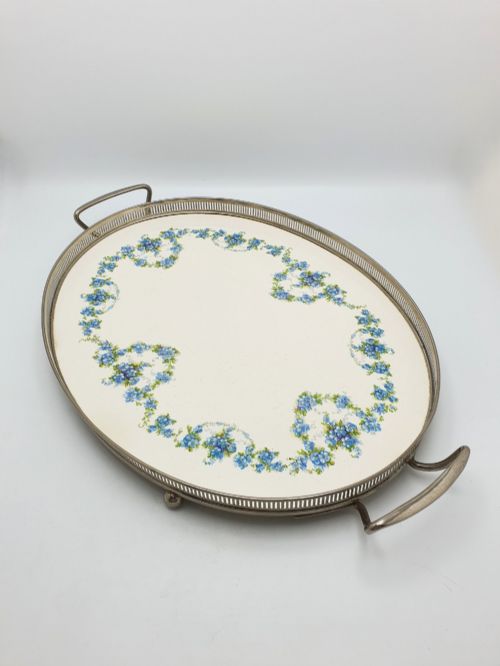
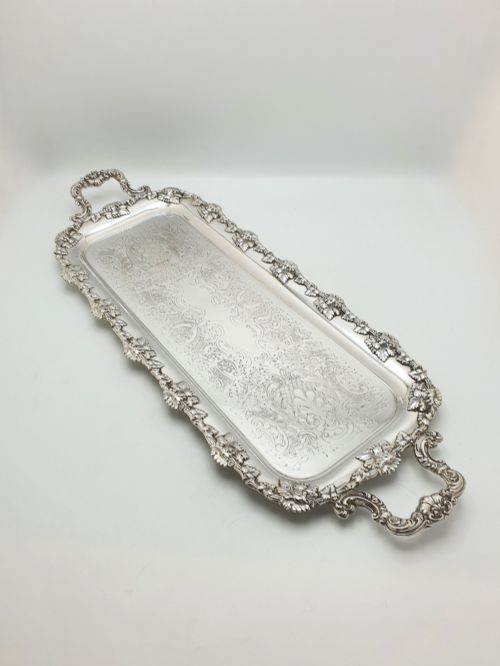
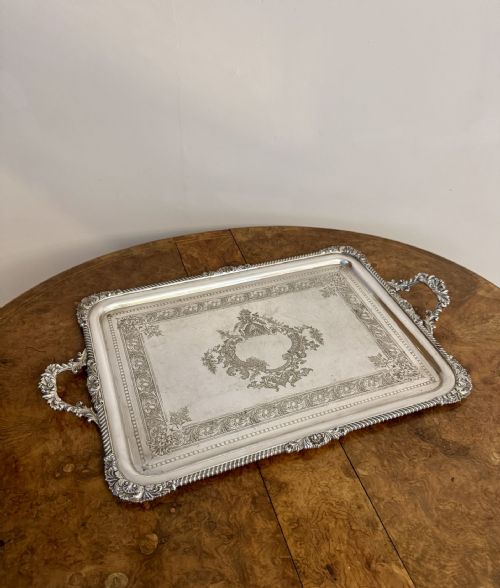
The assortment spans circular, oval, and octagonal formats, often fitted with carrying handles or pierced upright galleries. Most examples rely on silver plate, electroplated nickel silver, or copper substrates, though sterling silver pieces appear among the offerings.
Materials and Technique
Many platters utilise silver plating over a base metal or copper substrate, employing methods such as Old Sheffield Plate or electroplating to bond a thin silver layer. Makers frequently incorporated wooden bases, such as mahogany or oak, into heavy gallery trays to provide structural stability.
Surface ornament relies on hand engraving, intricate embossed scrolls, and applied cast borders featuring motifs like grapevines. Handles and feet are typically cast separately and soldered or screwed to the main body.
Listings feature items spanning the nineteenth century through the nineteen-thirties, incorporating silver plate, sterling silver, and oak.
Standards of Execution
Quality rests upon the crispness of the chased or engraved surface decoration and the structural integrity of applied borders and handles. Superior pieces maintain an even distribution of the silver layer without base metal showing through high-wear zones.
Weight and balance distinguish standard production from exceptional work, as heavier copper or nickel silver foundations resist bending under the load of a heavy tea service. Maker attribution to notable workshops also elevates the standing of a piece.
James Deakin·Mappin & Webb·Thomas Bradbury & Sons·John Harrison·Elkington & Co.·J B Chatterley & Sons·James Dixon & Sons
The Antique Silver Tea Platter Glossary
- Gallery tray
- A tray featuring a pierced metal or wooden upright border around its perimeter designed to keep decanters and vessels secure.
- Salver
- A flat metal platter traditionally used for presenting documents, glasses, or tea services.
- Electroplated nickel silver
- A base alloy of copper, nickel, and zinc coated with a thin layer of pure silver through an electrical process.
- Sheffield plate
- An early form of composite metal made by fusing a sheet of silver to a thicker copper ingot before rolling.
- Engraving
- The technique of cutting lines into the metal surface with a sharp tool to create decorative borders or crests.
Antique Silver Tea Platter: Frequently Asked Questions
What is the difference between a tea platter and a salver?
A tea platter generally accommodates a full service of teapot, jug, and basin, often featuring handles for safe transport. A salver traditionally functions as a flat serving plate for individual cups or documents.
While terms overlap in historic listings, platters tend to be larger and heavier to support multiple vessels during afternoon tea.
How do I clean an antique silver plated tray?
Maintenance requires mild silver polish applied with a soft cloth to lift tarnish without wearing through the plated surface. Avoid harsh abrasive compounds that strip thin historic plating from the underlying copper or base metal.
Frequent gentle dusting preserves the finish better than heavy chemical cleaning sessions.
Can I use these trays for daily serving?
Most solid silver and heavy plated trays withstand regular use for drinks and afternoon tea when handled with care. Wooden-based gallery trays require protection from moisture to prevent warping of the internal panel.
Placing felt pads underneath heavy decanters protects the engraved surface from unnecessary scratching.
How do I date a silver plated tray?
Stylistic clues such as Edwardian neoclassical engraving or Art Deco geometric borders provide the clearest initial indication of age. Maker marks stamped on the reverse also link specific workshops to active production decades.
Substrate materials like copper cores point towards earlier Sheffield plate techniques.