
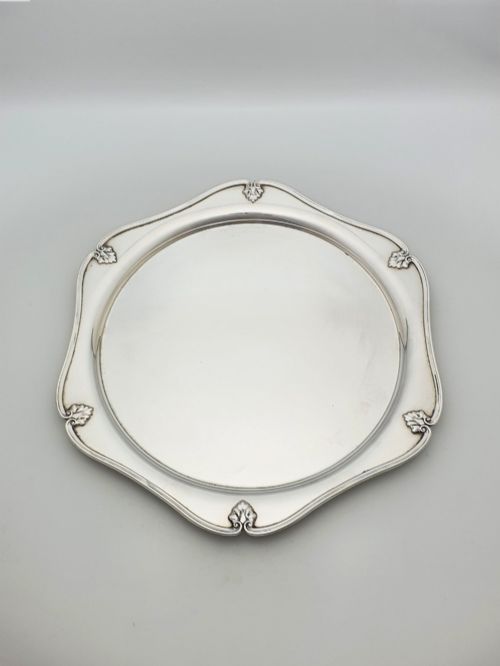
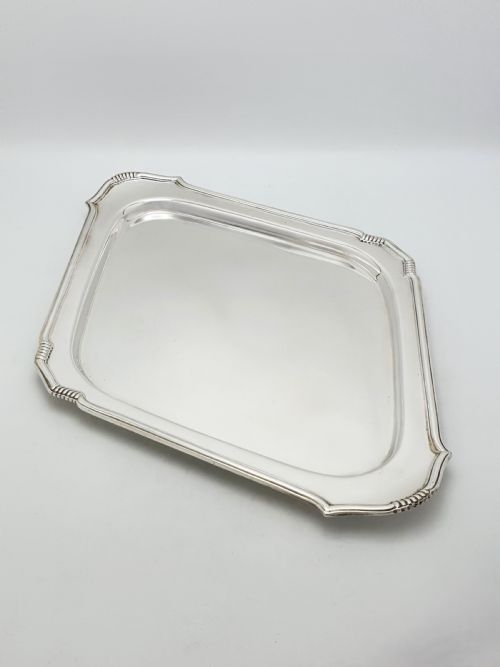


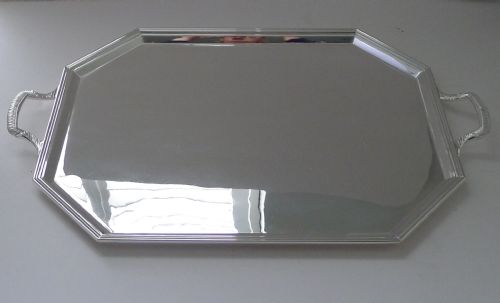


Silver Plated Bar Tray
A silver plated bar tray brings period glamour to a home bar, offering a durable surface for glassware and decanters.
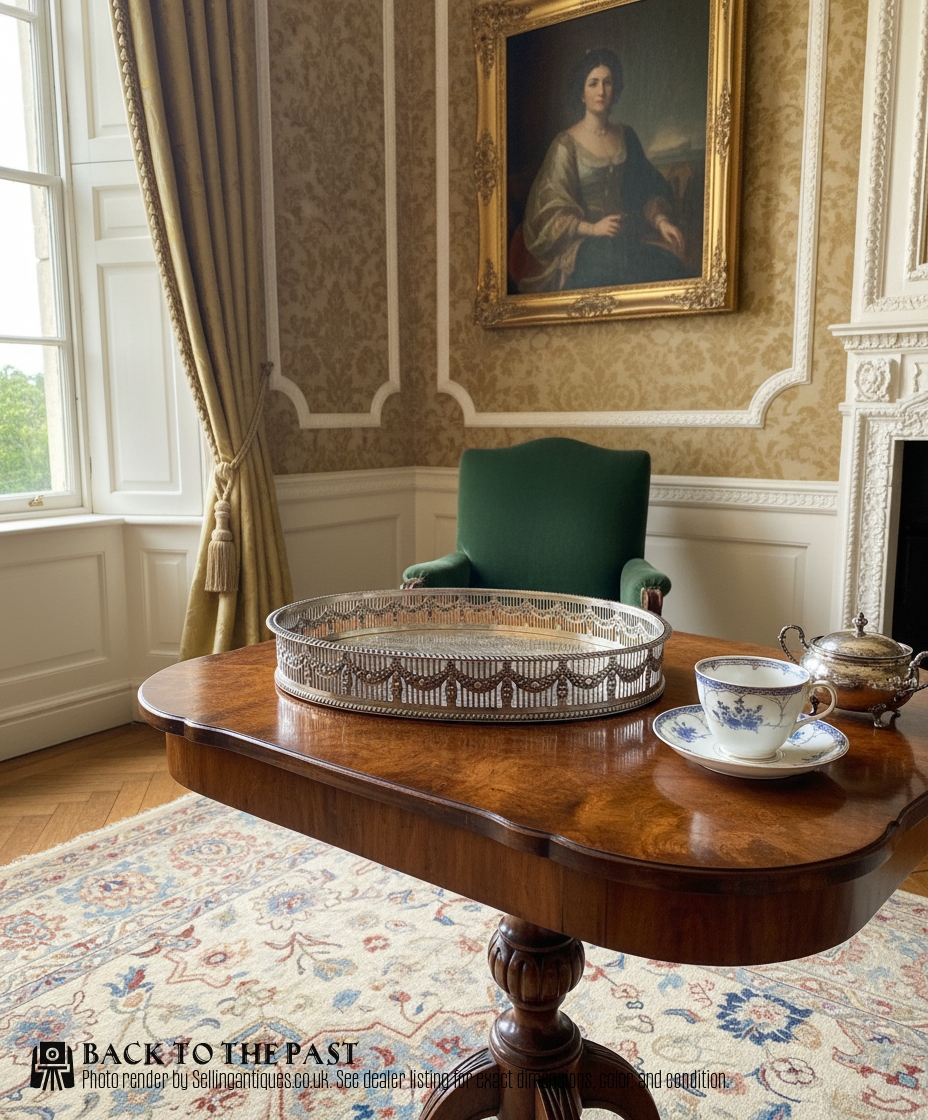
Silver Plated Bar Tray
A silver plated bar tray is a practical serving surface designed for cocktails, drinks and glassware. When you search for this phrase, you will find pieces ranging from Victorian gallery designs to streamlined twentieth-century examples.
The most common versions on this page are Art Deco cocktail trays from the nineteen-twenties and nineteen-thirties, often featuring geometric shapes or mirrored glass. Edwardian and nineteenth-century serving trays also appear regularly with classical borders or wooden mounts.
How they were made
These pieces are constructed primarily from base metal, nickel silver or EPNS, coated in a layer of silver plate. Makers also incorporated inlaid mahogany, satinwood and ebonised wood into the heavier serving and drinks trays.
Surface decoration relied on techniques such as engine turning, hand hammering and applied borders. Gallery trays feature pierced or solid vertical walls soldered to the base to secure glassware.
Cobalt blue mirror glass made an appearance in the nineteen-twenties, ensuring that mixing a gin and tonic came with a deep oceanic glow.
What varies in quality
Quality rests in the weight of the metal blank and the crispness of the applied decoration, such as cast shell or Celtic borders. Heavier gauges of nickel silver provide a rigid foundation that resists bending.
The distinction between standard production and top-tier work is visible in the finish of the handles, the tightness of gallery joints and the depth of the engine turning on the central panel.
J B Chatterley & Sons·Walker & Hall·Hukin & Heath·James Dixon & Sons·Roberts & Dore·Asprey London·Elkington·Barker Brothers·Barker Ellis
The Silver Plated Bar Tray Glossary
- EPNS
- Electroplated Nickel Silver denotes a base metal of copper, zinc and nickel coated with a layer of pure silver. It forms the structural core of many Edwardian and twentieth-century bar trays.
- Gallery tray
- A serving tray fitted with a raised pierced or solid metal border around the perimeter. This architectural rim prevents decanters and glasses from sliding off during transit.
- Engine turned
- A mechanical decoration technique that cuts intricate geometric patterns into the metal surface. It creates a textured background that catches the light and hides minor surface wear.
- Old Sheffield plate
- An early fusing method where a thin sheet of silver is fused to a thicker copper core by heat and pressure. Pieces made this way display a characteristic copper bleed along edges and seams.
- Salver
- A flat serving tray typically supported on small feet. In historical usage, the term usually refers to a formal circular tray used for serving drinks or calling cards.
Silver Plated Bar Tray: Frequently Asked Questions
What is a silver plated bar tray?
A silver plated bar tray is a metal serving accessory designed to hold cocktail shakers, glasses and bottles. They provide a stable, protective surface for furniture while organising barware.
These pieces combine a durable base metal core with a polished silver exterior. They have served as functional entertaining accessories from the Victorian era through the mid-century period.
How do I clean a silver plated bar tray?
Clean your tray using a soft microfibre cloth and a specialist silver polish designed for plated items. Avoid harsh abrasive cleaners that can wear away the thin silver layer.
Rinse the tray gently with warm water after polishing and dry it immediately with a soft cloth to prevent water spots and tarnishing.
How can I tell Art Deco trays apart?
Art Deco trays are distinguished by geometric forms such as octagons, diamonds and stepped corners. They frequently incorporate contrasting materials like cobalt blue mirror glass.
Earlier Victorian and Edwardian examples lean towards floral borders, mahogany surrounds and heavier circular or rectangular gallery walls without the streamlined asymmetry of the nineteen-thirties.
Were these trays used for tea or cocktails?
Depending on the era, these trays served multiple domestic functions including tea service, breakfast delivery and cocktail preparation. Edwardian and nineteenth-century examples often served tea or general hospitality.
By the nineteen-twenties and nineteen-thirties, designers specifically tailored trays for home cocktail bars, incorporating specialised shapes and inset mirrored bases to hold glassware.
What does EPNS mean on a tray?
EPNS stands for Electroplated Nickel Silver, which indicates the underlying metal composition of the tray. This alloy of copper, nickel and zinc provides a strong, rigid foundation for the silver coating.
Most pieces bearing this mark date from the late nineteenth century onwards, replacing earlier copper-based fusion methods with an efficient electroplating process.