




Engraved Silver Gallery Tray
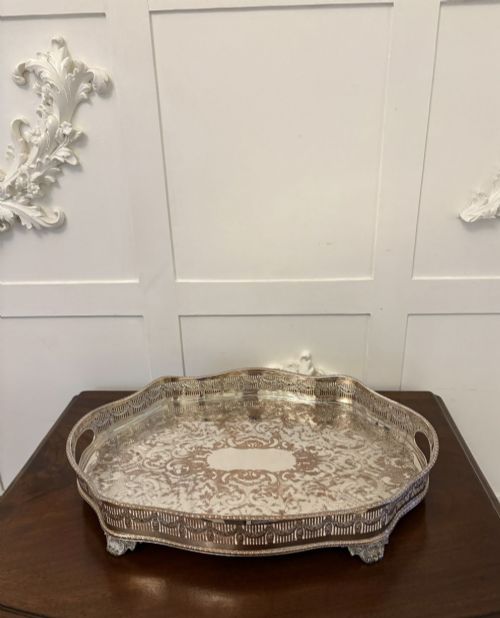
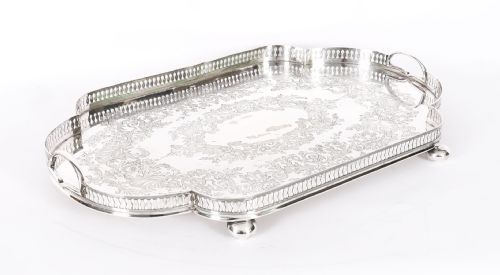
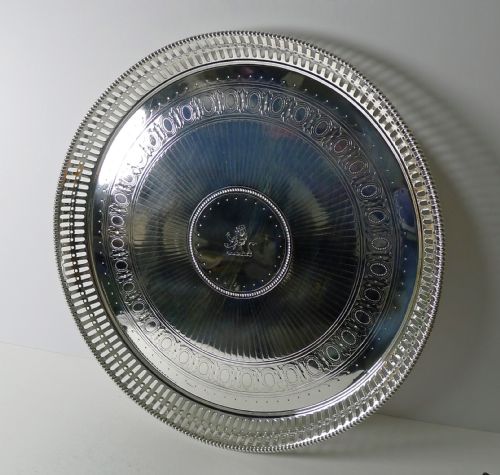
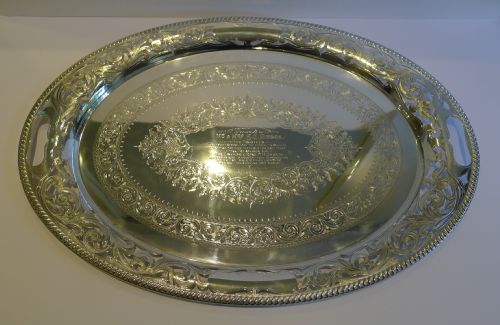
These engraved silver gallery trays bring surface decoration and raised pierced borders to the table, offering a sturdy base for tea services and decanter sets.
Engraved Silver Gallery Tray
An engraved silver gallery tray provides a formal surface for serving drinks, featuring an upright pierced or reticulated border that keeps glassware and teapots secure. When searching for an engraved silver gallery tray, buyers encounter serving pieces dating from the Victorian, Edwardian, and interwar periods.
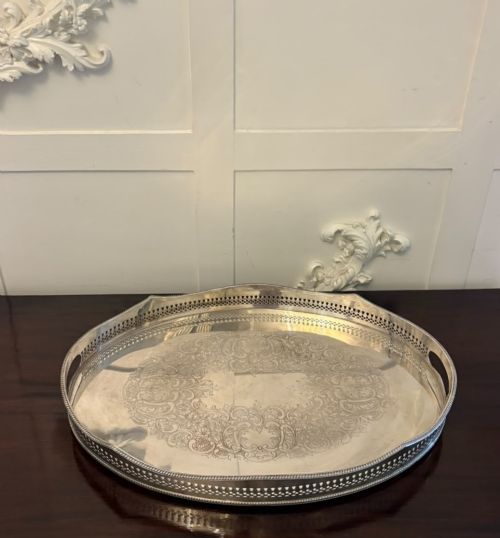
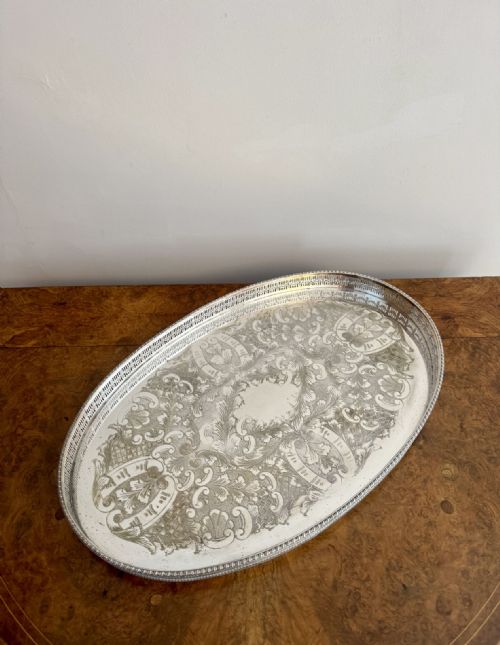
The assortment spans circular, oval, and cut-corner forms executed in silver plate, electroplated nickel silver, and Sheffield plate. Many examples combine engraved floral scrolls or butterflies and ferns on the base with pierced galleries and cast handles.
How they were made
The foundation of these pieces relies on base metals such as copper or nickel silver, which received a coating of silver through electroplating or the traditional Sheffield plating method. Makers applied surface decoration by hand engraving intricate scrolls, butterflies, and ferns directly into the metal.
The raised galleries require careful piercing or reticulation work, often pierced by hand or punched with geometric and floral patterns before being soldered to the tray base. Handles and decorative feet are cast separately and attached to the body.
Listings span the nineteenth century through the interwar period, utilising silver plate, copper, cut glass, and base metal.
What varies in quality
Quality rests upon the crispness of the hand engraving and the structural integrity of the pierced gallery. Pieces with deep, clear chasing and heavy gauge plating demonstrate superior workshop standards.
The weight of the metal and the precision of the soldered joints distinguish grander serving pieces from lighter utilitarian items. Trays bearing the marks of established makers show greater refinement in the cast handles and pierced borders.
James Deakin·Mappin & Webb·Elkington·Lee & Wigfull·J.H. Potter
The Engraved Silver Gallery Tray Glossary
- Gallery tray
- A serving tray fitted with a raised, upright border around the perimeter. This pierced or solid wall prevents items from sliding off the surface.
- Silver plate
- A layer of silver bonded to a base metal core such as copper or nickel silver. This technique allowed makers to produce large tableware items at a lower cost than solid silver.
- EPNS
- Electroplated nickel silver. A common base metal composition used under silver plating from the mid-nineteenth century onward.
- Sheffield plate
- An early form of plating created by fusing a sheet of silver to a copper ingot before rolling them into sheets. This method predates modern electroplating.
- Reticulated
- Decorated with an openwork network or net-like pattern. This technique appears frequently in the pierced borders of nineteenth-century trays.
Engraved Silver Gallery Tray: Frequently Asked Questions
What is a gallery tray used for?
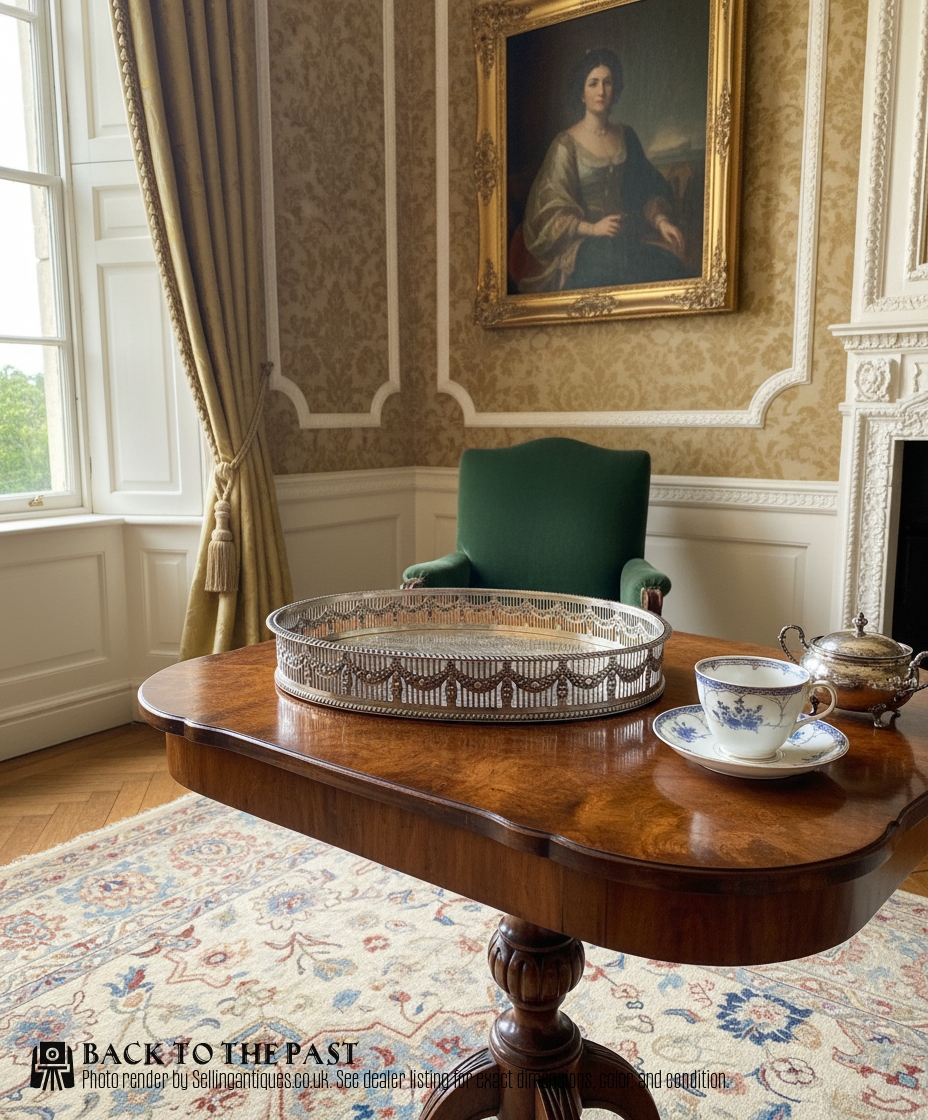
These trays serve for carrying and displaying tea sets, coffee services, or decanter drinks sets. The raised border keeps glassware secure during transport.
They also function as decorative centerpieces on sideboards or tables when not in active service.
How do I date a silver plated tray?
Dating relies on stylistic clues, manufacturing techniques, and maker marks stamped into the metal. Victorian examples often feature heavy ornamentation and elaborate engraving.
Edwardian and interwar pieces tend toward lighter pierced galleries and refined floral scrolls.
Are these trays solid silver?
The majority of pieces use silver plate or electroplated nickel silver over a base metal such as copper or nickel silver. This construction provided durability and weight while remaining accessible.
Sheffield plate versions use a fused layer of silver over copper.
How do I care for silver plate?
Gentle cleaning with a specialised silver polish maintains the finish without wearing through the plated layer to the base metal. Regular dusting prevents tarnish buildup.
Storage in dry conditions protects the surface from rapid oxidation.