




Vintage Silver Waiter Tray
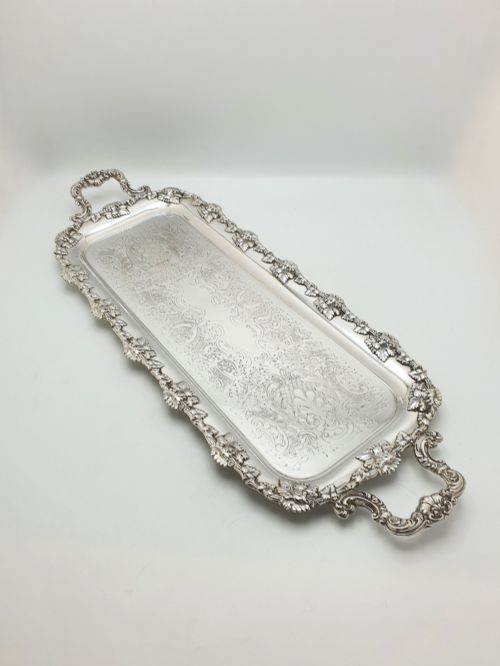
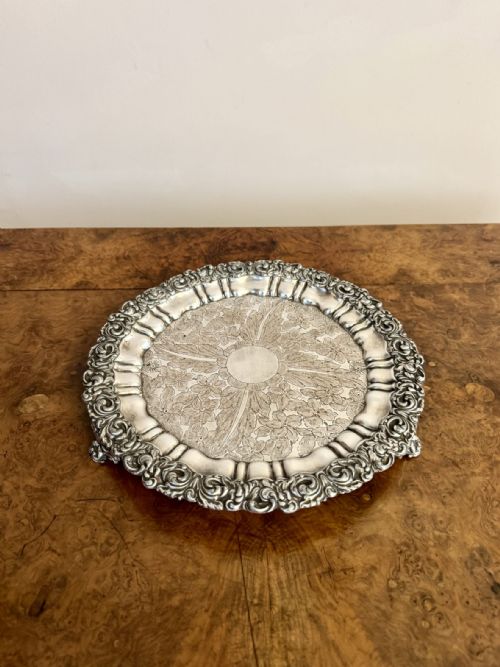
A vintage silver waiter tray brings formal service to drinks, combining robust metal foundations with meticulous hand engraving.
Vintage Silver Waiter Tray
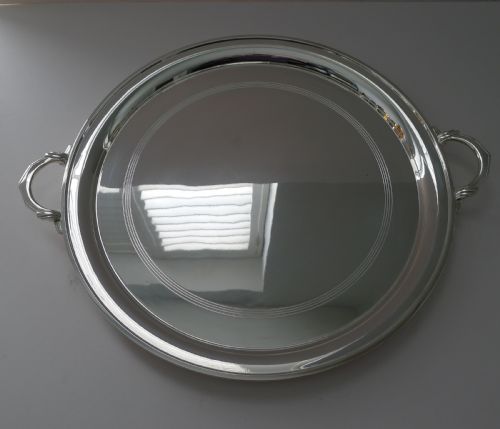
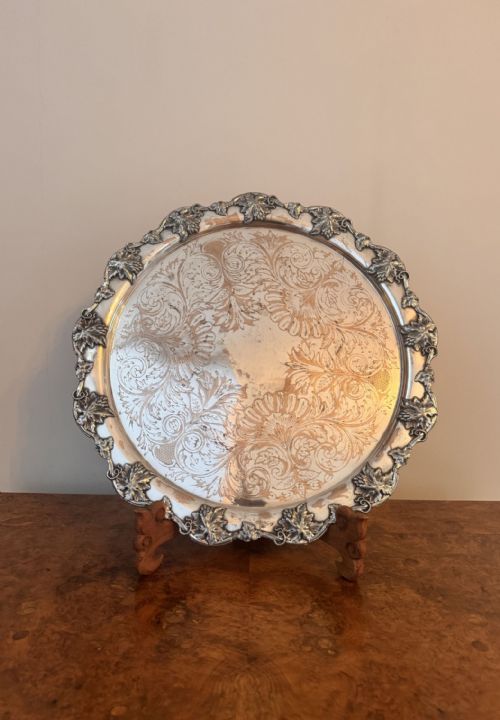
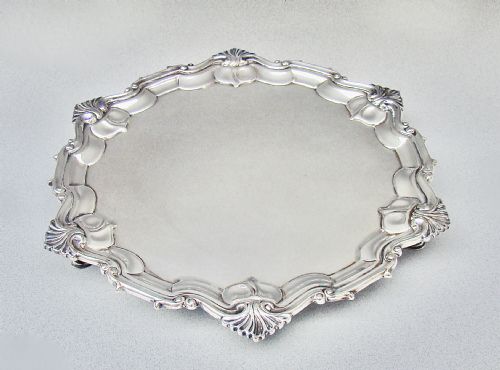
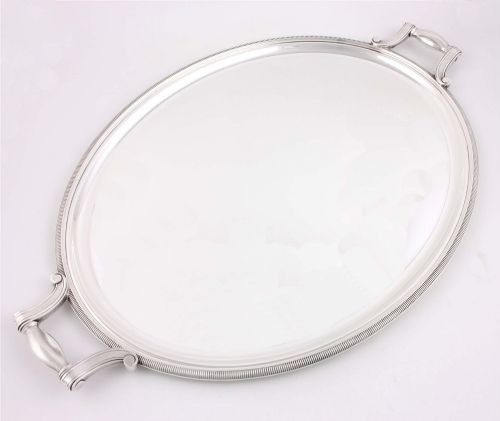
A vintage silver waiter tray encompasses circular salvers, oval serving pieces, and gallery tea trays designed for domestic hospitality. Buyers exploring this category encounter pieces spanning from the mid nineteenth century through the art deco decades into the mid twentieth century. The selection ranges from compact cocktail platters to monumental butler trays with raised rims and handles.
Victorian and Edwardian examples dominate the physical forms, often exhibiting ornate grapevine borders or engine turned surfaces. Alongside these, geometric art deco designs reflect the streamlined aesthetic of the nineteen twenties and thirties. Origin points stretch from English workshops to continental makers in Paris, Hamburg, and beyond.
Markers of quality
Quality rests in the crispness of the engraved decoration and the substantial weight of the underlying metal foundation. Superior pieces exhibit deeply chased borders and firmly soldered handles that withstand regular lifting.
The integrity of the plating layer defines the longevity of the piece, where thick applications resist wear from decades of polishing. Master silversmiths and established firms applied distinct proportions and balanced rims that separate standard domestic wares from exhibition grade commissions.
A Chicago World Fair commemorative tray from eighteen ninety three sits among the British serving pieces.
Mappin & Webb·William Hutton & Sons·Christofle·Padley Parkin·J B Chatterley & Sons·Walker & Hall·James Dixon & Sons·Tiffany & Co·Elkington·Atkin Brothers·John Collyer Birmingham
The Vintage Silver Waiter Tray Glossary
- Salver
- A flat tray, typically circular and supported on small feet, used for serving drinks or presenting cards.
- Gallery tray
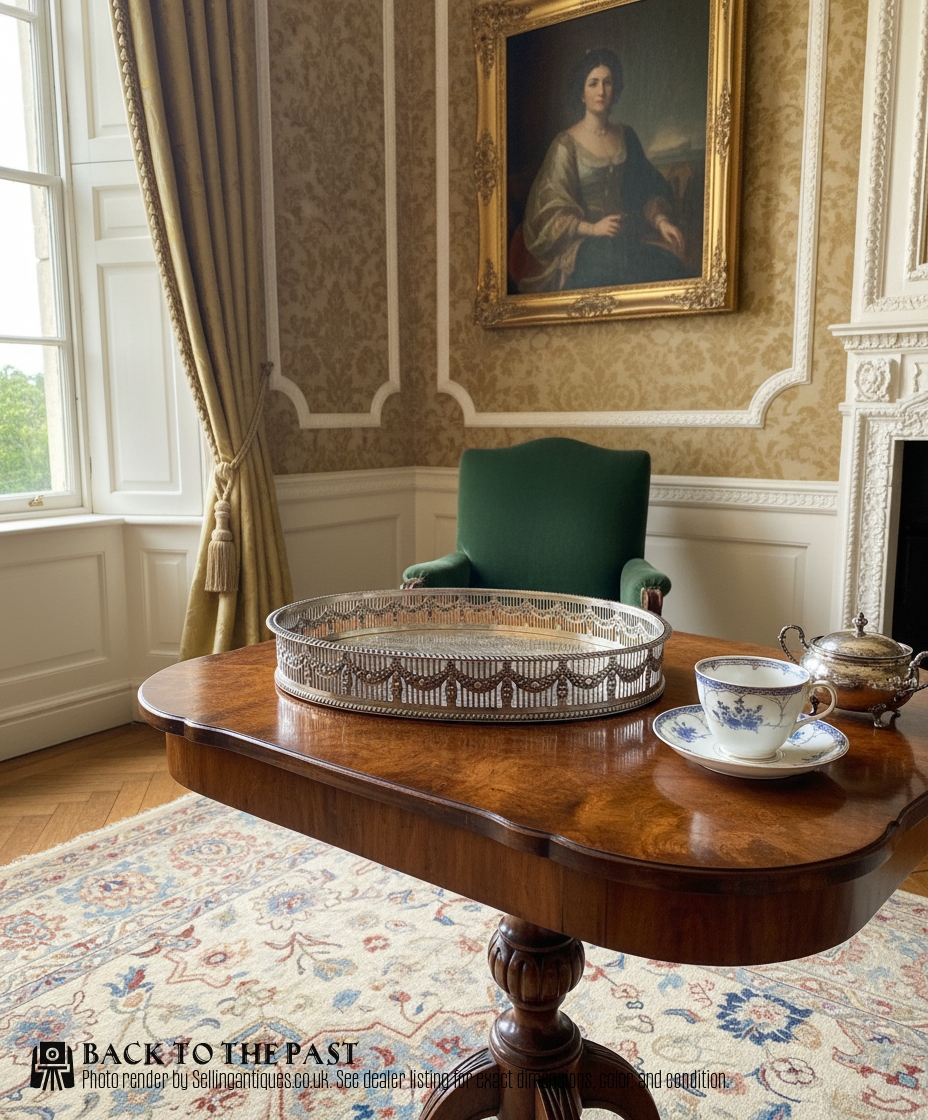
- A tray featuring an openwork metal gallery or pierced railing around the perimeter to secure items.
- EPNS
- Electroplated Nickel Silver, a common base metal composition coated in a thin layer of silver.
- Sheffield plate
- An early fusing technique where a sheet of silver is fused to a thicker copper core before rolling.
- Engine turned
- A geometric pattern mechanically engraved into metal using a lathe.
Vintage Silver Waiter Tray: Frequently Asked Questions
How do I clean my silver waiter tray?
Use a soft cloth and a gentle silver cream formulated to protect plated surfaces from excessive abrasion. Avoid harsh chemical dips that strip the residual metal.
Rinse thoroughly with warm water and dry immediately with a lint free cloth to prevent water spots on the engraved surface.
Can I use these trays for serving cocktails?
These trays were originally built for drinks service and handle glassware, decanters, and cocktail shakers with ease. The raised rims and sturdy handles provide secure transport.
Ensure moisture from cold glasses is wiped away promptly to preserve the underlying silver plating over time.
How do I date a silver plated tray?
Examine the style of the handles, the geometry of the rim, and any maker stamps or registry marks stamped into the base. Art deco pieces show clean geometric lines, while Victorian examples lean toward heavy floral chasing.
Compare the construction methods, noting whether old Sheffield plate or electroplated nickel silver was utilised by the workshop.
What is the difference between a salver and a tray?
A salver traditionally refers to a flat circular serving vessel raised on small feet, whereas a tray often includes handles and varied geometric shapes.
Both served similar roles in domestic hospitality, though salvers frequently function as formal presentation pieces.