
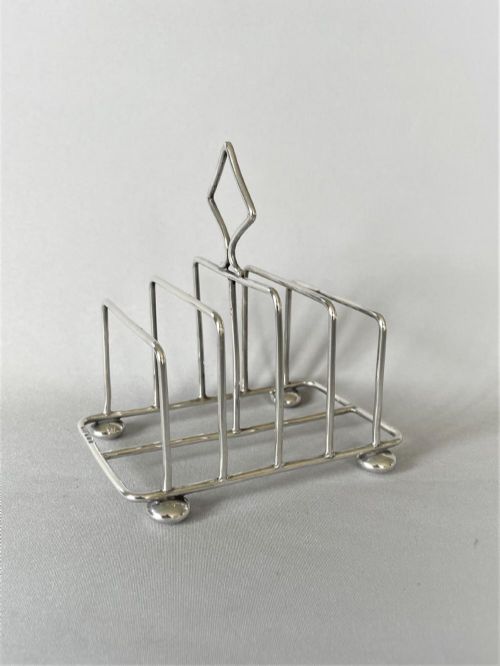
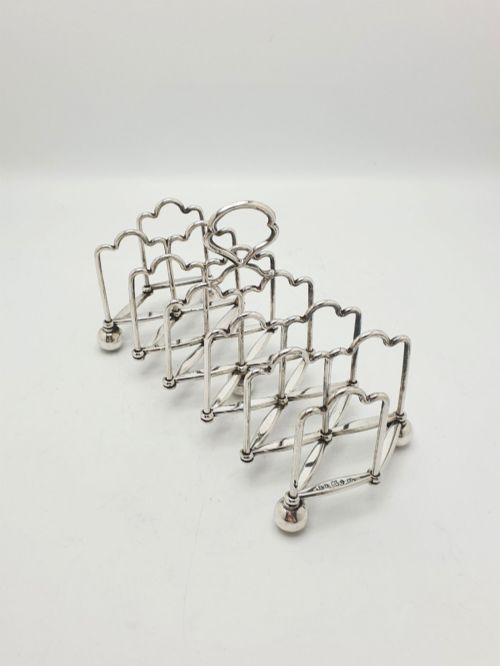
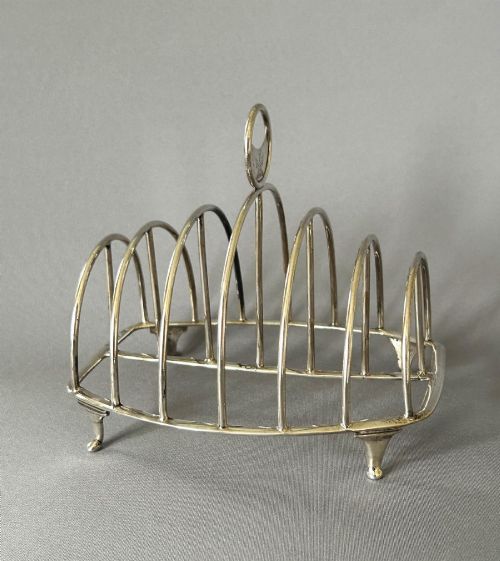
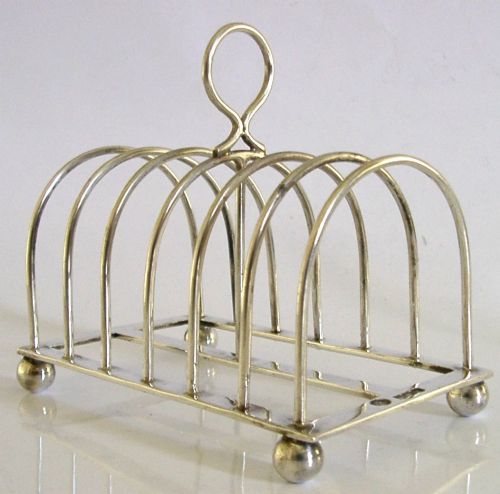



Antique Silver Letter Rack
An antique silver letter rack holds correspondence upright on a desk while bringing tangible history to a working surface.
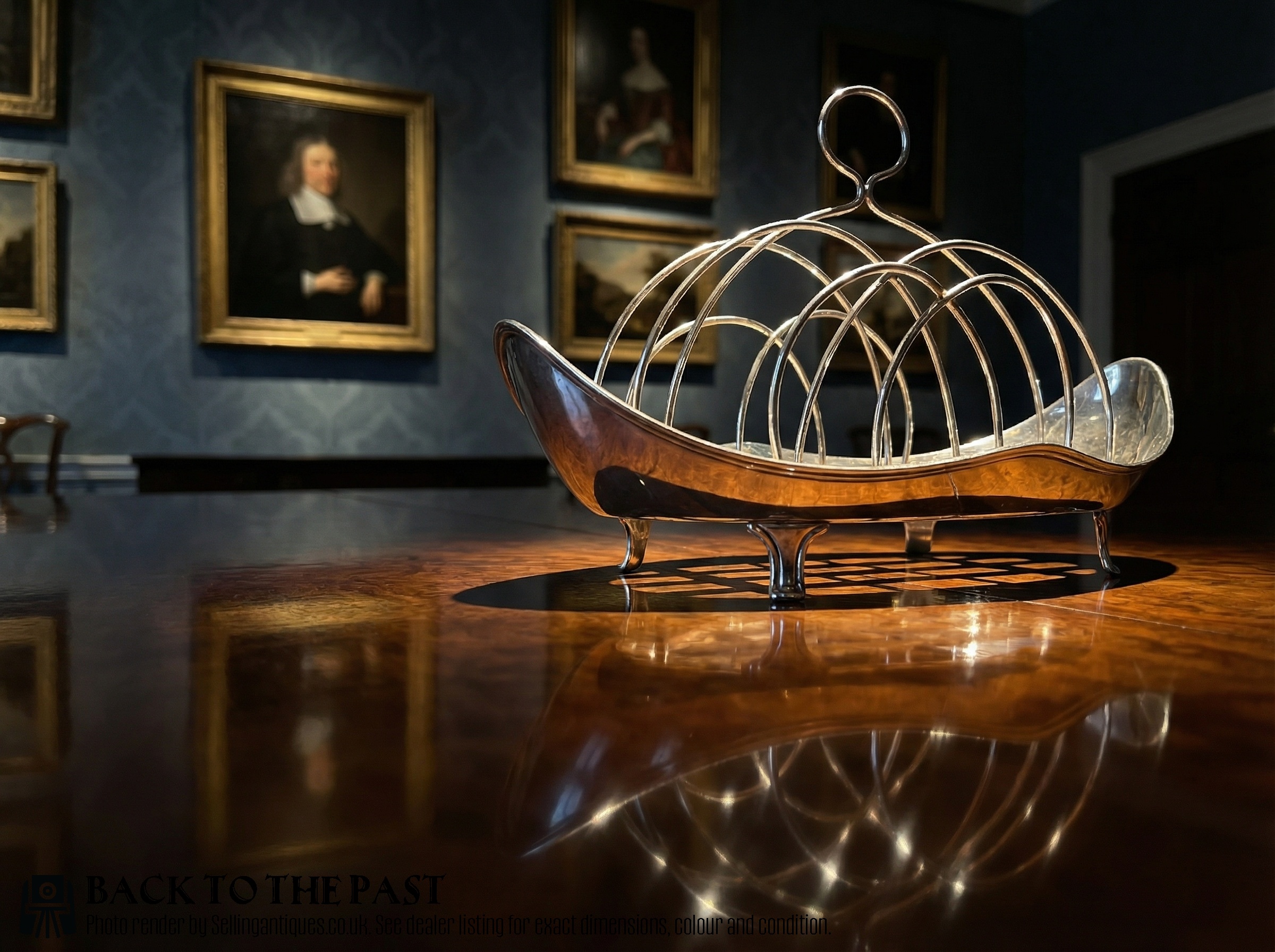
Identifying an antique silver letter rack
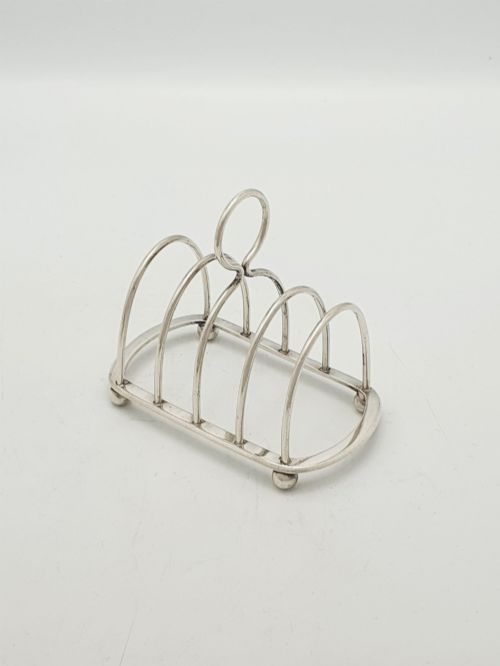
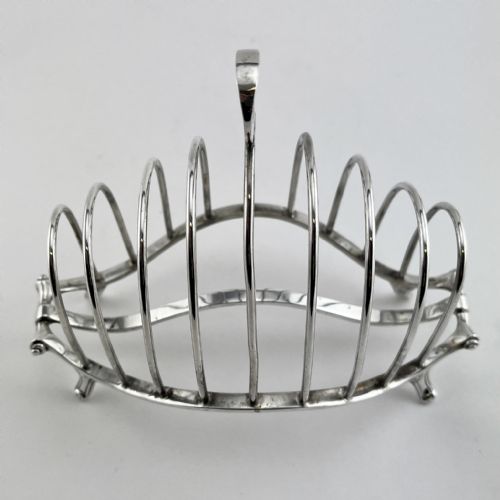
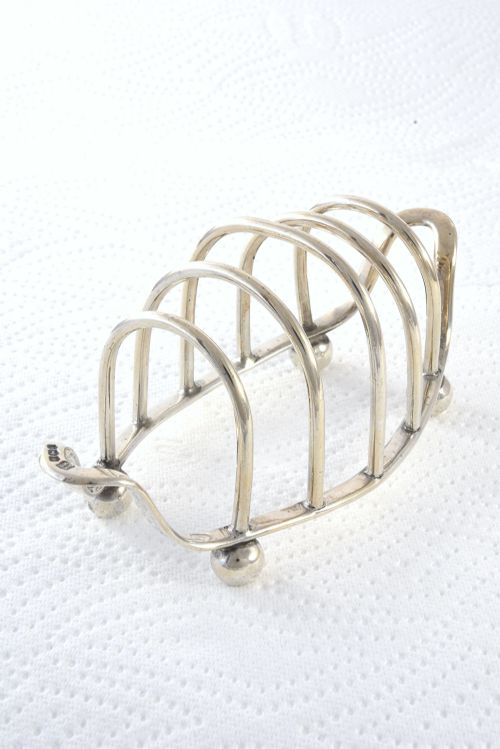
These desk accessories organise papers, envelopes and correspondence using vertical metal dividers arranged on a stable base. Pieces meeting this description frequently share forms with toast racks, as makers often designed dual-purpose items for the table and writing desk.
The pieces appearing on this page span several distinct periods including the Georgian era, the Regency period, and the Edwardian years. Buyers encounter both sterling silver and silver plate constructions, alongside combinations incorporating hardwood or tortoiseshell.
Makers occasionally produced novelty formats shaped like hearts, wishbones, horseshoes, stirrups, or crossed golf clubs. Standard architectural and wirework frames remain the versions most frequently met by collectors browsing current stock.
Materials and construction
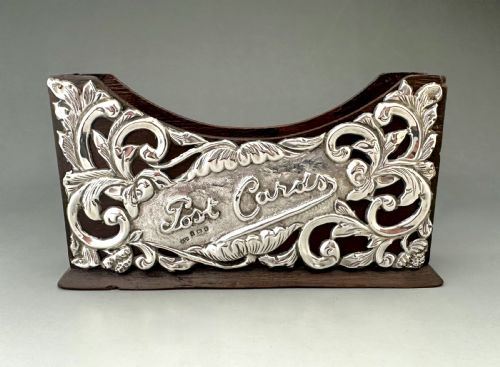
Silversmiths utilised sterling silver and silver plate over base metals, shaping wire and sheet metal into upright dividers. Solid oak and other hardwoods frequently formed the wooden bases of desk racks, mounted with silver mounts and shields.
Craftsmen employed piercing, engraving, and casting techniques to decorate frames and create novelty motifs such as swans or golf equipment. Components were soldered or screwed together before receiving hallmarks or maker stamps.
Retail Price Guide 2026
Typical UK retail prices for silver letter rack, calculated from the Sellingantiques database of over a million retail prices indexed since 2003. This retail price guide relies exclusively on Sellingantiques data; no external sources or auction records are used, so the figures do not describe the wider market.
Keep your mail organised with a silver golf club divider, perfect for correspondence that requires a handicap.
Judging quality in desk accessories
Quality rests on the weight of the metal and the rigidity of the upright dividers, which should remain securely fixed to the base without wobbling. Heavier gauges of sterling silver indicate superior manufacture compared to thin silver plate that shows wear through to the base metal.
Design complexity also separates standard items from exceptional pieces, particularly in novelty forms or examples incorporating tortoiseshell and carved hardwood. Crisp hallmarks, clear maker marks, and undamaged piercing elevate the standing of a desk rack.
Mappin & Webb·Padley, Parkin & Staniforth·Roberts & Belk·Atkin Brothers·Walker & Hall·Elkington & Co.
The Antique Silver Letter Rack Glossary
- Sterling silver
- An alloy containing 92.5 percent pure silver and 7.5 percent other metals, usually copper, used extensively for quality desk wares.
- Silver plate
- A layer of silver fused or electroplated onto a base metal such as copper or nickel brass, common in Victorian and Edwardian manufacturing.
- Hallmark
- A series of official marks stamped on precious metals indicating the standard of purity, assay office, and year of manufacture.
- Piercing
- A decorative technique involving cutting patterns out of sheet metal to create openwork designs along the frame or base.
Frequently Asked Questions
Were letter racks and toast racks the same thing?
Makers frequently produced versatile silver frames that served equally well for holding toast at breakfast or letters upon a writing desk. Contemporary descriptions often list these interchangeable forms under both functions.
Buyers find that surviving examples share identical wirework dividers and proportions regardless of their intended primary use.
How do I care for antique silver on a desk?
Gentle dusting with a soft microfibre cloth removes surface particles without abrading the metal or wearing away delicate silver plating. Avoid harsh abrasive polishes that can soften crisp hallmarks and engraved details over time.
Keeping pieces away from direct heat sources and damp environments preserves any integrated wooden bases or tortoiseshell panels.
What materials were used alongside silver?
Silversmiths frequently combined sterling silver and silver plate with solid oak, mahogany, and exotic tortoiseshell to add contrast and weight to desk accessories. Novelty pieces also utilised base metals shaped into sports equipment or animals.
These mixed-media constructions reflect the aesthetic preferences of the Georgian, Victorian, and Edwardian periods.
How can I tell the date of a piece?
British sterling silver items generally bear hallmarks indicating the assay office, date letter, and standard mark which allows precise dating. Silver plated versions rely on registration numbers, maker marks, and stylistic clues typical of the Victorian and Edwardian eras.
Comparing construction methods and decorative motifs helps narrow down the period of unmarked or plated items.