


Antique Silver Glass Liner
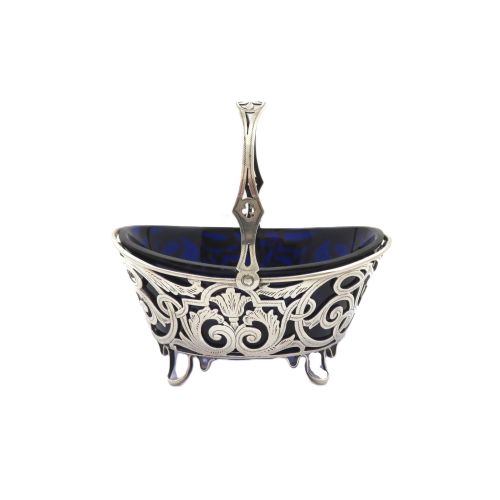
An antique silver glass liner combines a pierced or solid metal holder with a colourful blown vessel, designed to protect the precious metal from reactive contents.
Antique Silver Glass Liner
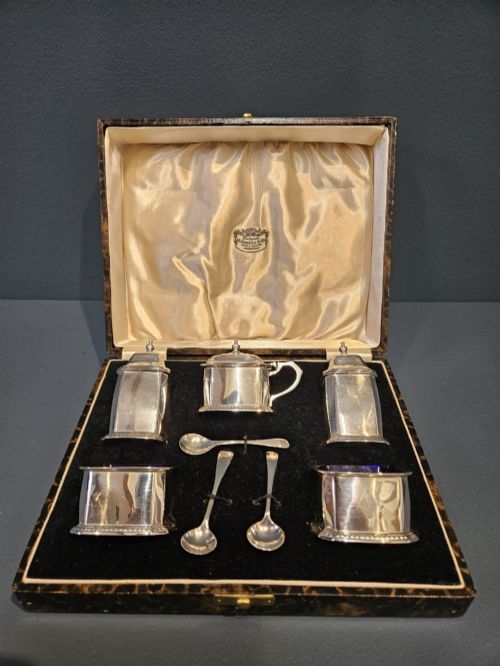
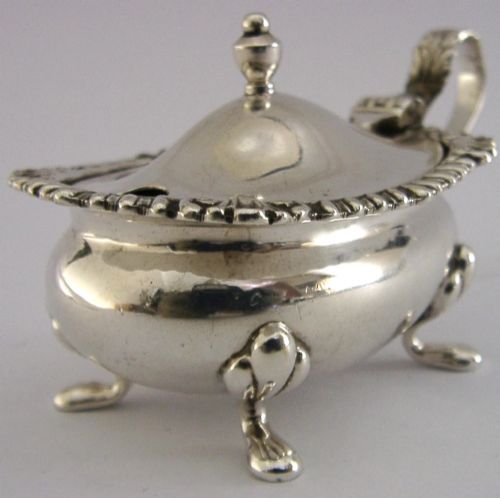
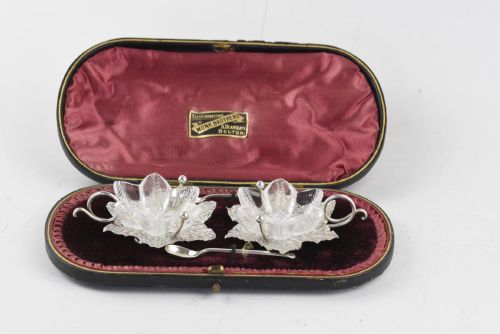
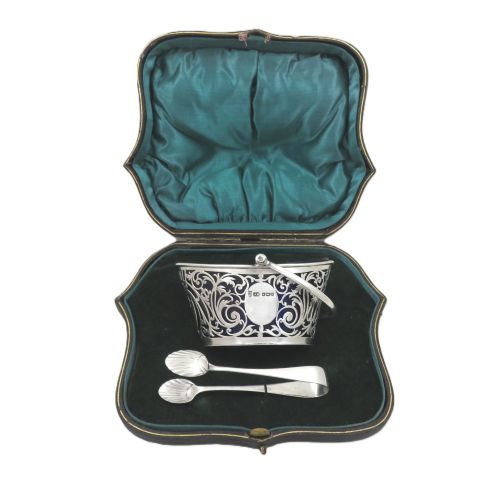
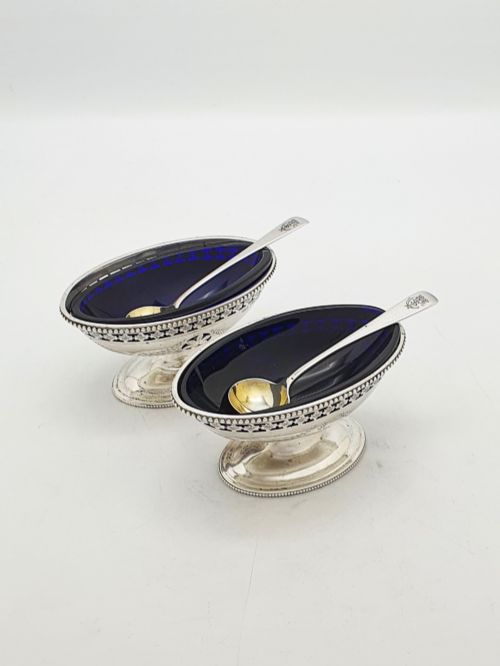
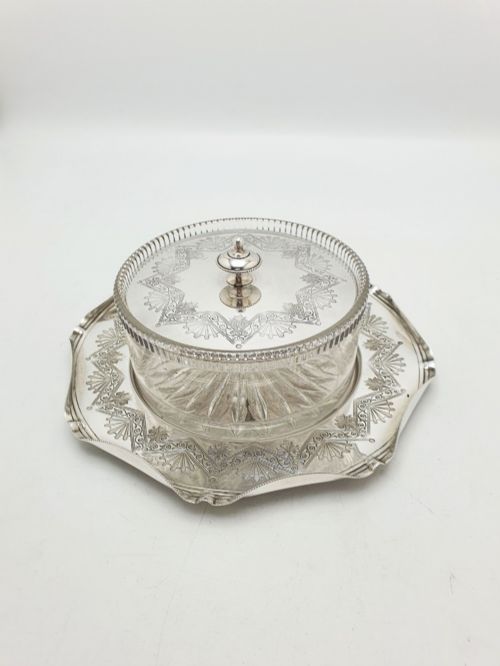
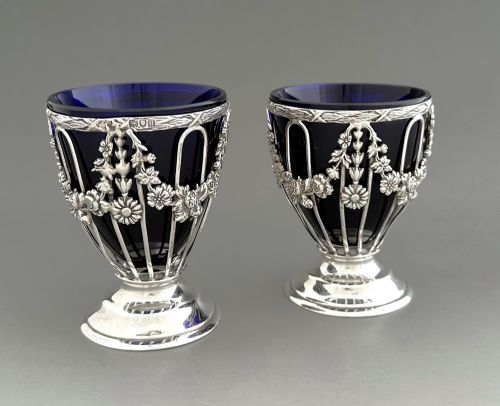
When searching for an antique silver glass liner, buyers encounter tableware such as salt cellars, mustard pots, sugar baskets, butter dishes, and cruet sets spanning the Victorian, Edwardian, and Georgian periods. These items pair a metal framework - often executed in sterling silver or silver plate - with a contrasting vessel designed to hold condiments, preserves, or flowers safely.
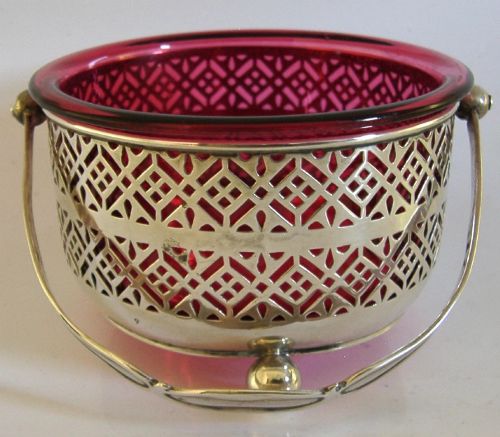
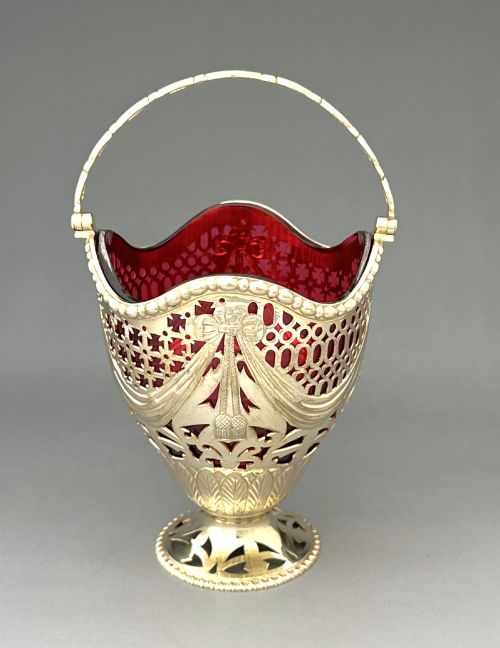
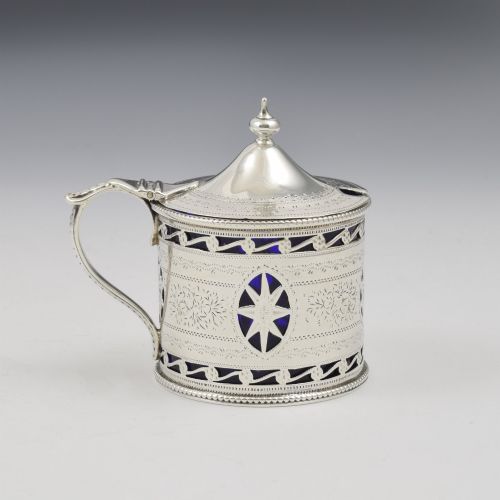
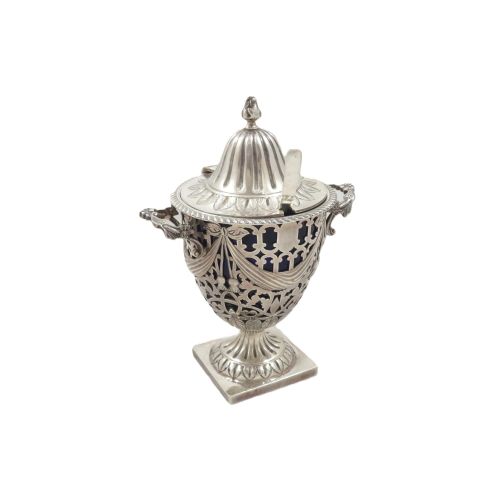
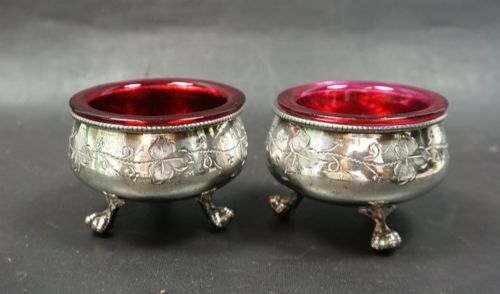
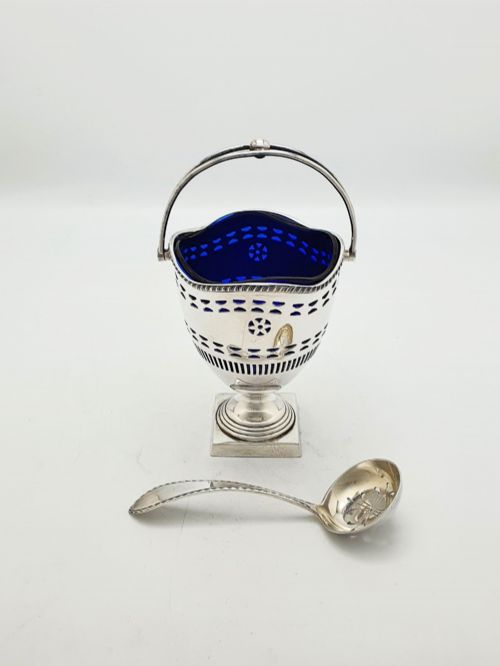
The most common examples on this page are mustard pots and salt cellars with cobalt blue glass inserts, alongside swing-handled sugar baskets featuring cranberry, green, or ruby glass. Pierced silverwork dominates the domestic output, allowing the bright interior glass colour to show through open lattice and scroll patterns.
Origins stretch from eighteenth-century Georgian workshops through to twentieth-century Art Deco designs, encompassing domestic English makers and continental silver. Buyers also find larger vessels including biscuit barrels, ice buckets, and vases that rely on fitted glass inserts to contain moisture and prevent corrosion.
Materials and Technique
Silversmiths constructed the outer holders using casting, piercing, and wirework techniques, often creating reticulated galleries that revealed the inner vessel. Sterling silver and durable silver plate provided structural rigidity, while specialised maker techniques accommodated the precise thermal tolerances required for glass inserts.
The glass liners themselves were predominantly free-blown or mould-blown, utilising rich mineral oxides to achieve deep cobalt blue, cranberry, ruby, and green hues. Some later or larger pieces incorporate cut glass or frosted and opaline finishes, fitted carefully into the metal housing.
Listings span periods from the eighteenth century through the Art Deco era, featuring sterling silver, silver plate, and coloured glass.
Assessing the Range
Quality rests in the harmony between the metal mount and the glass insert, particularly where original components remain together. Thicker gauge silver, crisp hand-pierced detailing, and cast figural elements distinguish finer workshop output from standard commercial production.
The integrity of the glass liner dictates overall desirability. Smooth rims without chips, deep saturated colour, and a snug fit inside the silver frame set superior examples apart from replacements or mismatched pairings.
Nathan and Hayes·Aldridge and Green·William Neale and Son·Mappin and Webb·Elkington and Co
The Antique Silver Glass Liner Glossary
- Cobalt Glass
- A deep blue glass coloured with cobalt oxide. This material is frequently found in Victorian and Edwardian salt cellars and mustard pots.
- Cranberry Glass
- A pinkish-red glass created by adding gold chloride to the molten batch. It is commonly seen in swing-handled sugar baskets and small vases.
- Pierced Silver
- Metalwork decorated by cutting or piercing decorative patterns through the sheet. This technique allows the coloured glass liner to remain visible from the exterior.
- Cruet Set
- A matched collection of condiment containers held in a frame. These sets often incorporate multiple glass liners for mustard, pepper, and salt.
- Silver Plate
- A base metal coated with a thin layer of pure silver. Many nineteenth-century biscuit barrels and butter dishes utilise this method for durability.
Antique Silver Glass Liner: Frequently Asked Questions
What were glass liners used for?
Glass liners protected the outer silver frame from corrosive substances like salt, vinegar, and mustard. Without a protective insert, reactive contents would quickly tarnish and pit the precious metal.
They also allowed for easy cleaning and refilling between meals without damaging delicate silver wirework or pierced galleries.
How do I know if the glass liner is original?
An original liner fits the inner dimensions of the silver mount precisely, resting at the correct height without excessive wobble. The glass should exhibit manufacturing characteristics and wear consistent with the age of the silver housing.
Mismatched replacements often sit too low, rattle within the frame, or display a noticeably different tint to period examples.
How should I clean my silver and glass?
Remove the glass liner from the silver mount before cleaning either piece. Wash the glass gently in warm soapy water, avoiding harsh abrasives that might scratch the surface.
Clean the silver mount with a suitable polish, taking care to keep chemical polishes away from the glass insert and any antique hallmarks.
Can I use these items daily?
Many of these pieces remain robust enough for regular use on the dining table, provided they are handled with care. Modern condiments can be safely served from period salt cellars and mustard pots if washed promptly after use.
Delicate wirework baskets and vanity jars benefit from careful placement to prevent accidental impact to the glass or metal.